Oppo A5i Pro
Xiaomi Redmi 15C 4G

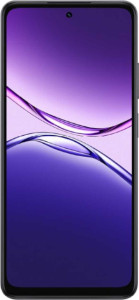
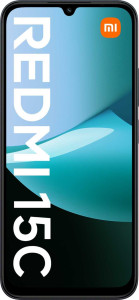
Oppo A5i Pro Xiaomi Redmi 15C 4G

Overview

Welcome to our in-depth comparison of the Oppo A5i Pro and the Xiaomi Redmi 15C 4G, two budget-friendly Android smartphones that take notably different approaches to everyday performance and usability. While both share a large battery, water resistance, and NFC support, the rivalry gets interesting when examining their chipset capabilities, display characteristics, camera setups, and connectivity features. Read on to discover which device better matches your needs.

Common Features

  • Both phones are water resistant.
  • Both phones have a thickness of 8 mm.
  • Neither phone has a rugged build.
  • Neither phone can be folded.
  • Both phones feature an LCD IPS display.
  • Both phones have branded damage-resistant glass.
  • HDR10 support is not available on either phone.
  • HDR10+ support is not available on either phone.
  • Always-On Display is not available on either phone.
  • Dolby Vision support is not available on either phone.
  • Neither phone has a secondary screen.
  • Both phones have a touchscreen.
  • Both phones support LTE connectivity.
  • Both phones support 64-bit processing.
  • Both phones use DirectX 12.
  • Both phones have integrated graphics.
  • Both phones use big.LITTLE technology.
  • Both phones have 8 CPU threads.
  • Both phones have TrustZone security.
  • Both phones record main camera video at 1080p 30fps.
  • Neither phone has a dual-tone LED flash.
  • Both phones have a single LED flash.
  • Both phones have a CMOS sensor.
  • Both phones support continuous autofocus during video recording.
  • Both phones have phase-detection autofocus for photos.
  • Both phones support slow-motion video recording.
  • Both phones include clipboard warnings.
  • Both phones have location privacy options.
  • Both phones have camera and microphone privacy options.
  • Mail Privacy Protection is not available on either phone.
  • Both phones support theme customization.
  • Both phones can block app tracking.
  • Cross-site tracking blocking is not available on either phone.
  • Both phones have on-device machine learning.
  • Both phones have a 6000 mAh battery.
  • Neither phone supports wireless charging.
  • Both phones support fast charging.
  • Neither phone supports reverse wireless charging.
  • Neither phone has a removable battery.
  • Both phones have a battery level indicator.
  • Both phones have a rechargeable battery.
  • Both phones have a 3.5 mm audio jack.
  • Neither phone has stereo speakers.
  • LDAC support is not available on either phone.
  • aptX HD support is not available on either phone.
  • aptX Adaptive support is not available on either phone.
  • aptX Lossless support is not available on either phone.
  • Neither phone supports 5G.
  • Both phones support Wi-Fi 4 (802.11n) and Wi-Fi 5 (802.11ac).
  • Both phones have dual SIM card slots.
  • Both phones have USB Type-C.
  • Both phones use USB version 2.
  • Both phones have NFC.
  • Both phones have a fingerprint scanner.
  • Neither phone has emergency SOS via satellite.
  • Both phones have a video light.
  • Neither phone has a sapphire glass display.
  • Neither phone has a curved display.
  • Neither phone has an e-paper display.

Main Differences

  • Weight is 193 g on Oppo A5i Pro and 205 g on Xiaomi Redmi 15C 4G.
  • Width is 76.2 mm on Oppo A5i Pro and 79.5 mm on Xiaomi Redmi 15C 4G.
  • Height is 165.7 mm on Oppo A5i Pro and 171.6 mm on Xiaomi Redmi 15C 4G.
  • Volume is 101.01 cm³ on Oppo A5i Pro and 109.14 cm³ on Xiaomi Redmi 15C 4G.
  • IP rating is IP65 on Oppo A5i Pro and IP64 on Xiaomi Redmi 15C 4G.
  • Screen size is 6.67″ on Oppo A5i Pro and 6.9″ on Xiaomi Redmi 15C 4G.
  • Pixel density is 264 ppi on Oppo A5i Pro and 254 ppi on Xiaomi Redmi 15C 4G.
  • Resolution is 720 x 1604 px on Oppo A5i Pro and 720 x 1600 px on Xiaomi Redmi 15C 4G.
  • Refresh rate is 90Hz on Oppo A5i Pro and 120Hz on Xiaomi Redmi 15C 4G.
  • Gorilla Glass version is Gorilla Glass 7i on Oppo A5i Pro and Gorilla Glass 3 on Xiaomi Redmi 15C 4G.
  • Internal storage is 128GB on Oppo A5i Pro and 256GB on Xiaomi Redmi 15C 4G.
  • RAM is 8GB on Oppo A5i Pro and 4GB on Xiaomi Redmi 15C 4G.
  • Chipset is Qualcomm Snapdragon 6 Gen 1 on Oppo A5i Pro and MediaTek Helio G81 Ultra on Xiaomi Redmi 15C 4G.
  • GPU is Adreno 710 on Oppo A5i Pro and Mali G52 MP2 on Xiaomi Redmi 15C 4G.
  • CPU speed is 4 x 2.2 & 4 x 1.8 GHz on Oppo A5i Pro and 2 x 2 & 6 x 1.8 GHz on Xiaomi Redmi 15C 4G.
  • Geekbench 6 multi-core score is 2748 on Oppo A5i Pro and 1391 on Xiaomi Redmi 15C 4G.
  • Geekbench 6 single-core score is 943 on Oppo A5i Pro and 420 on Xiaomi Redmi 15C 4G.
  • RAM speed is 2750 MHz on Oppo A5i Pro and 1800 MHz on Xiaomi Redmi 15C 4G.
  • Semiconductor size is 4 nm on Oppo A5i Pro and 12 nm on Xiaomi Redmi 15C 4G.
  • Maximum memory bandwidth is 22 GB/s on Oppo A5i Pro and 13.41 GB/s on Xiaomi Redmi 15C 4G.
  • L2 cache is 2 MB on Oppo A5i Pro and 0.3 MB on Xiaomi Redmi 15C 4G.
  • Maximum supported memory is 12GB on Oppo A5i Pro and 8GB on Xiaomi Redmi 15C 4G.
  • Main camera is dual-lens (50 MP + 2 MP) on Oppo A5i Pro, while Xiaomi Redmi 15C 4G has a single 50 MP main camera.
  • Main camera wide aperture is f/2.4 and f/1.8 on Oppo A5i Pro and f/1.8 on Xiaomi Redmi 15C 4G.
  • Front camera resolution is 5MP on Oppo A5i Pro and 8MP on Xiaomi Redmi 15C 4G.
  • Optical image stabilization is present on Oppo A5i Pro but not available on Xiaomi Redmi 15C 4G.
  • Front camera aperture is f/2.2 on Oppo A5i Pro and f/2.0 on Xiaomi Redmi 15C 4G.
  • Android version is Android 16 on Oppo A5i Pro and Android 15 on Xiaomi Redmi 15C 4G.
  • Charging speed is 45W on Oppo A5i Pro and 33W on Xiaomi Redmi 15C 4G.
  • aptX support is present on Oppo A5i Pro but not available on Xiaomi Redmi 15C 4G.
  • A built-in radio is available on Xiaomi Redmi 15C 4G but not on Oppo A5i Pro.
  • Bluetooth version is 5.0 on Oppo A5i Pro and 5.4 on Xiaomi Redmi 15C 4G.
  • An external memory slot is available on Xiaomi Redmi 15C 4G but not on Oppo A5i Pro.
  • Download speed is 2900 Mbits/s on Oppo A5i Pro and 300 Mbits/s on Xiaomi Redmi 15C 4G.
  • Upload speed is 900 Mbits/s on Oppo A5i Pro and 100 Mbits/s on Xiaomi Redmi 15C 4G.
  • A gyroscope is present on Oppo A5i Pro but not available on Xiaomi Redmi 15C 4G.
Specs Comparison
Oppo A5i Pro

Oppo A5i Pro

Xiaomi Redmi 15C 4G

Xiaomi Redmi 15C 4G

Design:
water resistance Water resistant Water resistant
weight 193 g 205 g
thickness 8 mm 8 mm
width 76.2 mm 79.5 mm
height 165.7 mm 171.6 mm
volume 101.01072 cm³ 109.1376 cm³
Ingress Protection (IP) rating IP65 IP64
has a rugged build
can be folded

In terms of form factor, the Oppo A5i Pro is the more compact and lighter of the two. At 193 g versus 205 g, it is 12 grams lighter than the Redmi 15C 4G — a difference that is genuinely noticeable during prolonged one-handed use or when the phone sits in a pocket. The Oppo is also narrower (76.2 mm vs 79.5 mm) and shorter (165.7 mm vs 171.6 mm), translating to a meaningfully smaller overall volume (101 cm³ vs 109 cm³). Both phones share the same 8 mm thickness, so neither feels slimmer in the hand.

On water and dust resistance, both carry an IP6X dust-tight rating, meaning neither allows any dust ingress. However, the Oppo A5i Pro holds an IP65 certification while the Redmi 15C 4G is rated IP64. The difference lies in the water protection digit: IP65 protects against low-pressure water jets from any direction, whereas IP64 only covers water splashes. In practical terms, the Oppo can withstand a quick rinse or rain caught directly on the device, offering a slight but real-world meaningful edge in durability scenarios. Neither phone has a rugged build or a foldable form factor.

Overall, the Oppo A5i Pro holds a clear advantage in this category. It is lighter, more pocketable, and offers superior water resistance — three tangible benefits for everyday handling and peace of mind. The Redmi 15C 4G′s larger footprint may appeal to users who prefer a bigger canvas, but on pure design and build quality metrics, the Oppo comes out ahead.

Display:
Display type LCD, IPS LCD, IPS
screen size 6.67" 6.9"
pixel density 264 ppi 254 ppi
resolution 720 x 1604 px 720 x 1600 px
refresh rate 90Hz 120Hz
has branded damage-resistant glass
Gorilla Glass version Gorilla Glass 7i Gorilla Glass 3
supports HDR10
supports HDR10+
Always-On Display
supports Dolby Vision
Has a secondary screen
has a touch screen

Both phones use an LCD IPS panel, so color reproduction and viewing angle characteristics are broadly comparable. Where they diverge is in size and refresh rate. The Redmi 15C 4G sports a larger 6.9″ screen against the Oppo A5i Pro′s 6.67″, giving it more real estate for media and reading. However, despite sharing the same 720p resolution, the Oppo′s smaller screen actually yields a slightly sharper image at 264 ppi versus 254 ppi on the Redmi — though the gap is small enough that most users would not notice it in practice.

The more meaningful differentiator is refresh rate. The Redmi 15C 4G runs at 120Hz, compared to the Oppo′s 90Hz. In everyday use, a 120Hz display makes scrolling, animations, and casual gaming feel noticeably smoother and more fluid. It is a tangible quality-of-life advantage, especially for users who spend long sessions browsing or on social media. On the protection front, the Oppo counters with Gorilla Glass 7i — a significantly newer generation than the Redmi′s Gorilla Glass 3. Gorilla Glass 7i offers substantially better resistance to drops and scratches, which matters for long-term screen survivability without a case.

This category ends in a split decision. The Redmi 15C 4G wins on screen size and refresh rate smoothness, making it the better choice for media consumption and fluid interactions. The Oppo A5i Pro wins on screen protection, offering considerably more durable glass. Users who prioritize display experience day-to-day will lean toward the Redmi; those who value durability will prefer the Oppo.

Performance:
internal storage 128GB 256GB
RAM 8GB 4GB
Chipset (SoC) name Qualcomm Snapdragon 6 Gen 1 MediaTek Helio G81 Ultra
GPU name Adreno 710 Mali G52 MP2
CPU speed 4 x 2.2 & 4 x 1.8 GHz 2 x 2 & 6 x 1.8 GHz
Geekbench 6 result (multi) 2748 1391
Geekbench 6 result (single) 943 420
Has integrated LTE
RAM speed 2750 MHz 1800 MHz
semiconductor size 4 nm 12 nm
Supports 64-bit
DirectX version DirectX 12 DirectX 12
Has integrated graphics
OpenGL ES version 3.2 3.2
Uses big.LITTLE technology
CPU threads 8 threads 8 threads
Has TrustZone
maximum memory bandwidth 22 GB/s 13.41 GB/s
OpenCL version 2 2
memory channels 2 2
L2 cache 2 MB 0.3 MB
eMMC version 5.1 5.1
maximum memory amount 12GB 8GB
Thermal Design Power (TDP) 7W 5W
DDR memory version 5 4
shading units 128 32
L3 cache 2 MB 1 MB

The silicon gap between these two phones is substantial. The Oppo A5i Pro runs on a Qualcomm Snapdragon 6 Gen 1 built on a modern 4 nm process, while the Redmi 15C 4G relies on a MediaTek Helio G81 Ultra fabricated on an older 12 nm node. Process size matters because a smaller node means more transistors per millimeter, translating directly into better performance per watt and improved thermal efficiency. The Geekbench 6 scores make this concrete: the Oppo scores 943 single-core and 2748 multi-core, versus just 420 single-core and 1391 multi-core for the Redmi — roughly double the performance across the board. For everyday tasks like app launches, multitasking, and web browsing, single-core performance is the most felt metric, and the Oppo′s lead here is decisive.

The memory story reinforces this gap. The Oppo ships with 8 GB of DDR5 RAM running at 2750 MHz and a memory bandwidth of 22 GB/s, compared to the Redmi′s 4 GB of DDR4 at 1800 MHz and 13.41 GB/s bandwidth. More RAM means more apps can stay active in the background without being force-closed, and faster RAM ensures data moves to the CPU more quickly — both directly impacting perceived snappiness. On storage, the Redmi counters with 256 GB of built-in space versus the Oppo′s 128 GB, which is the one area where the Redmi holds a practical advantage for users who store large amounts of media locally.

The Oppo A5i Pro wins the performance category decisively. Its newer chipset, double the RAM, faster memory, and far superior benchmark scores place it in a different performance tier altogether. The Redmi 15C 4G′s larger base storage offers some consolation, but no amount of storage compensates for the significant gap in processing speed and multitasking capability.

Cameras:
megapixels (main camera) 50 & 2 MP 50 MP
wide aperture (main camera) 2.4 & 1.8f 1.8f
Has a dual-lens (or multi-lens) main camera
megapixels (front camera) 5MP 8MP
has built-in optical image stabilization
video recording (main camera) 1080 x 30 fps 1080 x 30 fps
Has a dual-tone LED flash
number of flash LEDs 1 1
has a BSI sensor
has a CMOS sensor
has continuous autofocus when recording movies
Has phase-detection autofocus for photos
supports slow-motion video recording
has a built-in HDR mode
has manual exposure
has a flash
optical zoom 0x 0x
has manual ISO
has a serial shot mode
has manual focus
has a front camera
Has laser autofocus
Shoots 360° panorama
has manual white balance
shoots raw
has touch autofocus
has manual shutter speed
can create panoramas in-camera
wide aperture (front camera) 2.2f 2f
Has timelapse function
Has a front-facing LED flash
has a dual-lens (or multi-lens) front camera
supports HDR10 recording
supports Dolby Vision recording
has a front-facing camera under the display
Has a RGB LED flash
has 3D photo/video recording capabilities

At the rear, both phones lead with a 50 MP main sensor, but the configurations diverge meaningfully from there. The Oppo A5i Pro adds a secondary 2 MP depth lens, enabling more controlled bokeh in portrait shots — a feature absent on the Redmi 15C 4G′s single-camera setup. More importantly, the Oppo includes optical image stabilization (OIS), which the Redmi lacks entirely. OIS is one of the most impactful camera features for everyday photography: it compensates for hand tremor during handheld shots and low-light captures, resulting in sharper images and smoother video. Its absence on the Redmi is a notable omission. One trade-off worth noting is aperture — the Redmi′s main lens opens to f/1.8, which is wider than the Oppo′s primary f/2.4 lens, meaning the Redmi can theoretically admit more light through its single main sensor. However, OIS generally has a greater practical impact on image stability than a modest aperture advantage.

Flipping to the front, the Redmi takes a clear lead with an 8 MP selfie camera at f/2.0, compared to the Oppo′s 5 MP sensor at f/2.2. Higher megapixels allow for more detail in selfies and more flexibility when cropping, while the slightly wider aperture on the Redmi also aids in low-light selfie performance. For users who prioritize front-facing photography — social media content, video calls, or portraits — the Redmi has a tangible edge here. Both phones cap video at 1080p at 30 fps and share an otherwise identical feature set including phase-detection autofocus, slow-motion, HDR mode, and manual controls.

This category is a split, with each phone excelling in a different use case. The Oppo A5i Pro is the stronger all-round rear shooter thanks to OIS and dual-lens versatility, making it the better choice for general photography and video. The Redmi 15C 4G wins specifically on selfie capability. Users who shoot primarily with the rear camera should favor the Oppo; selfie-focused users will find more to like in the Redmi.
Operating system:
Android version Android 16 Android 15
has clipboard warnings
has location privacy options
has camera/microphone privacy options
has Mail Privacy Protection
has theme customization
can block app tracking
blocks cross-site tracking
has on-device machine learning
has notification permissions
has media picker
Can play games while they download
has dark mode
has Wi-Fi password sharing
has battery health check
has an extra dim mode
has focus modes
has dynamic theming
can offload apps
Has customizable notifications
has Live Text
has full-page screenshots
supports split screen
gets direct OS updates
has PiP
Can be used as a PC
Has sharing intents
has a child lock
Supports widgets
Is free and open source
Has offline voice recognition
has voice commands
Tracks the current position of a mobile device
is a multi-user system
has Quick Start

Strip away the single version number difference, and these two phones are running virtually identical software feature sets — every privacy control, productivity tool, and system capability listed is shared between them. That said, the version number itself does matter: the Oppo A5i Pro ships with Android 16 while the Redmi 15C 4G launches on Android 15. A newer Android version means access to the latest platform security patches, refined privacy APIs, and any behavioral or UI improvements Google introduced in that release cycle — all available to the Oppo out of the box, without waiting for an update.

Beyond the version gap, the shared feature parity is genuinely strong for this price segment. Both devices include meaningful privacy tools such as camera and microphone access controls, app tracking blocking, and location privacy options. Productivity staples like split-screen multitasking, Picture-in-Picture, widgets, and full-page screenshots are present on both. Neither phone receives direct OS updates from Google — meaning both rely on their respective manufacturers for software maintenance — so the long-term software support trajectory depends on Oppo′s and Xiaomi′s own update policies rather than anything reflected in these specs.

The Oppo A5i Pro takes a narrow but clear edge here solely by virtue of launching on a more current Android version. For users who care about having the freshest security baseline and platform features from day one, that one-version lead is a real advantage. If Xiaomi updates the Redmi 15C 4G to Android 16 promptly, this gap closes entirely — but based strictly on the provided data, the Oppo is the more current device at launch.

Battery:
battery power 6000 mAh 6000 mAh
has wireless charging
Supports fast charging
charging speed 45W 33W
has reverse wireless charging
has a removable battery
has a battery level indicator
has a rechargeable battery

Capacity-wise, this is a dead heat: both phones pack an identical 6000 mAh battery. At this size, users can reasonably expect all-day and potentially two-day battery life under moderate usage, making endurance a non-issue for either device. Neither supports wireless or reverse wireless charging, so the only dimension left to differentiate them is how quickly they refill that large cell.

That is where the Oppo A5i Pro pulls ahead. Its 45W fast charging is notably faster than the Redmi 15C 4G′s 33W. In practical terms, the difference of 12W on a 6000 mAh battery is meaningful — faster wattage translates to significantly less time tethered to a wall outlet, particularly for top-up charges during the day. For a user rushing out the door with a low battery, that speed gap can matter considerably.

The Oppo A5i Pro takes the edge in this category. Both phones offer the same excellent battery longevity, but when it comes time to recharge, the Oppo gets back to full capacity faster. For users who value minimizing charge time — whether due to a busy schedule or simply the convenience of shorter top-ups — the Oppo′s charging advantage is a clear, practical benefit.

Audio:
has a socket for a 3.5 mm audio jack
has stereo speakers
has aptX
has LDAC
has aptX HD
has aptX Adaptive
has aptX Lossless
Has a radio

Shared ground first: both phones retain the increasingly rare 3.5 mm headphone jack, a welcome inclusion for users with wired headphones or earphones who want to avoid dongles. Neither device offers stereo speakers, so loudspeaker output on both is mono — adequate for notifications and casual listening, but not immersive for media consumption.

The two differentiators pull in opposite directions depending on how you listen. The Oppo A5i Pro supports aptX, a Bluetooth audio codec that delivers higher-quality wireless audio with lower latency compared to standard SBC — a meaningful perk for users who rely on Bluetooth headphones and want cleaner, more stable wireless sound. The Redmi 15C 4G lacks aptX entirely but counters with a built-in FM radio, which allows it to receive over-the-air broadcasts without any data connection. For users in regions with strong FM coverage, or those who simply enjoy radio without burning mobile data, this is a genuinely useful feature.

This category is a contextual draw, with each phone serving a distinct listener profile. The Oppo A5i Pro is the stronger choice for Bluetooth headphone users who care about wireless audio fidelity. The Redmi 15C 4G edges ahead for users who value FM radio access. Neither holds a universal advantage — the right pick here comes down entirely to personal listening habits.

Connectivity & Features:
release date June 2025 August 2025
has 5G support
Wi-Fi version Wi-Fi 4 (802.11n), Wi-Fi 5 (802.11ac) Wi-Fi 4 (802.11n), Wi-Fi 5 (802.11ac)
SIM cards 2 SIM 2 SIM
Bluetooth version 5 5.4
has an external memory slot
Has USB Type-C
USB version 2 2
has NFC
download speed 2900 MBits/s 300 MBits/s
upload speed 900 MBits/s 100 MBits/s
Has a fingerprint scanner
has emergency SOS via satellite
has crash detection
is DLNA-certified
has a gyroscope
supports ANT+
Has a heart rate monitor
has GPS
has a compass
supports Wi-Fi
Has an infrared sensor
has an accelerometer
has a cellular module
Has a barometer
has an HDMI output
Uses 3D facial recognition
Has an iris scanner
Stylus included
supports Galileo
Has motion tracking
Has optical tracking
Has a built-in projector

A striking data point jumps out immediately: the Oppo A5i Pro lists a cellular download speed of 2900 Mbits/s and upload of 900 Mbits/s, against the Redmi 15C 4G′s 300 Mbits/s down and 100 Mbits/s up. This near 10x gap in peak modem throughput reflects a significantly more capable LTE modem in the Oppo, which translates to faster data speeds on compatible networks — relevant for heavy streamers, frequent large file transfers, or anyone in a congested network environment. Both phones are 4G only, share identical Wi-Fi 4/5 support, and carry NFC, making them equally capable for contactless payments and local data transfer.

Elsewhere, the differences trade off neatly. The Redmi 15C 4G offers a microSD card slot for expandable storage — a practical advantage given its 256 GB base and useful for users who want flexibility beyond internal capacity. It also runs a slightly newer Bluetooth 5.4 versus the Oppo′s Bluetooth 5.0, which brings incremental improvements in connection stability and energy efficiency. The Oppo counters by including a gyroscope, which the Redmi lacks. A gyroscope enables accurate screen rotation, motion-based gaming, and augmented reality applications — its absence on the Redmi is a quiet but meaningful omission for users who use those features.

No single winner dominates this category cleanly. The Oppo A5i Pro leads on cellular throughput and sensor completeness, while the Redmi 15C 4G wins on storage expandability and a marginally newer Bluetooth version. Users who prioritize mobile data performance or motion-sensitive apps will prefer the Oppo; those who want the flexibility to expand storage cheaply via microSD will lean toward the Redmi.

Miscellaneous:
has a video light
Has sapphire glass display
Has a curved display
Has an e-paper display

The miscellaneous specs for these two phones are in complete lockstep. Both feature a video light, neither has a curved or e-paper display, and neither uses sapphire glass — all consistent with what you would expect from mainstream mid-range devices. There are no differentiators anywhere in this group.

This category is a complete tie. Neither the Oppo A5i Pro nor the Redmi 15C 4G holds any advantage here, and this group has no bearing on the overall decision between the two devices.

Comparison Summary & Verdict

After a thorough look at both devices, it is clear that each phone targets a different kind of user. The Oppo A5i Pro stands out with its significantly more powerful Snapdragon 6 Gen 1 chipset, higher RAM, faster 45W charging, optical image stabilization, a newer Android 16, and superior download speeds — making it the stronger choice for performance-oriented users. The Xiaomi Redmi 15C 4G, on the other hand, offers a larger 6.9-inch display with a smoother 120Hz refresh rate, more internal storage at 256GB, an expandable memory slot, a higher-resolution front camera, newer Bluetooth 5.4, and a built-in FM radio — appealing to users who value media consumption and storage flexibility. Both share a 6000 mAh battery and water resistance, so the decision ultimately comes down to raw performance versus display and storage versatility.

Oppo A5i Pro
Buy Oppo A5i Pro if...

Buy the Oppo A5i Pro if you prioritize stronger processing performance, faster 45W charging, optical image stabilization, and significantly faster data speeds.

Xiaomi Redmi 15C 4G
Buy Xiaomi Redmi 15C 4G if...

Buy the Xiaomi Redmi 15C 4G if you want a larger 120Hz display, more built-in storage with an expandable memory slot, and a higher-resolution selfie camera.