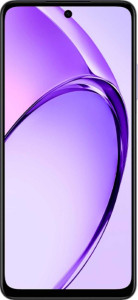
Oppo A5i
Samsung Galaxy A07 4G

Oppo A5i Samsung Galaxy A07 4G

Overview

Welcome to our in-depth spec comparison between the Oppo A5i and the Samsung Galaxy A07 4G, two mid-range Android smartphones competing for the same budget-conscious audience. While they share several fundamentals like a 90Hz LCD IPS display and fast charging support, they diverge sharply in areas like raw CPU performance, camera configuration, charging speed, and connectivity features. Read on to discover how each phone stacks up across design, display, performance, cameras, battery, and more.

Common Features

  • Both phones are water resistant.
  • Neither phone has a rugged build.
  • Neither phone can be folded.
  • Both phones feature an LCD IPS display type.
  • Both phones have a 90Hz refresh rate.
  • HDR10 support is not available on either product.
  • HDR10+ support is not available on either product.
  • Always-On Display is not available on either product.
  • Dolby Vision support is not available on either product.
  • Neither phone has a secondary screen.
  • Both phones have a touch screen.
  • Both phones have integrated LTE.
  • Both phones support 64-bit processing.
  • Both phones use big.LITTLE technology with 8 CPU threads.
  • Both phones have integrated graphics and use HMP.
  • Both phones have TrustZone security.
  • Neither phone has a dual-tone LED flash, and both have a single flash LED.
  • Both phones have a CMOS sensor.
  • Both phones support continuous autofocus when recording movies.
  • Both phones support phase-detection autofocus for photos.
  • Both phones support slow-motion video recording.
  • Both phones have a built-in HDR mode.
  • Clipboard warnings are present on both phones.
  • Location privacy options are available on both phones.
  • Camera and microphone privacy options are available on both phones.
  • Mail Privacy Protection is not available on either phone.
  • Theme customization is available on both phones.
  • App tracking blocking is available on both phones.
  • Cross-site tracking blocking is not available on either phone.
  • On-device machine learning is present on both phones.
  • Neither phone supports wireless charging.
  • Both phones support fast charging.
  • Neither phone supports reverse wireless charging.
  • Neither phone has a removable battery.
  • Both phones have a battery level indicator and a rechargeable battery.
  • Both phones have a 3.5mm audio jack.
  • Neither phone has stereo speakers.
  • LDAC support is not available on either phone.
  • aptX HD support is not available on either phone.
  • aptX Adaptive support is not available on either phone.
  • aptX Lossless support is not available on either phone.
  • Neither phone supports 5G.
  • Both phones support Wi-Fi 4 (802.11n) and Wi-Fi 5 (802.11ac).
  • Both phones have dual SIM card slots.
  • Both phones have USB Type-C with USB version 2.
  • Both phones have a fingerprint scanner.
  • Emergency SOS via satellite is not available on either phone.
  • Crash detection is not available on either phone.
  • Both phones have a video light.
  • Neither phone has a sapphire glass display.
  • Neither phone has a curved display.
  • Neither phone has an e-paper display.

Main Differences

  • Weight is 186 g on Oppo A5i and 184 g on Samsung Galaxy A07 4G.
  • Thickness is 8 mm on Oppo A5i and 7.6 mm on Samsung Galaxy A07 4G.
  • Width is 76 mm on Oppo A5i and 77.4 mm on Samsung Galaxy A07 4G.
  • Height is 165.7 mm on Oppo A5i and 164.4 mm on Samsung Galaxy A07 4G.
  • Volume is 100.75 cm³ on Oppo A5i and 96.71 cm³ on Samsung Galaxy A07 4G.
  • Ingress Protection rating is IP65 on Oppo A5i and IP54 on Samsung Galaxy A07 4G.
  • Screen size is 6.67″ on Oppo A5i and 6.7″ on Samsung Galaxy A07 4G.
  • Pixel density is 264 ppi on Oppo A5i and 262 ppi on Samsung Galaxy A07 4G.
  • Resolution is 720 x 1604 px on Oppo A5i and 720 x 1600 px on Samsung Galaxy A07 4G.
  • Damage-resistant glass is present on Oppo A5i but not available on Samsung Galaxy A07 4G.
  • Internal storage is 128GB on Oppo A5i and 256GB on Samsung Galaxy A07 4G.
  • RAM is 6GB on Oppo A5i and 8GB on Samsung Galaxy A07 4G.
  • The chipset is Qualcomm Snapdragon 6 Gen 1 on Oppo A5i and Mediatek Helio G99 on Samsung Galaxy A07 4G.
  • The GPU is Adreno 710 on Oppo A5i and Mali G57 on Samsung Galaxy A07 4G.
  • CPU speed is 4 x 2.2 & 4 x 1.8 GHz on Oppo A5i and 2 x 2.2 & 6 x 2 GHz on Samsung Galaxy A07 4G.
  • Geekbench 6 multi-core score is 2748 on Oppo A5i and 1979 on Samsung Galaxy A07 4G.
  • Geekbench 6 single-core score is 943 on Oppo A5i and 729 on Samsung Galaxy A07 4G.
  • GPU clock speed is 800 MHz on Oppo A5i and 950 MHz on Samsung Galaxy A07 4G.
  • RAM speed is 2750 MHz on Oppo A5i and 4266 MHz on Samsung Galaxy A07 4G.
  • Semiconductor size is 4 nm on Oppo A5i and 6 nm on Samsung Galaxy A07 4G.
  • DirectX version is DirectX 12 on Oppo A5i and DirectX 11 on Samsung Galaxy A07 4G.
  • Maximum memory bandwidth is 22 GB/s on Oppo A5i and 17.1 GB/s on Samsung Galaxy A07 4G.
  • Main camera resolution is 8 MP on Oppo A5i and 50 & 2 MP on Samsung Galaxy A07 4G.
  • Main camera aperture is f/2 on Oppo A5i and f/2.4 & f/1.8 on Samsung Galaxy A07 4G.
  • A multi-lens main camera is present on Samsung Galaxy A07 4G but not on Oppo A5i.
  • Front camera resolution is 5 MP on Oppo A5i and 8 MP on Samsung Galaxy A07 4G.
  • Optical image stabilization is present on Oppo A5i but not available on Samsung Galaxy A07 4G.
  • Main camera video recording is 1080p at 30 fps on Oppo A5i and 1080p at 60 fps on Samsung Galaxy A07 4G.
  • Front camera aperture is f/2.2 on Oppo A5i and f/2 on Samsung Galaxy A07 4G.
  • Android version is Android 16 on Oppo A5i and Android 15 on Samsung Galaxy A07 4G.
  • Battery capacity is 5100 mAh on Oppo A5i and 5000 mAh on Samsung Galaxy A07 4G.
  • Charging speed is 45W on Oppo A5i and 25W on Samsung Galaxy A07 4G.
  • A charger is included with Oppo A5i but not included with Samsung Galaxy A07 4G.
  • aptX support is present on Oppo A5i but not available on Samsung Galaxy A07 4G.
  • A built-in radio is present on Samsung Galaxy A07 4G but not on Oppo A5i.
  • Bluetooth version is 5.0 on Oppo A5i and 5.3 on Samsung Galaxy A07 4G.
  • External memory slot support is present on Samsung Galaxy A07 4G but not available on Oppo A5i.
  • NFC is present on Oppo A5i but not available on Samsung Galaxy A07 4G.
  • Download speed is 2900 Mbits/s on Oppo A5i and 650 Mbits/s on Samsung Galaxy A07 4G.
  • Upload speed is 900 Mbits/s on Oppo A5i and 150 Mbits/s on Samsung Galaxy A07 4G.
  • A gyroscope is present on Oppo A5i but not available on Samsung Galaxy A07 4G.
  • A compass is present on Oppo A5i but not available on Samsung Galaxy A07 4G.
Specs Comparison
Oppo A5i

Oppo A5i

Samsung Galaxy A07 4G

Samsung Galaxy A07 4G

Design:
water resistance Water resistant Water resistant
weight 186 g 184 g
thickness 8 mm 7.6 mm
width 76 mm 77.4 mm
height 165.7 mm 164.4 mm
volume 100.7456 cm³ 96.706656 cm³
Ingress Protection (IP) rating IP65 IP54
has a rugged build
can be folded

Both the Oppo A5i and the Samsung Galaxy A07 4G share a broadly similar physical footprint — nearly identical weight (186 g vs 184 g) and comparable overall dimensions — so neither will feel dramatically larger or heavier in hand. That said, the Galaxy A07 4G is measurably slimmer at 7.6 mm versus the A5i's 8 mm, and its slightly smaller volume (96.7 cm³ vs 100.7 cm³) means it will feel marginally more pocketable and refined in daily use.

Where the comparison tilts more decisively is water and dust protection. Both phones carry a water-resistant rating, but the certifications are meaningfully different: the Oppo A5i holds an IP65 rating, which guarantees full dust ingress protection and resistance to sustained water jets from any direction. The Samsung Galaxy A07 4G is rated IP54, offering only partial dust resistance and protection against water splashes — a notably weaker standard. In practice, this gap matters: the A5i can handle dusty environments and accidental water exposure more confidently, while the A07 4G is better suited to incidental splashes only.

Neither device features a rugged build or a foldable form factor, so those are non-factors here. Overall, the Oppo A5i holds a clear edge in this group due to its superior IP65 rating, which represents a meaningfully stronger durability guarantee — even if the Galaxy A07 4G counters with a slightly slimmer and more compact body.

Display:
Display type LCD, IPS LCD, IPS
screen size 6.67" 6.7"
pixel density 264 ppi 262 ppi
resolution 720 x 1604 px 720 x 1600 px
refresh rate 90Hz 90Hz
has branded damage-resistant glass
supports HDR10
supports HDR10+
Always-On Display
supports Dolby Vision
Has a secondary screen
has a touch screen

On paper, these two displays are almost indistinguishable. Both use an LCD IPS panel, both measure around 6.7 inches, both top out at 720p resolution with pixel densities within 2 ppi of each other, and both run at a 90Hz refresh rate. That 90Hz cadence is a genuine everyday perk at this price tier — scrolling and animations feel noticeably smoother than on standard 60Hz budget phones, even if the HD resolution means sharpness won't impress those accustomed to Full HD screens.

The one meaningful differentiator is screen protection: the Oppo A5i includes branded damage-resistant glass, while the Galaxy A07 4G does not. In real-world terms, this matters — scratch and crack resistance directly affects how well the display holds up over months of daily use without a screen protector. It's a small but practical advantage that can save on repair costs down the line.

Neither phone supports HDR10, Dolby Vision, or an Always-On Display, so content HDR and ambient information features are off the table for both. The verdict here is a narrow edge to the Oppo A5i, solely on the basis of its protected glass — because everything else about these displays is functionally a dead heat.

Performance:
internal storage 128GB 256GB
RAM 6GB 8GB
Chipset (SoC) name Qualcomm Snapdragon 6 Gen 1 Mediatek Helio G99
GPU name Adreno 710 Mali G57
CPU speed 4 x 2.2 & 4 x 1.8 GHz 2 x 2.2 & 6 x 2 GHz
Geekbench 6 result (multi) 2748 1979
Geekbench 6 result (single) 943 729
GPU clock speed 800 MHz 950 MHz
Has integrated LTE
RAM speed 2750 MHz 4266 MHz
semiconductor size 4 nm 6 nm
Supports 64-bit
DirectX version DirectX 12 DirectX 11
Has integrated graphics
OpenGL ES version 3.2 3.2
Uses big.LITTLE technology
CPU threads 8 threads 8 threads
Uses HMP
Has TrustZone
maximum memory bandwidth 22 GB/s 17.1 GB/s
OpenCL version 2 2
memory channels 2 2
eMMC version 5.1 5.2
maximum memory amount 12GB 12GB
Thermal Design Power (TDP) 7W 5W
DDR memory version 5 4
shading units 128 32

The chipset matchup here is a decisive one. The Oppo A5i runs on the Qualcomm Snapdragon 6 Gen 1, fabbed on a 4nm process node, while the Galaxy A07 4G uses the Mediatek Helio G99 on a 6nm node. That generational gap in manufacturing translates directly into real-world performance: the A5i scores 2748 on Geekbench 6 multi-core and 943 single-core, versus the A07 4G's 1979 and 729 respectively — a roughly 30% CPU advantage that users will feel in app loading times, multitasking responsiveness, and demanding workloads.

The GPU picture also favors the A5i in most respects. Despite the Galaxy A07 4G's Mali G57 running at a higher clock speed (950 MHz vs 800 MHz), the A5i's Adreno 710 boasts 128 shading units compared to just 32 on the Mali, and benefits from greater memory bandwidth (22 GB/s vs 17.1 GB/s) and DDR5 memory versus the A07 4G's DDR4. For gaming and GPU-accelerated tasks, these architectural advantages outweigh the raw clock speed difference. The A5i also supports DirectX 12 versus the A07 4G's DirectX 11, indicating a more modern graphics API tier.

The Samsung Galaxy A07 4G does punch back meaningfully on storage: it offers 8GB of RAM and 256GB of internal storage versus the A5i's 6GB and 128GB, which matters for heavy multitaskers and users who store a lot of media locally. Still, raw speed is the more impactful variable for day-to-day experience, and on that front the Oppo A5i holds a clear overall performance advantage — the Snapdragon 6 Gen 1 is simply a faster, more efficient chip.

Cameras:
megapixels (main camera) 8 MP 50 & 2 MP
wide aperture (main camera) 2f 2.4 & 1.8f
Has a dual-lens (or multi-lens) main camera
megapixels (front camera) 5MP 8MP
has built-in optical image stabilization
video recording (main camera) 1080 x 30 fps 1080 x 60 fps
Has a dual-tone LED flash
number of flash LEDs 1 1
has a BSI sensor
has a CMOS sensor
has continuous autofocus when recording movies
Has phase-detection autofocus for photos
supports slow-motion video recording
has a built-in HDR mode
has manual exposure
has a flash
optical zoom 0x 0x
has manual ISO
has a serial shot mode
has manual focus
has a front camera
Has laser autofocus
Shoots 360° panorama
has manual white balance
shoots raw
has touch autofocus
has manual shutter speed
can create panoramas in-camera
wide aperture (front camera) 2.2f 2f
Has timelapse function
Has a front-facing LED flash
has a dual-lens (or multi-lens) front camera
supports HDR10 recording
supports Dolby Vision recording
has a front-facing camera under the display
Has a RGB LED flash
has 3D photo/video recording capabilities

The camera gap between these two phones is significant. The Samsung Galaxy A07 4G sports a dual-lens rear system led by a 50 MP main sensor, while the Oppo A5i makes do with a single 8 MP shooter. That resolution difference is not just a number — 50 MP captures far more detail, offers greater flexibility for cropping, and tends to produce sharper images in good lighting. The secondary 2 MP lens adds depth-sensing capability for portrait-style shots. Up front, the A07 4G also leads with an 8 MP selfie camera versus the A5i's 5 MP, and its slightly wider front aperture (f/2.0 vs f/2.2) means marginally better low-light selfie performance.

The Oppo A5i does counter with one notable hardware advantage: built-in optical image stabilization (OIS), which the Galaxy A07 4G lacks entirely. OIS physically compensates for hand tremor during shots, reducing blur in low-light photos and smoothing out handheld video. The A5i also caps video at 1080p at 30fps, while the A07 4G can record at 1080p at 60fps — a smoother frame rate that produces more fluid-looking footage, particularly for action or movement.

Weighing it all up, the Galaxy A07 4G holds a clear camera advantage. Its combination of a high-resolution 50 MP main sensor, dual-lens versatility, higher-resolution front camera, and 60fps video recording outweighs the A5i's OIS benefit for most shooting scenarios. The A5i's stabilization is a useful perk, but it cannot compensate for the fundamental resolution and hardware gap on both cameras.

Operating system:
Android version Android 16 Android 15
has clipboard warnings
has location privacy options
has camera/microphone privacy options
has Mail Privacy Protection
has theme customization
can block app tracking
blocks cross-site tracking
has on-device machine learning
has notification permissions
has media picker
Can play games while they download
has dark mode
has Wi-Fi password sharing
has battery health check
has an extra dim mode
has focus modes
has dynamic theming
can offload apps
Has customizable notifications
has Live Text
has full-page screenshots
supports split screen
gets direct OS updates
has PiP
Can be used as a PC
Has sharing intents
has a child lock
Supports widgets
Is free and open source
Has offline voice recognition
has voice commands
Tracks the current position of a mobile device
is a multi-user system
has Quick Start

Across nearly every software feature listed, these two phones are in complete lockstep — both offer dark mode, dynamic theming, split-screen multitasking, picture-in-picture, on-device machine learning, customizable notifications, and a robust set of privacy controls including app tracking blocks and camera/microphone permission management. For the vast majority of users, the day-to-day software experience will feel functionally identical.

The one concrete differentiator is the Android version: the Oppo A5i ships with Android 16, while the Galaxy A07 4G launches on Android 15. A newer OS version typically brings security patches, under-the-hood optimizations, and incremental feature improvements. Importantly, neither device receives direct OS updates according to the provided data, which means the starting version matters more than it otherwise would — whichever version the phone ships with is likely to represent its ceiling for a longer period.

Given how closely matched the feature sets are, the Oppo A5i has a narrow but meaningful edge here, purely by virtue of launching on a more current Android version. It starts ahead on the security and feature timeline, and in the absence of guaranteed OS update pipelines for either phone, that head start carries real practical weight.

Battery:
battery power 5100 mAh 5000 mAh
has wireless charging
Supports fast charging
charging speed 45W 25W
has reverse wireless charging
comes with a charger
has a removable battery
has a battery level indicator
has a rechargeable battery

Battery capacity is nearly a wash: the Oppo A5i packs a 5100 mAh cell versus the Galaxy A07 4G's 5000 mAh. A 100 mAh difference is negligible in practice — users of both phones can reasonably expect similar all-day endurance under comparable usage conditions. Where things diverge more meaningfully is how fast that battery refills.

The A5i supports 45W fast charging, nearly double the Galaxy A07 4G's 25W. In real-world terms, this gap translates to significantly less time tethered to a wall — a faster charger can take a depleted battery to a usable level in a fraction of the time, which matters considerably for users with busy schedules. Compounding this advantage, the Oppo A5i includes a charger in the box, while the Galaxy A07 4G does not. For A07 4G buyers, that means an additional purchase to unlock whatever fast-charging potential the phone supports — an easy-to-overlook but real added cost.

Neither device offers wireless or reverse wireless charging, so those are non-factors. Overall, the Oppo A5i wins this category clearly: its charging speed advantage is substantial and directly impacts daily convenience, and the inclusion of an in-box charger adds immediate practical value that the Galaxy A07 4G simply cannot match.

Audio:
has a socket for a 3.5 mm audio jack
has stereo speakers
has aptX
has LDAC
has aptX HD
has aptX Adaptive
has aptX Lossless
Has a radio

Audio is a short story for both phones, and a fairly similar one. Each retains a 3.5mm headphone jack — a welcome inclusion at this price tier that lets users plug in wired headphones without an adapter — and neither offers stereo speakers or any of the premium Bluetooth audio codecs like LDAC, aptX HD, or aptX Adaptive.

Two features separate them. The Oppo A5i supports aptX, a Bluetooth codec that delivers better wireless audio quality over standard SBC when paired with a compatible headset — a modest but real improvement for those who primarily listen through Bluetooth earphones. The Galaxy A07 4G counters with a built-in FM radio, which is a niche but genuinely useful feature for users who rely on local broadcast stations, particularly in areas with limited data connectivity.

These trade-offs serve different audiences, making this category difficult to call universally. For wireless audio quality, the Oppo A5i has the edge via aptX; for users who value offline broadcast listening, the Galaxy A07 4G's FM radio is the more distinctive perk. Neither advantage is overwhelming, so this group ultimately comes down to personal use case — though on pure audio fidelity grounds, the A5i's aptX support is the more broadly applicable benefit.

Connectivity & Features:
release date June 2025 August 2025
has 5G support
Wi-Fi version Wi-Fi 4 (802.11n), Wi-Fi 5 (802.11ac) Wi-Fi 4 (802.11n), Wi-Fi 5 (802.11ac)
SIM cards 2 SIM 2 SIM
Bluetooth version 5 5.3
has an external memory slot
Has USB Type-C
USB version 2 2
has NFC
download speed 2900 MBits/s 650 MBits/s
upload speed 900 MBits/s 150 MBits/s
Has a fingerprint scanner
has emergency SOS via satellite
has crash detection
is DLNA-certified
has a gyroscope
supports ANT+
Has a heart rate monitor
has GPS
has a compass
supports Wi-Fi
Has an infrared sensor
has an accelerometer
has a cellular module
Has a barometer
has an HDMI output
Uses 3D facial recognition
Has an iris scanner
Stylus included
supports Galileo
Has motion tracking
Has optical tracking
Has a built-in projector

Several meaningful differences emerge here. The most impactful for everyday use is cellular throughput: the Oppo A5i supports download speeds up to 2900 Mbits/s and upload up to 900 Mbits/s, dwarfing the Galaxy A07 4G's 650 Mbits/s down and 150 Mbits/s up. While real-world speeds are always capped by carrier infrastructure, a higher ceiling matters for users in areas with strong LTE networks — the A5i will more consistently hit faster speeds when the network allows it. The A5i also includes NFC, enabling contactless payments and quick device pairing, while the A07 4G omits it entirely — a notable gap for users who rely on mobile wallets.

The Galaxy A07 4G fights back on two fronts. It features a slightly newer Bluetooth 5.3 versus the A5i's Bluetooth 5, offering marginally improved connection stability and efficiency — a modest but real advantage for wireless peripheral users. More practically, it includes an external memory card slot, allowing users to expand storage affordably, while the A5i offers no such option. For users who already found the A5i's 128GB internal storage limiting, this is a meaningful flexibility advantage.

On sensors, the A5i adds a gyroscope and compass that the A07 4G lacks — the gyroscope in particular matters for gaming, AR applications, and more accurate motion-based navigation. Taken together, the Oppo A5i holds the broader connectivity advantage, with its substantially higher LTE speeds, NFC support, and richer sensor suite outweighing the Galaxy A07 4G's expandable storage and newer Bluetooth revision — unless local storage flexibility is a top priority.

Miscellaneous:
has a video light
Has sapphire glass display
Has a curved display
Has an e-paper display

This category offers no differentiation whatsoever. The Oppo A5i and the Samsung Galaxy A07 4G share an identical profile across every listed miscellaneous feature: both include a video light, and neither carries a sapphire glass display, a curved screen, or an e-paper panel. This is a complete tie — no advantage can be assigned to either device based on the available data.

Comparison Summary & Verdict

After examining every spec category, it is clear that both phones serve different kinds of users. The Oppo A5i stands out with its superior Geekbench 6 performance, a more advanced 4 nm Snapdragon 6 Gen 1 chipset, significantly faster 45W charging (with a charger included), a stronger IP65 water resistance rating, NFC, a gyroscope, a compass, and branded damage-resistant glass. It also leads in download and upload speeds. The Samsung Galaxy A07 4G, on the other hand, appeals to users who need more storage and RAM (256GB and 8GB), a versatile dual-lens rear camera with a high-resolution 50 MP main sensor, 60fps video recording, expandable storage, and a built-in FM radio. Choose the Oppo A5i if raw performance, faster charging, and richer connectivity matter most to you. Opt for the Samsung Galaxy A07 4G if camera versatility and generous onboard storage are your top priorities.

Oppo A5i
Buy Oppo A5i if...

Buy the Oppo A5i if you want faster CPU performance, significantly quicker 45W charging with a charger included, stronger IP65 water resistance, NFC, and richer connectivity features like a gyroscope and compass.

Samsung Galaxy A07 4G
Buy Samsung Galaxy A07 4G if...

Buy the Samsung Galaxy A07 4G if you prioritize a high-resolution 50 MP dual-lens camera, more RAM and storage out of the box, expandable memory, and 60fps video recording capability.