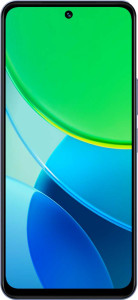
Two specs dominate this category and they cut in opposite directions. The Oppo A5x 5G, as its name signals, supports 5G connectivity with a peak download speed of 3300 Mbits/s — the Vivo Y19s Pro is a 4G-only device capped at 300 Mbits/s. That is an eleven-fold difference in theoretical throughput. In practical terms, on a 5G network the Oppo can stream higher-quality content with less buffering, download large files in a fraction of the time, and is better positioned for the ongoing global rollout of 5G infrastructure. For users in 5G-covered areas, this is a forward-looking advantage that will compound in value over the phone's lifespan.
The Vivo hits back with NFC, which the Oppo lacks entirely. NFC is the backbone of contactless payments — Google Pay, tap-to-pay at retail — as well as quick Bluetooth pairing and data transfers. For users who regularly pay with their phone, this is a daily-use feature whose absence on the Oppo is a genuine inconvenience. The Vivo also edges ahead on Bluetooth 5.2 versus 5.1, which brings marginally improved connection stability and power efficiency, though the real-world difference at this version gap is minor. All other connectivity specs — Wi-Fi versions, dual SIM, USB Type-C 2.0, expandable storage, and location sensors — are identical across both devices.
On balance, the Oppo A5x 5G holds the stronger connectivity profile for most users, as 5G future-proofs the device in a way that 4G cannot match. However, if contactless payments are a daily habit, the Vivo's NFC is a meaningful counter-argument that could be the deciding factor for the right buyer.