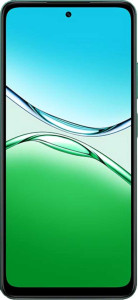
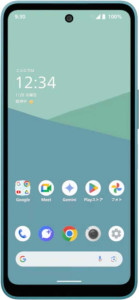
Cellular connectivity is where the Sharp Aquos Wish5 establishes a meaningful lead. It supports 5G, while the Oppo A5x is limited to 4G LTE. For users in areas with 5G coverage, this unlocks significantly faster mobile data speeds and lower latency — and as 5G networks continue to expand, the Wish5 is simply more future-proof as a long-term device. The Wish5 also edges ahead on Bluetooth, offering version 5.3 versus the A5x's 5.0, which brings incremental improvements in connection stability and energy efficiency. Its maximum download speed of 3300 Mbits/s also outpaces the A5x's 2900 Mbits/s, consistent with its 5G capability.
The Wish5 further adds NFC — a feature the A5x lacks entirely. NFC enables contactless payments, quick Bluetooth pairing, and transit card functionality, all of which have become everyday conveniences for many users. Its SIM configuration of one physical SIM plus one eSIM offers flexibility for travellers or users who want to manage two numbers without carrying a second physical card. The A5x, meanwhile, provides a traditional dual physical SIM setup, which may suit users in markets where eSIM adoption is limited.
The A5x counters with one notable exclusive: an infrared sensor, which allows it to function as a universal remote control for compatible home appliances — a niche but genuinely useful feature for some. Both phones share Wi-Fi 5 support, USB-C 2.0, expandable storage, fingerprint scanning, GPS, and Galileo. Overall, the Sharp Aquos Wish5 holds the stronger hand in this category, with 5G, NFC, and a newer Bluetooth version representing advantages that affect daily connectivity in a meaningful way.