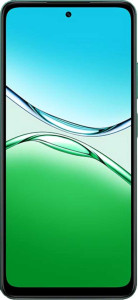
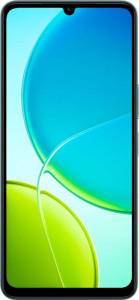
The headline difference in this category is cellular: the Vivo Y19s 5G supports 5G, while the Oppo A5x is limited to 4G LTE. For buyers in regions where 5G networks are active or expanding, this is a forward-looking advantage — 5G delivers faster real-world speeds and lower latency, and it future-proofs the device as 4G networks gradually get deprioritized. The Vivo also pairs this with a slightly newer Bluetooth 5.4 versus the Oppo's Bluetooth 5.0, which brings incremental improvements in connection stability and energy efficiency for wireless peripherals. Add NFC support on the Vivo — absent on the Oppo — and that further widens the gap, enabling contactless payments and quick device pairing that many users now consider essential.
The Oppo A5x punches back with one notable exclusive: an infrared sensor. This turns the phone into a universal remote for TVs, air conditioners, and other IR-controlled appliances — a genuinely useful feature in daily home use that the Vivo cannot replicate. Both phones otherwise share the same Wi-Fi standards, dual-SIM support, USB Type-C 2.0, expandable storage, fingerprint scanner, GPS with Galileo, and accelerometer.
On balance, the Vivo Y19s 5G takes this category. Its 5G connectivity, NFC, and newer Bluetooth version represent a broader and more impactful set of connectivity advantages than the Oppo's infrared sensor — particularly for users prioritizing network performance and mobile payments today and into the future.