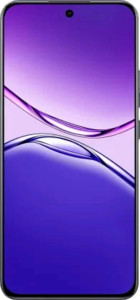
Oppo F29 Pro 5G
Oppo F31 Pro 5G

Oppo F29 Pro 5G Oppo F31 Pro 5G

Overview

Welcome to our in-depth spec comparison between the Oppo F29 Pro 5G and the Oppo F31 Pro 5G. Both phones share a strong foundation, including an IP68-rated waterproof build, a 120Hz OLED display, and the MediaTek Dimensity 7300 chipset, but they diverge in meaningful ways. Key battlegrounds include battery capacity, front camera resolution, screen size, and overall form factor, making this a fascinating comparison for anyone deciding between the two.

Common Features

  • Both phones are waterproof with an IP68 ingress protection rating.
  • Neither phone has a rugged build.
  • Neither phone can be folded.
  • Both phones feature an OLED/AMOLED display with a 120Hz refresh rate.
  • Both phones have a 240Hz touch sampling rate.
  • Both phones have a typical brightness of 600 nits.
  • Both phones feature damage-resistant glass.
  • HDR10, HDR10+, and Dolby Vision are not supported on either phone.
  • Both phones are powered by the MediaTek Dimensity 7300 chipset with a Mali G615 MC2 GPU.
  • Both phones come with 12GB of RAM and 256GB of internal storage.
  • Both phones score 2932 (multi) and 1026 (single) on Geekbench 6.
  • Both phones have a dual-lens main camera with 50 & 2 MP and optical image stabilization.
  • Both phones support 4K video recording at 30 fps.
  • Neither phone has a BSI sensor or a dual-tone LED flash.
  • Both phones run Android 15 with theme customization and app tracking blocking.
  • Both phones support 80W fast charging and come with a charger in the box.
  • Neither phone supports wireless charging or has a removable battery.
  • Both phones lack a 3.5mm audio jack but feature stereo speakers with aptX and aptX HD support.
  • Both phones support 5G, NFC, Bluetooth 5.4, USB Type-C, and dual SIM.
  • Neither phone has an external memory slot.

Main Differences

  • Weight is 180 g on Oppo F29 Pro 5G and 190 g on Oppo F31 Pro 5G.
  • Thickness is 7.6 mm on Oppo F29 Pro 5G and 8 mm on Oppo F31 Pro 5G.
  • Height is 161.5 mm on Oppo F29 Pro 5G and 158.2 mm on Oppo F31 Pro 5G.
  • Width is 74.9 mm on Oppo F29 Pro 5G and 75 mm on Oppo F31 Pro 5G.
  • Volume is 91.93 cm³ on Oppo F29 Pro 5G and 94.92 cm³ on Oppo F31 Pro 5G.
  • Screen size is 6.7″ on Oppo F29 Pro 5G and 6.57″ on Oppo F31 Pro 5G.
  • Resolution is 1080 x 2412 px on Oppo F29 Pro 5G and 1080 x 2372 px on Oppo F31 Pro 5G.
  • Pixel density is 394 ppi on Oppo F29 Pro 5G and 397 ppi on Oppo F31 Pro 5G.
  • Front camera resolution is 16MP on Oppo F29 Pro 5G and 32MP on Oppo F31 Pro 5G.
  • Battery capacity is 6000 mAh on Oppo F29 Pro 5G and 7000 mAh on Oppo F31 Pro 5G.
Specs Comparison
Oppo F29 Pro 5G

Oppo F29 Pro 5G

Oppo F31 Pro 5G

Oppo F31 Pro 5G

Design:
water resistance Waterproof Waterproof
weight 180 g 190 g
thickness 7.6 mm 8 mm
width 74.9 mm 75 mm
height 161.5 mm 158.2 mm
volume 91.93226 cm³ 94.92 cm³
Ingress Protection (IP) rating IP68 IP68
has a rugged build
can be folded

Both the Oppo F29 Pro 5G and the Oppo F31 Pro 5G share a strong foundation in terms of durability: each carries an IP68 rating, meaning both are fully waterproof and can withstand submersion beyond a casual splash. Neither is built as a rugged device, and neither folds, so in terms of protection class and form factor category, they are evenly matched.

Where the two diverge is in their physical dimensions and feel in hand. The F29 Pro is notably lighter at 180 g versus 190 g for the F31 Pro — a 10-gram difference that, while modest on paper, is genuinely perceptible during extended one-handed use or all-day carry. The F29 Pro is also slimmer at 7.6 mm thick compared to 8 mm, making it the more pocket-friendly option. The F31 Pro, meanwhile, is slightly shorter at 158.2 mm tall versus 161.5 mm, which marginally improves thumb reach to the top of the screen, though its larger overall volume (94.92 cm³ vs 91.93 cm³) means it occupies more physical space.

On balance, the Oppo F29 Pro 5G holds a clear edge in design ergonomics: it is lighter, thinner, and more compact in volume, making it the better choice for users who prioritize a slimmer, more comfortable everyday carry without sacrificing any protection rating.

Display:
Display type OLED/AMOLED OLED/AMOLED
screen size 6.7" 6.57"
pixel density 394 ppi 397 ppi
resolution 1080 x 2412 px 1080 x 2372 px
refresh rate 120Hz 120Hz
touch sampling rate 240Hz 240Hz
brightness (typical) 600 nits 600 nits
has branded damage-resistant glass
supports HDR10
supports HDR10+
supports Dolby Vision
Has a secondary screen
has a touch screen

The display story here is one of near-identical technology with a meaningful size difference. Both phones use OLED/AMOLED panels with a 120Hz refresh rate, 240Hz touch sampling, 600 nits typical brightness, and damage-resistant glass — so the core viewing and interaction experience is essentially the same. Neither supports HDR10 or Dolby Vision, which means neither has an edge for premium streaming content.

The real distinction is screen real estate. The F29 Pro offers a larger 6.7″ display compared to the F31 Pro's 6.57″, making it more comfortable for video consumption, gaming, or multitasking. Despite the size gap, both phones land at virtually the same pixel density — 394 ppi versus 397 ppi — so sharpness is indistinguishable to the naked eye. This is a result of the F29 Pro running a slightly higher resolution (1080 x 2412 vs 1080 x 2372) to compensate for its larger panel.

The verdict here favors the Oppo F29 Pro 5G for users who value screen size, as it delivers a noticeably larger canvas without any sacrifice in clarity or display quality. For those who prefer a more compact display, the F31 Pro's 6.57″ panel is the logical pick — but on pure display specs, the F29 Pro has the edge.

Performance:
internal storage 256GB 256GB
RAM 12GB 12GB
Chipset (SoC) name MediaTek Dimensity 7300 MediaTek Dimensity 7300
GPU name Mali G615 MC2 Mali G615 MC2
CPU speed 4 x 2.5 & 4 x 2 GHz 4 x 2.5 & 4 x 2 GHz
Geekbench 6 result (multi) 2932 2932
Geekbench 6 result (single) 1026 1026
GPU clock speed 1047 MHz 1047 MHz
Has integrated LTE
RAM speed 6400 MHz 6400 MHz
semiconductor size 4 nm 4 nm
Supports 64-bit
DirectX version DirectX 12 DirectX 12
Has integrated graphics
Uses big.LITTLE technology
CPU threads 8 threads 8 threads
Uses HMP
maximum memory amount 16GB 16GB
number of transistors 6200 million 6200 million
DDR memory version 5 5
supported displays 1 1

Under the hood, these two phones are not just similar — they are identical. Both the F29 Pro and F31 Pro are powered by the MediaTek Dimensity 7300 chipset, built on a 4nm process, paired with the same Mali G615 MC2 GPU, 12GB of DDR5 RAM running at 6400 MHz, and 256GB of internal storage. Every single performance specification in the provided data matches exactly.

This shared foundation translates to an identical real-world experience. The Dimensity 7300 is a capable mid-range chip — the 4nm node keeps power consumption efficient, big.LITTLE architecture with HMP support ensures smart workload distribution between the four performance cores at 2.5 GHz and four efficiency cores at 2 GHz, and the Geekbench 6 scores of 2932 multi-core and 1026 single-core confirm solidly competitive performance for everyday tasks, gaming, and multitasking. DirectX 12 support also means both are capable of handling modern GPU-accelerated workloads.

This category is an absolute tie. There is no performance-based reason to choose one over the other — any difference in day-to-day speed, gaming capability, or responsiveness between the F29 Pro and F31 Pro will be imperceptible, as the silicon driving both is completely interchangeable.

Cameras:
megapixels (main camera) 50 & 2 MP 50 & 2 MP
wide aperture (main camera) 2.4 & 1.8f 2.4 & 1.8f
Has a dual-lens (or multi-lens) main camera
megapixels (front camera) 16MP 32MP
has built-in optical image stabilization
video recording (main camera) 2160 x 30 fps 2160 x 30 fps
Has a dual-tone LED flash
number of flash LEDs 1 1
has a BSI sensor
has a CMOS sensor
has continuous autofocus when recording movies
Has phase-detection autofocus for photos
supports slow-motion video recording
has a built-in HDR mode
has manual exposure
has a flash
optical zoom 0x 0x
has manual ISO
has a serial shot mode
has manual focus
has a front camera
Has laser autofocus
Shoots 360° panorama
has manual white balance
shoots raw
has touch autofocus
has manual shutter speed
can create panoramas in-camera
wide aperture (front camera) 2.4f 2.4f
Has timelapse function
Has a front-facing LED flash
has a dual-lens (or multi-lens) front camera
supports HDR10 recording
supports Dolby Vision recording
has a front-facing camera under the display
Has a RGB LED flash
has 3D photo/video recording capabilities

The rear camera systems on these two phones are a carbon copy of each other: a 50 & 2 MP dual-lens setup with OIS, phase-detection autofocus, 4K at 30fps video recording, and a solid manual controls suite including ISO, exposure, focus, and white balance. For everyday photography and video, expect an identical experience from both.

The one place they diverge is the selfie camera, and it is a meaningful gap. The F31 Pro steps up to a 32MP front camera versus the F29 Pro's 16MP — double the resolution. In practice, higher megapixel count on a front camera means more detail in selfies, greater flexibility to crop without losing sharpness, and generally improved output in well-lit conditions. Both share the same f/2.4 front aperture, so low-light selfie performance is theoretically on par, but the F31 Pro has a clear resolution advantage for daytime and portrait-style shots.

Overall, the Oppo F31 Pro 5G wins the camera category on the strength of its superior 32MP selfie shooter. For users who prioritize front-facing photography — content creators, video callers, or selfie enthusiasts — the F31 Pro is the more capable choice. Those indifferent to selfie quality will find no reason to prefer one over the other.

Operating system:
Android version Android 15 Android 15
has clipboard warnings
has location privacy options
has camera/microphone privacy options
has Mail Privacy Protection
has theme customization
can block app tracking
blocks cross-site tracking
has on-device machine learning
has notification permissions
has media picker
Can play games while they download
has dark mode
has Wi-Fi password sharing
has battery health check
has an extra dim mode
has focus modes
has dynamic theming
can offload apps
Has customizable notifications
has Live Text
has full-page screenshots
supports split screen
gets direct OS updates
has PiP
Can be used as a PC
Has sharing intents
has a child lock
Supports widgets
Is free and open source
Has offline voice recognition
has voice commands
Tracks the current position of a mobile device
is a multi-user system
has Quick Start

From a software standpoint, the F29 Pro and F31 Pro are once again indistinguishable. Both ship with Android 15 and share an identical feature set across every single specification provided — from privacy controls like location and camera/microphone permissions, to usability features like split-screen, Picture-in-Picture, dynamic theming, and offline voice recognition.

A few shared traits are worth highlighting for prospective buyers. Neither phone receives direct OS updates from Google, meaning updates are routed through Oppo's own update pipeline — which can introduce delays compared to stock Android devices. On the privacy front, both offer solid controls including app tracking blocks and clipboard warnings, though neither supports cross-site tracking protection or Wi-Fi password sharing. The inclusion of on-device machine learning and Live Text adds practical day-to-day utility for tasks like scanning text from images or running smart features without a data connection.

This category is a complete tie — not a single software feature differentiates the two phones based on the provided data. Whichever device a buyer chooses, they will have an identical Android experience, identical privacy tooling, and identical feature availability out of the box.

Battery:
battery power 6000 mAh 7000 mAh
has wireless charging
Supports fast charging
charging speed 80W 80W
comes with a charger
has a removable battery
has a battery level indicator
has a rechargeable battery

Battery capacity is where these two phones part ways most decisively. The F31 Pro packs a substantial 7000 mAh cell compared to the F29 Pro's already generous 6000 mAh — a 1000 mAh difference that represents a roughly 17% larger reserve. In practical terms, that gap translates to meaningfully longer screen-on time, more headroom for power users, and greater confidence when traveling or going through long days without access to a charger.

Charging speed is identical across both devices at 80W, and both ship with a charger in the box. This means that while the F31 Pro has more capacity to replenish, it does not take proportionally longer to top up — 80W is a fast enough rate that the larger battery remains a pure advantage rather than a trade-off. Neither phone supports wireless charging, so that is a non-factor in the comparison.

The Oppo F31 Pro 5G wins the battery category outright. A 7000 mAh cell at the same charging speed as its sibling is an unambiguous advantage — users who prioritize longevity, heavy daily use, or simply fewer top-ups will find the F31 Pro the stronger choice in this regard.

Audio:
has a socket for a 3.5 mm audio jack
has stereo speakers
has aptX
has aptX HD
has aptX Adaptive
has aptX Lossless
Has a radio

Audio is another category where the F29 Pro and F31 Pro are spec-for-spec identical. Both feature stereo speakers for spatial sound during media playback, support aptX and aptX HD for higher-quality wireless audio over compatible Bluetooth headphones, and omit a 3.5mm headphone jack — meaning wired listening requires an adapter or USB-C headphones on either device.

The shared aptX HD support is worth noting for wireless audio enthusiasts: it enables lossless-grade Bluetooth streaming at up to 576 kbps, which is a step above standard aptX and delivers noticeably richer audio when paired with compatible headphones. That said, neither phone supports the newer aptX Adaptive or aptX Lossless codecs, so the ceiling for wireless audio quality is the same on both.

This category is a straight tie. Every audio capability and limitation is shared equally between the two devices, and no meaningful distinction can be drawn from the provided specs. The choice between them will have to rest on the advantages identified in other categories.

Connectivity & Features:
release date March 2025 September 2025
has 5G support
Wi-Fi version Wi-Fi 4 (802.11n), Wi-Fi 6 (802.11ax), Wi-Fi 5 (802.11ac) Wi-Fi 4 (802.11n), Wi-Fi 5 (802.11ac), Wi-Fi 6 (802.11ax)
SIM cards 2 SIM 2 SIM
Bluetooth version 5.4 5.4
has an external memory slot
Has USB Type-C
USB version 2 2
has NFC
download speed 3270 MBits/s 3270 MBits/s
upload speed 3270 MBits/s 3270 MBits/s
Has a fingerprint scanner
has emergency SOS via satellite
has crash detection
is DLNA-certified
has a gyroscope
supports ANT+
Has a heart rate monitor
has GPS
has a compass
supports Wi-Fi
Has an infrared sensor
has an accelerometer
has a cellular module
Has a barometer
has an HDMI output
Uses 3D facial recognition
Has an iris scanner
Stylus included
supports Galileo
Has motion tracking
Has optical tracking
Has a built-in projector

Connectivity is yet another area of near-total parity between these two devices. Both support 5G, Wi-Fi 6 (802.11ax), Bluetooth 5.4, and NFC — a strong modern stack that covers fast cellular, low-latency wireless networking, and contactless payments or device pairing. The Wi-Fi listings differ only in the order the standards are presented; the supported standards themselves are identical across both phones.

On the sensors and features side, the picture is equally uniform: both include GPS with Galileo support, a gyroscope, accelerometer, compass, infrared sensor, and a fingerprint scanner. The infrared sensor is a practical bonus for using either phone as a universal remote. Notably, neither supports external memory expansion, and both are limited to USB 2.0 speeds over their Type-C ports — a limitation worth flagging for users who transfer large files frequently, as USB 2.0 tops out at 480 Mbps, far below what modern USB 3.x connections offer.

This category is a complete tie. Every connectivity standard, sensor, and feature is shared identically between the F29 Pro and the F31 Pro. Neither gains any practical advantage in how it connects to networks, peripherals, or the world around it.

Miscellaneous:
has a video light
Has sapphire glass display
Has a curved display
Has an e-paper display

The miscellaneous specs provided for these two phones are entirely identical — both feature a video light, and neither has a sapphire glass display, curved display, or e-paper display. With so few data points and no differentiation between the two, there is limited analytical ground to cover here.

The shared absence of a curved display is arguably the most practically relevant note: flat panels are generally easier to use with screen protectors and less prone to accidental edge touches, which many users prefer. The lack of sapphire glass on both is unsurprising at this price tier, as sapphire remains a premium material largely reserved for flagship and ultra-durable devices.

This category is a complete tie. The provided specs reveal no distinguishing characteristics between the F29 Pro and the F31 Pro, and neither holds any advantage over the other based on this data.

Comparison Summary & Verdict

After a thorough look at the specs, both phones are clearly strong contenders built on the same core platform, but they cater to slightly different priorities. The Oppo F29 Pro 5G stands out with its lighter 180g frame, slimmer 7.6mm profile, and larger 6.7-inch display, making it the better pick for users who value a comfortable, premium in-hand feel and an immersive screen. The Oppo F31 Pro 5G, on the other hand, pulls ahead with its 7000 mAh battery and 32MP front camera, making it the stronger choice for power users and selfie enthusiasts who need longer endurance and sharper video calls. Both share the same fast 80W charging, identical performance hardware, and IP68 water resistance, so neither sacrifices the essentials.

Oppo F29 Pro 5G
Buy Oppo F29 Pro 5G if...

Buy the Oppo F29 Pro 5G if you prefer a lighter, slimmer phone with a larger 6.7-inch display and do not need the absolute maximum battery capacity.

Oppo F31 Pro 5G
Buy Oppo F31 Pro 5G if...

Buy the Oppo F31 Pro 5G if long battery life and a higher-resolution 32MP front camera are your top priorities.