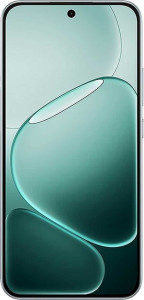
Oppo F31 5G
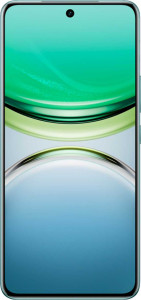
Vivo T4 5G

Oppo F31 5G Vivo T4 5G

Overview

Choosing between the Oppo F31 5G and the Vivo T4 5G is no easy task, as both mid-range 5G contenders bring compelling strengths to the table. This comparison dives into the key battlegrounds that matter most to everyday users, from display brightness and raw performance to battery capacity, audio quality, and connectivity features. Whether you prioritize a more compact, feature-rich device or a powerhouse chipset with a larger screen, read on to see how these two phones truly stack up against each other.

Common Features

  • Neither the Oppo F31 5G nor the Vivo T4 5G has a rugged build.
  • Neither the Oppo F31 5G nor the Vivo T4 5G can be folded.
  • Both phones feature an OLED/AMOLED display type.
  • Both phones support a 120Hz refresh rate.
  • Both phones have branded damage-resistant glass.
  • HDR10 support is not available on either phone.
  • HDR10+ support is not available on either phone.
  • Dolby Vision support is not available on either phone.
  • Neither phone has a secondary screen.
  • Both phones have a touch screen.
  • Both phones come with 256GB of internal storage.
  • Both phones run Android 15.
  • Both phones have a 50 & 2 MP main camera.
  • Both phones share the same main camera apertures of 2.4f and 1.8f.
  • Both phones have a dual-lens main camera.
  • Both phones support 4K video recording at 30fps on the main camera.
  • Both phones support fast charging.
  • Neither phone has wireless charging.
  • Neither phone has a removable battery.
  • Neither phone has a 3.5mm audio jack.
  • Both phones support 5G connectivity.
  • Both phones have dual SIM card slots.
  • Both phones have a USB Type-C port with USB version 2.
  • Both phones have a fingerprint scanner.
  • Neither phone has emergency SOS via satellite.
  • Neither phone has crash detection.
  • Both phones have a video light.
  • Neither phone has a curved display.

Main Differences

  • Water resistance is rated as Waterproof (IP68) on the Oppo F31 5G and Water resistant (IP65) on the Vivo T4 5G.
  • Weight is 185g on the Oppo F31 5G and 199g on the Vivo T4 5G.
  • Thickness is 8mm on the Oppo F31 5G and 7.9mm on the Vivo T4 5G.
  • Width is 75mm on the Oppo F31 5G and 76.4mm on the Vivo T4 5G.
  • Height is 158.2mm on the Oppo F31 5G and 163.4mm on the Vivo T4 5G.
  • Screen size is 6.57″ on the Oppo F31 5G and 6.77″ on the Vivo T4 5G.
  • Pixel density is 397 ppi on the Oppo F31 5G and 388 ppi on the Vivo T4 5G.
  • Display resolution is 1080x2372px on the Oppo F31 5G and 1080x2392px on the Vivo T4 5G.
  • Typical brightness is 600 nits on the Oppo F31 5G and 1300 nits on the Vivo T4 5G.
  • RAM is 8GB on the Oppo F31 5G and 12GB on the Vivo T4 5G.
  • The chipset is MediaTek Dimensity 6300 on the Oppo F31 5G and Qualcomm Snapdragon 7s Gen 3 on the Vivo T4 5G.
  • The GPU is Arm Mali-G57 MC2 on the Oppo F31 5G and Adreno 710 on the Vivo T4 5G.
  • Geekbench 6 multi-core score is 2012 on the Oppo F31 5G and 3239 on the Vivo T4 5G.
  • Geekbench 6 single-core score is 782 on the Oppo F31 5G and 1162 on the Vivo T4 5G.
  • Semiconductor size is 6nm on the Oppo F31 5G and 4nm on the Vivo T4 5G.
  • RAM speed is 2133 MHz on the Oppo F31 5G and 3200 MHz on the Vivo T4 5G.
  • DDR memory version is DDR4 on the Oppo F31 5G and DDR5 on the Vivo T4 5G.
  • Maximum memory bandwidth is 17.07 GB/s on the Oppo F31 5G and 25.6 GB/s on the Vivo T4 5G.
  • Front camera resolution is 16MP on the Oppo F31 5G and 32MP on the Vivo T4 5G.
  • Optical image stabilization is present on the Vivo T4 5G but not available on the Oppo F31 5G.
  • Front camera aperture is 2.4f on the Oppo F31 5G and 2f on the Vivo T4 5G.
  • Battery capacity is 7000 mAh on the Oppo F31 5G and 7300 mAh on the Vivo T4 5G.
  • Charging speed is 80W on the Oppo F31 5G and 90W on the Vivo T4 5G.
  • Stereo speakers are present on the Oppo F31 5G but not available on the Vivo T4 5G.
  • aptX support is present on the Oppo F31 5G but not available on the Vivo T4 5G.
  • LDAC support is present on the Oppo F31 5G but not available on the Vivo T4 5G.
  • aptX HD support is present on the Oppo F31 5G but not available on the Vivo T4 5G.
  • Wi-Fi support includes Wi-Fi 4 and Wi-Fi 5 on the Oppo F31 5G, while the Vivo T4 5G additionally supports Wi-Fi 6 (802.11ax).
  • Bluetooth version is 5.4 on the Oppo F31 5G and 5.2 on the Vivo T4 5G.
  • NFC is present on the Oppo F31 5G but not available on the Vivo T4 5G.
  • Download speed is 3300 Mbits/s on the Oppo F31 5G and 2900 Mbits/s on the Vivo T4 5G.
  • A gyroscope is present on the Vivo T4 5G but not available on the Oppo F31 5G.
  • An infrared sensor is present on the Vivo T4 5G but not available on the Oppo F31 5G.
Specs Comparison
Oppo F31 5G

Oppo F31 5G

Vivo T4 5G

Vivo T4 5G

Design:
water resistance Waterproof Water resistant
weight 185 g 199 g
thickness 8 mm 7.9 mm
width 75 mm 76.4 mm
height 158.2 mm 163.4 mm
volume 94.92 cm³ 98.621704 cm³
Ingress Protection (IP) rating IP68 IP65
has a rugged build
can be folded

Both the Oppo F31 5G and Vivo T4 5G share a non-rugged, non-foldable form factor, but they diverge meaningfully on water resistance and physical dimensions. The Oppo F31 5G carries an IP68 rating, meaning it can withstand submersion in water — a significant real-world advantage for users who are near pools, rain, or accidental spills. The Vivo T4 5G, by contrast, is rated IP65, which covers protection against water jets but not immersion. For most everyday scenarios this difference is manageable, but for users who want genuine waterproofing, the Oppo has a clear edge.

On dimensions, the Vivo T4 5G is noticeably taller (163.4 mm vs 158.2 mm) and slightly wider (76.4 mm vs 75 mm), making it a larger device overall — reflected in its greater volume of roughly 98.6 cm³ compared to the Oppo's 94.9 cm³. The Vivo is also heavier at 199 g versus the Oppo's 185 g, a 14-gram difference that is perceptible during extended one-handed use. Thickness is nearly identical at 7.9 mm vs 8 mm, so neither phone feels meaningfully slimmer in hand.

Overall, the Oppo F31 5G holds a design advantage: it is more compact, lighter, and offers superior water protection. The Vivo T4 5G's larger frame may appeal to users who prefer a bigger display footprint, but it concedes ground on both portability and durability credentials.

Display:
Display type OLED/AMOLED OLED/AMOLED
screen size 6.57" 6.77"
pixel density 397 ppi 388 ppi
resolution 1080 x 2372 px 1080 x 2392 px
refresh rate 120Hz 120Hz
brightness (typical) 600 nits 1300 nits
has branded damage-resistant glass
supports HDR10
supports HDR10+
supports Dolby Vision
Has a secondary screen
has a touch screen

Both phones share a strong display foundation — OLED/AMOLED panels, a 120Hz refresh rate, branded damage-resistant glass, and identical 1080p-class resolutions. In practice, this means both deliver punchy colors, deep blacks, and smooth scrolling. The differences, however, emerge in size and brightness, and one of them is substantial.

The Vivo T4 5G features a larger 6.77″ screen versus the Oppo F31 5G's 6.57″, giving it more real estate for media and multitasking. Pixel density is nearly identical (388 ppi vs 397 ppi), so sharpness is indistinguishable in everyday use — neither has a meaningful edge there. Where the Vivo pulls ahead decisively is brightness: its 1300 nits typical brightness more than doubles the Oppo's 600 nits. This is not a marginal gap — at 600 nits, outdoor visibility in direct sunlight can become a genuine struggle, while 1300 nits ensures the screen remains comfortably legible even in harsh lighting conditions.

The Vivo T4 5G holds a clear display advantage. The larger screen and dramatically higher brightness make it the stronger choice for outdoor users or anyone who consumes a lot of video content. The Oppo F31 5G's display is by no means poor, but the brightness deficit is a meaningful real-world limitation that tips the scales decisively in the Vivo's favor for this category.

Performance:
internal storage 256GB 256GB
RAM 8GB 12GB
Chipset (SoC) name MediaTek Dimensity 6300 Qualcomm Snapdragon 7s Gen 3
GPU name Arm Mali-G57 MC2 Adreno 710
CPU speed 2 x 2.4 & 6 x 2 GHz 1 x 2.5 & 3 x 2.4 & 4 x 1.8 GHz
Geekbench 6 result (multi) 2012 3239
Geekbench 6 result (single) 782 1162
GPU clock speed 950 MHz 1050 MHz
Has integrated LTE
RAM speed 2133 MHz 3200 MHz
semiconductor size 6 nm 4 nm
Supports 64-bit
DirectX version DirectX 12 DirectX 12
Has integrated graphics
Uses big.LITTLE technology
CPU threads 8 threads 8 threads
Uses HMP
maximum memory bandwidth 17.07 GB/s 25.6 GB/s
maximum memory amount 12GB 16GB
uses multithreading
DDR memory version 4 5

The silicon gap between these two phones is significant. The Oppo F31 5G runs on the MediaTek Dimensity 6300, built on a 6nm process, while the Vivo T4 5G is powered by the Qualcomm Snapdragon 7s Gen 3 on a more advanced 4nm node. A smaller process size generally means greater power efficiency and thermal headroom — the Vivo's chip can sustain higher performance for longer without throttling under load.

The benchmark numbers reinforce this gap decisively. The Vivo T4 5G scores 3239 multi-core and 1162 single-core on Geekbench 6, compared to the Oppo's 2012 multi-core and 782 single-core — roughly a 60% lead in multi-threaded workloads and a 49% lead in single-threaded tasks. Single-core performance in particular governs everyday responsiveness — app launches, UI snappiness, and general fluidity — so this is not an abstract advantage. The Vivo also ships with 12GB of DDR5 RAM running at 3200 MHz against the Oppo's 8GB of DDR4 at 2133 MHz, and its memory bandwidth of 25.6 GB/s versus 17.07 GB/s means data moves to the processor faster, further supporting heavier multitasking and gaming workloads.

Across every meaningful performance dimension — CPU speed, GPU clock, RAM capacity, memory generation, and benchmark results — the Vivo T4 5G holds a commanding and unambiguous advantage. For users who game, multitask heavily, or simply want a phone that stays fast over its lifetime, the Vivo is the clear choice in this category.

Cameras:
megapixels (main camera) 50 & 2 MP 50 & 2 MP
wide aperture (main camera) 2.4 & 1.8f 2.4 & 1.8f
Has a dual-lens (or multi-lens) main camera
megapixels (front camera) 16MP 32MP
has built-in optical image stabilization
video recording (main camera) 2160 x 30 fps 2160 x 30 fps
Has a dual-tone LED flash
number of flash LEDs 1 1
has a BSI sensor
has a CMOS sensor
has continuous autofocus when recording movies
Has phase-detection autofocus for photos
supports slow-motion video recording
has a built-in HDR mode
has manual exposure
has a flash
optical zoom 0x 0x
has manual ISO
has a serial shot mode
has manual focus
has a front camera
Has laser autofocus
Shoots 360° panorama
has manual white balance
shoots raw
has touch autofocus
has manual shutter speed
can create panoramas in-camera
wide aperture (front camera) 2.4f 2f
Has timelapse function
Has a front-facing LED flash
has a dual-lens (or multi-lens) front camera
supports HDR10 recording
supports Dolby Vision recording
has a front-facing camera under the display
Has a RGB LED flash
has 3D photo/video recording capabilities

The rear camera systems on these two phones are nearly carbon copies of each other — identical 50 MP + 2 MP dual-lens setups, matching apertures, the same 4K/30fps video ceiling, and an equivalent feature set covering phase-detection autofocus, slow-motion, HDR, and manual controls. For primary photography, users can expect a comparable experience from both devices.

The differentiators emerge when you look beyond the main sensor. The Vivo T4 5G includes optical image stabilization (OIS), which the Oppo F31 5G lacks entirely. OIS is particularly impactful for video recording and low-light photography — it physically compensates for hand tremor, producing smoother footage and sharper handheld shots in challenging conditions. This is a meaningful real-world advantage that cannot be replicated by software stabilization alone. On the selfie side, the Vivo also pulls ahead with a 32 MP front camera versus the Oppo's 16 MP, and a wider f/2.0 aperture compared to f/2.4 — meaning more detail and better light intake for self-portraits and video calls.

The Vivo T4 5G takes a clear edge in this category. The rear camera parity is quickly overshadowed by OIS — a feature that elevates everyday video and low-light performance — and a substantially stronger front camera. For users who prioritize video quality or selfies, the Vivo is the more capable shooter.

Operating system:
Android version Android 15 Android 15
has clipboard warnings
has location privacy options
has camera/microphone privacy options
has Mail Privacy Protection
has theme customization
can block app tracking
blocks cross-site tracking
has on-device machine learning
has notification permissions
has media picker
Can play games while they download
has dark mode
has Wi-Fi password sharing
has battery health check
has an extra dim mode
has focus modes
has dynamic theming
can offload apps
Has customizable notifications
has Live Text
has full-page screenshots
supports split screen
gets direct OS updates
has PiP
Can be used as a PC
Has sharing intents
has a child lock
Supports widgets
Is free and open source
Has offline voice recognition
has voice commands
Tracks the current position of a mobile device
is a multi-user system
has Quick Start

This is a rare instance of complete parity. Both the Oppo F31 5G and Vivo T4 5G run Android 15 and share an identical feature set across every single tracked specification in this category — from privacy controls like location and camera/microphone permissions, to usability features like dark mode, dynamic theming, split-screen, and Picture-in-Picture. Neither receives direct OS updates, and neither supports features like cross-site tracking blocking, Wi-Fi password sharing, focus modes, or PC mode.

For the user, this means the software experience out of the box is governed not by this spec layer, but by the custom Android skins each manufacturer lays on top — which fall outside the scope of the provided data. The shared Android 15 base ensures both phones benefit from the same generation of privacy architecture, on-device machine learning capabilities, and system-level features like full-page screenshots, offline voice recognition, and multi-user support.

Based strictly on the provided specifications, this category is a complete tie. There is no differentiator here that favors either device — every tracked feature is identical. The operating system should not factor into a decision between these two phones.

Battery:
battery power 7000 mAh 7300 mAh
has wireless charging
Supports fast charging
charging speed 80W 90W
has a removable battery
has a battery level indicator
has a rechargeable battery

Both phones arrive with generously sized batteries that sit well above the mainstream midrange norm — the Oppo F31 5G packs a 7000 mAh cell while the Vivo T4 5G edges ahead with 7300 mAh. In practice, the 300 mAh difference is modest and unlikely to translate into a perceptibly longer day for most users; both phones are firmly in multi-day battery territory under typical usage patterns.

Where the two separate slightly is charging speed. The Vivo supports 90W fast charging against the Oppo's 80W, meaning the Vivo's larger battery will still replenish faster in absolute terms. The gap is not dramatic — at these wattages, both phones are capable of rapid top-ups — but the Vivo's combination of a bigger cell and faster charging gives it a marginal but real advantage for users who are frequently time-constrained. Neither phone offers wireless charging, and both have sealed, non-removable batteries.

The Vivo T4 5G holds a narrow edge in this category — larger capacity and faster charging, even if neither gap is individually decisive. For pure endurance and replenishment speed, the Vivo is the slightly stronger package, though Oppo F31 5G users are unlikely to feel meaningfully short-changed given the size of both batteries.

Audio:
has a socket for a 3.5 mm audio jack
has stereo speakers
has aptX
has LDAC
has aptX HD
has aptX Adaptive
has aptX Lossless
Has a radio

Audio is where the Oppo F31 5G pulls its most decisive advantage of this entire comparison. It features stereo speakers — a fundamental hardware difference that delivers wider soundstage, better channel separation, and noticeably more immersive audio for media consumption and gaming. The Vivo T4 5G, by contrast, offers only a mono speaker setup, which sounds comparatively narrow and less engaging at any volume level.

The gap widens further over Bluetooth. The Oppo supports aptX, aptX HD, and LDAC — three high-resolution wireless audio codecs that allow compatible headphones to receive significantly more audio data than standard Bluetooth, preserving detail and dynamic range closer to wired quality. The Vivo T4 5G supports none of these codecs, meaning wireless audio is limited to lower-fidelity SBC or AAC transmission regardless of how premium the connected headphones are. For users who invest in quality wireless audio gear, this is a meaningful limitation. Neither phone includes a 3.5mm headphone jack or FM radio.

The Oppo F31 5G wins this category convincingly. Stereo speakers alone would be enough to tip the scales, but the addition of LDAC and aptX HD support makes it the substantially stronger audio device — both for speaker listening and for users who prioritize high-quality wireless headphone performance.

Connectivity & Features:
release date September 2025 April 2025
has 5G support
Wi-Fi version Wi-Fi 4 (802.11n), Wi-Fi 5 (802.11ac) Wi-Fi 4 (802.11n), Wi-Fi 5 (802.11ac), Wi-Fi 6 (802.11ax)
SIM cards 2 SIM 2 SIM
Bluetooth version 5.4 5.2
has an external memory slot
Has USB Type-C
USB version 2 2
has NFC
download speed 3300 MBits/s 2900 MBits/s
Has a fingerprint scanner
has emergency SOS via satellite
has crash detection
is DLNA-certified
has a gyroscope
supports ANT+
Has a heart rate monitor
has GPS
has a compass
supports Wi-Fi
Has an infrared sensor
has an accelerometer
has a cellular module
Has a barometer
has an HDMI output
Uses 3D facial recognition
Has an iris scanner
Stylus included
supports Galileo
Has motion tracking
Has optical tracking
Has a built-in projector

Connectivity tells a split story here, with each phone holding meaningful advantages in different areas. The Vivo T4 5G supports Wi-Fi 6 (802.11ax) — a standard the Oppo F31 5G lacks — which delivers faster throughput, lower latency, and better performance in congested network environments like offices or apartments with many connected devices. The Oppo counters with a higher peak cellular download speed of 3300 Mbits/s versus the Vivo's 2900 Mbits/s, and a newer Bluetooth 5.4 versus the Vivo's 5.2, which can offer marginal improvements in connection stability and energy efficiency.

The most consequential single difference in this category, however, is NFC. The Oppo F31 5G includes it; the Vivo T4 5G does not. NFC is the backbone of contactless payments, quick Bluetooth pairing, and transit card integration — for many users, its absence on the Vivo is a daily-use limitation that is hard to overlook. On the sensor side, the Vivo reclaims some ground with a gyroscope and an infrared sensor, neither of which the Oppo carries. The gyroscope enables motion-based gaming and more accurate navigation, while the IR blaster lets the Vivo function as a universal remote for TVs and appliances.

This category is genuinely split, but the Oppo F31 5G holds the narrower overall edge — NFC is a broadly impactful everyday feature that affects more users more often than a gyroscope or IR blaster. That said, users who prioritize Wi-Fi 6 performance or motion-sensitive applications will find the Vivo T4 5G better suited to their needs.

Miscellaneous:
has a video light
Has sapphire glass display
Has a curved display
Has an e-paper display

The miscellaneous specifications for these two phones are identical across every tracked data point. Both feature a video light, and neither offers a sapphire glass display, a curved display, or an e-paper display — premium or niche hardware features that remain uncommon at this segment of the market.

This category is a complete tie. There is no differentiator present in the provided data that gives either the Oppo F31 5G or the Vivo T4 5G any advantage, and neither spec here is significant enough to influence a purchasing decision on its own.

Comparison Summary & Verdict

After a thorough comparison, the Oppo F31 5G and Vivo T4 5G each carve out a distinct identity. The Oppo F31 5G stands out with its superior IP68 waterproof rating, lighter 185g build, stereo speakers, LDAC and aptX HD audio support, and NFC — making it an excellent pick for users who value a well-rounded multimedia and connectivity experience in a more compact form. On the other hand, the Vivo T4 5G pulls ahead with its more powerful Snapdragon 7s Gen 3 chipset, 12GB of RAM, significantly brighter 1300-nit display, optical image stabilization, 32MP front camera, Wi-Fi 6 support, and a gyroscope — making it the stronger choice for performance-focused users and content creators who want sharper selfies and smoother gaming.

Oppo F31 5G
Buy Oppo F31 5G if...

Buy the Oppo F31 5G if you want a lighter phone with an IP68 waterproof rating, stereo speakers with premium audio codec support (LDAC, aptX HD), and NFC for contactless payments.

Vivo T4 5G
Buy Vivo T4 5G if...

Buy the Vivo T4 5G if you prioritize faster performance with the Snapdragon 7s Gen 3 chipset, a significantly brighter display, a higher-resolution 32MP front camera, and Wi-Fi 6 support.