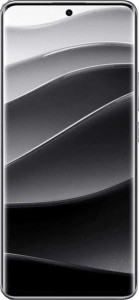
Oppo F31 5G
Xiaomi Redmi Note 14 Pro 5G (Global)

Oppo F31 5G Xiaomi Redmi Note 14 Pro 5G (Global)

Overview

Welcome to our in-depth spec comparison between the Oppo F31 5G and the Xiaomi Redmi Note 14 Pro 5G (Global) — two mid-range 5G contenders that share a strong foundation yet diverge sharply in key areas. Both phones arrive with OLED displays, IP68 waterproofing, and fast charging, but the battlegrounds of display quality, raw performance, and battery capacity reveal very different priorities from each manufacturer. Read on to see which device is the right fit for you.

Common Features

  • Both phones are waterproof with an IP68 ingress protection rating.
  • Neither phone has a rugged build.
  • Neither phone can be folded.
  • Both phones feature an OLED/AMOLED display.
  • Both phones support a 120Hz refresh rate.
  • Both phones have branded damage-resistant glass on the display.
  • Neither phone has a secondary screen.
  • Both phones have a touchscreen.
  • Both phones have integrated LTE support.
  • Both phones support 64-bit processing.
  • Both phones use DirectX 12.
  • Both phones have integrated graphics.
  • Both phones use big.LITTLE technology with 8 CPU threads and HMP support.
  • Both phones feature a dual-lens or multi-lens main camera.
  • Both phones support 4K video recording at 30fps on the main camera.
  • Both phones have a CMOS sensor and phase-detection autofocus.
  • Both phones support continuous autofocus when recording video.
  • Neither phone has a dual-tone LED flash, with each having a single LED flash.
  • Both phones have clipboard warnings and location privacy options.
  • Both phones support camera and microphone privacy options, theme customization, blocking app tracking, and on-device machine learning.
  • Neither phone supports Mail Privacy Protection or cross-site tracking blocking.
  • Both phones support fast charging and come with a charger included.
  • Neither phone has wireless charging or a removable battery.
  • Both phones have a battery level indicator and a rechargeable battery.
  • Neither phone has a 3.5mm audio jack.
  • Both phones have stereo speakers.
  • Both phones support aptX and LDAC audio codecs.
  • Neither phone supports aptX Adaptive, aptX Lossless, or an FM radio.
  • Both phones support 5G connectivity with dual SIM capability.
  • Both phones feature Bluetooth 5.4.
  • Neither phone has an external memory slot.
  • Both phones have USB Type-C with USB 2.0.
  • Both phones have NFC and a fingerprint scanner.
  • Both phones have a video light.
  • Neither phone has a sapphire glass display or an e-paper display.

Main Differences

  • Weight is 185g on Oppo F31 5G and 190g on Xiaomi Redmi Note 14 Pro 5G (Global).
  • Thickness is 8mm on Oppo F31 5G and 8.4mm on Xiaomi Redmi Note 14 Pro 5G (Global).
  • Width is 75mm on Oppo F31 5G and 74.4mm on Xiaomi Redmi Note 14 Pro 5G (Global).
  • Height is 158.2mm on Oppo F31 5G and 162.3mm on Xiaomi Redmi Note 14 Pro 5G (Global).
  • Screen size is 6.57″ on Oppo F31 5G and 6.67″ on Xiaomi Redmi Note 14 Pro 5G (Global).
  • Pixel density is 397 ppi on Oppo F31 5G and 446 ppi on Xiaomi Redmi Note 14 Pro 5G (Global).
  • Resolution is 1080 x 2372 px on Oppo F31 5G and 1220 x 2712 px on Xiaomi Redmi Note 14 Pro 5G (Global).
  • Touch sampling rate is 240Hz on Oppo F31 5G and 2560Hz on Xiaomi Redmi Note 14 Pro 5G (Global).
  • Typical brightness is 600 nits on Oppo F31 5G and 3000 nits on Xiaomi Redmi Note 14 Pro 5G (Global).
  • HDR10, HDR10+, and Dolby Vision support are present on Xiaomi Redmi Note 14 Pro 5G (Global) but not available on Oppo F31 5G.
  • Internal storage is 256GB on Oppo F31 5G and 512GB on Xiaomi Redmi Note 14 Pro 5G (Global).
  • RAM is 8GB on Oppo F31 5G and 12GB on Xiaomi Redmi Note 14 Pro 5G (Global).
  • The chipset is MediaTek Dimensity 6300 on Oppo F31 5G and MediaTek Dimensity 7300 on Xiaomi Redmi Note 14 Pro 5G (Global).
  • Geekbench 6 multi-core score is 2012 on Oppo F31 5G and 6487 on Xiaomi Redmi Note 14 Pro 5G (Global).
  • Geekbench 6 single-core score is 782 on Oppo F31 5G and 2051 on Xiaomi Redmi Note 14 Pro 5G (Global).
  • RAM speed is 2133 MHz (DDR4) on Oppo F31 5G and 6400 MHz (DDR5) on Xiaomi Redmi Note 14 Pro 5G (Global).
  • Semiconductor size is 6nm on Oppo F31 5G and 4nm on Xiaomi Redmi Note 14 Pro 5G (Global).
  • Main camera resolution is 50 & 2 MP on Oppo F31 5G and 200 & 8 & 2 MP on Xiaomi Redmi Note 14 Pro 5G (Global).
  • Optical image stabilization is present on Xiaomi Redmi Note 14 Pro 5G (Global) but not available on Oppo F31 5G.
  • Front camera resolution is 16MP on Oppo F31 5G and 20MP on Xiaomi Redmi Note 14 Pro 5G (Global).
  • Android version is Android 15 on Oppo F31 5G and Android 14 on Xiaomi Redmi Note 14 Pro 5G (Global).
  • App offloading is supported on Oppo F31 5G but not available on Xiaomi Redmi Note 14 Pro 5G (Global).
  • Battery capacity is 7000 mAh on Oppo F31 5G and 5110 mAh on Xiaomi Redmi Note 14 Pro 5G (Global).
  • Charging speed is 80W on Oppo F31 5G and 45W on Xiaomi Redmi Note 14 Pro 5G (Global).
  • aptX HD support is present on Oppo F31 5G but not available on Xiaomi Redmi Note 14 Pro 5G (Global).
  • Wi-Fi 6 (802.11ax) support is present on Xiaomi Redmi Note 14 Pro 5G (Global) but not available on Oppo F31 5G.
  • A gyroscope is present on Xiaomi Redmi Note 14 Pro 5G (Global) but not available on Oppo F31 5G.
  • An infrared sensor is present on Xiaomi Redmi Note 14 Pro 5G (Global) but not available on Oppo F31 5G.
  • A curved display is featured on Xiaomi Redmi Note 14 Pro 5G (Global) but not on Oppo F31 5G.
Specs Comparison
Oppo F31 5G

Oppo F31 5G

Xiaomi Redmi Note 14 Pro 5G (Global)

Xiaomi Redmi Note 14 Pro 5G (Global)

Design:
water resistance Waterproof Waterproof
weight 185 g 190 g
thickness 8 mm 8.4 mm
width 75 mm 74.4 mm
height 158.2 mm 162.3 mm
volume 94.92 cm³ 101.431008 cm³
Ingress Protection (IP) rating IP68 IP68
has a rugged build
can be folded

Both the Oppo F31 5G and the Xiaomi Redmi Note 14 Pro 5G share an IP68 waterproof rating, meaning both can withstand submersion in fresh water — a genuinely useful feature at this tier that protects against rain, spills, and accidental drops in water. Neither offers a rugged build or a foldable form factor, so they occupy the same conventional smartphone category.

Where they diverge is in their physical footprint. The Oppo F31 5G is the more compact of the two: at 8 mm thick versus 8.4 mm, and 185 g versus 190 g, it is both slimmer and lighter. Its overall volume of 94.92 cm³ is noticeably smaller than the Redmi Note 14 Pro's 101.43 cm³, driven largely by the latter's taller 162.3 mm height compared to 158.2 mm. In practice, this means the F31 5G will feel slightly more manageable in one-handed use and in a pocket, while the Note 14 Pro's extra height likely accommodates a larger display or battery.

On design, the Oppo F31 5G holds a modest but real edge in ergonomics — it is lighter, thinner, and less voluminous. For users who prioritize a comfortable, pocket-friendly form factor without sacrificing water resistance, it has the advantage. The Redmi Note 14 Pro's larger frame is a neutral tradeoff rather than a flaw, but it does nothing to close the gap on compactness.

Display:
Display type OLED/AMOLED OLED/AMOLED
screen size 6.57" 6.67"
pixel density 397 ppi 446 ppi
resolution 1080 x 2372 px 1220 x 2712 px
refresh rate 120Hz 120Hz
touch sampling rate 240Hz 2560Hz
brightness (typical) 600 nits 3000 nits
has branded damage-resistant glass
supports HDR10
supports HDR10+
supports Dolby Vision
Has a secondary screen
has a touch screen

Both phones use an OLED/AMOLED panel with a 120Hz refresh rate and damage-resistant glass, giving them a comparable baseline for smoothness and durability. The similarities, however, largely end there. The Redmi Note 14 Pro pulls significantly ahead on nearly every meaningful display metric.

The sharpness gap is substantial: the Note 14 Pro's 446 ppi pixel density at a 1220 x 2712 px resolution is a clear step above the F31 5G's 397 ppi and 1080 x 2372 px — fine text and intricate graphics will look noticeably crisper on the Xiaomi. Far more striking, though, is the brightness difference: 3000 nits on the Note 14 Pro versus just 600 nits on the F31 5G. In direct sunlight, this gap is the difference between a screen that remains comfortably readable and one that can struggle. The Note 14 Pro also supports HDR10, HDR10+, and Dolby Vision — three standards the F31 5G entirely lacks — meaning streaming content from compatible platforms will render with greater dynamic range, truer highlights, and richer shadow detail on the Xiaomi.

The Redmi Note 14 Pro 5G wins this category decisively. Its advantages in pixel density, peak brightness, and HDR coverage are not marginal refinements — they translate to a meaningfully better viewing experience in real-world conditions, from outdoor use to media consumption. The Oppo F31 5G's display is competent, but it cannot match the Note 14 Pro at this level of the spec sheet.

Performance:
internal storage 256GB 512GB
RAM 8GB 12GB
Chipset (SoC) name MediaTek Dimensity 6300 MediaTek Dimensity 7300
GPU name Arm Mali-G57 MC2 Mali G615 MC2
CPU speed 2 x 2.4 & 6 x 2 GHz 4 x 2.5 & 4 x 2 GHz
Geekbench 6 result (multi) 2012 6487
Geekbench 6 result (single) 782 2051
GPU clock speed 950 MHz 1047 MHz
Has integrated LTE
RAM speed 2133 MHz 6400 MHz
semiconductor size 6 nm 4 nm
Supports 64-bit
DirectX version DirectX 12 DirectX 12
Has integrated graphics
Uses big.LITTLE technology
CPU threads 8 threads 8 threads
Uses HMP
maximum memory amount 12GB 16GB
DDR memory version 4 5

The performance gap between these two phones is far wider than their price tiers might suggest. The Redmi Note 14 Pro's Dimensity 7300 on a 4 nm process node versus the F31 5G's Dimensity 6300 on 6 nm is not a minor generational step — it represents a fundamentally different class of silicon. The real-world consequence of that difference shows up starkly in the Geekbench 6 scores: the Note 14 Pro posts a multi-core score of 6487 against the F31 5G's 2012, a more than three-fold advantage. Single-core performance tells the same story at 2051 versus 782. These are not close numbers.

Memory architecture compounds the gap further. The Note 14 Pro ships with 12 GB of DDR5 RAM at 6400 MHz, while the F31 5G offers 8 GB of DDR4 at 2133 MHz. Faster RAM means data moves between the processor and memory far more quickly, reducing bottlenecks in multitasking, gaming, and app loading. Paired with 512 GB of base storage versus 256 GB, the Note 14 Pro also has a straightforward capacity advantage for users who store large media libraries or install many apps.

The Redmi Note 14 Pro 5G wins this category without contest. Its chipset, memory speed, RAM capacity, and benchmark scores all point in the same direction: it is substantially more capable under load, more future-proof for demanding applications, and more efficient in how it uses power to deliver that performance. The Oppo F31 5G's Dimensity 6300 handles everyday tasks adequately, but users who game, multitask heavily, or plan to keep their device for several years will feel the difference.

Cameras:
megapixels (main camera) 50 & 2 MP 200 & 8 & 2 MP
wide aperture (main camera) 2.4 & 1.8f 1.7 & 2.2 & 2.4f
Has a dual-lens (or multi-lens) main camera
megapixels (front camera) 16MP 20MP
has built-in optical image stabilization
video recording (main camera) 2160 x 30 fps 2160 x 30 fps
Has a dual-tone LED flash
number of flash LEDs 1 1
has a BSI sensor
has a CMOS sensor
has continuous autofocus when recording movies
Has phase-detection autofocus for photos
supports slow-motion video recording
has a built-in HDR mode
has manual exposure
has a flash
optical zoom 0x 0x
has manual ISO
has a serial shot mode
has manual focus
has a front camera
Has laser autofocus
Shoots 360° panorama
has manual white balance
shoots raw
has touch autofocus
has manual shutter speed
can create panoramas in-camera
wide aperture (front camera) 2.4f 2.2f
Has timelapse function
Has a front-facing LED flash
has a dual-lens (or multi-lens) front camera
supports HDR10 recording
supports Dolby Vision recording
has a front-facing camera under the display
Has a RGB LED flash
has 3D photo/video recording capabilities

Camera hardware is where the gap between these two phones becomes most visually apparent. The Redmi Note 14 Pro fields a triple-lens rear system headlined by a 200 MP main sensor at f/1.7, accompanied by an 8 MP and a 2 MP lens. The Oppo F31 5G, by contrast, offers a dual-lens setup with a 50 MP primary at f/1.8 and a 2 MP auxiliary. Beyond the raw megapixel count — which alone gives the Note 14 Pro a significant advantage in detail retention and cropping flexibility — the Xiaomi's wider f/1.7 aperture means it admits more light, a meaningful edge in low-light scenarios.

Two differences stand out as particularly impactful in daily use. First, the Note 14 Pro includes optical image stabilization (OIS), which the F31 5G entirely lacks. OIS physically compensates for hand movement, producing sharper handheld photos and noticeably smoother video — especially in dim conditions where longer exposures are needed. Second, the Note 14 Pro's third lens adds versatility the F31 5G cannot match, enabling a wider range of focal lengths. On the front, the gap is smaller — 20 MP at f/2.2 versus 16 MP at f/2.4 — but the Note 14 Pro again holds a slight advantage in both resolution and light intake.

The Redmi Note 14 Pro 5G wins this category clearly. The combination of a far higher-resolution main sensor, a brighter aperture, an additional rear lens, and the presence of OIS creates a camera system that is more capable across more shooting conditions. The F31 5G's camera setup is functional and covers the basics, but it cannot compete with the depth or flexibility the Note 14 Pro offers.

Operating system:
Android version Android 15 Android 14
has clipboard warnings
has location privacy options
has camera/microphone privacy options
has Mail Privacy Protection
has theme customization
can block app tracking
blocks cross-site tracking
has on-device machine learning
has notification permissions
has media picker
Can play games while they download
has dark mode
has Wi-Fi password sharing
has battery health check
has an extra dim mode
has focus modes
has dynamic theming
can offload apps
Has customizable notifications
has Live Text
has full-page screenshots
supports split screen
gets direct OS updates
has PiP
Can be used as a PC
Has sharing intents
has a child lock
Supports widgets
Is free and open source
Has offline voice recognition
has voice commands
Tracks the current position of a mobile device
is a multi-user system
has Quick Start

Across the operating system spec sheet, these two phones are remarkably alike — sharing the same privacy controls, productivity features, and Android capabilities in virtually every category. The meaningful differences narrow down to just two points. The Oppo F31 5G ships with Android 15, one full version ahead of the Redmi Note 14 Pro's Android 14. A newer base version matters because it typically brings security patches, refined privacy tooling, and quality-of-life improvements out of the box — without waiting for an OEM update cycle to deliver them.

The second differentiator is app offloading: the F31 5G supports it, the Note 14 Pro does not. This feature allows the system to automatically remove infrequently used apps while preserving their data, freeing up storage space without the user having to manually manage their device. Given the Note 14 Pro's larger 512 GB base storage, the practical impact of this omission is reduced — but it remains a feature gap nonetheless.

The Oppo F31 5G holds a slim edge here, purely on the strength of its newer Android version and app offloading support. Neither advantage is dramatic, and both devices offer a nearly identical day-to-day software experience. But shipping with a more current OS version is an objective advantage, particularly for users who care about security and longevity.

Battery:
battery power 7000 mAh 5110 mAh
has wireless charging
Supports fast charging
charging speed 80W 45W
comes with a charger
has a removable battery
has a battery level indicator
has a rechargeable battery

Battery is the one category where the Oppo F31 5G delivers a genuinely commanding advantage. Its 7000 mAh cell is nearly 37% larger than the Redmi Note 14 Pro's 5110 mAh — a difference that, in practical terms, can translate to an extra half-day or more of use between charges. For heavy users, frequent travelers, or anyone who regularly finds themselves away from a charger, that margin is substantial and hard to dismiss.

Charging speed inverts the advantage, however. The F31 5G supports 80W fast charging versus the Note 14 Pro's 45W. The faster charger helps offset the F31 5G's larger capacity when it does need topping up, meaning wall-to-full times remain competitive despite the bigger tank. Neither phone supports wireless charging, so both users are tethered to a cable regardless — a shared limitation at this tier.

On balance, the Oppo F31 5G wins this category. The 7000 mAh battery is a rare and meaningful differentiator, and the faster 80W charging ensures that the larger capacity does not come at the cost of slow refill times. Users who prioritize endurance above all else will find the F31 5G's battery setup the more compelling of the two.

Audio:
has a socket for a 3.5 mm audio jack
has stereo speakers
has aptX
has LDAC
has aptX HD
has aptX Adaptive
has aptX Lossless
Has a radio

Strip away the shared features — no 3.5mm headphone jack, stereo speakers, aptX, and LDAC on both — and the audio comparison comes down to a single differentiator: the Oppo F31 5G supports aptX HD, while the Redmi Note 14 Pro does not. aptX HD enables higher-resolution Bluetooth audio transmission, delivering up to 24-bit depth over a wireless connection for users with compatible headphones. For listeners who use high-quality Bluetooth headphones and value audio fidelity, this is a genuine, if niche, advantage.

The shared presence of LDAC on both devices is worth noting, as Sony's codec also supports high-resolution wireless audio and is widely regarded as the more capable of the two standards where both are available. In practice, users with LDAC-compatible headphones may find the aptX HD gap less consequential — but having aptX HD as an additional option still broadens compatibility with a wider range of wireless audio hardware.

The Oppo F31 5G holds a narrow edge in this category by virtue of its aptX HD support, which the Note 14 Pro lacks. It is not a decisive advantage for most users, but for those who have invested in a compatible wireless audio ecosystem, the F31 5G offers a broader codec toolkit. For everyone else, the two phones are effectively tied on audio hardware.

Connectivity & Features:
release date September 2025 January 2025
has 5G support
Wi-Fi version Wi-Fi 4 (802.11n), Wi-Fi 5 (802.11ac) Wi-Fi 4 (802.11n), Wi-Fi 6 (802.11ax), Wi-Fi 5 (802.11ac)
SIM cards 2 SIM 2 SIM
Bluetooth version 5.4 5.4
has an external memory slot
Has USB Type-C
USB version 2 2
has NFC
download speed 3300 MBits/s 3270 MBits/s
Has a fingerprint scanner
has emergency SOS via satellite
has crash detection
is DLNA-certified
has a gyroscope
supports ANT+
Has a heart rate monitor
has GPS
has a compass
supports Wi-Fi
Has an infrared sensor
has an accelerometer
has a cellular module
Has a barometer
has an HDMI output
Uses 3D facial recognition
Has an iris scanner
Stylus included
supports Galileo
Has motion tracking
Has optical tracking
Has a built-in projector

The two phones share a solid connectivity foundation — 5G, Bluetooth 5.4, NFC, USB Type-C, dual SIM, and near-identical download speeds — but the Redmi Note 14 Pro pulls ahead in two areas that matter for day-to-day usability. Its Wi-Fi stack includes Wi-Fi 6 (802.11ax), while the F31 5G tops out at Wi-Fi 5 (802.11ac). Wi-Fi 6 offers better performance in congested environments — crowded offices, apartments with many competing networks, or households with numerous connected devices — with improved throughput efficiency and lower latency under load.

The sensor difference is equally telling. The Note 14 Pro includes both a gyroscope and an infrared sensor, neither of which is present on the F31 5G. The gyroscope's absence on the Oppo is a notable omission — it is essential for augmented reality apps, immersive gaming, and accurate motion-based navigation. The infrared sensor, meanwhile, lets the Note 14 Pro function as a universal remote for TVs and appliances, a convenience feature that has no equivalent on the F31 5G.

The Redmi Note 14 Pro 5G takes this category. Wi-Fi 6 support and the addition of a gyroscope and infrared blaster represent genuine, functional advantages over the F31 5G's offering. The gyroscope gap in particular is not a niche omission — it affects a wide range of applications and use cases that many users engage with regularly.

Miscellaneous:
has a video light
Has sapphire glass display
Has a curved display
Has an e-paper display

This spec group is lean, and the data points shared between the two phones — a video light, no sapphire glass, no e-paper display — leave only one differentiator worth discussing: the Redmi Note 14 Pro features a curved display, while the Oppo F31 5G uses a flat panel.

A curved screen is largely an aesthetic and ergonomic choice. The gentle edge curvature gives the Note 14 Pro a more premium, sculpted look in hand, and some users find the rounded glass more comfortable for extended grip. The trade-off is practical: curved displays can be marginally more prone to accidental edge touches, and replacement screens tend to cost more if the panel is damaged. Neither outcome is a dealbreaker, but they are real considerations for users who prioritize repairability or prefer a flat surface for screen protector compatibility.

The Redmi Note 14 Pro 5G has a marginal edge here for users who value a more refined aesthetic, though this is ultimately a matter of personal preference rather than a functional advantage. The F31 5G's flat display is not a shortcoming — it simply reflects a different design priority. In a category this sparse, neither phone distinguishes itself meaningfully beyond that single stylistic difference.

Comparison Summary & Verdict

After a thorough look at the specs, both phones earn their place in the mid-range 5G segment, but they clearly target different users. The Oppo F31 5G stands out with its massive 7000 mAh battery and blazing 80W fast charging, making it the go-to choice for heavy users who demand all-day endurance without battery anxiety. It also edges ahead with aptX HD audio and ships with Android 15 out of the box. The Xiaomi Redmi Note 14 Pro 5G (Global), on the other hand, dominates in display performance — offering a brighter 3000-nit panel, a 2560Hz touch sampling rate, and full HDR10+/Dolby Vision support — while its Dimensity 7300 chipset delivers dramatically higher benchmark scores, a superior 200MP main camera with OIS, Wi-Fi 6, and a gyroscope. Users who prioritize multimedia, gaming, and photography will find the Xiaomi the more compelling package overall.

Oppo F31 5G
Buy Oppo F31 5G if...

Buy the Oppo F31 5G if you prioritize exceptional battery life and faster 80W charging, and want a phone that ships with the latest Android 15 out of the box.

Xiaomi Redmi Note 14 Pro 5G (Global)
Buy Xiaomi Redmi Note 14 Pro 5G (Global) if...

Buy the Xiaomi Redmi Note 14 Pro 5G (Global) if you want a superior display with higher brightness and HDR support, stronger processing performance, a more versatile camera system with OIS, and modern connectivity features like Wi-Fi 6 and a gyroscope.