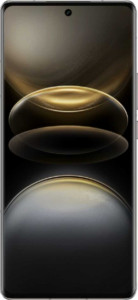
Oppo Find X8 Ultra
vivo X200 Ultra

Oppo Find X8 Ultra vivo X200 Ultra

Overview

When two of Android's most capable flagships go head-to-head, the details matter. In this comparison between the Oppo Find X8 Ultra and the vivo X200 Ultra, we examine how these nearly identical twins diverge across display brightness, camera versatility, audio performance, and everyday connectivity features — revealing which phone best suits your specific priorities.

Common Features

  • Both phones are waterproof with an IP69 ingress protection rating.
  • Both devices share the same dimensions of 76.8 mm width and 163.1 mm height.
  • Neither phone has a rugged build or a foldable form factor.
  • Both feature a 6.82″ OLED/AMOLED display with a 1440 x 3168 px resolution and 510 ppi pixel density.
  • Both screens support a 120Hz refresh rate.
  • Damage-resistant branded glass is present on both devices.
  • HDR10 and HDR10+ support is available on both phones.
  • Both are powered by the Qualcomm Snapdragon 8 Elite chipset with an Adreno 830 GPU running at 1100 MHz.
  • Both phones come with 16GB of RAM and 1024GB of internal storage.
  • CPU speed is identical on both at 2 x 4.32 & 6 x 3.53 GHz.
  • Both devices scored 3234 (single-core) and 10059 (multi-core) on Geekbench 6.
  • Both cameras feature optical image stabilization, phase-detection autofocus, continuous autofocus during video, a CMOS sensor, a built-in HDR mode, and slow-motion video recording.
  • Both run Android 15 and share the same privacy features including clipboard warnings, location options, and camera/microphone controls.
  • Neither device supports Mail Privacy Protection or cross-site tracking blocking, but both support theme customization and blocking app tracking.
  • Both support wireless charging, fast charging, and reverse wireless charging, and neither has a removable battery.
  • Both phones lack a 3.5 mm audio jack but include stereo speakers and support aptX and aptX HD.
  • Both support 5G, Wi-Fi 7 (802.11be), Bluetooth 5.4, NFC, dual SIM, USB Type-C with USB 3.2, and have no external memory slot.
  • Both devices include a video light but lack a sapphire glass display and an e-paper display.

Main Differences

  • Weight is 226 g on Oppo Find X8 Ultra and 229 g on vivo X200 Ultra.
  • Thickness is 8.8 mm on Oppo Find X8 Ultra and 8.7 mm on vivo X200 Ultra.
  • Volume is 110.23 cm³ on Oppo Find X8 Ultra and 108.98 cm³ on vivo X200 Ultra.
  • Typical brightness is 1600 nits on Oppo Find X8 Ultra and 4500 nits on vivo X200 Ultra.
  • Always-On Display is available on vivo X200 Ultra but not on Oppo Find X8 Ultra.
  • AnTuTu benchmark score is 2,792,179 on Oppo Find X8 Ultra and 2,819,127 on vivo X200 Ultra.
  • Main camera configuration is 50 & 50 & 50 & 50 MP on Oppo Find X8 Ultra and 200 & 50 & 50 MP on vivo X200 Ultra.
  • Front camera resolution is 32 MP on Oppo Find X8 Ultra and 50 MP on vivo X200 Ultra.
  • Main camera wide aperture is f/1.8, f/1.8, f/3.1, f/2 on Oppo Find X8 Ultra and f/2.3, f/1.7, f/2 on vivo X200 Ultra.
  • Front camera aperture is f/2.4 on Oppo Find X8 Ultra and f/2.5 on vivo X200 Ultra.
  • Maximum video recording resolution is 2160p at 60 fps on Oppo Find X8 Ultra and 4320p at 30 fps on vivo X200 Ultra.
  • The number of flash LEDs is 2 on Oppo Find X8 Ultra and 3 on vivo X200 Ultra.
  • A BSI sensor is present on vivo X200 Ultra but not on Oppo Find X8 Ultra.
  • Optical zoom is 6x on Oppo Find X8 Ultra and 3.7x on vivo X200 Ultra.
  • 360° panorama shooting is supported on vivo X200 Ultra but not on Oppo Find X8 Ultra.
  • Manual shutter speed control is available on vivo X200 Ultra but not on Oppo Find X8 Ultra.
  • HDR10 and Dolby Vision video recording are supported on vivo X200 Ultra but not on Oppo Find X8 Ultra.
  • Battery capacity is 6100 mAh on Oppo Find X8 Ultra and 6000 mAh on vivo X200 Ultra.
  • Wired charging speed is 100W on Oppo Find X8 Ultra and 90W on vivo X200 Ultra.
  • Wireless charging speed is 50W on Oppo Find X8 Ultra and 40W on vivo X200 Ultra.
  • LDAC, aptX Adaptive, and aptX Lossless audio support is present on vivo X200 Ultra but not on Oppo Find X8 Ultra.
  • Emergency SOS via satellite is available on vivo X200 Ultra but not on Oppo Find X8 Ultra.
  • A curved display is featured on vivo X200 Ultra but not on Oppo Find X8 Ultra.
Specs Comparison
Oppo Find X8 Ultra

Oppo Find X8 Ultra

vivo X200 Ultra

vivo X200 Ultra

Design:
water resistance Waterproof Waterproof
weight 226 g 229 g
thickness 8.8 mm 8.7 mm
width 76.8 mm 76.8 mm
height 163.1 mm 163.1 mm
volume 110.229504 cm³ 108.976896 cm³
Ingress Protection (IP) rating IP69 IP69
has a rugged build
can be folded

In terms of physical design, the Oppo Find X8 Ultra and vivo X200 Ultra are remarkably close twins. Both share an identical footprint — 163.1 mm tall and 76.8 mm wide — meaning they feel the same in-hand and fit identically in pockets or cases. The thickness difference of 8.8 mm vs. 8.7 mm is a single millimeter's tenth, which is imperceptible in daily use. The weight gap is equally negligible: the Find X8 Ultra at 226 g versus the X200 Ultra at 229 g, a 3-gram difference no user will notice during normal handling.

On durability, both devices are rated IP69, which is one of the most stringent ingress protection standards available on a consumer smartphone. IP69 certifies resistance not just to sustained submersion but also to high-pressure, high-temperature water jets — a meaningful step above the more common IP68 rating found on most flagships. In practical terms, both phones can withstand accidental drops in water, rain, splashes, and even a rinse under a tap without concern. Neither carries a rugged build designation, so they remain conventional-looking premium devices rather than ruggedized handsets.

Overall, this category is effectively a tie. The dimensional and weight differences are so marginal as to be irrelevant in the real world, and both phones offer the same top-tier IP69 waterproofing. No meaningful design advantage exists for either product based solely on these specs.

Display:
Display type OLED/AMOLED OLED/AMOLED
screen size 6.82" 6.82"
pixel density 510 ppi 510 ppi
resolution 1440 x 3168 px 1440 x 3168 px
refresh rate 120Hz 120Hz
brightness (typical) 1600 nits 4500 nits
has branded damage-resistant glass
supports HDR10
supports HDR10+
Always-On Display
supports Dolby Vision
Has a secondary screen
has a touch screen

The panel fundamentals are identical across both devices: a 6.82″ OLED/AMOLED screen, a sharp 1440 x 3168 px resolution at 510 ppi, and a 120Hz refresh rate. Both also share the full suite of HDR standards — HDR10, HDR10+, and Dolby Vision — along with branded damage-resistant glass. For everyday sharpness, smoothness, and content compatibility, neither holds an advantage over the other.

Where the displays diverge significantly is peak brightness. The vivo X200 Ultra reaches a striking 4500 nits typical brightness, compared to 1600 nits on the Find X8 Ultra. This is not a minor spec gap — it translates directly to outdoor visibility. Under direct sunlight, the X200 Ultra's screen will remain far more legible, with colors staying vivid rather than washing out. For users who frequently use their phone outdoors or in bright environments, this nearly three-fold brightness advantage is a tangible, everyday benefit. The X200 Ultra also supports an Always-On Display, a convenience feature absent on the Find X8 Ultra, allowing time, notifications, and widgets to remain visible without fully waking the screen.

The vivo X200 Ultra holds a clear edge in this category. The brightness gap alone is substantial enough to affect real-world usability, and the addition of Always-On Display adds a layer of everyday convenience the Find X8 Ultra simply does not offer.

Performance:
internal storage 1024GB 1024GB
RAM 16GB 16GB
AnTuTu benchmark score 2792179 2819127
Chipset (SoC) name Qualcomm Snapdragon 8 Elite Qualcomm Snapdragon 8 Elite
GPU name Adreno 830 Adreno 830
CPU speed 2 x 4.32 & 6 x 3.53 GHz 2 x 4.32 & 6 x 3.53 GHz
Geekbench 6 result (multi) 10059 10059
Geekbench 6 result (single) 3234 3234
GPU clock speed 1100 MHz 1100 MHz
Has integrated LTE
RAM speed 5300 MHz 5300 MHz
semiconductor size 3 nm 3 nm
Supports 64-bit
DirectX version DirectX 12 DirectX 12
Has integrated graphics
OpenGL version 3.2 3.2
OpenGL ES version 3.2 3.2
Uses big.LITTLE technology
CPU threads 8 threads 8 threads
Uses HMP
Has TrustZone
maximum memory bandwidth 85.1 GB/s 85.1 GB/s
OpenCL version 3 3
memory channels 2 2
L2 cache 12 MB 12 MB
Supports ECC memory
L1 cache 192 KB 192 KB
maximum memory amount 24GB 24GB
uses multithreading
GPU turbo 1100 MHz 1100 MHz
Thermal Design Power (TDP) 8.2W 8.2W
DDR memory version 5 5
shading units 1536 1536
supported displays 2 2
L3 cache 8 MB 8 MB

Both phones are powered by the Qualcomm Snapdragon 8 Elite chipset, built on a 3 nm process, paired with 16 GB of DDR5 RAM and 1 TB of internal storage. Every architectural detail — CPU configuration, GPU model, clock speeds, cache hierarchy, memory bandwidth, and TDP — is identical between the two. This is not a case of shared branding masking different silicon; these devices are running the exact same hardware stack.

Benchmark results confirm the parity almost perfectly. Geekbench 6 scores are identical to the digit: 3234 single-core and 10059 multi-core. The AnTuTu scores show a marginal difference — 2,819,127 for the X200 Ultra versus 2,792,179 for the Find X8 Ultra — a gap of roughly 1%, which falls well within normal run-to-run variance and carries no practical significance for real-world tasks, gaming, or sustained workloads.

This category is a definitive tie. Choosing between these two phones on performance grounds is not possible — nor necessary. Any perceived difference in day-to-day responsiveness, app loading, or gaming will owe entirely to software optimization, thermal management, or UI differences, none of which are reflected in the provided specs.

Cameras:
megapixels (main camera) 50 & 50 & 50 & 50 MP 200 & 50 & 50 MP
wide aperture (main camera) 1.8 & 1.8 & 3.1 & 2f 2.3 & 1.7 & 2f
Has a dual-lens (or multi-lens) main camera
megapixels (front camera) 32MP 50MP
has built-in optical image stabilization
video recording (main camera) 2160 x 60 fps 4320 x 30 fps
Has a dual-tone LED flash
number of flash LEDs 2 3
has a BSI sensor
has a CMOS sensor
has continuous autofocus when recording movies
Has phase-detection autofocus for photos
supports slow-motion video recording
has a built-in HDR mode
has manual exposure
has a flash
optical zoom 6x 3.7x
has manual ISO
has a serial shot mode
has manual focus
has a front camera
Has laser autofocus
Shoots 360° panorama
has manual white balance
shoots raw
has touch autofocus
has manual shutter speed
can create panoramas in-camera
wide aperture (front camera) 2.4f 2.5f
Has timelapse function
Has a front-facing LED flash
has a dual-lens (or multi-lens) front camera
supports HDR10 recording
supports Dolby Vision recording
has a front-facing camera under the display
Has a RGB LED flash
has 3D photo/video recording capabilities

The camera systems take meaningfully different approaches. The Oppo Find X8 Ultra deploys a quad-camera setup with four 50 MP sensors, prioritizing consistency across focal lengths, and achieves a higher 6x optical zoom — useful for pulling in distant subjects with less digital degradation. The vivo X200 Ultra opts for a triple-camera array led by a massive 200 MP primary sensor, which enables far greater detail capture and more flexible cropping in post. Its main sensor also carries a BSI (Back-Side Illuminated) designation, a technology that improves light-gathering efficiency — particularly relevant in low-light conditions. The X200 Ultra's front camera at 50 MP also outresolves the Find X8 Ultra's 32 MP selfie shooter by a significant margin.

On video, the gap is pronounced. The X200 Ultra records at up to 4320p (8K) at 30fps, while the Find X8 Ultra tops out at 2160p (4K) at 60fps. Neither is strictly superior for every use case — 4K/60fps offers smoother motion, while 8K/30fps delivers far greater resolution headroom for cropping and future-proofing. The X200 Ultra also supports HDR10 and Dolby Vision recording, which the Find X8 Ultra lacks entirely, making it the stronger choice for high-quality video content creation. Additional X200 Ultra exclusives include manual shutter speed control and 3D photo/video recording, adding creative and functional depth for advanced users.

The vivo X200 Ultra holds a clear overall edge in this category. Its higher-resolution main and front sensors, 8K video capability, HDR recording support, BSI sensor technology, and broader manual controls collectively represent a more capable and versatile imaging system. The Find X8 Ultra's advantage in optical zoom is real but narrow, and does not offset the X200 Ultra's advantages across the rest of the camera stack.

Operating system:
Android version Android 15 Android 15
has clipboard warnings
has location privacy options
has camera/microphone privacy options
has Mail Privacy Protection
has theme customization
can block app tracking
blocks cross-site tracking
has on-device machine learning
has notification permissions
has media picker
Can play games while they download
has dark mode
has Wi-Fi password sharing
has battery health check
has an extra dim mode
has focus modes
has dynamic theming
can offload apps
Has customizable notifications
has Live Text
has full-page screenshots
supports split screen
gets direct OS updates
has PiP
Can be used as a PC
Has sharing intents
has a child lock
Supports widgets
Is free and open source
Has offline voice recognition
has voice commands
Tracks the current position of a mobile device
is a multi-user system
has Quick Start

Running Android 15 on both devices, the software experience is built on an identical foundation. Every feature in the provided data — from privacy controls like location and camera/microphone permissions to usability tools like split-screen, Picture-in-Picture, dark mode, and dynamic theming — is present on both phones without exception. Neither device receives direct OS updates from Google, meaning both rely on their respective manufacturers for software patches and version upgrades, which is standard practice for Android OEM skins.

This category is a complete tie. The spec data reveals no differentiating feature between the two devices — every capability listed is shared equally. Users should factor in their experience with ColorOS versus Funtouch OS (the respective skins from Oppo and vivo) when making a decision, but those differences are not captured in the provided data and cannot be assessed here.

Battery:
battery power 6100 mAh 6000 mAh
has wireless charging
Supports fast charging
charging speed 100W 90W
wireless charging speed 50W 40W
has reverse wireless charging
has a removable battery
has a battery level indicator
has a rechargeable battery

Both phones pack exceptionally large batteries for flagship devices — 6100 mAh on the Find X8 Ultra versus 6000 mAh on the X200 Ultra. A 100 mAh difference at this capacity level is negligible in practice; real-world battery life will be dictated far more by software efficiency and screen-on behavior than this marginal gap. What matters more is that both devices sit well above the typical flagship range, offering endurance that should comfortably last a full day of heavy use.

On charging, the Find X8 Ultra holds a modest but measurable advantage. Its 100W wired charging outpaces the X200 Ultra's 90W, translating to a slightly faster top-up from empty — meaningful when you need a quick charge before heading out. The wireless charging gap is wider: 50W on the Find X8 Ultra versus 40W on the X200 Ultra, a 25% speed advantage that wireless charging users will notice in daily routines. Both support reverse wireless charging, allowing either phone to act as a charging pad for accessories.

The Oppo Find X8 Ultra earns a narrow edge in this category. The battery capacities are functionally equivalent, but the Find X8 Ultra's faster wired and wireless charging speeds give it a consistent, real-world advantage for users who prioritize minimizing time tethered to a charger.

Audio:
has a socket for a 3.5 mm audio jack
has stereo speakers
has aptX
has LDAC
has aptX HD
has aptX Adaptive
has aptX Lossless
Has a radio

Wired audio is off the table for both phones — neither includes a 3.5 mm headphone jack — and both feature stereo speakers for media playback. The more revealing differences lie in Bluetooth audio codec support, which directly determines the quality ceiling for wireless headphones and earbuds.

Both devices share a baseline of aptX and aptX HD, covering standard and high-definition wireless audio for compatible devices. Where they diverge is significant for audiophiles: the vivo X200 Ultra additionally supports LDAC, aptX Adaptive, and aptX Lossless. LDAC, developed by Sony, transmits audio at up to three times the bandwidth of standard Bluetooth, making it the preferred codec for high-resolution streaming. aptX Adaptive dynamically adjusts bitrate for stability and low latency, while aptX Lossless — the most demanding of the three — enables mathematically perfect CD-quality transmission over Bluetooth when conditions allow. The Find X8 Ultra supports none of these three codecs, leaving it behind for users who invest in high-end wireless audio gear.

The vivo X200 Ultra wins this category without contest. For casual listeners the gap may go unnoticed, but anyone using premium wireless headphones or earbuds with LDAC or aptX Adaptive support will have access to a noticeably higher audio quality ceiling that the Find X8 Ultra simply cannot match.

Connectivity & Features:
release date April 2025 April 2025
has 5G support
Wi-Fi version Wi-Fi 4 (802.11n), Wi-Fi 6 (802.11ax), Wi-Fi 5 (802.11ac), Wi-Fi 7 (802.11be) Wi-Fi 4 (802.11n), Wi-Fi 6 (802.11ax), Wi-Fi 5 (802.11ac), Wi-Fi 7 (802.11be)
SIM cards 2 SIM 2 SIM
Bluetooth version 5.4 5.4
has an external memory slot
Has USB Type-C
USB version 3.2 3.2
has NFC
download speed 10000 MBits/s 10000 MBits/s
upload speed 3500 MBits/s 3500 MBits/s
Has a fingerprint scanner
has emergency SOS via satellite
has crash detection
is DLNA-certified
has a gyroscope
supports ANT+
Has a heart rate monitor
has GPS
has a compass
supports Wi-Fi
Has an infrared sensor
has an accelerometer
has a cellular module
Has a barometer
has an HDMI output
Uses 3D facial recognition
Has an iris scanner
Stylus included
supports Galileo
Has motion tracking
Has optical tracking
Has a built-in projector

Across the core connectivity stack, these two phones are virtually indistinguishable. Both support 5G, Wi-Fi 7, Bluetooth 5.4, NFC, and USB 3.2 Type-C, with identical peak download and upload speeds. Sensor suites — gyroscope, accelerometer, compass, infrared, GPS with Galileo support — are equally matched. For everyday connectivity needs, neither phone presents any advantage over the other.

The sole differentiator in this category is emergency SOS via satellite, available exclusively on the vivo X200 Ultra. This feature allows the phone to transmit distress signals even in areas with no cellular or Wi-Fi coverage, using satellite infrastructure instead. While most users will never need it, for frequent travelers, hikers, or anyone venturing into remote areas, it represents a potentially life-critical capability that the Find X8 Ultra entirely lacks.

The vivo X200 Ultra takes a narrow but meaningful edge here. The connectivity foundations are identical, and for urban users the difference may never matter — but satellite SOS is one of those features whose value is disproportionate to how rarely it is used, making the X200 Ultra the more capable device in this group.

Miscellaneous:
has a video light
Has sapphire glass display
Has a curved display
Has an e-paper display

This group contains limited data, with only one meaningful differentiator between the two devices. Both share a video light and neither features sapphire glass or an e-paper display. The single distinguishing factor is display curvature: the vivo X200 Ultra has a curved display, while the Oppo Find X8 Ultra uses a flat panel.

Curved displays are a matter of genuine preference rather than objective superiority. They can enhance the sense of immersion during media consumption and give a device a more premium aesthetic, but they also make screen protectors harder to apply and can introduce unintended touch inputs along the edges. Flat displays, by contrast, are easier to protect and generally more precise at the edges — a preference shared by many power users and gamers. Neither approach is universally advantageous, and the right choice depends entirely on the user's priorities.

This category does not produce a clear winner. The curved screen on the X200 Ultra is the only differentiator, and whether it counts as an advantage or a drawback is subjective. Users who value an immersive, sculpted look will lean toward the X200 Ultra; those who prioritize practicality and flat-screen precision will prefer the Find X8 Ultra's approach.

Comparison Summary & Verdict

Both the Oppo Find X8 Ultra and the vivo X200 Ultra are exceptional flagship smartphones sharing the same Snapdragon 8 Elite chipset, display size, and core build quality. However, their differences are meaningful. The vivo X200 Ultra pulls ahead with a dramatically brighter 4500-nit display, Always-On Display, 8K video recording, a 200 MP main sensor with a BSI sensor, superior wireless audio codecs including LDAC and aptX Lossless, and satellite SOS connectivity. The Oppo Find X8 Ultra counters with a slightly larger 6100 mAh battery, faster 100W wired and 50W wireless charging, and a longer 6x optical zoom. Choose the vivo X200 Ultra for a richer multimedia and imaging experience; choose the Oppo Find X8 Ultra if faster charging and greater zoom reach are your top priorities.

Oppo Find X8 Ultra
Buy Oppo Find X8 Ultra if...

Buy the Oppo Find X8 Ultra if you prioritize faster 100W wired and 50W wireless charging, or need a longer 6x optical zoom reach for telephoto photography.

vivo X200 Ultra
Buy vivo X200 Ultra if...

Buy the vivo X200 Ultra if you want a significantly brighter screen, richer wireless audio support, 8K video recording, and added connectivity features like satellite SOS.