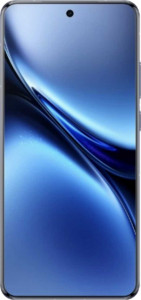
Oppo Find X8s Plus
Vivo X200s

Oppo Find X8s Plus Vivo X200s

Overview

When two flagship smartphones share the same MediaTek Dimensity 9400 Plus chipset, identical RAM and storage, and near-identical camera hardware, the comparison becomes a fascinating study in the finer details. The Oppo Find X8s Plus and the Vivo X200s are closely matched rivals that diverge in meaningful ways across display brightness, battery capabilities, and build choices — making the decision between them far less obvious than a spec sheet glance might suggest.

Common Features

  • Both phones are waterproof with an IP68 ingress protection rating.
  • Both devices have a thickness of 8 mm.
  • Neither phone has a rugged build.
  • Neither phone can be folded.
  • Both displays use OLED/AMOLED technology.
  • Both screens have a pixel density of 460 ppi and a 120Hz refresh rate.
  • HDR10 and HDR10+ support is available on both devices.
  • Always-On Display is available on both phones.
  • Dolby Vision support is present on both devices.
  • Neither phone has a secondary screen.
  • Both phones are powered by the MediaTek Dimensity 9400 Plus chipset with 16GB RAM and 1024GB internal storage.
  • Both devices share the same CPU configuration of 1 x 3.73 & 4 x 3.3 & 3 x 2.4 GHz.
  • Both phones score 8969 (multi-core) and 2874 (single-core) on Geekbench 6.
  • Both phones feature a triple 50 MP rear camera system with optical image stabilization.
  • Both devices support 4K video recording at 60 fps.
  • Both phones have a 32 MP front camera.
  • Both devices run Android 15 with theme customization, clipboard warnings, location privacy options, and camera/microphone privacy controls.
  • Both phones support wireless charging and fast charging, and neither has a removable battery.
  • Both devices support 5G, Wi-Fi 7, Bluetooth 5.4, NFC, USB Type-C, and dual SIM.
  • Both phones have stereo speakers, aptX, and aptX HD support, but no 3.5 mm audio jack and no LDAC.

Main Differences

  • Weight is 198 g on Oppo Find X8s Plus and 203 g on Vivo X200s.
  • Width is 74.5 mm on Oppo Find X8s Plus and 74.3 mm on Vivo X200s.
  • Height is 157.5 mm on Oppo Find X8s Plus and 160 mm on Vivo X200s.
  • Volume is 93.87 cm³ on Oppo Find X8s Plus and 95.104 cm³ on Vivo X200s.
  • Screen size is 6.59″ on Oppo Find X8s Plus and 6.67″ on Vivo X200s.
  • Resolution is 1256 x 2760 px on Oppo Find X8s Plus and 1260 x 2800 px on Vivo X200s.
  • Typical brightness is 1600 nits on Oppo Find X8s Plus and 5000 nits on Vivo X200s.
  • Damage-resistant glass is present on Oppo Find X8s Plus but not available on Vivo X200s.
  • Main camera apertures are f/1.8, f/2.6, and f/2 on Oppo Find X8s Plus, and f/1.6, f/2, and f/2.6 on Vivo X200s.
  • The number of flash LEDs is 2 on Oppo Find X8s Plus and 1 on Vivo X200s.
  • A BSI sensor is present on Vivo X200s but not available on Oppo Find X8s Plus.
  • Front camera aperture is f/2.4 on Oppo Find X8s Plus and f/2 on Vivo X200s.
  • Battery capacity is 6000 mAh on Oppo Find X8s Plus and 6200 mAh on Vivo X200s.
  • Wired charging speed is 80W on Oppo Find X8s Plus and 90W on Vivo X200s.
  • Wireless charging speed is 50W on Oppo Find X8s Plus and 40W on Vivo X200s.
  • Reverse wireless charging is supported on Oppo Find X8s Plus but not available on Vivo X200s.
Specs Comparison
Oppo Find X8s Plus

Oppo Find X8s Plus

Vivo X200s

Vivo X200s

Design:
water resistance Waterproof Waterproof
weight 198 g 203 g
thickness 8 mm 8 mm
width 74.5 mm 74.3 mm
height 157.5 mm 160 mm
volume 93.87 cm³ 95.104 cm³
Ingress Protection (IP) rating IP68 IP68
has a rugged build
can be folded

In terms of design, the Oppo Find X8s Plus and Vivo X200s are remarkably close siblings. Both share identical 8 mm thickness and the same IP68 waterproof rating, meaning neither has an edge in slimness or water/dust resistance — both can handle submersion in fresh water up to 1.5 meters for 30 minutes under standard conditions.

The most meaningful difference lies in size and weight. The Vivo X200s is slightly taller (160 mm vs. 157.5 mm) and marginally heavier (203 g vs. 198 g), resulting in a modestly larger volume (95.1 cm³ vs. 93.9 cm³). In practice, the Find X8s Plus's 5g weight advantage is barely perceptible in daily use, but its slightly more compact footprint may make one-handed reach marginally more comfortable over long sessions.

Neither device offers a rugged build or foldable form factor. Overall, this group is essentially a near-tie, with the Find X8s Plus holding a very slight edge in compactness and weight — a marginal but real advantage for users who prioritize ergonomics and pocketability.

Display:
Display type OLED/AMOLED OLED/AMOLED
screen size 6.59" 6.67"
pixel density 460 ppi 460 ppi
resolution 1256 x 2760 px 1260 x 2800 px
refresh rate 120Hz 120Hz
brightness (typical) 1600 nits 5000 nits
has branded damage-resistant glass
supports HDR10
supports HDR10+
Always-On Display
supports Dolby Vision
Has a secondary screen
has a touch screen

Both phones use OLED/AMOLED panels with an identical 460 ppi pixel density and matching feature sets — 120Hz refresh rate, HDR10+, Dolby Vision, and Always-On Display. At this pixel density, sharpness is essentially indistinguishable to the naked eye on either device, so the real story here lies elsewhere.

The standout differentiator is brightness. The Vivo X200s claims a staggering 5000 nits of typical brightness compared to the Find X8s Plus's 1600 nits — more than three times higher. In practice, this means the X200s is dramatically more legible under direct sunlight or harsh outdoor lighting, where 1600 nits, while respectable, can still struggle. For users who spend significant time outdoors, this gap is genuinely meaningful and not just a spec-sheet number.

The trade-off is screen protection: the Oppo Find X8s Plus features branded damage-resistant glass while the X200s does not, giving it a tangible edge in scratch and drop resilience. Weighing these against each other, the X200s wins the display category on sheer visual performance — its brightness advantage is substantial and practical — but users who prioritize physical durability may value the Find X8s Plus's protected glass more highly.

Performance:
internal storage 1024GB 1024GB
RAM 16GB 16GB
Chipset (SoC) name MediaTek Dimensity 9400 Plus MediaTek Dimensity 9400 Plus
GPU name Immortalis G925 Immortalis G925
CPU speed 1 x 3.73 & 4 x 3.3 & 3 x 2.4 GHz 1 x 3.73 & 4 x 3.3 & 3 x 2.4 GHz
Geekbench 6 result (multi) 8969 8969
Geekbench 6 result (single) 2874 2874
GPU clock speed 1300 MHz 1300 MHz
Has integrated LTE
RAM speed 10667 MHz 10667 MHz
semiconductor size 3 nm 3 nm
Supports 64-bit
Has integrated graphics
Uses big.LITTLE technology
CPU threads 8 threads 8 threads
Uses HMP
maximum memory bandwidth 85.3 GB/s 85.3 GB/s
Supports ECC memory
maximum memory amount 24GB 24GB
uses multithreading
DDR memory version 5 5
L3 cache 12 MB 12 MB

Performance is the rare category where there is absolutely nothing to separate these two devices — every single spec is identical. Both run on the MediaTek Dimensity 9400 Plus chipset built on a 3 nm process, paired with the Immortalis G925 GPU clocked at 1300 MHz, and backed by 16GB of DDR5 RAM running at 10667 MHz. Their Geekbench 6 scores — 2874 single-core and 8969 multi-core — are a perfect match, confirming there is no real-world CPU performance gap whatsoever.

What those numbers mean in practice: the Dimensity 9400 Plus is a top-tier flagship chip, and scores in this range put both phones firmly among the fastest Android devices available. The 85.3 GB/s memory bandwidth and 12 MB L3 cache ensure smooth multitasking, fast app loads, and capable gaming. With up to 24GB of maximum addressable RAM and HMP scheduling, neither phone will struggle with demanding workloads.

This is a complete and definitive tie. Choosing between the Oppo Find X8s Plus and Vivo X200s on performance grounds is simply not possible — the silicon, memory architecture, and benchmark results are carbon copies of each other. The decision must rest entirely on other categories.

Cameras:
megapixels (main camera) 50 & 50 & 50 MP 50 & 50 & 50 MP
wide aperture (main camera) 1.8 & 2.6 & 2f 1.6 & 2 & 2.6f
Has a dual-lens (or multi-lens) main camera
megapixels (front camera) 32MP 32MP
has built-in optical image stabilization
video recording (main camera) 2160 x 60 fps 2160 x 60 fps
Has a dual-tone LED flash
number of flash LEDs 2 1
has a BSI sensor
has a CMOS sensor
has continuous autofocus when recording movies
Has phase-detection autofocus for photos
supports slow-motion video recording
has a built-in HDR mode
has manual exposure
has a flash
optical zoom 3x 3x
has manual ISO
has a serial shot mode
has manual focus
has a front camera
Has laser autofocus
Shoots 360° panorama
has manual white balance
shoots raw
has touch autofocus
has manual shutter speed
can create panoramas in-camera
wide aperture (front camera) 2.4f 2f
Has timelapse function
Has a front-facing LED flash
has a dual-lens (or multi-lens) front camera
supports HDR10 recording
supports Dolby Vision recording
has a front-facing camera under the display
Has a RGB LED flash
has 3D photo/video recording capabilities

On paper, the two camera systems look nearly identical — triple 50 MP lenses, 3x optical zoom, OIS, 4K/60fps video, and a matching 32 MP front camera. The feature checklist is virtually a mirror image, covering RAW shooting, laser autofocus, phase-detection, and full manual controls on both sides. The meaningful differences, however, emerge when you look closer at the optics and sensor hardware.

The Vivo X200s holds a tangible advantage in low-light capability. Its main lens opens to f/1.6 versus the Find X8s Plus's f/1.8 — a difference that allows roughly 27% more light to hit the sensor per shot, which translates directly into brighter, less noisy images in dim conditions. The X200s also adds a BSI (Back-Side Illuminated) sensor, a hardware design that further improves light-gathering efficiency and reduces noise, something the Find X8s Plus lacks. These two factors combined give the X200s a meaningful edge for nighttime and indoor photography.

The Find X8s Plus counters modestly with two flash LEDs compared to the X200s's single unit, which can improve flash coverage and color accuracy in dark scenes — but this is a minor advantage that does not offset the aperture and sensor gap. On balance, the Vivo X200s takes the edge in cameras, particularly for users who prioritize low-light performance.

Operating system:
Android version Android 15 Android 15
has clipboard warnings
has location privacy options
has camera/microphone privacy options
has Mail Privacy Protection
has theme customization
can block app tracking
blocks cross-site tracking
has on-device machine learning
has notification permissions
has media picker
Can play games while they download
has dark mode
has Wi-Fi password sharing
has battery health check
has an extra dim mode
has focus modes
has dynamic theming
can offload apps
Has customizable notifications
has Live Text
has full-page screenshots
supports split screen
gets direct OS updates
has PiP
Can be used as a PC
Has sharing intents
has a child lock
Supports widgets
Is free and open source
Has offline voice recognition
has voice commands
Tracks the current position of a mobile device
is a multi-user system
has Quick Start

Much like the performance category, the operating system specs reveal a complete dead heat. Both devices ship with Android 15 and share an identical feature set across every single data point provided — privacy controls, dark mode, dynamic theming, split-screen, Picture-in-Picture, on-device machine learning, offline voice recognition, and more. There is not a single differentiating flag between them in this group.

The shared highlights are worth noting for buyers: both phones offer solid privacy tooling including location controls, camera/microphone permissions, app tracking blocks, and clipboard warnings — a well-rounded set for privacy-conscious users. Practical productivity features like split-screen multitasking, widgets, full-page screenshots, and the ability to play games while downloading are present on both. Neither device receives direct OS updates from Google, meaning both depend on their respective manufacturers for software delivery — a shared limitation rather than a differentiator.

This is an unambiguous tie. The operating system experience, as defined by these specs, is functionally identical on both phones. Prospective buyers should look to other categories — such as display, cameras, or design — to inform their decision, as the OS offers no basis for choosing one over the other.

Battery:
battery power 6000 mAh 6200 mAh
has wireless charging
Supports fast charging
charging speed 80W 90W
wireless charging speed 50W 40W
has reverse wireless charging
has a removable battery
has a battery level indicator
has a rechargeable battery

Battery is one of the more nuanced categories in this comparison, with each phone holding a clear advantage in a different area. The Vivo X200s edges ahead on raw capacity at 6200 mAh versus the Find X8s Plus's 6000 mAh — a modest 3% difference that, in real-world use, is unlikely to translate into a dramatically longer day but does give the X200s a slight buffer on heavy-use days. The X200s also wins on wired charging speed at 90W versus 80W, meaning marginally shorter top-up times from a wall adapter.

The Oppo Find X8s Plus flips the advantage when it comes to wireless charging. It supports 50W wireless charging compared to the X200s's 40W — a meaningful 25% faster rate for users who rely on a wireless pad as their primary charger. More significantly, the Find X8s Plus also offers reverse wireless charging, allowing it to top up accessories like earbuds or a smartwatch directly from the phone's back — a feature the X200s entirely lacks.

The verdict here depends squarely on how you charge. If wired speed and raw capacity are the priority, the Vivo X200s has a slim edge. If wireless convenience and versatility matter more, the Oppo Find X8s Plus pulls ahead. Neither is a decisive overall winner — this category is a genuine trade-off rather than a clean victory for either side.

Audio:
has a socket for a 3.5 mm audio jack
has stereo speakers
has aptX
has LDAC
has aptX HD
has aptX Adaptive
has aptX Lossless
Has a radio

Audio is another category where the two phones are inseparable. Both drop the 3.5mm headphone jack — now standard practice on flagship Android devices — and both deliver stereo speakers for immersive media consumption. Wireless audio codec support is also identical: aptX and aptX HD are present on both, while neither supports aptX Adaptive, aptX Lossless, or LDAC.

The codec picture matters for wireless headphone users. aptX HD supports up to 576 kbps transmission, which covers CD-quality audio wirelessly — a solid baseline for audiophiles using compatible headphones. The absence of LDAC, Sony's high-res wireless codec capable of up to 990 kbps, is a shared limitation worth noting for users who own LDAC-compatible headphones and prioritize the highest possible wireless audio fidelity.

With zero differentiation across every provided spec, this category is a complete tie. Neither the Oppo Find X8s Plus nor the Vivo X200s offers any audio advantage over the other — buyers with strong audio priorities should look beyond these specs, such as to speaker tuning or software equalizer features, which fall outside the data provided here.

Connectivity & Features:
release date April 2025 April 2025
has 5G support
Wi-Fi version Wi-Fi 4 (802.11n), Wi-Fi 6 (802.11ax), Wi-Fi 5 (802.11ac), Wi-Fi 7 (802.11be) Wi-Fi 4 (802.11n), Wi-Fi 6 (802.11ax), Wi-Fi 5 (802.11ac), Wi-Fi 7 (802.11be)
SIM cards 2 SIM 2 SIM
Bluetooth version 5.4 5.4
has an external memory slot
Has USB Type-C
USB version 2 2
has NFC
download speed 7300 MBits/s 7300 MBits/s
Has a fingerprint scanner
has emergency SOS via satellite
has crash detection
is DLNA-certified
has a gyroscope
supports ANT+
Has a heart rate monitor
has GPS
has a compass
supports Wi-Fi
Has an infrared sensor
has an accelerometer
has a cellular module
Has a barometer
has an HDMI output
Uses 3D facial recognition
Has an iris scanner
Stylus included
supports Galileo
Has motion tracking
Has optical tracking
Has a built-in projector

Connectivity is yet another category where the two phones are perfectly matched. Both support 5G, Wi-Fi 7 (the latest standard, offering significantly faster throughput and lower latency than Wi-Fi 6), Bluetooth 5.4, and NFC — a strong and current suite that covers all practical bases. With a shared maximum download speed of 7300 Mbps, neither device has a cellular edge either.

Beyond wireless, the feature set remains identical: dual SIM slots, USB Type-C with USB 2.0, an infrared sensor for controlling home appliances, GPS with Galileo support, and a standard array of motion sensors including gyroscope, accelerometer, and compass. The shared USB 2.0 standard is a notable limitation on both — it caps wired data transfer speeds and rules out video output over the port, which is increasingly common on competing flagships. Neither phone compensates with HDMI output, a barometer, or satellite SOS.

With every single connectivity and feature spec a mirror image, this category is a definitive tie. Buyers comparing these two devices gain absolutely nothing by weighing connectivity alone — both deliver the same modern, capable, and identically constrained feature package.

Miscellaneous:
has a video light
Has sapphire glass display
Has a curved display
Has an e-paper display

The miscellaneous category is slim in scope and offers no differentiation whatsoever. Both phones include a video light — useful for illuminating subjects during video calls or recordings in low-light environments — and neither features a sapphire glass display, curved screen, or e-paper display. Every data point is identical.

This is a clear tie by every available measure in this group. With so few specs to analyze and none creating any distinction between the two devices, buyers should place no weight on this category when making their decision.

Comparison Summary & Verdict

After a thorough look at both devices, the choice between the Oppo Find X8s Plus and the Vivo X200s comes down to what trade-offs matter most to you. The Oppo Find X8s Plus stands out with its damage-resistant glass, faster 50W wireless charging, and reverse wireless charging capability, making it the better pick for users who value screen protection and versatile charging options. The Vivo X200s, on the other hand, counters with a significantly brighter 5000-nit display, a larger 6200 mAh battery, faster 90W wired charging, wider aperture lenses, and a BSI sensor — advantages that will appeal to outdoor users, photography enthusiasts, and those who demand maximum battery endurance. Both phones are excellent all-rounders at their core, but your priorities around display brightness versus charging flexibility will likely be the deciding factor.

Oppo Find X8s Plus
Buy Oppo Find X8s Plus if...

Buy the Oppo Find X8s Plus if you want damage-resistant glass for added screen protection and value reverse wireless charging alongside faster 50W wireless charging speeds.

Vivo X200s
Buy Vivo X200s if...

Buy the Vivo X200s if you prioritize an exceptionally bright 5000-nit display for outdoor visibility, a larger battery with faster 90W wired charging, and wider aperture cameras with a BSI sensor.