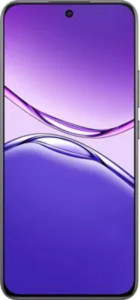
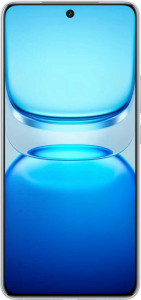
Both phones use OLED/AMOLED panels, so the baseline visual experience — deep blacks, vivid colors, and power-efficient Always-On Display — is shared between them. The similarities largely end there, however. The iQOO Z10 Turbo Pro steps up to a 6.78″ screen against the K12s's 6.67″, but the more consequential gap is in resolution and sharpness: the iQOO renders at 1260 × 2800 px at 453 ppi, versus the K12s's 1080 × 2400 px at 395 ppi. That 58 ppi advantage is clearly perceptible — text appears crisper, fine UI details are better defined, and high-resolution media looks noticeably more refined on the iQOO.
The brightness disparity is arguably the most dramatic difference in this entire category. The K12s offers a typical brightness of 600 nits, which is adequate for indoor use but can struggle in direct sunlight. The iQOO Z10 Turbo Pro, at 2000 nits, is in an entirely different league — outdoor legibility in bright conditions is far superior, and HDR content, even without formal HDR certification on either device, will render with much greater dynamic range and visual punch. On top of that, the iQOO's 144Hz refresh rate versus the K12s's 120Hz delivers marginally smoother scrolling and animations, a difference most noticeable in gaming and fast-paced content.
The iQOO Z10 Turbo Pro wins the display category decisively. Its advantages in pixel density, peak brightness, and refresh rate are not marginal — particularly the 2000-nit brightness, which represents a transformative real-world upgrade for outdoor users. The K12s offers a competent OLED screen, but it cannot match the iQOO across any of the key display performance metrics.