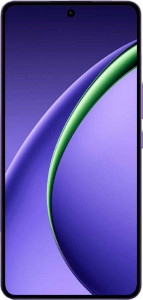
Oppo K13 Turbo
Realme P4 Pro 5G

Oppo K13 Turbo Realme P4 Pro 5G

Overview

When comparing the Oppo K13 Turbo and the Realme P4 Pro 5G, two competitive mid-range 5G smartphones emerge with surprisingly different priorities. Both share a generous 6.8″ display, a massive 7000 mAh battery, and 12GB of RAM, yet they diverge significantly in areas like display technology, camera capabilities, and raw processing power. Whether you care most about screen quality, build protection, or audio performance, this comparison breaks down every key spec to help you decide which device truly fits your needs.

Common Features

  • Neither product has a rugged build.
  • Neither product can be folded.
  • Both products share a 6.8″ screen size.
  • Both products have a pixel density of 453 ppi.
  • Both products share a resolution of 1280 x 2800 px.
  • Both products have a touch sampling rate of 240Hz.
  • Dolby Vision support is not available on either product.
  • Neither product has a secondary screen.
  • Both products have a touch screen.
  • Both products come with 512GB of internal storage.
  • Both products have 12GB of RAM.
  • Both products use a 4 nm semiconductor size.
  • Both products support 64-bit processing.
  • Both products support DirectX 12.
  • Both products have integrated graphics.
  • Both products use big.LITTLE technology.
  • Both products have an OpenGL ES version of 3.2.
  • Both products have a main camera of 50 & 2 MP.
  • Both products support video recording at 2160 x 60 fps.
  • Neither product has a dual-tone LED flash.
  • Both products have a single LED flash.
  • Both products have a CMOS sensor.
  • Both products support continuous autofocus when recording movies.
  • Both products run Android 15.
  • Both products have clipboard warnings.
  • Both products offer location privacy options.
  • Both products offer camera and microphone privacy options.
  • Mail Privacy Protection is not available on either product.
  • Both products support theme customization.
  • Both products can block app tracking.
  • Cross-site tracking blocking is not available on either product.
  • Both products have a 7000 mAh battery.
  • Wireless charging is not available on either product.
  • Both products support fast charging at 80W.
  • Reverse wireless charging is not available on either product.
  • Both products come with a charger in the box.
  • Neither product has a removable battery.
  • Both products have a battery level indicator.
  • Neither product has a 3.5 mm audio jack.
  • Both products have stereo speakers.
  • aptX Adaptive support is not available on either product.
  • aptX Lossless support is not available on either product.
  • Both products support 5G.
  • Both products support Wi-Fi 4, Wi-Fi 5, and Wi-Fi 6.
  • Both products support dual SIM cards.
  • Both products have Bluetooth version 5.4.
  • Neither product has an external memory slot.
  • Both products have USB Type-C.
  • Both products use USB version 2.
  • Both products have NFC.
  • Both products have a video light.
  • Neither product has a sapphire glass display.
  • Neither product has a curved display.
  • Neither product has an e-paper display.

Main Differences

  • Water resistance is rated as Waterproof on Oppo K13 Turbo and Water resistant on Realme P4 Pro 5G.
  • Weight is 207 g on Oppo K13 Turbo and 189 g on Realme P4 Pro 5G.
  • Thickness is 7.3 mm on Oppo K13 Turbo and 7.7 mm on Realme P4 Pro 5G.
  • Width is 77.2 mm on Oppo K13 Turbo and 76.2 mm on Realme P4 Pro 5G.
  • Height is 162.8 mm on Oppo K13 Turbo and 162.3 mm on Realme P4 Pro 5G.
  • Volume is 91.747568 cm³ on Oppo K13 Turbo and 95.227902 cm³ on Realme P4 Pro 5G.
  • IP rating is IP67 on Oppo K13 Turbo and IP66 on Realme P4 Pro 5G.
  • Display type is LCD IPS on Oppo K13 Turbo and OLED/AMOLED on Realme P4 Pro 5G.
  • Refresh rate is 120Hz on Oppo K13 Turbo and 144Hz on Realme P4 Pro 5G.
  • Branded damage-resistant glass is present on Realme P4 Pro 5G but not available on Oppo K13 Turbo.
  • HDR10 support is present on Realme P4 Pro 5G but not available on Oppo K13 Turbo.
  • HDR10+ support is present on Realme P4 Pro 5G but not available on Oppo K13 Turbo.
  • Always-On Display is available on Realme P4 Pro 5G but not on Oppo K13 Turbo.
  • The chipset is MediaTek Dimensity 8450 on Oppo K13 Turbo and Qualcomm Snapdragon 7 Gen 4 on Realme P4 Pro 5G.
  • CPU speed is 1 x 3.25 & 3 x 3 & 4 x 2.15 GHz on Oppo K13 Turbo and 1 x 2.8 & 4 x 2.4 & 3 x 1.8 GHz on Realme P4 Pro 5G.
  • GPU clock speed is 1300 MHz on Oppo K13 Turbo and 1000 MHz on Realme P4 Pro 5G.
  • RAM speed is 4267 MHz on Oppo K13 Turbo and 4200 MHz on Realme P4 Pro 5G.
  • Maximum memory bandwidth is 68.2 GB/s on Oppo K13 Turbo and 33.6 GB/s on Realme P4 Pro 5G.
  • Front camera resolution is 16MP on Oppo K13 Turbo and 50MP on Realme P4 Pro 5G.
  • Optical image stabilization is present on Realme P4 Pro 5G but not available on Oppo K13 Turbo.
  • aptX support is available on Realme P4 Pro 5G but not on Oppo K13 Turbo.
  • LDAC support is available on Realme P4 Pro 5G but not on Oppo K13 Turbo.
  • aptX HD support is available on Oppo K13 Turbo but not on Realme P4 Pro 5G.
  • An infrared sensor is present on Oppo K13 Turbo but not available on Realme P4 Pro 5G.
Specs Comparison
Oppo K13 Turbo

Oppo K13 Turbo

Realme P4 Pro 5G

Realme P4 Pro 5G

Design:
water resistance Waterproof Water resistant
weight 207 g 189 g
thickness 7.3 mm 7.7 mm
width 77.2 mm 76.2 mm
height 162.8 mm 162.3 mm
volume 91.747568 cm³ 95.227902 cm³
Ingress Protection (IP) rating IP67 IP66
has a rugged build
can be folded

The most consequential difference in this group is water protection. The Oppo K13 Turbo carries an IP67 rating, meaning it can withstand submersion in up to one meter of water for 30 minutes — a true waterproofing standard. The Realme P4 Pro 5G, by contrast, holds an IP66 rating, which guarantees protection against powerful water jets but offers no submersion tolerance. In everyday terms, an IP67 device can survive an accidental drop in a sink or toilet; an IP66 device cannot. For users who frequently use their phone near water or in unpredictable conditions, this is a meaningful real-world gap.

On ergonomics, the two phones trade advantages. The Realme P4 Pro is noticeably lighter at 189 g versus the Oppo's 207 g — an 18-gram difference that is perceptible during extended one-handed use or prolonged calls. However, the Oppo counters with a slimmer profile at 7.3 mm thick compared to the Realme's 7.7 mm, making it feel sleeker in-hand and easier to slip into a pocket. Their footprints are nearly identical, so the choice comes down to whether you prioritize lightness or slimness.

Overall, the Oppo K13 Turbo holds a clear edge in this design group. Its superior IP67 water resistance is a tangible durability advantage over the Realme's IP66, and its thinner chassis partially offsets the weight penalty. The Realme P4 Pro's lighter build is its best design argument, but it cannot match the Oppo's protection credentials.

Display:
Display type LCD, IPS OLED/AMOLED
screen size 6.8" 6.8"
pixel density 453 ppi 453 ppi
resolution 1280 x 2800 px 1280 x 2800 px
refresh rate 120Hz 144Hz
touch sampling rate 240Hz 240Hz
has branded damage-resistant glass
supports HDR10
supports HDR10+
Always-On Display
supports Dolby Vision
Has a secondary screen
has a touch screen

At the heart of this comparison is a fundamental panel technology gap. The Realme P4 Pro 5G uses an OLED/AMOLED display, while the Oppo K13 Turbo relies on an LCD IPS panel. Despite sharing the same screen size, resolution, and pixel density, this distinction shapes the entire viewing experience: OLED delivers true blacks, higher contrast, and more vibrant colors by lighting pixels individually, whereas IPS LCD uses a backlight that cannot fully turn off, resulting in less punchy blacks and lower contrast ratios. For media consumption, dark-theme apps, and general visual richness, the Realme's panel holds a structural advantage that no spec tweak on the Oppo's side can fully close.

The Realme also pulls ahead on several supporting features. Its 144Hz refresh rate edges out the Oppo's 120Hz, producing marginally smoother scrolling and animations — a subtle but noticeable difference in daily use. It also supports HDR10 and HDR10+, meaning compatible streaming content will render with wider dynamic range and greater tonal detail. Adding to this, the Realme offers an Always-On Display and comes with branded damage-resistant glass, both of which the Oppo lacks. The Always-On Display is a genuine convenience feature for glancing at notifications without waking the phone, and scratch-resistant glass provides meaningful long-term screen protection.

This is one of the more lopsided matchups in this comparison. Across panel quality, refresh rate, HDR capability, and durability features, the Realme P4 Pro 5G holds a decisive advantage in display. The Oppo K13 Turbo has no meaningful counterpoint in this category — users who prioritize screen quality will find the Realme the clear choice here.

Performance:
internal storage 512GB 512GB
RAM 12GB 12GB
Chipset (SoC) name MediaTek Dimensity 8450 Qualcomm Snapdragon 7 Gen 4
CPU speed 1 x 3.25 & 3 x 3 & 4 x 2.15 GHz 1 x 2.8 & 4 x 2.4 & 3 x 1.8 GHz
GPU clock speed 1300 MHz 1000 MHz
RAM speed 4267 MHz 4200 MHz
semiconductor size 4 nm 4 nm
Supports 64-bit
DirectX version DirectX 12 DirectX 12
Has integrated graphics
OpenGL ES version 3.2 3.2
Uses big.LITTLE technology
Has TrustZone
maximum memory bandwidth 68.2 GB/s 33.6 GB/s
OpenCL version 2 2
DDR memory version 5 5

Both phones share the same 12GB of RAM and 512GB of storage, but beneath that surface-level parity lies a significant performance gap driven by their respective chipsets. The Oppo K13 Turbo runs on the MediaTek Dimensity 8450, while the Realme P4 Pro 5G uses the Qualcomm Snapdragon 7 Gen 4. The Oppo's prime core clocks in at 3.25 GHz versus the Realme's 2.8 GHz, giving it a meaningful advantage in single-threaded tasks — the kind that determine how snappy app launches and UI interactions feel in everyday use.

Where the gap becomes most striking is in graphics and memory throughput. The Oppo's GPU runs at 1300 MHz against the Realme's 1000 MHz — a 30% clock speed advantage that translates directly into smoother frame rates in graphically demanding games. Even more telling is memory bandwidth: the Dimensity 8450 delivers 68.2 GB/s compared to the Snapdragon 7 Gen 4's 33.6 GB/s, roughly double. Higher memory bandwidth means the processor can feed data to the CPU and GPU faster, reducing bottlenecks during heavy multitasking, large file operations, and sustained gaming sessions.

Both chips are built on a 4 nm process and share the same foundational feature set — DDR5 memory, DirectX 12, and big.LITTLE architecture — so neither holds a structural efficiency edge. But on raw throughput metrics across CPU peak speed, GPU clock, and memory bandwidth, the Oppo K13 Turbo holds a clear and consistent performance advantage in this group.

Cameras:
megapixels (main camera) 50 & 2 MP 50 & 2 MP
Has a dual-lens (or multi-lens) main camera
megapixels (front camera) 16MP 50MP
has built-in optical image stabilization
video recording (main camera) 2160 x 60 fps 2160 x 60 fps
Has a dual-tone LED flash
number of flash LEDs 1 1
has a BSI sensor
has a CMOS sensor
has continuous autofocus when recording movies
Has phase-detection autofocus for photos
supports slow-motion video recording
has a built-in HDR mode
has manual exposure
has a flash
optical zoom 0x 0x
has manual ISO
has a serial shot mode
has manual focus
has a front camera
Has laser autofocus
Shoots 360° panorama
has manual white balance
shoots raw
has touch autofocus
has manual shutter speed
can create panoramas in-camera
wide aperture (front camera) 2.4f 2.4f
Has timelapse function
Has a front-facing LED flash
has a dual-lens (or multi-lens) front camera
supports HDR10 recording
supports Dolby Vision recording
has a front-facing camera under the display
Has a RGB LED flash
has 3D photo/video recording capabilities

Strip away the near-identical rear camera configurations — both offer a 50 & 2 MP dual-lens setup, 4K/60fps video, phase-detection autofocus, and the same manual controls — and two differentiators define this category. The first is the front camera. The Realme P4 Pro 5G packs a 50MP selfie sensor versus the Oppo K13 Turbo's 16MP. That resolution gap is substantial: more megapixels allow for greater detail retention, more aggressive cropping without visible quality loss, and sharper results when shooting in good light. For users who prioritize selfies or video calls, this alone is a significant differentiator.

The second — and arguably more impactful — difference is Optical Image Stabilization (OIS), which the Realme carries and the Oppo does not. OIS uses physical lens movement to counteract hand tremor in real time, producing noticeably steadier handheld video and sharper stills in low-light conditions where longer shutter speeds are required. The Oppo has no equivalent hardware compensation, meaning it relies entirely on software stabilization, which typically delivers inferior results especially during movement or in dimly lit environments.

Given that the rear camera specs are otherwise a dead heat, the Realme P4 Pro 5G takes a clear edge in this group. The combination of a dramatically higher-resolution front camera and hardware-level OIS on the main shooter makes it the stronger camera package by a meaningful margin.

Operating system:
Android version Android 15 Android 15
has clipboard warnings
has location privacy options
has camera/microphone privacy options
has Mail Privacy Protection
has theme customization
can block app tracking
blocks cross-site tracking
has on-device machine learning
has notification permissions
has media picker
Can play games while they download
has dark mode
has Wi-Fi password sharing
has battery health check
has an extra dim mode
has focus modes
has dynamic theming
can offload apps
Has customizable notifications
has Live Text
has full-page screenshots
supports split screen
gets direct OS updates
has PiP
Can be used as a PC
Has sharing intents
has a child lock
Supports widgets
Is free and open source
Has offline voice recognition
has voice commands
Tracks the current position of a mobile device
is a multi-user system
has Quick Start

Rarely does a spec group produce such a clear outcome: the Oppo K13 Turbo and Realme P4 Pro 5G are in complete lockstep across every single operating system data point provided. Both run Android 15, share the same privacy suite — location controls, camera and microphone permissions, clipboard warnings, and app tracking blocks — and support the same productivity and usability features including split-screen, Picture-in-Picture, dynamic theming, widgets, and offline voice recognition.

This is not a superficial tie. Even more nuanced capabilities like on-device machine learning, Live Text, full-page screenshots, battery health checks, and multi-user support are present on both devices. Neither phone gets direct OS updates, and neither supports features like Wi-Fi password sharing, cross-site tracking blocks, or focus modes. The symmetry extends to every line of the dataset without a single exception.

This group is an exact tie. There is no basis within the provided data to give either phone an advantage here — a user's software experience, privacy controls, and feature set will be functionally identical regardless of which device they choose.

Battery:
battery power 7000 mAh 7000 mAh
has wireless charging
Supports fast charging
charging speed 80W 80W
has reverse wireless charging
comes with a charger
has a removable battery
has a battery level indicator
has a rechargeable battery

Back-to-back identical spec groups: every battery data point for the Oppo K13 Turbo and Realme P4 Pro 5G is an exact match. Both carry a large 7000 mAh cell — well above the mainstream midrange average — which positions them as endurance-focused devices capable of comfortably lasting through a full day of heavy use and potentially stretching into a second day under moderate workloads.

Charging parity continues the story: both top out at 80W wired fast charging and ship with a charger in the box, meaning refill times from low battery will be comparably quick on either device. Neither supports wireless or reverse wireless charging, so users dependent on wireless pads will find the same limitation on both sides.

This group is a complete tie. The battery capacity, charging speed, and full feature set are identical — there is nothing in the provided data that separates these two phones on endurance or charging capability.

Audio:
has a socket for a 3.5 mm audio jack
has stereo speakers
has aptX
has LDAC
has aptX HD
has aptX Adaptive
has aptX Lossless

With both phones dropping the 3.5mm headphone jack and offering stereo speakers, the meaningful distinction in this category comes down to Bluetooth audio codec support — and the two devices take notably different paths. The Oppo K13 Turbo supports aptX HD, Qualcomm's higher-fidelity codec capable of transmitting 24-bit audio over Bluetooth, targeting audiophiles using compatible wired-to-wireless adapters or headphones. The Realme P4 Pro 5G, meanwhile, foregoes aptX HD in favor of standard aptX paired with LDAC.

That LDAC support is the pivotal differentiator. Developed by Sony, LDAC can transmit audio at up to three times the data rate of standard Bluetooth codecs, making it the premier option for streaming high-resolution audio wirelessly to compatible headphones. For users who own LDAC-enabled headphones — increasingly common in the mid-to-premium wireless segment — the Realme will deliver a perceptibly richer, more detailed listening experience. The Oppo's aptX HD is a capable codec, but LDAC generally represents a higher ceiling for wireless audio fidelity.

Given that both phones share the same speaker setup and jack omission, codec support is the only lever here — and LDAC gives the Realme P4 Pro 5G a clear edge for users invested in high-quality wireless audio. The Oppo's aptX HD is not without merit, but it appeals to a narrower ecosystem of compatible devices.

Connectivity & Features:
release date July 2025 August 2025
has 5G support
Wi-Fi version Wi-Fi 4 (802.11n), Wi-Fi 5 (802.11ac), Wi-Fi 6 (802.11ax) Wi-Fi 4 (802.11n), Wi-Fi 5 (802.11ac), Wi-Fi 6 (802.11ax)
SIM cards 2 SIM 2 SIM
Bluetooth version 5.4 5.4
has an external memory slot
Has USB Type-C
USB version 2 2
has NFC
Has a fingerprint scanner
has emergency SOS via satellite
has crash detection
is DLNA-certified
has a gyroscope
supports ANT+
Has a heart rate monitor
has GPS
has a compass
supports Wi-Fi
Has an infrared sensor
has an accelerometer
has a cellular module
Has a barometer
has an HDMI output
Uses 3D facial recognition
Has an iris scanner
Stylus included
supports Galileo
Has motion tracking
Has optical tracking
Has a built-in projector

Across the broad sweep of connectivity, these two phones are remarkably well-matched. Both support 5G, Wi-Fi 6, Bluetooth 5.4, NFC, and dual SIM — a solid and current feature set that covers all mainstream wireless use cases. Shared support for GPS, Galileo, a gyroscope, accelerometer, compass, and fingerprint scanner means the sensor suite is also functionally equivalent for navigation, gaming, and biometric security.

Scanning the full dataset for a differentiator, only one emerges: the Oppo K13 Turbo includes an infrared sensor, while the Realme P4 Pro 5G does not. An IR blaster lets the phone act as a universal remote for televisions, air conditioners, and other home appliances — a genuinely useful convenience feature for users who want to consolidate remotes. It is a niche capability, but among the data provided it is the sole point of separation.

The Oppo K13 Turbo takes a narrow edge in this group purely by virtue of its infrared sensor. Everything else — wireless standards, Bluetooth version, NFC, sensors — is identical. For users who value IR remote functionality, the Oppo is the clear pick; for those indifferent to it, this category is effectively a draw.

Miscellaneous:
has a video light
Has sapphire glass display
Has a curved display
Has an e-paper display

The Miscellaneous group offers the thinnest dataset of the entire comparison, and it delivers the same verdict as the Battery and OS groups before it: a complete tie. Both the Oppo K13 Turbo and Realme P4 Pro 5G match on every data point — each has a video light, and neither features sapphire glass, a curved display, or an e-paper display.

There is simply no differentiation to analyze here. The provided specs, while limited in scope, give neither phone a meaningful advantage or disadvantage over the other in this category.

This group is a draw by every available measure. Any decision between these two phones will have to rest on the differentiators surfaced in other spec groups.

Comparison Summary & Verdict

After a thorough look at both devices, it is clear that each phone targets a slightly different kind of user. The Oppo K13 Turbo stands out with its superior IP67 waterproof rating, a higher-clocked GPU at 1300 MHz, nearly double the memory bandwidth at 68.2 GB/s, and the addition of an infrared sensor — making it a strong pick for performance-focused users who also want robust water protection. The Realme P4 Pro 5G, on the other hand, counters with a vibrant OLED/AMOLED display running at 144Hz, a much more capable 50MP front camera, optical image stabilization, HDR10+ support, Always-On Display, and richer audio codec support via LDAC and aptX. If display quality and multimedia versatility matter most to you, the Realme P4 Pro 5G is the stronger choice. If raw performance headroom and durability are your priorities, the Oppo K13 Turbo has the edge.

Oppo K13 Turbo
Buy Oppo K13 Turbo if...

Buy the Oppo K13 Turbo if you prioritize a higher IP67 waterproof rating, superior GPU clock speed, and significantly greater memory bandwidth for demanding tasks.

Realme P4 Pro 5G
Buy Realme P4 Pro 5G if...

Buy the Realme P4 Pro 5G if you want a vivid OLED display with a 144Hz refresh rate, a 50MP front camera, optical image stabilization, and richer audio support with LDAC and aptX.