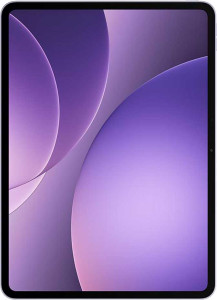
Across a broad swath of software features — split-screen multitasking, Picture-in-Picture, dark mode, dynamic theming, widget support, and privacy controls — these two tablets are virtually identical. Both run on Wi-Fi 7 (802.11be) and share Bluetooth 5.4, placing them on equal footing for wireless connectivity standards. Neither offers cellular, 5G, NFC, or GPS, which are common omissions at this tablet tier.
The meaningful gaps emerge in data throughput and motion sensing. The Xiaomi Pad 8 Pro supports a peak Wi-Fi download speed of 10,000 Mbits/s versus the Oppo Pad 5's 7,300 Mbits/s — a 37% higher ceiling that matters most in dense Wi-Fi 7 environments or when transferring large files wirelessly. More practically, the Xiaomi also has a significantly faster USB 3.2 port, while the Oppo's USB version registers as unspecified at a value suggesting a much older standard — a real disadvantage for anyone who transfers large files, connects external displays, or uses the port for high-speed peripherals. Additionally, the Xiaomi includes both a gyroscope and a compass, sensors the Oppo Pad 5 lacks entirely. These enable more accurate motion-based interactions, augmented reality applications, and navigation — niche but not insignificant for certain use cases.
Given the Xiaomi Pad 8 Pro's advantages in USB speed, wireless throughput ceiling, and sensor suite, it holds a clear connectivity edge in this category. The Oppo Pad 5 matches it on every software feature, but falls short where hardware-level connectivity counts most.