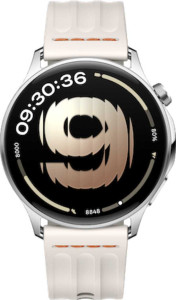
Oppo Watch S
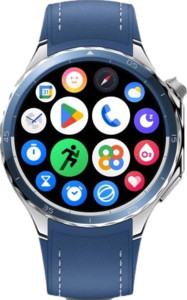
Oppo Watch X2

Oppo Watch S Oppo Watch X2

Overview

Welcome to our in-depth spec comparison between the Oppo Watch S and the Oppo Watch X2. Both smartwatches share a strong foundation — OLED displays, comprehensive health sensors, and broad activity tracking — yet they take noticeably different paths when it comes to design philosophy, connectivity options, and battery strategy. Whether you value a slim, lightweight form factor or a feature-packed, premium build, this comparison will help you find the right fit.

Common Features

  • Both watches feature an OLED/AMOLED display.
  • Both watches are waterproof with a 5 ATM rating.
  • Both watches have an IP-rated water resistance.
  • Watch band is replaceable on both products.
  • Neither watch has branded damage-resistant glass specific to the standard model.
  • Both watches feature a touchscreen display.
  • Neither watch is designed for kids.
  • Both watches monitor blood oxygenation levels.
  • Both watches have a heart rate monitor.
  • Both watches have built-in GPS.
  • Both watches include an accelerometer, gyroscope, compass, barometer, and temperature sensor.
  • Both watches track sleep and provide sleep reports.
  • Both watches track steps, distance, pace, elevation, and include a route tracker.
  • Both watches automatically detect activities.
  • Neither watch has a cellular module.
  • Both watches are compatible with iOS and Android.
  • Both watches use Bluetooth 5.2.
  • Neither watch supports ANT+, but both support Galileo.
  • Neither watch has wireless charging, a solar power battery, or a removable battery.
  • Both watches have a rechargeable battery.
  • Both watches measure VO2 max and resting heart rate.
  • Both watches support fast/slow heart rate notifications and ECG technology.
  • Both watches can be used to answer calls and have call control and notifications.
  • Both watches have a silent alarm.
  • Both watches provide activity reports, inactivity alerts, calorie tracking, goal setting, achievements, an exercise diary, and a free ad-free app.
  • Both watches have a battery level indicator and passcode support.
  • Neither watch is compatible with Windows or Mac OS X.
  • Neither watch has an external memory slot.

Main Differences

  • Screen size is 1.46″ on Oppo Watch S and 1.5″ on Oppo Watch X2.
  • IP rating is IP68 on Oppo Watch S and IP67 on Oppo Watch X2.
  • Waterproof depth rating is 1.5 m on Oppo Watch S and 50 m on Oppo Watch X2.
  • Always-On Display is not available on Oppo Watch S but is present on Oppo Watch X2.
  • Pixel density is 317 ppi on Oppo Watch S and 310 ppi on Oppo Watch X2.
  • Resolution is 464 x 464 px on Oppo Watch S and 466 x 466 px on Oppo Watch X2.
  • Thickness is 8.9 mm on Oppo Watch S and 11.8 mm on Oppo Watch X2.
  • Weight is 35 g on Oppo Watch S and 49.7 g on Oppo Watch X2.
  • Height is 45 mm on Oppo Watch S and 46.6 mm on Oppo Watch X2.
  • Width is 45 mm on Oppo Watch S and 47.6 mm on Oppo Watch X2.
  • Sapphire glass display is not present on Oppo Watch S but is available on Oppo Watch X2.
  • Volume is 18.0225 cm³ on Oppo Watch S and 26.174288 cm³ on Oppo Watch X2.
  • Wi-Fi support is not available on Oppo Watch S but is present on Oppo Watch X2.
  • NFC is not available on Oppo Watch S but is present on Oppo Watch X2.
  • Battery life is 7 days on Oppo Watch S and 5 days on Oppo Watch X2.
  • Battery power is 339 mAh on Oppo Watch S and 648 mAh on Oppo Watch X2.
  • HRV tracking is available on Oppo Watch S but not on Oppo Watch X2.
  • Readiness level is shown on Oppo Watch S but not on Oppo Watch X2.
  • Phone locating feature is not available on Oppo Watch S but is present on Oppo Watch X2.
  • Irregular heart rate warnings are available on Oppo Watch S but not on Oppo Watch X2.
  • Internal storage is 4GB on Oppo Watch S and 32GB on Oppo Watch X2.
  • A 3.5 mm audio jack socket is present on Oppo Watch S but not available on Oppo Watch X2.
Specs Comparison
Oppo Watch S

Oppo Watch S

Oppo Watch X2

Oppo Watch X2

Design:
screen size 1.46" 1.5"
Display type OLED/AMOLED OLED/AMOLED
water resistance Waterproof Waterproof
ATM rating 5 ATM 5 ATM
Ingress Protection (IP) rating IP68 IP67
waterproof depth rating 1.5 m 50 m
Always-On Display
pixel density 317 ppi 310 ppi
resolution 464 x 464 px 466 x 466 px
Watch band is replaceable
has branded damage-resistant glass
thickness 8.9 mm 11.8 mm
weight 35 g 49.7 g
height 45 mm 46.6 mm
width 45 mm 47.6 mm
Has a display
has a touch screen
Has sapphire glass display
volume 18.0225 cm³ 26.174288 cm³
is designed for kids

The most immediate design difference between the Oppo Watch S and Oppo Watch X2 is physical presence. The Watch S is notably slimmer at 8.9 mm thick and lighter at 35 g, compared to the Watch X2's 11.8 mm thickness and 49.7 g weight. That near-15 g difference is meaningful for all-day and sleep tracking wear — a lighter watch causes less wrist fatigue and is far less noticeable during workouts or at rest. The Watch S's smaller overall volume (18.02 cm³ vs 26.17 cm³) confirms it is the more compact, discreet option, making it better suited for users who prioritize comfort and a low-profile look.

On display quality, both watches use OLED/AMOLED panels, but the Watch X2 pulls ahead in two meaningful ways. First, it features an Always-On Display, allowing time and key metrics to remain visible without a wrist raise — a genuine convenience in daily use. Second, the Watch X2 is equipped with sapphire glass, one of the hardest materials used in watch faces, offering significantly better scratch resistance over time compared to the Watch S, which has no branded damage-resistant glass. Pixel density is virtually equivalent (317 ppi vs 310 ppi), so sharpness is a non-issue for either device.

On water resistance, the specs tell a nuanced story. The Watch S holds an IP68 rating but is only rated to 1.5 m depth, while the Watch X2 carries an IP67 rating yet is rated to an impressive 50 m depth — making the Watch X2 far more capable for swimming or water sports despite its nominally lower IP number. Overall, the Watch S has a clear edge in wearability and comfort, while the Watch X2 wins on durability, display functionality, and water resistance depth — making it the stronger pick for active or outdoor-focused users.

Sensors:
Monitors blood oxygenation levels
Has a heart rate monitor
has GPS
has an accelerometer
Has a temperature sensor
has a compass
Has a barometer
has a gyroscope
Has a cadence sensor
Monitors perspiration

Across every sensor listed, the Oppo Watch S and Oppo Watch X2 are in complete lockstep. Both carry a comprehensive suite that covers the essentials for health and fitness tracking: heart rate monitor, SpO2 (blood oxygen), temperature sensor, accelerometer, gyroscope, barometer, compass, and GPS. This is a strong and well-rounded sensor package by any measure, capable of supporting a wide range of workout types, altitude tracking, sleep health monitoring, and navigation.

The practical implications of this shared hardware are significant. Onboard GPS means neither watch relies on a paired phone for route tracking, a meaningful advantage for runners and cyclists. The barometer enables elevation gain measurement and even weather trend detection, while the gyroscope combined with the accelerometer allows for more accurate movement classification — distinguishing a swim stroke from a walk, for instance. The temperature sensor adds a layer of wellness insight, useful for tracking body temperature trends over time.

With neither watch holding any sensor advantage — both also missing a cadence sensor and perspiration monitoring — this category is a clear tie. The sensor parity means your choice between the two should rest entirely on other factors like design, battery life, or software features, as health and fitness data collection capabilities are effectively identical.

Activity tracking:
Tracks your sleep
Tracks distance
Tracks steps taken
Measures pace
Provides sleep reports
Detects activities automatically
Has a route tracker
Tracks elevation
Has exercise tagging
Tracks calorie intake
Designed for diving
Designed for golf

Activity tracking is another category where the Oppo Watch S and Oppo Watch X2 are completely identical on paper. Both cover the full spectrum of everyday fitness needs: sleep tracking with reports, step counting, distance, pace, calorie intake, and elevation — a combination that serves casual walkers and dedicated athletes alike. Automatic activity detection is a particularly useful shared feature, as it removes the need to manually log workouts, ensuring no session goes unrecorded even when you forget to start tracking.

The inclusion of route tracking and exercise tagging on both devices rounds out a capable package for users who want to review their performance over time. Route tracking lets you replay and analyze outdoor sessions, while exercise tagging helps organize workout history by type — both features that add real value beyond raw data collection. Neither watch is positioned for niche sports, with both explicitly not designed for diving or golf, keeping the focus squarely on mainstream fitness use cases.

Given the spec-for-spec match across every single activity tracking feature, this category is an unambiguous tie. There is no data here to differentiate the two watches, so users prioritizing activity tracking breadth can confidently evaluate the two products on other criteria entirely.

Connectivity:
has a cellular module
Is compatible with iOS
Is compatible with Android
Bluetooth version 5.2 5.2
supports Wi-Fi
supports ANT+
has NFC
supports Galileo

Both the Oppo Watch S and Oppo Watch X2 share a solid connectivity foundation: Bluetooth 5.2 for stable, energy-efficient pairing, full compatibility with both iOS and Android, and support for the Galileo satellite system alongside GPS for improved location accuracy. Neither watch offers a cellular module, meaning both depend on a paired phone for calls and data — a relevant consideration for users who want watch independence during runs or commutes.

Where the two diverge is in two practical extras. The Watch X2 adds Wi-Fi support, which enables faster firmware updates and data syncing without needing Bluetooth proximity to a phone. More notably, it also includes NFC, enabling contactless payments directly from the wrist — a feature many users consider a daily-use convenience that the Watch S entirely lacks. Neither watch supports ANT+, so compatibility with third-party fitness equipment like gym machines or cycling sensors is off the table for both.

The Oppo Watch X2 holds a clear edge in this category. While the shared Bluetooth version and cross-platform compatibility keep the basics even, the addition of Wi-Fi and NFC on the Watch X2 meaningfully expands its real-world utility — particularly for users who rely on contactless payments or want a more self-sufficient syncing experience.

Battery:
battery life 7 days 5 days
battery power 339 mAh 648 mAh
has wireless charging
has a rechargeable battery
Has a solar power battery
has a removable battery

The battery specs here present an interesting paradox. The Oppo Watch X2 packs a significantly larger 648 mAh cell compared to the Watch S's 339 mAh — nearly double the capacity — yet it delivers a shorter rated battery life of 5 days versus the Watch S's 7 days. This tells a clear story: the Watch X2's additional hardware, most notably its Always-On Display, sapphire glass panel, Wi-Fi, and NFC, consume enough power to more than offset the larger battery, resulting in a net reduction in longevity.

In practical terms, a 7-day battery means the Watch S can comfortably last a full week for most users without needing a charge, reducing the friction of daily or every-other-day charging cycles. The Watch X2's 5-day rating, while still respectable for a feature-rich smartwatch, requires more frequent attention — typically a mid-week top-up for weekend-to-weekend users. Neither watch supports wireless charging, so both require a proprietary cable, which is a minor but equal inconvenience for both.

For battery longevity, the Oppo Watch S holds a meaningful edge. Its superior efficiency — achieving more days of use from a smaller cell — makes it the stronger choice for users who prioritize going longer between charges, particularly travelers or those who dislike charging routines. The Watch X2's larger battery is better understood as a necessity to sustain its richer feature set rather than a stamina advantage.

Features:
release date October 2025 February 2025
has HRV tracking
measures VO2 max
measures resting heart rate
has fast/slow heart rate notifications
shows readiness level
Can be used to answer calls
Locates your phone
Has call control
Has notifications
has irregular heart rate warnings
Has ECG technology
Has silent alarm
Has vibrating alerts
has fall detection
Has a stopwatch
Has smart alarm
has voice commands
internal storage 4GB 32GB
Acquires GPS faster
warranty period 1 years 1 years
has a front camera

Despite sharing a long list of features — including ECG, VO2 max, call answering, voice commands, and fast GPS acquisition — the Watch S and Watch X2 diverge meaningfully in health intelligence. The Oppo Watch S adds HRV tracking, a readiness score, and irregular heart rate warnings, none of which appear on the Watch X2. HRV (heart rate variability) is one of the more sophisticated wellness metrics available on consumer wearables, used to gauge recovery and stress levels; pairing it with a readiness score gives users actionable daily guidance on whether to push hard or rest. The absence of these features on the Watch X2 is a notable gap for health-conscious users.

The Watch X2 counters with a commanding lead in internal storage32GB versus just 4GB on the Watch S. That is an eight-fold difference, making the Watch X2 far more capable of storing music, workouts, or app data locally — a genuine advantage for users who want to leave their phone behind. The Watch X2 also adds a phone finder feature, a small but frequently appreciated convenience the Watch S omits.

This category produces a split verdict depending on user priority. The Watch S has the edge for health tracking depth, offering a more complete cardiac and recovery monitoring suite. The Watch X2 wins on storage capacity and device utility. Users who treat their watch primarily as a wellness tool will find more value in the Watch S's feature set, while those who want maximum onboard storage and everyday convenience extras will lean toward the Watch X2.

App & Software:
Provides activity reports
Has inactivity alerts
Counts how many calories you've burned
Has goal setting
Has achievements
Free app
Has exercise diary
Ad-free
Has coaching
Has temperature tracking
Supports routes
Syncs with existing calendars
Has music playback
Exports to email
Doesn’t require account
Supports widgets
Can be personalised
Has barcode scanner on app
Tracks water intake
Has weight tracking

When it comes to app and software capabilities, the Oppo Watch S and Oppo Watch X2 are mirror images of each other. Every single feature in this category — from goal setting and activity reports to water intake tracking, weight tracking, and calendar sync — is present on both devices without exception. Both apps are free and ad-free, which matters for day-to-day usability, and both support widgets and personalization, giving users a degree of control over how data is surfaced.

A few shared limitations are worth noting. Neither watch supports route planning through the app, neither allows data export via email, and both require an account to function. The absence of coaching features on both devices means users looking for guided training programs will need to look elsewhere. That said, the combination of an exercise diary, inactivity alerts, calorie tracking, music playback, and temperature tracking covers the needs of most mainstream fitness users without requiring a premium subscription.

This category is a complete tie — not a single differentiator exists between the two watches in app and software features. Prospective buyers can set this dimension aside entirely and focus their decision on the hardware and feature differences that do separate the two, such as health tracking depth, storage, or design.

Miscellaneous:
has a battery level indicator
Has passcode
Is compatible with Windows
has an external memory slot
Is compatible with Mac OS X
has a socket for a 3.5 mm audio jack

Most of the miscellaneous specs here are shared equally — both watches have a battery level indicator, passcode security, no external memory slot, and no compatibility with Windows or Mac OS X as standalone devices. None of these shared points meaningfully differentiate the two.

The sole distinguishing detail in this category is the 3.5mm audio jack, which is present on the Oppo Watch S but absent on the Watch X2. On a smartwatch, a headphone jack is an uncommon inclusion and allows users to connect wired earphones directly to the watch — particularly useful for listening to locally stored music without needing Bluetooth headphones or a paired phone nearby.

Given that this is the only point of difference, the Oppo Watch S has a narrow edge here for users who prefer or rely on wired audio. For the majority of users who use wireless earphones, however, this distinction will carry little practical weight, making this category largely a tie in real-world impact.

Comparison Summary & Verdict

After examining every specification, these two watches clearly target different users. The Oppo Watch S stands out for its lighter 35g frame, slimmer 8.9mm profile, longer 7-day battery life, HRV tracking, readiness level monitoring, and a 3.5mm audio jack — making it the smarter choice for everyday fitness enthusiasts who want comfort and endurance above all. The Oppo Watch X2, on the other hand, justifies its larger footprint with premium additions like an Always-On Display, sapphire glass, Wi-Fi, NFC, a vastly larger 32GB internal storage, and a deeper 50m waterproof rating — appealing to power users who demand a more versatile and durable wearable experience.

Oppo Watch S
Buy Oppo Watch S if...

Buy the Oppo Watch S if you prioritize a lightweight, slim design with longer battery life, HRV tracking, and a 3.5mm audio jack for everyday comfort and fitness use.

Oppo Watch X2
Buy Oppo Watch X2 if...

Buy the Oppo Watch X2 if you want a premium smartwatch with an Always-On Display, sapphire glass, Wi-Fi, NFC payments, 32GB storage, and a deeper waterproof rating for a more versatile experience.