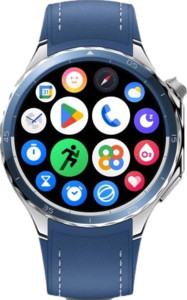
Oppo Watch X2
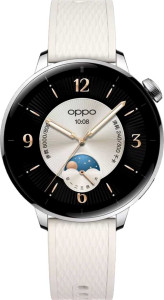
Oppo Watch X2 Mini

Oppo Watch X2 Oppo Watch X2 Mini

Overview

Choosing between the Oppo Watch X2 and the Oppo Watch X2 Mini is no simple task — both watches share a strong foundation of health and fitness features, yet they diverge in meaningful ways. This in-depth comparison examines the key battlegrounds between these two smartwatches, including battery life, body dimensions, health-monitoring capabilities, and connectivity options, to help you decide which model truly fits your lifestyle and wrist.

Common Features

  • Both watches feature an OLED/AMOLED display type.
  • Both watches are waterproof with a 5 ATM rating and an IP67 ingress protection rating, rated to 50 m depth.
  • Always-On Display is available on both watches.
  • Both watches share the same resolution of 466 x 466 px.
  • The watch band is replaceable on both models.
  • Blood oxygenation level monitoring is available on both watches.
  • A heart rate monitor is present on both watches.
  • GPS is available on both watches.
  • Both watches include an accelerometer, a compass, a barometer, and a gyroscope.
  • A cadence sensor is not available on either watch.
  • Both watches track sleep, distance, steps taken, pace, and elevation.
  • Sleep reports and automatic activity detection are available on both watches.
  • A route tracker is present on both watches.
  • Both watches are compatible with iOS and Android.
  • Both watches use Bluetooth 5.2 and support Wi-Fi 4 (802.11n).
  • ANT+ is not supported on either watch.
  • NFC is available on both watches.
  • Galileo satellite system support is present on both watches.
  • Wireless charging, solar power battery, and removable battery are not available on either watch.
  • Both watches have a rechargeable battery.
  • HRV tracking is not available on either watch.
  • VO2 max measurement, resting heart rate measurement, and fast/slow heart rate notifications are available on both watches.
  • A readiness level indicator is not available on either watch.
  • Both watches can be used to answer calls, locate the phone, and control calls.
  • Activity reports, inactivity alerts, calorie tracking, goal setting, achievements, an exercise diary, and an ad-free free app are available on both watches.
  • A battery level indicator and passcode protection are present on both watches.
  • Neither watch is compatible with Windows or Mac OS X, and neither has an external memory slot or a 3.5 mm audio jack socket.

Main Differences

  • Screen size is 1.5″ on the Oppo Watch X2 and 1.32″ on the Oppo Watch X2 Mini.
  • Pixel density is 310 ppi on the Oppo Watch X2 and 352 ppi on the Oppo Watch X2 Mini.
  • Thickness is 11.8 mm on the Oppo Watch X2 and 11 mm on the Oppo Watch X2 Mini.
  • Weight is 49.7 g on the Oppo Watch X2 and 37.8 g on the Oppo Watch X2 Mini.
  • Height is 46.6 mm on the Oppo Watch X2 and 43.2 mm on the Oppo Watch X2 Mini.
  • Width is 47.6 mm on the Oppo Watch X2 and 43.2 mm on the Oppo Watch X2 Mini.
  • Volume is 26.174288 cm³ on the Oppo Watch X2 and 20.52864 cm³ on the Oppo Watch X2 Mini.
  • A temperature sensor is present on the Oppo Watch X2 but not available on the Oppo Watch X2 Mini.
  • A cellular module is present on the Oppo Watch X2 Mini but not available on the Oppo Watch X2.
  • Battery life is 5 days on the Oppo Watch X2 and 16 days on the Oppo Watch X2 Mini.
  • Battery power is 648 mAh on the Oppo Watch X2 and 345 mAh on the Oppo Watch X2 Mini.
  • Charge time is 1.3 hours on the Oppo Watch X2 and 1 hour on the Oppo Watch X2 Mini.
  • Battery life in power save mode is 384 hours on the Oppo Watch X2 and 168 hours on the Oppo Watch X2 Mini.
  • ECG technology is present on the Oppo Watch X2 but not available on the Oppo Watch X2 Mini.
  • Temperature tracking in the app is available on the Oppo Watch X2 but not on the Oppo Watch X2 Mini.
Specs Comparison
Oppo Watch X2

Oppo Watch X2

Oppo Watch X2 Mini

Oppo Watch X2 Mini

Design:
screen size 1.5" 1.32"
Display type OLED/AMOLED OLED/AMOLED
water resistance Waterproof Waterproof
ATM rating 5 ATM 5 ATM
Ingress Protection (IP) rating IP67 IP67
waterproof depth rating 50 m 50 m
Always-On Display
pixel density 310 ppi 352 ppi
resolution 466 x 466 px 466 x 466 px
Watch band is replaceable
has branded damage-resistant glass
thickness 11.8 mm 11 mm
weight 49.7 g 37.8 g
height 46.6 mm 43.2 mm
width 47.6 mm 43.2 mm
maximum operating temperature 70 °C 70 °C
lowest potential operating temperature -40 °C -40 °C
Has a display
has a touch screen
Has sapphire glass display
volume 26.174288 cm³ 20.52864 cm³
is designed for kids

The most fundamental design difference between the Oppo Watch X2 and the Oppo Watch X2 Mini is physical size. The standard X2 carries a 1.5″ AMOLED display in a 46.6 × 47.6 mm case weighing 49.7 g, while the Mini offers a 1.32″ panel in a more compact 43.2 × 43.2 mm frame at just 37.8 g. That roughly 12 g weight reduction is meaningful in daily wear — a lighter watch is noticeably less fatiguing over long periods and tends to sit more comfortably during sleep tracking. The Mini's smaller footprint also makes it a far better fit for narrower wrists where the X2's wider case might overhang or feel disproportionate.

Despite the smaller screen, the Mini actually achieves a higher pixel density of 352 ppi versus the X2's 310 ppi, because both watches share the same 466 × 466 px resolution packed into a smaller area. In practice, this means text and UI elements may appear marginally crisper on the Mini, though the X2's larger canvas provides more comfortable readability and a more immersive experience at a glance. Both watches use sapphire glass — a premium, scratch-resistant material that is a genuine real-world advantage over standard mineral glass — and both support an Always-On Display. Neither carries a branded damage-resistant glass coating beyond sapphire.

On durability, the two are perfectly matched: both are rated 5 ATM / IP67 with a waterproof depth of 50 m, and both operate across the same extreme temperature range (-40 °C to 70 °C). The edge in this group depends entirely on wrist size and preference: the X2 wins for screen real estate and visual impact, while the Mini holds a clear advantage in comfort and wearability for smaller wrists, thanks to its lighter weight, reduced thickness (11 mm vs 11.8 mm), and higher pixel density.

Sensors:
Monitors blood oxygenation levels
Has a heart rate monitor
has GPS
has an accelerometer
Has a temperature sensor
has a compass
Has a barometer
has a gyroscope
Has a cadence sensor
Monitors perspiration

Across most of the sensor suite, the Oppo Watch X2 and Watch X2 Mini are nearly identical — both pack GPS, heart rate monitoring, blood oxygen tracking, an accelerometer, gyroscope, compass, and barometer. For everyday fitness and health use, this shared foundation is strong: onboard GPS means accurate route tracking without needing a paired phone, while the barometer adds value for hikers and stair-climbers by enabling elevation and floor-count tracking.

The one meaningful divergence is the temperature sensor, which is present on the X2 but absent on the Mini. Wrist-based temperature sensors are primarily used for tracking body temperature trends over time — useful for detecting early signs of illness, monitoring menstrual cycle patterns, or flagging overnight fluctuations that may indicate recovery stress. It is not a clinical thermometer, but as a longitudinal wellness signal it adds a layer of health insight the Mini simply cannot provide.

Both watches omit a cadence sensor and perspiration monitoring, so neither has an edge in those areas. Overall, the X2 holds a clear advantage in this group — the addition of a temperature sensor meaningfully expands its health monitoring capabilities beyond what the Mini offers, making it the stronger choice for users who prioritize comprehensive wellness tracking.

Activity tracking:
Tracks your sleep
Tracks distance
Tracks steps taken
Measures pace
Provides sleep reports
Detects activities automatically
Has a route tracker
Tracks elevation
Has multi-sport mode
Has exercise tagging
Tracks calorie intake
Designed for diving
Designed for golf

When it comes to activity tracking, the Oppo Watch X2 and Watch X2 Mini are in complete lockstep — every single capability in this group is shared identically between them. Both track sleep with full reports, monitor steps, distance, pace, and elevation, and both support automatic activity detection, exercise tagging, route tracking, and calorie intake logging. This is a well-rounded feature set that comfortably covers the needs of most everyday fitness users.

A few highlights worth contextualizing: automatic activity detection removes the friction of manually starting a workout, which is particularly useful for users who mix spontaneous movement with structured exercise. Elevation tracking — backed by the barometer confirmed in both devices — makes outdoor activities like hiking meaningfully more detailed. And sleep reports (not just raw sleep tracking) indicate structured analysis of sleep stages rather than a simple on/off log, adding genuine recovery insight.

Neither watch supports a dedicated multi-sport mode, and neither is designed for specialized use cases like diving or golf. Since there is not a single differentiating spec in this group, the verdict here is a complete tie — your choice between the two should rest entirely on the differences identified in other spec groups.

Connectivity:
has a cellular module
Is compatible with iOS
Is compatible with Android
Bluetooth version 5.2 5.2
supports Wi-Fi
Wi-Fi version Wi-Fi 4 (802.11n) Wi-Fi 4 (802.11n)
supports ANT+
has NFC
supports Galileo

Shared connectivity features between the Oppo Watch X2 and Watch X2 Mini form a solid baseline: both run Bluetooth 5.2 for stable, low-energy pairing, support Wi-Fi 4, carry NFC for contactless payments, and are compatible with both iOS and Android. Galileo satellite support on both devices also broadens GPS accuracy across regions where that constellation provides better coverage.

The single — but significant — dividing line is cellular connectivity. The Watch X2 Mini includes a cellular module; the standard X2 does not. This is a genuinely impactful distinction: a cellular-enabled watch can make and receive calls, stream data, and operate independently of a paired smartphone. For users who want to leave their phone behind during runs, commutes, or workouts while staying reachable, the Mini's cellular capability is a substantial functional upgrade over the X2.

Despite the X2 being the larger, ostensibly more premium model, the Watch X2 Mini holds a clear and meaningful edge in this group solely due to its cellular module. All other connectivity specs are identical, so this one feature entirely determines the winner for users who value phone-free independence.

Battery:
battery life 5 days 16 days
battery power 648 mAh 345 mAh
charge time 1.3 hours 1 hours
battery life in power save mode 384 hours 168 hours
has wireless charging
has a rechargeable battery
Has a solar power battery
has a removable battery

Battery life is where the data delivers a genuinely counterintuitive result. The Oppo Watch X2 carries a substantially larger 648 mAh cell versus the Mini's 345 mAh — nearly double the capacity — yet the Watch X2 Mini rated battery life of 16 days dwarfs the X2's 5 days. This strongly implies that the X2's larger, brighter display and more power-intensive components draw significantly more energy in normal operation, to the point where raw capacity alone cannot compensate. For most users, 5 days is workable but demands a weekly charging rhythm, while 16 days is in a different category of convenience entirely.

Power-save mode tells a different story: the X2 extends to an impressive 384 hours (16 days) in that mode, while the Mini reaches 168 hours (7 days). This means that in emergencies or low-usage periods, the X2 can actually outlast the Mini — though this reversal only applies under a stripped-down power-save profile rather than everyday use. Both watches charge without wireless support, but the Mini also edges ahead on charge time at 1 hour versus the X2's 1.3 hours, a modest but real convenience advantage.

For day-to-day use, the Watch X2 Mini holds a commanding advantage in this group. Its ability to last 16 days on a smaller battery means fewer interruptions, less charging anxiety, and better suitability for travel or extended outdoor use — making it the clear winner for users who prioritize longevity over raw capacity figures.

Features:
release date February 2025 April 2025
has HRV tracking
measures VO2 max
measures resting heart rate
has fast/slow heart rate notifications
shows readiness level
Can be used to answer calls
Locates your phone
Has call control
Has notifications
has irregular heart rate warnings
Has ECG technology
Has silent alarm
Has vibrating alerts
has fall detection
Has a stopwatch
Has smart alarm
has voice commands
RAM 2GB 2GB
internal storage 32GB 32GB
Acquires GPS faster
warranty period 1 years 1 years
has a front camera

Functionally, these two watches share a remarkably broad feature set: both offer VO2 max measurement, resting heart rate tracking, fast/slow heart rate notifications, call answering and control, voice commands, notifications, silent and vibrating alarms, a stopwatch, fast GPS acquisition, and identical hardware specs of 2GB RAM and 32GB internal storage. That last point is particularly notable — 32GB of onboard storage is generous for a smartwatch and suggests capacity for local music or app data without relying on a phone.

The sole differentiator in this group is ECG technology, which is present on the Oppo Watch X2 but absent on the Mini. ECG capability allows the watch to generate an electrocardiogram reading that can help detect atrial fibrillation — a clinically meaningful feature that goes well beyond standard heart rate monitoring. It is not a medical device, but for users with cardiac health concerns or those who want a deeper cardiovascular snapshot on demand, its absence on the Mini is a tangible limitation.

Everything else — from the missing HRV tracking and fall detection to the shared warranty period and voice command support — is identical across both models. The verdict for this group is straightforward: the X2 has a clear edge due exclusively to its ECG technology, which adds a meaningful health monitoring capability the Mini cannot replicate.

App & Software:
Provides activity reports
Has inactivity alerts
Counts how many calories you've burned
Has goal setting
Has achievements
Free app
Has exercise diary
Ad-free
Has coaching
Has temperature tracking
Supports routes
Syncs with existing calendars
Has music playback
Exports to email
Doesn’t require account
Supports widgets
Can be personalised
Has barcode scanner on app
Tracks water intake
Has weight tracking

Both the Oppo Watch X2 and Watch X2 Mini are backed by a well-featured companion app that covers the essentials and then some. Activity reports, calorie burn, goal setting, an exercise diary, water intake logging, weight tracking, calendar sync, music playback, and widget support are all present on both — and critically, the app is both free and ad-free, which is not a given in this product category. The inclusion of inactivity alerts and achievements also suggests the app is designed to encourage consistent engagement rather than just passive data logging.

The only functional divergence is temperature tracking in the app, available for the X2 but not the Mini. This directly mirrors the hardware difference identified in the Sensors group — since the Mini lacks a temperature sensor, its app naturally cannot surface that data. For X2 users, having temperature trends accessible within the app adds a longitudinal wellness dimension that the Mini's software simply has no equivalent for.

Neither app supports route mapping, email export, or coaching features, and both require an account to function. On the whole, this is a near-complete tie in software capability, with the X2 holding a narrow edge purely by virtue of its temperature tracking support — a gap that flows from hardware rather than any software-level decision by Oppo.

Miscellaneous:
has a battery level indicator
Has passcode
Is compatible with Windows
has an external memory slot
Is compatible with Mac OS X
has a socket for a 3.5 mm audio jack

The Miscellaneous group offers no differentiation whatsoever between the Oppo Watch X2 and Watch X2 Mini. Every spec here is identical: both include a battery level indicator and passcode protection, and both equally lack Windows and Mac OS X compatibility, an external memory slot, and a 3.5mm audio jack.

The absence of desktop OS compatibility is standard for smartwatches in this category and is unlikely to affect most users, who will manage the device through a paired smartphone. Similarly, the lack of an external memory slot is unsurprising given that both watches already offer a generous 32GB of internal storage as noted in the Features group. Passcode support is a worthwhile security baseline, ensuring that health and notification data stays protected if the watch is removed.

With no differentiating data points present, this group is an unambiguous complete tie. Neither watch holds any advantage here, and the decision between the two remains entirely dependent on the distinctions surfaced in other specification groups.

Comparison Summary & Verdict

After a thorough look at the specs, each watch carves out a clear niche. The Oppo Watch X2 is the stronger choice for health enthusiasts who want richer biometric data, thanks to its ECG technology and temperature sensor, and it also offers a significantly larger 1.5″ display. However, its bulk and shorter real-world battery life may deter some users. The Oppo Watch X2 Mini, on the other hand, shines with an impressive 16-day battery life, a lighter and more compact build at just 37.8 g, a built-in cellular module for standalone connectivity, and a faster 1-hour charge time — making it ideal for those who prioritize endurance and independence from their phone. Both watches are equally strong on activity tracking, cross-platform compatibility, and core sensors, so the decision ultimately comes down to health-feature depth versus everyday practicality.

Oppo Watch X2
Buy Oppo Watch X2 if...

Buy the Oppo Watch X2 if you want advanced health monitoring, including ECG technology and a temperature sensor, and prefer a larger display for easier readability.

Oppo Watch X2 Mini
Buy Oppo Watch X2 Mini if...

Buy the Oppo Watch X2 Mini if you prioritize a longer 16-day battery life, a lighter and more compact design, built-in cellular connectivity, and faster charging.