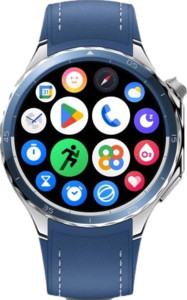
Oppo Watch X2
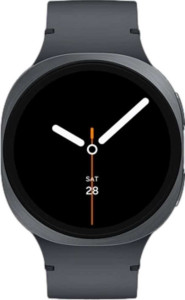
Samsung Galaxy Watch8 LTE 44mm

Oppo Watch X2 Samsung Galaxy Watch8 LTE 44mm

Overview

Welcome to our in-depth comparison of the Oppo Watch X2 and the Samsung Galaxy Watch8 LTE 44mm — two capable smartwatches that take notably different approaches to design, connectivity, and health monitoring. Whether you care most about battery endurance, cellular independence, or the breadth of health-tracking features, this head-to-head breakdown covers every key specification to help you make an informed choice.

Common Features

  • Both watches feature an OLED/AMOLED display.
  • Both watches are rated at 5 ATM and waterproof to 50 m.
  • Always-On Display is available on both watches.
  • The watch band is replaceable on both watches.
  • Neither watch features branded damage-resistant glass.
  • Both watches have a touchscreen display.
  • Both watches monitor blood oxygenation levels.
  • Both watches include a heart rate monitor.
  • Both watches have built-in GPS.
  • Both watches include an accelerometer, gyroscope, compass, barometer, and temperature sensor.
  • Both watches track sleep, distance, steps, pace, elevation, and route.
  • Both watches provide sleep and activity reports and detect activities automatically.
  • Both watches are compatible with Android and support Wi-Fi 4 (802.11n).
  • NFC is available on both watches.
  • Both watches support the Galileo satellite system.
  • ANT+ is not supported on either watch.
  • Both watches have a rechargeable, non-removable battery with no solar charging capability.
  • Both watches measure VO2 max, resting heart rate, and provide fast/slow heart rate notifications.
  • Both watches support call answering, call control, phone locating, notifications, and ECG technology.
  • Both watches offer activity reports, inactivity alerts, calorie tracking, goal setting, achievements, an exercise diary, a free app, and an ad-free experience.
  • Neither watch is compatible with Windows or Mac OS X, has an external memory slot, or includes a 3.5 mm audio jack.
  • Both watches have a battery level indicator and passcode support.

Main Differences

  • Screen size is 1.5″ on Oppo Watch X2 and 1.47″ on Samsung Galaxy Watch8 LTE 44mm.
  • Oppo Watch X2 is rated as fully waterproof, while Samsung Galaxy Watch8 LTE 44mm is rated as water resistant.
  • Ingress Protection rating is IP67 on Oppo Watch X2 and IP68 on Samsung Galaxy Watch8 LTE 44mm.
  • Pixel density is 310 ppi on Oppo Watch X2 and 327 ppi on Samsung Galaxy Watch8 LTE 44mm.
  • Resolution is 466 x 466 px on Oppo Watch X2 and 480 x 480 px on Samsung Galaxy Watch8 LTE 44mm.
  • Thickness is 11.8 mm on Oppo Watch X2 and 8.6 mm on Samsung Galaxy Watch8 LTE 44mm.
  • Weight is 49.7 g on Oppo Watch X2 and 34 g on Samsung Galaxy Watch8 LTE 44mm.
  • Height is 46.6 mm on Oppo Watch X2 and 46 mm on Samsung Galaxy Watch8 LTE 44mm.
  • Width is 47.6 mm on Oppo Watch X2 and 43.7 mm on Samsung Galaxy Watch8 LTE 44mm.
  • Maximum operating temperature is 70 °C on Oppo Watch X2 and 35 °C on Samsung Galaxy Watch8 LTE 44mm.
  • Lowest potential operating temperature is -40 °C on Oppo Watch X2 and 0 °C on Samsung Galaxy Watch8 LTE 44mm.
  • Volume is 26.17 cm³ on Oppo Watch X2 and 17.29 cm³ on Samsung Galaxy Watch8 LTE 44mm.
  • A cellular module is present on Samsung Galaxy Watch8 LTE 44mm but not available on Oppo Watch X2.
  • iOS compatibility is available on Oppo Watch X2 but not on Samsung Galaxy Watch8 LTE 44mm.
  • Bluetooth version is 5.2 on Oppo Watch X2 and 5.3 on Samsung Galaxy Watch8 LTE 44mm.
  • Battery life is 5 days on Oppo Watch X2 and 2 days on Samsung Galaxy Watch8 LTE 44mm.
  • Battery power is 648 mAh on Oppo Watch X2 and 435 mAh on Samsung Galaxy Watch8 LTE 44mm.
  • Wireless charging is available on Samsung Galaxy Watch8 LTE 44mm but not on Oppo Watch X2.
  • HRV tracking is present on Samsung Galaxy Watch8 LTE 44mm but not available on Oppo Watch X2.
  • Readiness level reporting is available on Samsung Galaxy Watch8 LTE 44mm but not on Oppo Watch X2.
  • Irregular heart rate warnings are present on Samsung Galaxy Watch8 LTE 44mm but not available on Oppo Watch X2.
  • Fall detection is available on Samsung Galaxy Watch8 LTE 44mm but not on Oppo Watch X2.
  • Coaching is available on Samsung Galaxy Watch8 LTE 44mm but not on Oppo Watch X2.
  • Route support in the app is available on Samsung Galaxy Watch8 LTE 44mm but not on Oppo Watch X2.
Specs Comparison
Oppo Watch X2

Oppo Watch X2

Samsung Galaxy Watch8 LTE 44mm

Samsung Galaxy Watch8 LTE 44mm

Design:
screen size 1.5" 1.47"
Display type OLED/AMOLED OLED/AMOLED
water resistance Waterproof Water resistant
ATM rating 5 ATM 5 ATM
Ingress Protection (IP) rating IP67 IP68
waterproof depth rating 50 m 50 m
Always-On Display
pixel density 310 ppi 327 ppi
resolution 466 x 466 px 480 x 480 px
Watch band is replaceable
has branded damage-resistant glass
thickness 11.8 mm 8.6 mm
weight 49.7 g 34 g
height 46.6 mm 46 mm
width 47.6 mm 43.7 mm
maximum operating temperature 70 °C 35 °C
lowest potential operating temperature -40 °C 0 °C
Has a display
has a touch screen
Has sapphire glass display
volume 26.174288 cm³ 17.28772 cm³
is designed for kids

Both watches share a strong design foundation: OLED/AMOLED displays, sapphire glass, Always-On Display, and replaceable bands. However, the physical form factor tells two very different stories. The Oppo Watch X2 is noticeably bulkier — at 11.8 mm thick and 49.7 g, it carries nearly 46% more weight than the Samsung Galaxy Watch8 44mm, which measures just 8.6 mm thick and weighs 34 g. That 15-gram difference is significant for all-day wear, and the Samsung's slimmer profile is less likely to catch on sleeves or feel intrusive during workouts. The Oppo's larger volume (26.17 cm³ vs 17.29 cm³) underscores just how much more wrist real estate it occupies.

On display quality, the Samsung edges ahead despite having a marginally smaller 1.47″ screen versus the Oppo's 1.5″. Its 480 x 480 px resolution at 327 ppi delivers a noticeably crisper image than the Oppo's 466 x 466 px at 310 ppi. In practical terms, text and watch faces will appear slightly sharper on the Samsung. Water protection is nearly identical — both rated 5 ATM at 50 m depth — though the Samsung carries an IP68 rating versus the Oppo's IP67, giving it a slight ingress protection advantage on paper.

One area where the Oppo stands out meaningfully is operating temperature range: it is rated from -40 °C to 70 °C, compared to the Samsung's narrow 0 °C to 35 °C window. For users in extreme cold climates or high-heat environments, this is a genuine differentiator. Overall, though, the Samsung Galaxy Watch8 holds a clear design edge for most users — it is lighter, thinner, and sharper-screened, making it the more wearable and refined option on a day-to-day basis.

Sensors:
Monitors blood oxygenation levels
Has a heart rate monitor
has GPS
has an accelerometer
Has a temperature sensor
has a compass
Has a barometer
has a gyroscope
Has a cadence sensor
Monitors perspiration

When it comes to sensors, these two watches are in complete lockstep. Both carry the full suite expected of a premium smartwatch in 2024: heart rate monitor, SpO2 (blood oxygen), GPS, accelerometer, gyroscope, barometer, compass, and a temperature sensor. This means neither watch has a gap in core health or fitness tracking capability — whether you are monitoring elevation on a trail run, tracking sleep temperature trends, or keeping tabs on your cardiovascular health, both deliver the same hardware foundation.

The shared absences are equally telling. Neither watch includes a cadence sensor or perspiration monitoring — the latter being a relatively rare feature even at this price tier, so its absence is not a meaningful strike against either product. The lack of cadence sensing is worth noting for dedicated cyclists who rely on pedal-stroke data, but for the general fitness user, the remaining sensor array more than compensates.

This group is a clear tie. The sensor specifications are identical across every data point provided, meaning hardware capability alone cannot differentiate these two watches here. A buyer's decision in this category would ultimately come down to how each platform's software translates these shared sensors into actionable insights — a factor outside the scope of the hardware specs themselves.

Activity tracking:
Tracks your sleep
Tracks distance
Tracks steps taken
Measures pace
Provides sleep reports
Detects activities automatically
Has a route tracker
Tracks elevation
Has multi-sport mode
Has exercise tagging
Tracks calorie intake
Designed for diving
Designed for golf

Activity tracking is another category where the Oppo Watch X2 and Samsung Galaxy Watch8 arrive at exactly the same destination. Both cover the essentials that matter most to everyday fitness users: sleep tracking with reports, step counting, distance and pace measurement, elevation tracking, and route recording. Automatic activity detection is also present on both, which is a genuinely useful quality-of-life feature — it means the watch starts logging a workout without requiring the user to manually initiate a session, reducing the chance of missed data.

The shared inclusion of calorie intake tracking and exercise tagging rounds out a well-balanced feature set for health-conscious users. Notably, neither watch supports a dedicated multi-sport mode, nor are either designed for specialized activities like diving or golf. For athletes who need seamless transitions between multiple disciplines in a single session — triathletes, for instance — this is a limitation common to both devices.

The verdict here mirrors the Sensors group: a definitive tie. Every tracked capability and every omission is identical across both products. As with sensor hardware, what will ultimately differentiate the user experience in activity tracking is how each ecosystem's software and algorithms interpret and present this shared data — and that falls outside what these specs can tell us.

Connectivity:
has a cellular module
Is compatible with iOS
Is compatible with Android
Bluetooth version 5.2 5.3
supports Wi-Fi
Wi-Fi version Wi-Fi 4 (802.11n) Wi-Fi 4 (802.11n)
supports ANT+
has NFC
supports Galileo

Connectivity is where these two watches diverge most sharply, and the differences carry real practical weight. The single biggest gap is cellular capability: the Samsung Galaxy Watch8 LTE includes a cellular module, while the Oppo Watch X2 does not. This means the Samsung can make calls, stream music, and receive notifications entirely independently of a paired smartphone — a meaningful advantage for runners or gym-goers who prefer to leave their phone behind. The Oppo, by contrast, must remain within Bluetooth range of a paired device to access most of its connected features.

Compatibility is the other major differentiator, and here the Oppo holds an exclusive advantage: it supports both Android and iOS, making it a viable option for iPhone users — a rare trait in non-Apple smartwatches. The Samsung Galaxy Watch8, however, is Android-only, locking out iPhone users entirely. For Android users, this distinction is irrelevant; for anyone in the Apple ecosystem, it is decisive. On Bluetooth, the Samsung carries a marginally newer Bluetooth 5.3 versus the Oppo's 5.2 — a difference that is largely imperceptible in everyday use. Both share identical Wi-Fi 4 support and NFC for contactless payments.

The overall edge in this group depends heavily on the user's situation. The Samsung Galaxy Watch8 wins on standalone capability thanks to its LTE module. But the Oppo Watch X2 wins on compatibility breadth, being the only option here for iOS users. Android users who want phone-free independence should lean Samsung; everyone else — or those who frequently switch ecosystems — will find the Oppo the more flexible choice.

Battery:
battery life 5 days 2 days
battery power 648 mAh 435 mAh
has wireless charging
has a rechargeable battery
Has a solar power battery
has a removable battery

Battery life is one of the most consequential specs for day-to-day smartwatch usability, and the gap here is substantial. The Oppo Watch X2 packs a 648 mAh cell rated for 5 days of use, compared to the Samsung Galaxy Watch8's 435 mAh battery with a rated life of just 2 days. In practical terms, that means Oppo users can go most of a working week without reaching for a charger, while Samsung users will need to charge roughly every other night — a routine that becomes particularly disruptive if the watch is also being used for sleep tracking.

The Samsung does reclaim some ground with wireless charging support, a convenience the Oppo lacks entirely. Being able to top up on a Qi pad or a compatible device without fumbling with proprietary cables is a genuine quality-of-life advantage — though it only partially offsets the need to charge more frequently in the first place. Neither watch offers solar charging or a removable battery, so both users are tied to a charger on a regular basis regardless.

On balance, the Oppo Watch X2 holds a clear edge in this category. A 5-day rated battery life versus 2 days is not a marginal difference — it fundamentally changes how often battery anxiety enters the picture. The Samsung's wireless charging is a welcome convenience, but for users who prioritize charging frequency above all else, the Oppo's larger capacity and longer endurance make it the more practical choice here.

Features:
release date February 2025 July 2025
has HRV tracking
measures VO2 max
measures resting heart rate
has fast/slow heart rate notifications
shows readiness level
Can be used to answer calls
Locates your phone
Has call control
Has notifications
has irregular heart rate warnings
Has ECG technology
Has silent alarm
Has vibrating alerts
has fall detection
Has a stopwatch
Has smart alarm
has voice commands
RAM 2GB 2GB
internal storage 32GB 32GB
Acquires GPS faster

Across the broad sweep of features, these two watches are remarkably well-matched — identical RAM, identical storage, shared support for ECG, VO2 max, call handling, notifications, voice commands, and fast GPS acquisition. But the Samsung Galaxy Watch8 pulls ahead in a cluster of health and safety features that collectively make a meaningful difference. It adds HRV tracking, a readiness level score, irregular heart rate warnings, and fall detection — none of which are present on the Oppo Watch X2.

Each of these omissions carries real-world weight. HRV (heart rate variability) is increasingly recognized as a reliable indicator of recovery and stress load, and its absence on the Oppo means users lose a key input for gauging how hard to push on any given day — which is precisely what the Samsung's readiness level score synthesizes into an actionable daily metric. Irregular heart rate warnings add a passive cardiac safety net, alerting users to potentially concerning rhythm patterns without requiring them to initiate a manual ECG. And fall detection, while easy to overlook for younger users, is a genuinely important safety feature for older wearers or those engaging in high-impact activities.

The Oppo Watch X2 is not deficient in the fundamentals — it covers everyday smartwatch utility thoroughly — but the Samsung Galaxy Watch8 holds a clear edge in this category. The features it adds over the Oppo are not gimmicks; they represent a more complete health monitoring and personal safety package that users focused on proactive wellness or safety assurance will find meaningfully superior.

App & Software:
Provides activity reports
Has inactivity alerts
Counts how many calories you've burned
Has goal setting
Has achievements
Free app
Has exercise diary
Ad-free
Has coaching
Has temperature tracking
Supports routes
Has music playback
Supports widgets
Can be personalised
Has barcode scanner on app
Tracks water intake
Has weight tracking

The app and software ecosystems of these two watches share an impressively broad common ground. Both deliver activity reports, goal setting, an exercise diary, calorie tracking, water intake logging, weight tracking, temperature tracking, inactivity alerts, music playback, widget support, and personalization — all through a free, ad-free app. For the vast majority of health and fitness use cases, users on either platform will find a well-rounded, polished software experience waiting for them out of the box.

The differentiators are narrow but notable. The Samsung Galaxy Watch8 app adds in-app coaching and route support, neither of which are available on the Oppo Watch X2. Coaching features provide structured guidance and adaptive feedback during workouts, which is particularly valuable for users who are newer to fitness tracking or those following a training plan. Route support, meanwhile, allows users to plan, follow, and review mapped paths directly within the app — a meaningful addition for outdoor runners and cyclists who want turn-by-turn course guidance or post-activity route analysis.

The Samsung Galaxy Watch8 takes a narrow but clear edge in this category. The Oppo Watch X2's app is comprehensive for everyday wellness tracking, but the Samsung's additions of coaching and route support add genuine depth for more structured or outdoor-focused users. Neither app charges for access or serves ads, so the Samsung's advantage here is purely about feature breadth rather than cost.
Miscellaneous:
has a battery level indicator
Has passcode
Is compatible with Windows
has an external memory slot
Is compatible with Mac OS X
has a socket for a 3.5 mm audio jack

The miscellaneous spec group for these two watches is, frankly, one of the least decisive in this entire comparison. Every single data point is identical: both include a battery level indicator and passcode protection, and both omit Windows compatibility, Mac OS X compatibility, external memory expansion, and a 3.5 mm audio jack. There is nothing here that separates them.

The shared absences are worth a brief note for context. Neither watch supports desktop OS pairing with Windows or macOS, which is standard for the smartwatch category — these devices are designed to sync via smartphone apps, not direct PC connections. The lack of a 3.5 mm audio jack and external memory slot is similarly expected at this tier; audio output is handled via Bluetooth, and both watches come with ample 32 GB of internal storage (as established in the Features group).

This group is an unambiguous tie. None of the specs listed here offer any differentiation between the Oppo Watch X2 and the Samsung Galaxy Watch8, and none of the shared omissions represent a meaningful drawback given the conventions of the modern smartwatch market. Buyers should weigh other spec groups — particularly Design, Battery, Connectivity, and Features — when making their final decision.

Comparison Summary & Verdict

After examining the full specification set, both watches share a strong foundation: AMOLED displays, comprehensive sensors, ECG support, and solid activity tracking. However, their priorities diverge sharply. The Oppo Watch X2 stands out for its exceptional 5-day battery life, wider temperature operating range, and iOS compatibility, making it the better companion for users who travel frequently or simply hate daily charging. The Samsung Galaxy Watch8 LTE 44mm, on the other hand, wins on advanced health features — offering HRV tracking, fall detection, readiness scores, and irregular heart rate warnings — alongside a built-in cellular module, wireless charging, and a noticeably slimmer and lighter build. It is the stronger pick for Android users who want a health-focused, always-connected wearable.

Oppo Watch X2
Buy Oppo Watch X2 if...

Buy the Oppo Watch X2 if you want a longer battery life of up to 5 days, need iOS compatibility, or frequently use your watch in extreme temperature conditions.

Samsung Galaxy Watch8 LTE 44mm
Buy Samsung Galaxy Watch8 LTE 44mm if...

Buy the Samsung Galaxy Watch8 LTE 44mm if you are an Android user who wants built-in LTE connectivity, advanced health features like HRV tracking and fall detection, wireless charging, and a lighter, slimmer design.