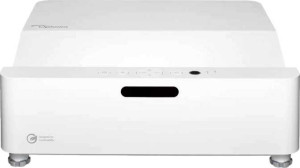
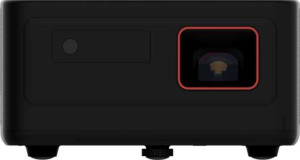
Optoma GT4000UHD
Philips GamePix 900

Optoma GT4000UHD Philips GamePix 900

Common Features

  • Both products have a dedicated smartphone app.
  • Both products have manual focus.
  • Both products have 240Hz refresh rate.
  • Both products support HDR10.
  • Both products have a remote control.
  • Both products have a built-in speaker.
  • Both products have a socket for a 3.5 mm audio jack.
  • Both products do not have stereo speakers.
  • Both products do not have lens shift (vertical).
  • Both products do not have lens shift (horizontal).
  • Both products do not support Dolby Atmos.
  • Both products do not have an external memory slot.
  • Both products do not have a VGA connector.
  • Both products do not have an S/PDIF Out port.
  • Both products have a 4K output resolution.
  • Both products do not support Dolby Vision.
  • Both products have a maximum projection size of at least 120″.
  • Both products do not support HLG.
  • Both products have an HDMI port.

Main Differences

  • Optoma GT4000UHD has a laser light source while Philips GamePix 900 does not.
  • Optoma GT4000UHD has a width of 330 mm, while Philips GamePix 900 has a width of 220 mm.
  • Optoma GT4000UHD has a height of 90 mm, while Philips GamePix 900 has a height of 120 mm.
  • Optoma GT4000UHD has a thickness of 330 mm, while Philips GamePix 900 has a thickness of 220 mm.
  • Optoma GT4000UHD weighs 4500 g, while Philips GamePix 900 weighs 2000 g.
  • Optoma GT4000UHD has a volume of 9801 cm³, while Philips GamePix 900 has a volume of 5808 cm³.
  • Optoma GT4000UHD has a response time of 4.3 ms, while Philips GamePix 900 has a response time of 6 ms.
  • Optoma GT4000UHD does not display 3D with glasses, while Philips GamePix 900 does.
  • Optoma GT4000UHD has a maximum projection size of 150″, while Philips GamePix 900 has a maximum projection size of 120″.
  • Optoma GT4000UHD has a minimum throw distance of 0.6 m, while Philips GamePix 900 has a minimum throw distance of 2 m.
  • Optoma GT4000UHD supports HLG, while Philips GamePix 900 does not.
  • Optoma GT4000UHD has 2 HDMI ports, while Philips GamePix 900 has 1 HDMI port.
  • Optoma GT4000UHD does not support Wi-Fi, while Philips GamePix 900 supports Wi-Fi.
  • Optoma GT4000UHD has 1 RJ45 port, while Philips GamePix 900 has 0 RJ45 ports.
  • Optoma GT4000UHD has an audio output power of 1 x 15W, while Philips GamePix 900 has an audio output power of 1 x 5W.
Specs Comparison
Optoma GT4000UHD

Optoma GT4000UHD

Philips GamePix 900

Philips GamePix 900

General info:
has laser light source
release date May 2025 May 2025
width 330 mm 220 mm
height 90 mm 120 mm
thickness 330 mm 220 mm
weight 4500 g 2000 g
Has a dedicated smartphone app
volume 9801 cm³ 5808 cm³

The Optoma GT4000UHD and Philips GamePix 900 differ in several key general specifications. The Optoma GT4000UHD has a laser light source, while the Philips GamePix 900 does not. This gives the Optoma model an advantage in longevity and color performance, as laser light sources tend to last longer and provide more vibrant images.

In terms of size, the Optoma GT4000UHD is larger, measuring 330 mm in both width and thickness, with a height of 90 mm. Its volume is 9801 cm³, making it significantly bulkier than the Philips GamePix 900, which is 220 mm wide, 120 mm high, and 220 mm thick, with a total volume of 5808 cm³. This difference means the Philips GamePix 900 is more compact and easier to transport.

When it comes to weight, the Optoma GT4000UHD is noticeably heavier, weighing 4500 g compared to the 2000 g of the Philips GamePix 900. Both projectors lack a dedicated smartphone app, so there’s no difference in this regard. Overall, the Optoma GT4000UHD is larger and heavier, while the Philips GamePix 900 is more portable and more compact.

Projection quality:
output resolution 4K 4K
response time 4.3 ms 6 ms
has motorized focus
displays 3D with glasses
maximum projection size 150" 120"
has motorized zoom
supports HDR10+
has manual focus
minimum throw distance 0.6 m 2 m
refresh rate 240Hz 240Hz
supports Dolby Vision
supports HDR10
supports HLG

The Optoma GT4000UHD and Philips GamePix 900 have some similarities and differences in their projection quality specifications. Both projectors offer a 4K output resolution, providing sharp and detailed images. However, the Optoma GT4000UHD has a faster response time of 4.3 ms, compared to the 6 ms response time of the Philips GamePix 900. This means the Optoma model may offer a slightly quicker image response, particularly noticeable in fast-moving content.

In terms of projection features, the Optoma GT4000UHD does not offer motorized focus or zoom, but it does have manual focus. The Philips GamePix 900 also lacks motorized focus or zoom, but it differs by offering the ability to display 3D content with glasses, which the Optoma does not support. The Optoma has a maximum projection size of 150″, while the Philips GamePix 900 is limited to 120″, so the Optoma model can project larger images.

The minimum throw distance differs significantly: the Optoma GT4000UHD requires only 0.6 m, while the Philips GamePix 900 needs a minimum of 2 m. Both projectors support HDR10 and have a 240Hz refresh rate, but the Optoma supports additional HDR formats such as HLG, which the Philips GamePix 900 does not. On the other hand, the Philips model is capable of displaying 3D content, which the Optoma cannot.

Connectivity:
HDMI ports 2 1
supports Wi-Fi
has a VGA connector
RJ45 ports 1 0
Has S/PDIF Out port

The Optoma GT4000UHD and Philips GamePix 900 have notable differences in connectivity options. The Optoma GT4000UHD features 2 HDMI ports, providing more flexibility for connecting multiple devices, while the Philips GamePix 900 offers only 1 HDMI port. The Optoma also includes an RJ45 port for wired network connections, whereas the Philips GamePix 900 lacks this option entirely.

On the wireless front, the Philips GamePix 900 supports Wi-Fi, allowing for wireless streaming and connectivity, while the Optoma GT4000UHD does not offer Wi-Fi support. Both projectors do not have a VGA connector and lack S/PDIF Out ports.

In summary, the Optoma GT4000UHD provides more wired connectivity with additional HDMI and an RJ45 port, while the Philips GamePix 900 stands out with Wi-Fi support, though it has fewer HDMI ports and no wired network option.

Features:
has stereo speakers
has lens shift (vertical)
has lens shift (horizontal)
has a remote control
has a built-in speaker
audio output power 1 x 15W 1 x 5W
has a socket for a 3.5 mm audio jack
has Dolby Atmos
has an external memory slot

When it comes to additional features, both the Optoma GT4000UHD and Philips GamePix 900 share some similarities, but also show a few key differences. Both projectors do not have stereo speakers, lens shift (vertical or horizontal), or Dolby Atmos support. They both include a remote control and a built-in speaker, but the audio output power differs significantly. The Optoma GT4000UHD has an audio output of 1 x 15W, while the Philips GamePix 900 has only 1 x 5W, offering a less powerful audio experience.

Both models feature a socket for a 3.5 mm audio jack, providing options for connecting external audio devices. Neither projector includes an external memory slot, meaning users cannot directly expand storage on either device. Overall, while both offer basic features like a remote control and built-in speakers, the Optoma model stands out with its higher audio output power.

Comparison Summary

This is a specification comparison between Optoma GT4000UHD and Philips GamePix 900. Both products share features such as a 4K output resolution, 240Hz refresh rate, and manual focus. However, they differ in several key areas. Optoma GT4000UHD has a laser light source, while Philips GamePix 900 does not. The Optoma model also has a higher weight (4500 g compared to 2000 g) and a larger maximum projection size (150″ versus 120″). Additionally, Optoma GT4000UHD has 2 HDMI ports, while Philips GamePix 900 has 1 HDMI port. Lastly, Philips GamePix 900 supports Wi-Fi, whereas Optoma GT4000UHD does not.