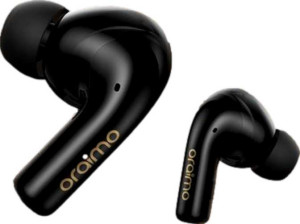
Oraimo SpaceBuds N
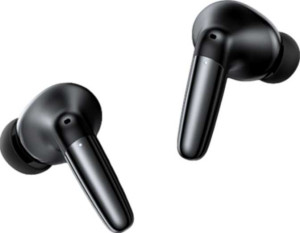
Tecno Buds 4

Oraimo SpaceBuds N Tecno Buds 4

Overview

Welcome to our in-depth specification comparison between the Oraimo SpaceBuds N and the Tecno Buds 4. Both are fully wireless in-ear earbuds sharing a common foundation of Bluetooth 5.4, USB-C charging, fast charging support, and a quad-microphone setup with noise-canceling capability. However, the two models take noticeably different paths when it comes to audio features and battery endurance, making this comparison a revealing look at where each brand chose to invest.

Common Features

  • Both products have an in-ear fit design.
  • Neither product has wires or cables, making them fully wireless.
  • Neither product is a neckband-style earbud.
  • Wingtips are not included with either product.
  • RGB lighting is not available on either product.
  • Both products feature stereo speakers.
  • UV light is not present on either product.
  • Neither product has a display.
  • Both products offer passive noise reduction.
  • Both products use a 10 mm driver unit size.
  • The frequency range starts at 20 Hz on both products.
  • The frequency range reaches up to 20000 Hz on both products.
  • Dolby Atmos support is not available on either product.
  • Dirac Virtuo support is not available on either product.
  • A neodymium magnet is not used in either product.
  • Wireless charging is not supported on either product.
  • Neither product has a solar power battery.
  • Both products include a battery level indicator.
  • Both products have a rechargeable battery.
  • Fast pairing is not supported on either product.
  • Both products use USB Type-C for charging.
  • Both products feature Bluetooth version 5.4.
  • LDAC support is not available on either product.
  • LDHC support is not available on either product.
  • Bluetooth LE Audio is not supported on either product.
  • aptX Adaptive support is not available on either product.
  • aptX Low Latency support is not available on either product.
  • In/on-ear detection is not present on either product.
  • A find device feature is not available on either product.
  • Fast charging is supported on both products.
  • Neither product can read notifications aloud.
  • A built-in translator is not available on either product.
  • Both products include a mute function.
  • Both products can be used as a headset.
  • Both products have a control panel placed directly on the device.
  • Both products are equipped with 4 microphones.
  • Both products feature a noise-canceling microphone.

Main Differences

  • Ingress Protection rating is IPX5 on Oraimo SpaceBuds N and IPX4 on Tecno Buds 4.
  • Oraimo SpaceBuds N is rated as water resistant, while Tecno Buds 4 is rated as sweat resistant.
  • Active noise cancellation (ANC) is present on Oraimo SpaceBuds N but not available on Tecno Buds 4.
  • Spatial audio support is available on Oraimo SpaceBuds N but not on Tecno Buds 4.
  • Battery life is 10 hours on Oraimo SpaceBuds N and 5 hours on Tecno Buds 4.
  • Battery life of the charging case is 28 hours on Oraimo SpaceBuds N and 23 hours on Tecno Buds 4.
  • Ambient sound mode is present on Oraimo SpaceBuds N but not available on Tecno Buds 4.
Specs Comparison
Oraimo SpaceBuds N

Oraimo SpaceBuds N

Tecno Buds 4

Tecno Buds 4

Design:
Fit In-ear In-ear
Ingress Protection (IP) rating IPX5 IPX4
water resistance Water resistant Sweat resistant
has no wires or cables
are neckband earbuds
wingtips included
has RGB lighting
has stereo speakers
has UV light
Has a display

Both the Oraimo SpaceBuds N and the Tecno Buds 4 share the same fundamental design philosophy: fully wireless, in-ear fit with no neckband, no wingtips, no RGB lighting, and stereo sound — making them functionally identical in form factor and overall aesthetic approach.

The meaningful differentiator here is water resistance. The SpaceBuds N carries an IPX5 rating, meaning it can withstand sustained, low-pressure water jets — making it suitable for workouts in the rain or heavy sweat sessions. The Buds 4, rated at IPX4, is only certified against splashes from any direction, which translates to sweat resistance rather than true water resistance. In practice, IPX5 offers a noticeably broader safety margin for active or outdoor use.

For users who prioritize durability during physical activity or unpredictable weather, the Oraimo SpaceBuds N has a clear edge in this category solely due to its stronger ingress protection rating. If water exposure is not a concern, both earbuds are otherwise evenly matched on design.

Sound quality:
has active noise cancellation (ANC)
has passive noise reduction
driver unit size 10 mm 10 mm
lowest frequency 20 Hz 20 Hz
highest frequency 20000 Hz 20000 Hz
supports spatial audio
has Dolby Atmos
has Dirac Virtuo
has a neodymium magnet

At the hardware level, both earbuds are evenly matched: identical 10 mm drivers and the same full 20 Hz–20,000 Hz frequency range, covering the entire spectrum of human hearing. Neither product uses a neodymium magnet or any certified spatial audio processing like Dolby Atmos, so raw driver performance is comparable on paper.

Where they diverge significantly is in noise isolation. The Oraimo SpaceBuds N combines passive noise reduction with Active Noise Cancellation (ANC) and spatial audio support — a meaningful combination that actively suppresses ambient sound using microphones and algorithms, rather than relying solely on the physical seal of the ear tip. The Tecno Buds 4, by contrast, offers only passive noise reduction, meaning isolation depends entirely on fit. In noisy environments like commutes or open offices, the real-world difference between ANC and no ANC is immediately perceptible.

The Oraimo SpaceBuds N holds a clear advantage in this category. ANC and spatial audio are features that directly elevate the listening experience beyond what the driver specs alone can deliver, and the Buds 4 simply does not offer either.

Power:
Battery life 10 hours 5 hours
Battery life of charging case 28 hours 23 hours
has wireless charging
Has a solar power battery
has a battery level indicator
has a rechargeable battery

Battery life is one of the most practical differentiators in truly wireless earbuds, and the gap here is substantial. The Oraimo SpaceBuds N delivers 10 hours of playback per charge versus the Tecno Buds 4's 5 hours — exactly double. For context, 5 hours is enough for a typical workday commute and lunch break, but falls short for long-haul flights or extended outdoor sessions without reaching for the case. The SpaceBuds N's 10-hour earbud runtime comfortably covers a full waking day of moderate use.

The charging cases reinforce this gap. The SpaceBuds N's case extends total listening time to 28 hours combined, while the Buds 4 case brings the total to 23 hours. Neither supports wireless charging, and both include a battery level indicator — so the convenience features are evenly matched. The difference in case capacity, however, means the SpaceBuds N can go meaningfully longer between cable top-ups.

The Oraimo SpaceBuds N wins this category decisively, offering twice the per-session endurance and greater total reserve capacity. For users who prioritize going long stretches without interruption, this is a significant practical advantage.

Connectivity:
has fast pairing
Has USB Type-C
Bluetooth version 5.4 5.4
has LDAC
has LDHC
has Bluetooth LE Audio
has aptX Adaptive
has aptX Low Latency
has aptX HD
has aptX
has aptX Lossless
has aptX Voice
has Auracast
maximum Bluetooth range 10 m 10 m
supports Bluetooth pairing using NFC
Can be used wirelessly
has AAC

Connectivity is a straight tie between these two earbuds — every single spec in this category is identical. Both run Bluetooth 5.4, one of the more current versions of the standard, which brings improved connection stability and energy efficiency compared to older iterations like 5.0 or 5.1. Both are capped at a 10 m maximum wireless range, which is typical for in-ear buds and sufficient for everyday use within the same room as a source device.

Neither earbud supports advanced audio codecs — no LDAC, no aptX variants, no AAC, and no Bluetooth LE Audio. This means both are limited to the standard SBC codec for audio transmission, which is adequate for casual listening but rules out high-resolution wireless audio. The absence of fast pairing and NFC pairing on both devices means initial setup follows the conventional Bluetooth discovery process.

This category is a complete draw. There is no connectivity-based reason to choose one over the other — users can expect an equivalent wireless experience from both products.

Features:
release date January 2025 January 2025
has ambient sound mode
has in/on-ear detection
has find device feature
Supports fast charging
can read notifications
Has a built-in translator
has a mute function
can be used as a headset
control panel placed on a device
Has voice prompts
travel bag is included
Has an in-line control panel
Has a temperature sensor
Has a built-in camera remote control function

Across most of this feature set, the two earbuds are evenly matched. Fast charging, mute, headset functionality, on-device controls, voice prompts, and an included travel bag are all present on both — a solid baseline that covers the practical needs of most users without either product pulling ahead.

The sole differentiator is ambient sound mode, available on the Oraimo SpaceBuds N but absent on the Tecno Buds 4. This feature uses external microphones to pipe in surrounding sounds, allowing the wearer to stay aware of their environment — conversations, announcements, or traffic — without removing the earbuds. It is particularly valuable for commuters and urban users who switch frequently between focused listening and situational awareness.

Given that everything else is identical, the Oraimo SpaceBuds N takes a narrow but meaningful edge here. Ambient sound mode is not a gimmick at this category level; it is a genuine usability feature that the Buds 4 simply does not offer.

Microphone:
number of microphones 4 4
has a noise-canceling microphone

On paper, the microphone setups are identical: both the Oraimo SpaceBuds N and the Tecno Buds 4 feature 4 microphones with noise-canceling capability. A quad-mic array is a meaningful configuration for truly wireless earbuds at this price tier, as it enables beamforming — using multiple pickup points to isolate the speaker's voice and suppress background noise from different directions.

This category is a complete tie. The available specs give no basis to distinguish call quality or voice pickup performance between the two products.

Comparison Summary & Verdict

After examining all available specifications, the Oraimo SpaceBuds N and the Tecno Buds 4 share a solid common base, but diverge meaningfully in key areas. The Oraimo SpaceBuds N stands out with its active noise cancellation, spatial audio support, ambient sound mode, stronger IPX5 water resistance, and a significantly longer battery life of 10 hours per charge with a 28-hour case. These features make it the stronger choice for commuters, travelers, or anyone seeking a more immersive and versatile listening experience. The Tecno Buds 4, on the other hand, is a more straightforward option for everyday use, offering a lighter feature set at what is likely a more accessible price point, with fast charging and a 23-hour case still in its corner. Choose the Tecno Buds 4 if simplicity and value are your priorities, and the Oraimo SpaceBuds N if you want a richer, more feature-packed audio experience.

Oraimo SpaceBuds N
Buy Oraimo SpaceBuds N if...

Buy the Oraimo SpaceBuds N if you want active noise cancellation, spatial audio, ambient sound mode, and longer battery life for commuting or travel.

Tecno Buds 4
Buy Tecno Buds 4 if...

Buy the Tecno Buds 4 if you prefer a simpler, no-frills wireless earbud for everyday casual listening without the need for advanced audio features.