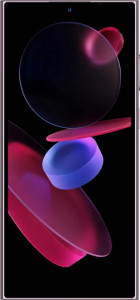
Oukitel C61
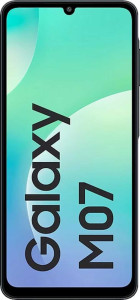
Samsung Galaxy M07

Oukitel C61 Samsung Galaxy M07

Overview

Welcome to our detailed spec comparison between the Oukitel C61 and the Samsung Galaxy M07. These two budget-friendly Android 15 smartphones share a number of similarities, including their LCD IPS panels with 90Hz refresh rates and dual-SIM 4G connectivity, yet they take noticeably different approaches to performance, camera hardware, and overall design philosophy. Whether you care most about raw processing power, build quality, or everyday usability, this side-by-side breakdown will help you decide which device deserves a place in your pocket.

Common Features

  • Neither product has a rugged build.
  • Neither product can be folded.
  • Both products feature an LCD IPS display.
  • Both products have a 90Hz refresh rate.
  • HDR10 support is not available on either product.
  • HDR10+ support is not available on either product.
  • Always-On Display is not available on either product.
  • Dolby Vision support is not available on either product.
  • Neither product has a secondary screen.
  • Both products have a touchscreen.
  • Both products come with 4GB of RAM.
  • Both products have integrated LTE.
  • Both products support 64-bit processing.
  • Both products use big.LITTLE technology with 8 CPU threads and HMP.
  • Neither product has built-in optical image stabilization.
  • Both products record main camera video at 1080p 30fps.
  • Both products have a CMOS sensor and phase-detection autofocus.
  • Both products run Android 15.
  • Neither product supports wireless charging, but both support fast charging.
  • Both products have a rechargeable, non-removable battery with a battery level indicator.
  • Neither product has stereo speakers, aptX, LDAC, or aptX HD audio.
  • Both products include a radio.
  • Neither product supports 5G.
  • Both products support Wi-Fi 4 and Wi-Fi 5, dual SIM, external memory slot, USB Type-C, NFC, and a fingerprint scanner.
  • Neither product has emergency SOS via satellite.
  • Both products have a video light.
  • Neither product has a sapphire glass, curved, or e-paper display.

Main Differences

  • Water resistance is not present on the Oukitel C61 but is available on the Samsung Galaxy M07.
  • Weight is 216g on the Oukitel C61 and 184g on the Samsung Galaxy M07.
  • Thickness is 9.5mm on the Oukitel C61 and 7.6mm on the Samsung Galaxy M07.
  • Width is 79.6mm on the Oukitel C61 and 77.4mm on the Samsung Galaxy M07.
  • Height is 170.7mm on the Oukitel C61 and 167.4mm on the Samsung Galaxy M07.
  • Volume is 129.08cm³ on the Oukitel C61 and 98.47cm³ on the Samsung Galaxy M07.
  • Screen size is 6.88″ on the Oukitel C61 and 6.7″ on the Samsung Galaxy M07.
  • Pixel density is 260 ppi on the Oukitel C61 and 262 ppi on the Samsung Galaxy M07.
  • Resolution is 720x1640px on the Oukitel C61 and 720x1600px on the Samsung Galaxy M07.
  • Damage-resistant glass is present on the Oukitel C61 but not on the Samsung Galaxy M07.
  • Internal storage is 128GB on the Oukitel C61 and 64GB on the Samsung Galaxy M07.
  • The chipset is Unisoc T606 on the Oukitel C61 and Mediatek Helio G99 on the Samsung Galaxy M07.
  • CPU speed is 2x1.6 & 6x1.6 GHz on the Oukitel C61 and 2x2.2 & 6x2 GHz on the Samsung Galaxy M07.
  • Geekbench 6 multi-core score is 1391 on the Oukitel C61 and 1979 on the Samsung Galaxy M07.
  • Geekbench 6 single-core score is 371 on the Oukitel C61 and 729 on the Samsung Galaxy M07.
  • GPU clock speed is 650MHz on the Oukitel C61 and 950MHz on the Samsung Galaxy M07.
  • RAM speed is 1600MHz on the Oukitel C61 and 4266MHz on the Samsung Galaxy M07.
  • Semiconductor size is 12nm on the Oukitel C61 and 6nm on the Samsung Galaxy M07.
  • Maximum memory bandwidth is 12.8 GB/s on the Oukitel C61 and 17.1 GB/s on the Samsung Galaxy M07.
  • Main camera is 13MP on the Oukitel C61 and 50 & 2MP on the Samsung Galaxy M07.
  • A dual-lens main camera is not present on the Oukitel C61 but is available on the Samsung Galaxy M07.
  • Front camera is 5MP on the Oukitel C61 and 8MP on the Samsung Galaxy M07.
  • Battery capacity is 5150mAh on the Oukitel C61 and 5000mAh on the Samsung Galaxy M07.
  • Charging speed is 10W on the Oukitel C61 and 25W on the Samsung Galaxy M07.
  • A 3.5mm audio jack is not present on the Oukitel C61 but is available on the Samsung Galaxy M07.
  • Bluetooth version is 5.0 on the Oukitel C61 and 5.3 on the Samsung Galaxy M07.
  • Download speed is 300 Mbit/s on the Oukitel C61 and 650 Mbit/s on the Samsung Galaxy M07.
  • Upload speed is 100 Mbit/s on the Oukitel C61 and 150 Mbit/s on the Samsung Galaxy M07.
  • A compass is present on the Oukitel C61 but not available on the Samsung Galaxy M07.
Specs Comparison
Oukitel C61

Oukitel C61

Samsung Galaxy M07

Samsung Galaxy M07

Design:
water resistance None Water resistant
weight 216 g 184 g
thickness 9.5 mm 7.6 mm
width 79.6 mm 77.4 mm
height 170.7 mm 167.4 mm
volume 129.08334 cm³ 98.471376 cm³
has a rugged build
can be folded

The most meaningful divide in this group is physical form. The Samsung Galaxy M07 is substantially slimmer at 7.6 mm thick versus the Oukitel C61's 9.5 mm, and lighter at 184 g compared to 216 g. That 32-gram difference is noticeable during prolonged one-handed use — it translates to a phone that feels less fatiguing to hold for extended periods. The smaller overall volume of the M07 (98.5 cm³ vs 129 cm³) also means it sits more comfortably in a pocket.

A significant functional differentiator is water resistance: the Galaxy M07 carries water resistance, while the Oukitel C61 has none. Even basic splash protection adds meaningful peace of mind in everyday scenarios — rain, kitchen counters, unexpected spills — that the C61 simply cannot handle. Neither device has a rugged build or a foldable form factor, so beyond that, both are conventional candy-bar smartphones.

The Galaxy M07 holds a clear advantage in this group. Its slimmer profile, lower weight, and water resistance collectively make it the more refined and practical design choice, while the Oukitel C61 feels noticeably bulkier and offers no protection against moisture.

Display:
Display type LCD, IPS LCD, IPS
screen size 6.88" 6.7"
pixel density 260 ppi 262 ppi
resolution 720 x 1640 px 720 x 1600 px
refresh rate 90Hz 90Hz
has branded damage-resistant glass
supports HDR10
supports HDR10+
Always-On Display
supports Dolby Vision
Has a secondary screen
has a touch screen

At their core, these two displays are nearly identical in technology and sharpness. Both use an LCD IPS panel, run at a 90Hz refresh rate, and land at virtually the same pixel density — 260 ppi on the Oukitel C61 versus 262 ppi on the Samsung Galaxy M07. That difference is imperceptible to the human eye, meaning neither phone has a real-world clarity advantage. The 90Hz refresh rate is a welcome trait shared by both, delivering noticeably smoother scrolling than the standard 60Hz budget-tier experience.

Where the two diverge is screen size and screen protection. The C61 offers a slightly larger 6.88″ panel compared to the M07's 6.7″, which marginally benefits media consumption and reading. More meaningfully, the Oukitel C61 includes branded damage-resistant glass — the Galaxy M07 does not. In practice, this means the C61's screen is better equipped to handle accidental scratches and minor drops without surface damage, a tangible everyday durability advantage.

This group ends in a split: the Galaxy M07 edges ahead on compactness, but the Oukitel C61 counters with a bigger screen and scratch-resistant glass. For users who prioritize display protection and screen real estate, the C61 holds the edge here — though neither phone offers any premium display features like HDR support or an Always-On Display.

Performance:
internal storage 128GB 64GB
RAM 4GB 4GB
Chipset (SoC) name Unisoc T606 Mediatek Helio G99
GPU name Mali G57 MP1 Mali G57
CPU speed 2 x 1.6 & 6 x 1.6 GHz 2 x 2.2 & 6 x 2 GHz
Geekbench 6 result (multi) 1391 1979
Geekbench 6 result (single) 371 729
GPU clock speed 650 MHz 950 MHz
Has integrated LTE
RAM speed 1600 MHz 4266 MHz
semiconductor size 12 nm 6 nm
Supports 64-bit
DirectX version DirectX 12 DirectX 11
Has integrated graphics
OpenGL ES version 3.2 3.2
Uses big.LITTLE technology
CPU threads 8 threads 8 threads
Uses HMP
Has TrustZone
maximum memory bandwidth 12.8 GB/s 17.1 GB/s
OpenCL version 2 2
eMMC version 5.1 5.2
maximum memory amount 14GB 12GB
GPU turbo 650 MHz 2133 MHz
Thermal Design Power (TDP) 10W 5W
DDR memory version 4 4
shading units 64 32

The chipset gap here is substantial. The Samsung Galaxy M07 runs on the Mediatek Helio G99, built on a modern 6 nm process, while the Oukitel C61 relies on the Unisoc T606 at 12 nm. A smaller semiconductor node generally means better power efficiency and more headroom for performance — and the benchmark results confirm this decisively. The M07 scores 729 in Geekbench 6 single-core versus the C61's 371, nearly doubling it, and leads multi-core as well with 1979 against 1391. In daily use, this gap translates to snappier app launches, smoother multitasking, and a more responsive overall experience, particularly under sustained load.

The GPU and memory subsystem tell a similar story. The M07's GPU runs at a significantly higher clock speed (950 MHz vs 650 MHz) and its RAM operates at 4266 MHz versus the C61's 1600 MHz, contributing to superior memory bandwidth (17.1 GB/s vs 12.8 GB/s). For graphics-intensive tasks and gaming, the M07 holds a clear structural advantage. On the flip side, the C61's 10W TDP versus the M07's 5W suggests the Unisoc chip draws considerably more power to achieve its lower performance — a doubly unfavorable tradeoff. The one area where the C61 pushes back is storage: it offers 128 GB of internal space compared to the M07's 64 GB, which is a meaningful practical advantage for users who store lots of media locally.

Overall, the Galaxy M07 wins the performance group convincingly across CPU, GPU, and memory metrics. The Oukitel C61's only real counter is its larger base storage, which may matter to some users — but from a raw processing standpoint, the M07 is the stronger performer by a wide margin.

Cameras:
megapixels (main camera) 13 MP 50 & 2 MP
wide aperture (main camera) 2.2f 2.4 & 1.8f
Has a dual-lens (or multi-lens) main camera
megapixels (front camera) 5MP 8MP
has built-in optical image stabilization
video recording (main camera) 1080 x 30 fps 1080 x 30 fps
Has a dual-tone LED flash
number of flash LEDs 1 1
has a BSI sensor
has a CMOS sensor
has continuous autofocus when recording movies
Has phase-detection autofocus for photos
supports slow-motion video recording
has a built-in HDR mode
has manual exposure
has a flash
optical zoom 0x 0x
has manual ISO
has a serial shot mode
has manual focus
has a front camera
Has laser autofocus
Shoots 360° panorama
has manual white balance
shoots raw
has touch autofocus
has manual shutter speed
can create panoramas in-camera
wide aperture (front camera) 2.2f 2f
Has timelapse function
Has a front-facing LED flash
has a dual-lens (or multi-lens) front camera
supports HDR10 recording
supports Dolby Vision recording
has a front-facing camera under the display
Has a RGB LED flash
has 3D photo/video recording capabilities

Camera hardware is where these two phones diverge most sharply. The Samsung Galaxy M07 fields a dual-lens rear camera — a 50 MP primary sensor paired with a 2 MP secondary — while the Oukitel C61 makes do with a single 13 MP shooter. The resolution gap is significant: more megapixels give the M07 greater detail retention and more flexibility when cropping shots. The secondary lens, while modest, also opens the door to depth-sensing capabilities the C61 cannot replicate. For selfies, the M07 again leads with an 8 MP front camera versus the C61's 5 MP, and its slightly wider front aperture of f/2.0 versus f/2.2 means marginally better light intake in low-light self-portraits.

Despite these hardware differences, the two phones are functionally identical across a long list of camera features — both support phase-detection autofocus, continuous autofocus during video, slow-motion recording, HDR mode, timelapse, panorama, and a full manual controls suite including ISO and exposure. Video capability is also equal, with both topping out at 1080p at 30 fps. Neither device offers optical image stabilization, optical zoom, or RAW shooting, which are common omissions at this price tier.

The Galaxy M07 holds a clear edge in this group. Its higher-resolution main sensor and dual-camera setup provide meaningfully more versatility and image detail than the C61's single 13 MP camera, and it edges ahead on the front camera too. For users who care about photo quality, the M07 is the stronger choice — the feature parity elsewhere does not offset the fundamental hardware gap.
Operating system:
Android version Android 15 Android 15
has clipboard warnings
has location privacy options
has camera/microphone privacy options
has Mail Privacy Protection
has theme customization
can block app tracking
blocks cross-site tracking
has on-device machine learning
has notification permissions
has media picker
Can play games while they download
has dark mode
has Wi-Fi password sharing
has battery health check
has an extra dim mode
has focus modes
has dynamic theming
can offload apps
Has customizable notifications
has Live Text
has full-page screenshots
supports split screen
gets direct OS updates
has PiP
Can be used as a PC
Has sharing intents
has a child lock
Supports widgets
Is free and open source
Has offline voice recognition
has voice commands
Tracks the current position of a mobile device
is a multi-user system
has Quick Start

Rarely does a spec group produce such a clean result: the Oukitel C61 and Samsung Galaxy M07 are in complete parity across every single operating system data point provided. Both ship with Android 15 and share an identical feature set — from privacy controls like location and camera/microphone permissions, to productivity tools like split-screen, Picture-in-Picture, and full-page screenshots, to quality-of-life additions like dark mode, dynamic theming, and on-device machine learning.

Notably, neither device receives direct OS updates — meaning software updates are routed through the manufacturer rather than pushed by Google directly. This is a shared limitation worth keeping in mind for users who prioritize long-term software support and timely security patches. On the privacy front, both phones offer a solid baseline with app tracking controls, clipboard warnings, and granular notification permissions, though neither blocks cross-site tracking or includes Mail Privacy Protection.

This group is an exact tie. With no differentiating data point across any feature, the operating system experience these two phones deliver — at least as defined by the provided specs — is functionally indistinguishable. Users should look to other spec groups to make their decision.

Battery:
battery power 5150 mAh 5000 mAh
has wireless charging
Supports fast charging
charging speed 10W 25W
has reverse wireless charging
has a removable battery
has a battery level indicator
has a rechargeable battery

Battery capacity is close but not identical: the Oukitel C61 packs a 5150 mAh cell versus the Samsung Galaxy M07's 5000 mAh. The 150 mAh difference is slim enough that real-world endurance will be largely indistinguishable between the two — both sit comfortably in the large-battery tier that typically supports a full day of mixed use with room to spare. Neither supports wireless or reverse wireless charging, which is expected at this price level.

Where the gap becomes genuinely meaningful is charging speed. The Galaxy M07 supports 25W fast charging, more than double the Oukitel C61's 10W. In practice, this means the M07 can recover a significant portion of its battery in a short time — a quick 20-minute top-up on the M07 will outpace a much longer session on the C61. For users who rely on fast pit-stop charging during a busy day, this is a real-world advantage that compounds over time.

Despite the C61's marginal capacity lead, the Galaxy M07 takes this group on the strength of its 25W charging. A 150 mAh difference is negligible in daily use, but having a battery that refills more than twice as fast is a tangible, everyday convenience that meaningfully tilts the balance in the M07's favor.

Audio:
has a socket for a 3.5 mm audio jack
has stereo speakers
has aptX
has LDAC
has aptX HD
has aptX Adaptive
has aptX Lossless
Has a radio

Audio is a lean spec group for both devices, but one difference stands out immediately. The Samsung Galaxy M07 retains a 3.5 mm headphone jack — the Oukitel C61 does not. For users who rely on wired headphones or earbuds, this is a practical daily inconvenience on the C61, as it forces a dependency on wireless audio or an adapter. The headphone jack remains a valued feature for budget-tier buyers, who are less likely to have invested in wireless audio gear.

Beyond that single differentiator, the two phones are evenly matched — and quite limited. Neither offers stereo speakers, and neither supports any high-quality Bluetooth audio codec such as aptX, LDAC, or their variants. Both include an FM radio receiver, a modest but genuinely useful feature for users in areas with strong local broadcasts, requiring no data connection to use.

The Galaxy M07 has the clear edge in this group, solely by virtue of its 3.5 mm jack. It is not an audiophile device by any measure, but for wired headphone users — a common profile among budget smartphone buyers — that single port makes a real difference in everyday convenience.

Connectivity & Features:
release date March 2025 October 2025
has 5G support
Wi-Fi version Wi-Fi 4 (802.11n), Wi-Fi 5 (802.11ac) Wi-Fi 4 (802.11n), Wi-Fi 5 (802.11ac)
SIM cards 2 SIM 2 SIM
Bluetooth version 5 5.3
has an external memory slot
Has USB Type-C
has NFC
download speed 300 MBits/s 650 MBits/s
upload speed 100 MBits/s 150 MBits/s
Has a fingerprint scanner
has emergency SOS via satellite
has crash detection
is DLNA-certified
has a gyroscope
supports ANT+
Has a heart rate monitor
has GPS
has a compass
supports Wi-Fi
Has an infrared sensor
has an accelerometer
has a cellular module
Has a barometer
has an HDMI output
Uses 3D facial recognition
Has an iris scanner
Stylus included
supports Galileo
Has motion tracking
Has optical tracking
Has a built-in projector

Connectivity fundamentals are largely shared between these two phones — both support dual SIM, Wi-Fi 5, USB Type-C, NFC, GPS, Galileo, expandable storage, and a fingerprint scanner. That said, a few targeted differences are worth examining. The Samsung Galaxy M07 runs Bluetooth 5.3 compared to the Oukitel C61's Bluetooth 5.0. While both are capable for everyday wireless audio and peripherals, the newer 5.3 standard brings improved connection stability, lower latency, and more efficient power usage — benefits that compound over extended daily use with wireless accessories.

The more operationally significant gap is cellular throughput. The M07 supports download speeds up to 650 Mbits/s versus the C61's 300 Mbits/s, and upload speeds of 150 Mbits/s against 100 Mbits/s. In practice, real-world speeds depend heavily on carrier and network conditions, but a higher theoretical ceiling means the M07 is better positioned to take advantage of stronger LTE signals. One minor trade-off: the C61 includes a compass while the M07 does not, which matters for navigation apps that rely on accurate directional orientation rather than GPS position alone.

This group lands as a modest win for the Galaxy M07. Its newer Bluetooth version and substantially higher LTE throughput ceiling are the more impactful differentiators, while the C61's compass inclusion is a niche advantage that only affects a narrower set of use cases. For most users, the M07's connectivity profile is the more future-facing of the two.

Miscellaneous:
has a video light
Has sapphire glass display
Has a curved display
Has an e-paper display

The Miscellaneous group offers no differentiating data between these two phones. The Oukitel C61 and Samsung Galaxy M07 share every attribute listed: both have a video light, and neither features a sapphire glass display, curved display, or e-paper display. With only four data points and a complete match across all of them, this group has no bearing on a purchasing decision.

This is an unambiguous tie. Users should weigh the more substantive differences covered in other spec groups — performance, cameras, and design — when making their final call.

Comparison Summary & Verdict

After examining every spec, the two phones emerge as strong choices for very different buyers. The Samsung Galaxy M07 holds a clear edge in performance, thanks to its Mediatek Helio G99 chipset, faster CPU and GPU clocks, and significantly higher Geekbench scores, while its 50MP dual-lens camera, 25W fast charging, water resistance, and slimmer 7.6mm body make it the more polished all-round package. The Oukitel C61, on the other hand, counters with a larger 6.88-inch display protected by damage-resistant glass, a bigger 5150mAh battery, double the internal storage at 128GB, and a built-in compass, making it an appealing pick for users who need more space and a larger screen at an entry-level price point.

Oukitel C61
Buy Oukitel C61 if...

Buy the Oukitel C61 if you want more internal storage out of the box, a larger display with damage-resistant glass, and a bigger battery for longer usage between charges.

Samsung Galaxy M07
Buy Samsung Galaxy M07 if...

Buy the Samsung Galaxy M07 if you prioritize stronger performance, a better camera system, faster 25W charging, water resistance, and a slimmer and lighter design.