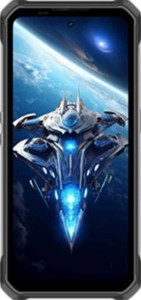
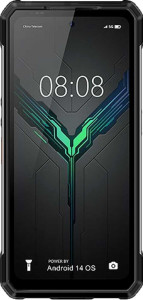
The connectivity foundation is identical: both devices offer 5G, dual SIM, Bluetooth 5.4, NFC, USB-C, expandable storage, and GPS with Galileo support — a strong shared baseline for field and enterprise use. Worth noting is that both also include a built-in projector, an unusual feature that sets the entire category apart from typical rugged phones and adds genuine utility for on-site presentations or sharing content without external equipment.
Wi-Fi is where the WP100 Titan pulls ahead. It supports Wi-Fi 6E (802.11ax) in addition to Wi-Fi 6 and Wi-Fi 5, while the Armor 34 Pro tops out at Wi-Fi 5 (802.11ac). Wi-Fi 6E unlocks the 6 GHz band, delivering faster throughput and lower congestion in dense environments — a meaningful advantage in warehouses, campuses, or any setting with heavy wireless traffic. The Armor 34 Pro counters on the sensor side, however, adding a barometer and an infrared sensor that the Titan lacks. The barometer enables accurate altitude readings and weather pressure monitoring — valuable in outdoor or elevation-sensitive deployments — while the infrared sensor allows the device to function as a universal remote, which has niche but real utility.
This category results in a split with a slight overall lean toward the WP100 Titan for most users. Its Wi-Fi 6E advantage is broadly applicable across modern connectivity scenarios, whereas the Armor 34 Pro's additional sensors serve more specialized use cases. The right choice depends on whether advanced wireless performance or environmental sensing is more relevant to the buyer's specific deployment.