Oukitel WP200 Pro
Oukitel WP300

Oukitel WP200 Pro Oukitel WP300

Overview

Welcome to our in-depth comparison of the Oukitel WP200 Pro and the Oukitel WP300, two rugged-oriented smartphones that take very different approaches to durability, power, and portability. Both devices share waterproofing credentials and Android 15, but they diverge sharply when it comes to size and weight, performance headroom, and battery capacity. Read on to see which phone fits your lifestyle best.

Common Features

  • Both phones are waterproof with a depth rating of 1.5 m.
  • Neither phone can be folded.
  • Both displays feature Gorilla Glass 5 damage-resistant glass.
  • HDR10 support is not available on either product.
  • HDR10+ support is not available on either product.
  • Always-On Display is not available on either product.
  • Dolby Vision support is not available on either product.
  • Neither phone has a secondary screen.
  • Both phones have a touch screen.
  • Both phones run Android 15.
  • Both phones support 5G connectivity.
  • Both phones have a GPU clock speed of 950 MHz.
  • Both phones support DirectX 12.
  • Both phones use big.LITTLE CPU technology with 8 threads.
  • Both phones support 64-bit processing.
  • Fast charging is supported on both phones at 45W.
  • Wireless charging is not available on either product.
  • Reverse wireless charging is not available on either product.
  • Neither phone has a removable battery.
  • Both phones have a 32MP front camera.
  • Optical image stabilization is not available on either product.
  • Both phones have a CMOS sensor and support phase-detection autofocus.
  • Both phones have continuous autofocus when recording movies.
  • Slow-motion video recording is supported on both phones.
  • Neither phone has a 3.5 mm audio jack.
  • Stereo speakers are not available on either product.
  • Both phones support NFC and have a fingerprint scanner.
  • Both phones have dual SIM card slots and USB Type-C (USB 2.0).
  • Emergency SOS via satellite is not available on either product.
  • Crash detection is not available on either product.
  • Both phones have a video light.
  • Neither phone has a sapphire glass display or a curved display.
  • Both phones have clipboard warnings and location privacy options.
  • Camera and microphone privacy options are available on both phones.
  • App tracking blocking is available on both phones.

Main Differences

  • Weight is 311 g on Oukitel WP200 Pro and 512 g on Oukitel WP300.
  • Thickness is 13.7 mm on Oukitel WP200 Pro and 23.2 mm on Oukitel WP300.
  • Width is 77.85 mm on Oukitel WP200 Pro and 82.4 mm on Oukitel WP300.
  • Height is 163.6 mm on Oukitel WP200 Pro and 177.3 mm on Oukitel WP300.
  • Volume is 174.49 cm³ on Oukitel WP200 Pro and 338.94 cm³ on Oukitel WP300.
  • IP rating is IP68 on Oukitel WP200 Pro and IP67 on Oukitel WP300.
  • A rugged build is present on Oukitel WP300 but not on Oukitel WP200 Pro.
  • The display type is OLED/AMOLED on Oukitel WP200 Pro and LCD IPS on Oukitel WP300.
  • Screen size is 6.7″ on Oukitel WP200 Pro and 6.8″ on Oukitel WP300.
  • Resolution is 1080 x 2412 px on Oukitel WP200 Pro and 1080 x 2460 px on Oukitel WP300.
  • Internal storage is 1000 GB on Oukitel WP200 Pro and 512 GB on Oukitel WP300.
  • RAM is 24 GB on Oukitel WP200 Pro and 12 GB on Oukitel WP300.
  • RAM speed is 6400 MHz on Oukitel WP200 Pro and 3200 MHz on Oukitel WP300.
  • GPU is Mali G610 MP6 on Oukitel WP200 Pro and Mali G68 MP4 on Oukitel WP300.
  • CPU speed is 1 x 3.1 & 3 x 3 & 4 x 2 GHz on Oukitel WP200 Pro and 2 x 2.6 & 6 x 2 GHz on Oukitel WP300.
  • Geekbench 6 multi-core score is 3891 on Oukitel WP200 Pro and 2257 on Oukitel WP300.
  • Geekbench 6 single-core score is 1224 on Oukitel WP200 Pro and 936 on Oukitel WP300.
  • Semiconductor size is 4 nm on Oukitel WP200 Pro and 6 nm on Oukitel WP300.
  • L3 cache is 4 MB on Oukitel WP200 Pro and 2 MB on Oukitel WP300.
  • Battery capacity is 8800 mAh on Oukitel WP200 Pro and 16000 mAh on Oukitel WP300.
  • A BSI sensor is present on Oukitel WP300 but not on Oukitel WP200 Pro.
  • Main camera megapixels are 108 & 2 & 0.3 MP on Oukitel WP200 Pro and 108 & 2 MP on Oukitel WP300.
  • Number of flash LEDs is 2 on Oukitel WP200 Pro and 3 on Oukitel WP300.
  • Front camera aperture is f/2.2 on Oukitel WP200 Pro and f/2.0 on Oukitel WP300.
  • Wi-Fi 6 support is present on Oukitel WP200 Pro but not available on Oukitel WP300.
  • Bluetooth version is 5.3 on Oukitel WP200 Pro and 5.2 on Oukitel WP300.
  • An external memory slot is available on Oukitel WP300 but not on Oukitel WP200 Pro.
  • Download speed is 4700 Mbit/s on Oukitel WP200 Pro and 2770 Mbit/s on Oukitel WP300.
  • Upload speed is 2500 Mbit/s on Oukitel WP200 Pro and 1250 Mbit/s on Oukitel WP300.
  • A barometer is present on Oukitel WP200 Pro but not available on Oukitel WP300.
Specs Comparison
Oukitel WP200 Pro

Oukitel WP200 Pro

Oukitel WP300

Oukitel WP300

Design:
water resistance Waterproof Waterproof
weight 311 g 512 g
thickness 13.7 mm 23.2 mm
width 77.85 mm 82.4 mm
height 163.6 mm 177.3 mm
volume 174.486762 cm³ 338.940864 cm³
Ingress Protection (IP) rating IP68 IP67
waterproof depth rating 1.5 m 1.5 m
has a rugged build
can be folded

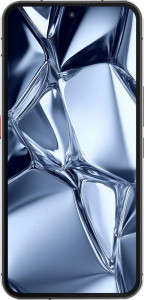
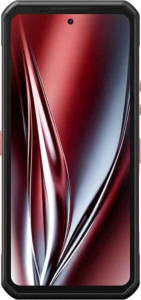
The most striking design contrast between the Oukitel WP200 Pro and the WP300 is sheer physical scale. The WP300 weighs a substantial 512 g — nearly 65% heavier than the WP200 Pro's 311 g — and at 23.2 mm thick it is almost double the WP200 Pro's slimmer 13.7 mm profile. This translates directly into pocket-friendliness and one-handed usability: the WP200 Pro is a device you can realistically carry all day without noticing, while the WP300's bulk will be felt in any jacket or trouser pocket and demands two-handed use in most scenarios.

On water resistance, both phones share a 1.5 m submersion depth rating, but they diverge on certification level. The WP200 Pro holds an IP68 rating, which implies a higher standard of sustained submersion testing than the WP300's IP67. In practice the difference is modest for everyday splashes and rain, but the IP68 edge matters if the phone is likely to be dropped into water and left there momentarily. Notably, despite its larger, heavier chassis, the WP300 does not achieve a higher IP rating — it does, however, formally carry a rugged build designation that the WP200 Pro lacks, suggesting reinforced resistance to drops and impacts rather than superior waterproofing.

Overall, the WP200 Pro has a clear design advantage for users who prioritize portability and daily carry comfort, thanks to its far lighter weight and dramatically thinner profile. The WP300 trades that ergonomic convenience for a purpose-built rugged construction, making it the better fit for demanding field or industrial environments where physical durability against shocks matters more than pocketability.

Display:
Display type OLED/AMOLED LCD, IPS
screen size 6.7" 6.8"
pixel density 394 ppi 395 ppi
resolution 1080 x 2412 px 1080 x 2460 px
has branded damage-resistant glass
Gorilla Glass version Gorilla Glass 5 Gorilla Glass 5
supports HDR10
supports HDR10+
Always-On Display
supports Dolby Vision
Has a secondary screen
has a touch screen

Screen size, resolution, and pixel density are virtually identical between the two phones — both sit at just under 400 ppi with a 1080p panel, meaning sharpness in everyday use is indistinguishable. The real story in this spec group is panel technology: the WP200 Pro uses an OLED/AMOLED display, while the WP300 relies on an LCD IPS panel. That difference has far-reaching consequences for daily viewing quality.

OLED technology produces true blacks by switching off individual pixels entirely, resulting in virtually infinite contrast ratios and noticeably richer, more vivid colors compared to LCD. Outdoors in bright sunlight, OLED panels also tend to offer better visibility at peak brightness. For a device likely used in varied lighting conditions, this is a meaningful real-world advantage. The WP300's IPS panel is competent and offers accurate color reproduction by LCD standards, but it cannot match the depth of blacks or contrast that OLED delivers.

Both screens are protected by Gorilla Glass 5, putting them on equal footing for scratch and drop resistance. Neither supports HDR10, HDR10+, or Dolby Vision, so the OLED advantage is confined to standard content rendering rather than premium HDR output. Still, the WP200 Pro holds a clear display edge — its OLED panel delivers a fundamentally superior viewing experience for everyday use despite the two phones being nearly identical in every other display metric.

Performance:
internal storage 1000GB 512GB
RAM 24GB 12GB
GPU name Mali G610 MP6 Mali G68 MP4
CPU speed 1 x 3.1 & 3 x 3 & 4 x 2 GHz 2 x 2.6 & 6 x 2 GHz
Geekbench 6 result (multi) 3891 2257
Geekbench 6 result (single) 1224 936
GPU clock speed 950 MHz 950 MHz
Has integrated LTE
RAM speed 6400 MHz 3200 MHz
semiconductor size 4 nm 6 nm
Supports 64-bit
DirectX version DirectX 12 DirectX 12
Has integrated graphics
Uses big.LITTLE technology
CPU threads 8 threads 8 threads
Has NX bit
Uses HMP
Has TrustZone
OpenCL version 2 2
memory channels 4 4
maximum memory amount 16GB 16GB
Thermal Design Power (TDP) 6W 5W
DDR memory version 5 5
L3 cache 4 MB 2 MB

The performance gap between these two phones is substantial and consistent across every meaningful metric. The WP200 Pro is built on a 4 nm process node versus the WP300's 6 nm, a generational difference that translates directly into better power efficiency and higher sustained performance. That architectural advantage shows up clearly in benchmarks: the WP200 Pro scores 1224 single-core and 3891 multi-core on Geekbench 6, compared to the WP300's 936 and 2257 respectively — roughly 30% faster in single-threaded tasks and over 70% faster in multi-threaded workloads. For real-world use, single-core performance governs app launch speeds and UI responsiveness, while multi-core scores reflect demanding tasks like video processing or running multiple apps simultaneously.

Memory configuration further widens the gap. The WP200 Pro pairs 24 GB of RAM at 6400 MHz against the WP300's 12 GB at 3200 MHz — double the capacity and double the speed. Faster RAM reduces bottlenecks between the processor and memory, complementing the stronger CPU. Storage also favors the WP200 Pro decisively, with 1 TB of internal space versus 512 GB, which matters for users accumulating large media files or app libraries over time. The WP200 Pro also carries a larger 4 MB L3 cache compared to the WP300's 2 MB, further improving how quickly the CPU can access frequently used data.

The WP200 Pro wins this category unambiguously. Whether measured by raw benchmark scores, process node efficiency, RAM capacity and speed, or storage, it outclasses the WP300 across the board. The WP300 is not underpowered for basic daily tasks, but users who demand snappy multitasking, gaming, or heavy media workloads will notice the difference in a meaningful way.

Cameras:
megapixels (main camera) 108 & 2 & 0.3 MP 108 & 2 MP
Has a dual-lens (or multi-lens) main camera
megapixels (front camera) 32MP 32MP
has built-in optical image stabilization
Has a dual-tone LED flash
number of flash LEDs 2 3
has a BSI sensor
has a CMOS sensor
has continuous autofocus when recording movies
Has phase-detection autofocus for photos
supports slow-motion video recording
has a built-in HDR mode
has manual exposure
has a flash
optical zoom 0x 0x
has manual ISO
has a serial shot mode
has manual focus
has a front camera
Has laser autofocus
Shoots 360° panorama
has manual white balance
shoots raw
has touch autofocus
has manual shutter speed
can create panoramas in-camera
wide aperture (front camera) 2.2f 2f
Has a front-facing LED flash
has a dual-lens (or multi-lens) front camera
supports HDR10 recording
supports Dolby Vision recording
has a front-facing camera under the display
Has a RGB LED flash
has 3D photo/video recording capabilities

At first glance the two camera systems look nearly identical — both lead with a 108 MP main sensor, a 32 MP front camera, and an identical feature set covering phase-detection autofocus, HDR, slow-motion, and a full suite of manual controls. Dig deeper, however, and a few meaningful distinctions emerge. The WP200 Pro adds a third rear lens at 0.3 MP, which at that resolution functions primarily as a depth sensor for portrait-mode effects rather than as a standalone shooting lens. It adds versatility on paper, but its practical imaging contribution is limited.

The WP300 counters with two hardware advantages that have more tangible impact on image quality. Its main sensor uses BSI (Back-Side Illuminated) technology, which repositions the sensor's circuitry to allow more light to reach the photodiodes — a genuine benefit in low-light conditions like indoor shots or evening scenes. The WP200 Pro's CMOS sensor lacks this designation. The WP300 also gains a slight edge for selfies: its front camera aperture is f/2.0 versus the WP200 Pro's f/2.2, meaning it admits more light, which can translate into cleaner, brighter selfies in dim environments. Its 3 flash LEDs versus the WP200 Pro's 2 may also provide more even flash illumination.

Neither phone includes optical image stabilization, optical zoom, or RAW capture, so both sit in a similar tier for serious photography. On balance, the WP300 holds a narrow camera edge — its BSI sensor and wider front aperture address real imaging scenarios, whereas the WP200 Pro's extra 0.3 MP depth lens adds little beyond what software can approximate.
Operating system:
Android version Android 15 Android 15
has clipboard warnings
has location privacy options
has camera/microphone privacy options
has Mail Privacy Protection
has theme customization
can block app tracking
blocks cross-site tracking
has on-device machine learning
has notification permissions
has media picker
Can play games while they download
has dark mode
has Wi-Fi password sharing
has battery health check
has an extra dim mode
has focus modes
has dynamic theming
can offload apps
Has customizable notifications
has Live Text
has full-page screenshots
supports split screen
gets direct OS updates
has PiP
Can be used as a PC
Has sharing intents
has a child lock
Supports widgets
Is free and open source
Has offline voice recognition
has voice commands
Tracks the current position of a mobile device
is a multi-user system
has Quick Start

This is a rare case of complete parity: the Oukitel WP200 Pro and WP300 run an identical software stack with no differences whatsoever across every tracked specification. Both ship with Android 15 and share the exact same feature set, from privacy controls like app tracking blocking, camera and microphone permissions management, and clipboard warnings, to usability features like dynamic theming, split-screen multitasking, Picture-in-Picture, widgets, and offline voice recognition.

Worth noting for prospective buyers is that neither phone receives direct OS updates — meaning software updates, if they come at all, are delivered through the manufacturer rather than Google directly. This is common for smaller OEMs and can result in slower or less reliable update cadences compared to phones that participate in Android's direct update programs. Both devices are equally affected by this limitation, so it does not differentiate them, but it is a relevant consideration for long-term software support expectations.

With zero divergence across all provided data points, this category is a complete tie. A buyer's operating system experience will be functionally identical on either device.

Battery:
battery power 8800 mAh 16000 mAh
has wireless charging
Supports fast charging
charging speed 45W 45W
has reverse wireless charging
has a removable battery
has a battery level indicator
has a rechargeable battery

Battery capacity is where the WP300 makes its most dramatic statement. Its 16000 mAh cell is nearly double the WP200 Pro's already generous 8800 mAh — and both figures are well above the 4000–5000 mAh range typical of mainstream smartphones. For context, 8800 mAh alone would comfortably deliver multi-day battery life for most users; the WP300's 16000 mAh pushes into territory typically associated with small power banks, making it exceptionally well-suited for extended off-grid use, fieldwork, or situations where charging access is unreliable for days at a time.

Both phones match each other exactly on charging: 45W wired fast charging with no wireless or reverse wireless charging on either device. The identical charging speed is notable given the WP300's far larger capacity — at 45W, filling a 16000 mAh battery from empty will take considerably longer than charging the WP200 Pro's 8800 mAh, so the WP300's endurance advantage comes with a trade-off in time-to-full. Neither phone offers wireless charging, which is a meaningful omission at this price tier but affects both equally.

The WP300 wins this category decisively. Its battery capacity is not a marginal improvement but a fundamental repositioning — it is built for users who treat longevity and self-sufficiency as a top priority, and no other spec in this group changes that conclusion.

Audio:
has a socket for a 3.5 mm audio jack
has stereo speakers
has aptX
has LDAC
has aptX HD
has aptX Adaptive
has aptX Lossless
Has a radio

Audio is a category defined entirely by shared absences. Neither the WP200 Pro nor the WP300 includes a 3.5 mm headphone jack, stereo speakers, a radio, or any high-resolution Bluetooth audio codec — no aptX, LDAC, aptX HD, aptX Adaptive, or aptX Lossless. Users who prioritize audio quality will need to rely on standard Bluetooth codecs or USB-C adapters for wired listening, and spatial or immersive speaker sound is off the table for both devices.

The omission of high-res wireless audio codecs like LDAC or aptX HD is particularly relevant for anyone pairing these phones with premium Bluetooth headphones — without those codecs, audio is transmitted at standard quality regardless of how capable the headphones themselves are. The lack of stereo speakers similarly limits media consumption, as mono output noticeably reduces the sense of space and volume when watching videos or listening to music without headphones.

Since every tracked spec is identical — and uniformly absent — this category is an unavoidable tie by default. Neither phone offers an audio advantage over the other; the more relevant takeaway is that audio is a shared weak point for both, and prospective buyers who care about sound quality should factor this into their decision.

Connectivity & Features:
release date February 2025 June 2025
has 5G support
Wi-Fi version Wi-Fi 4 (802.11n), Wi-Fi 5 (802.11ac), Wi-Fi 6 (802.11ax) Wi-Fi 4 (802.11n), Wi-Fi 5 (802.11ac)
SIM cards 2 SIM 2 SIM
Bluetooth version 5.3 5.2
has an external memory slot
Has USB Type-C
USB version 2 2
has NFC
download speed 4700 MBits/s 2770 MBits/s
upload speed 2500 MBits/s 1250 MBits/s
Has a fingerprint scanner
has emergency SOS via satellite
has crash detection
is DLNA-certified
has a gyroscope
supports ANT+
Has a heart rate monitor
has GPS
has a compass
supports Wi-Fi
Has an infrared sensor
has an accelerometer
has a cellular module
Has a barometer
has an HDMI output
Uses 3D facial recognition
Has an iris scanner
Stylus included
supports Galileo
Has motion tracking
Has optical tracking
Has a built-in projector

Both phones share a solid connectivity foundation — 5G, dual SIM, NFC, USB-C, GPS with Galileo support, and a fingerprint scanner all feature on both. The divergence comes in wireless performance. The WP200 Pro supports Wi-Fi 6 (802.11ax) while the WP300 tops out at Wi-Fi 5 (802.11ac), and that gap carries over to cellular speeds: the WP200 Pro's theoretical download and upload peaks of 4700 / 2500 Mbits/s dwarf the WP300's 2770 / 1250 Mbits/s. In practice, real-world speeds depend heavily on network conditions, but the WP200 Pro's modem headroom means it is better positioned to take advantage of congested Wi-Fi 6 networks and faster 5G deployments. Its Bluetooth 5.3 versus the WP300's 5.2 is a minor but incremental improvement in connection stability and efficiency.

The WP300 does claim one exclusive: an external memory slot, which the WP200 Pro lacks entirely. Given the WP200 Pro ships with 1 TB of internal storage this is less critical for that device, but for the WP300 — which is limited to 512 GB internally — the ability to expand via a memory card is a practical and meaningful safety net for users accumulating large files over time. The WP200 Pro, on the other hand, includes a barometer absent from the WP300, a sensor relevant for altitude tracking and weather monitoring that appeals to outdoor and field users.

On balance, the WP200 Pro holds the connectivity edge — its Wi-Fi 6 support, faster modem speeds, and newer Bluetooth version collectively represent more future-proof wireless capability. The WP300's expandable storage partially offsets this, but only in the context of managing its own more limited internal capacity.

Miscellaneous:
has a video light
Has sapphire glass display
Has a curved display
Has an e-paper display

The miscellaneous spec group for these two phones is entirely uniform — both include a video light and both lack sapphire glass, a curved display, and an e-paper display. There is nothing in this data set that separates them in any meaningful way.

This is a complete tie with no differentiating factors present. The shared video light is a minor practical convenience for shooting in low-light conditions, but beyond that, this category adds nothing to the decision between the two devices.

Comparison Summary & Verdict

After examining every specification, it is clear that these two phones are built for different types of users. The Oukitel WP200 Pro stands out with its superior processor efficiency thanks to its 4 nm chip, significantly higher Geekbench scores, an OLED display, 24 GB of RAM, and 1 TB of internal storage — all packed into a notably slimmer and lighter body. It also edges ahead with Wi-Fi 6, a higher IP68 rating, and faster download speeds. The Oukitel WP300, on the other hand, answers with a commanding 16000 mAh battery, a rugged build, an external memory slot, and a brighter front camera aperture, making it a true endurance machine. Choose the WP200 Pro if you want raw performance and everyday portability; opt for the WP300 if extreme battery longevity and expandable storage in a tough chassis are your top priorities.

Oukitel WP200 Pro
Buy Oukitel WP200 Pro if...

Buy the Oukitel WP200 Pro if you want a lighter, slimmer phone with faster processing, a vibrant OLED display, more RAM and storage, and a higher IP68 waterproof rating.

Oukitel WP300
Buy Oukitel WP300 if...

Buy the Oukitel WP300 if you need an ultra-long-lasting phone with its massive 16000 mAh battery, rugged build, and expandable storage via a microSD slot.