Oukitel WP200 Pro
Ulefone Armor 29 Pro Thermal

Oukitel WP200 Pro Ulefone Armor 29 Pro Thermal

Overview

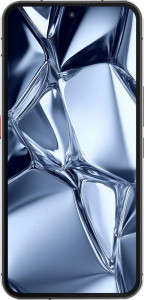
Welcome to our in-depth specification face-off between the Oukitel WP200 Pro and the Ulefone Armor 29 Pro Thermal — two rugged-oriented Android 15 smartphones that take very different approaches to durability, battery endurance, and everyday usability. Both share IP68 waterproofing and OLED displays with 120 Hz refresh rates, yet they diverge sharply on key battlegrounds including battery capacity, physical dimensions, storage configurations, and camera versatility. Read on to discover which device best matches your needs.

Common Features

  • Both phones are waterproof with an IP68 rating and a waterproof depth rating of 1.5 m.
  • Neither phone can be folded.
  • Both feature an OLED/AMOLED display with a 120 Hz refresh rate.
  • Both displays use branded damage-resistant glass.
  • HDR10 support is not available on either phone.
  • HDR10+ support is not available on either phone.
  • Dolby Vision support is not available on either phone.
  • Both phones have a touchscreen.
  • Both phones run Android 15.
  • Both phones support 5G and come with dual SIM card slots.
  • Both phones have a USB Type-C port with USB version 2.
  • Both phones have NFC.
  • Both phones have a fingerprint scanner.
  • Emergency SOS via satellite is not available on either phone.
  • Crash detection is not available on either phone.
  • Both phones support fast charging but do not support wireless charging or reverse wireless charging.
  • Neither phone has a removable battery.
  • Both phones have a rechargeable battery with a battery level indicator.
  • Stereo speakers are not present on either phone.
  • Neither phone supports aptX, LDAC, aptX HD, aptX Adaptive, aptX Lossless.
  • Both phones have integrated LTE, a 4 nm semiconductor, 64-bit support, and use big.LITTLE technology with 8 CPU threads.
  • Both phones have integrated graphics and support DirectX 12.
  • RAM speed is 6400 MHz on both phones.
  • Both main cameras support 4K video recording at 30 fps and continuous autofocus when recording.
  • Phase-detection autofocus for photos is available on both phones.
  • Both phones support slow-motion video recording.
  • Neither main camera has a BSI sensor, but both have a CMOS sensor.
  • Built-in optical image stabilization is not available on either phone.
  • Both phones have a multi-lens main camera.
  • Both phones have clipboard warnings, location privacy options, and camera/microphone privacy options.
  • Mail Privacy Protection is not available on either phone.
  • Theme customization is available and app tracking can be blocked on both phones.
  • Cross-site tracking blocking is not available on either phone.
  • Both phones have a video light.
  • Neither phone has a sapphire glass display, a curved display, or an e-paper display.

Main Differences

  • Weight is 311 g on the Oukitel WP200 Pro and 688 g on the Ulefone Armor 29 Pro Thermal.
  • Thickness is 13.7 mm on the Oukitel WP200 Pro and 33.8 mm on the Ulefone Armor 29 Pro Thermal.
  • Width is 77.85 mm on the Oukitel WP200 Pro and 85.6 mm on the Ulefone Armor 29 Pro Thermal.
  • Height is 163.6 mm on the Oukitel WP200 Pro and 177.4 mm on the Ulefone Armor 29 Pro Thermal.
  • Volume is 174.49 cm³ on the Oukitel WP200 Pro and 513.27 cm³ on the Ulefone Armor 29 Pro Thermal.
  • A rugged build is present on the Ulefone Armor 29 Pro Thermal but not on the Oukitel WP200 Pro.
  • Screen size is 6.7″ on the Oukitel WP200 Pro and 6.67″ on the Ulefone Armor 29 Pro Thermal.
  • Pixel density is 394 ppi on the Oukitel WP200 Pro and 395 ppi on the Ulefone Armor 29 Pro Thermal.
  • Resolution is 1080 x 2412 px on the Oukitel WP200 Pro and 1080 x 2400 px on the Ulefone Armor 29 Pro Thermal.
  • The Oukitel WP200 Pro uses Gorilla Glass 5 while the Ulefone Armor 29 Pro Thermal uses Gorilla Glass 3.
  • A secondary screen is present on the Ulefone Armor 29 Pro Thermal but not on the Oukitel WP200 Pro.
  • Internal storage is 1000 GB on the Oukitel WP200 Pro and 512 GB on the Ulefone Armor 29 Pro Thermal.
  • RAM is 24 GB on the Oukitel WP200 Pro and 16 GB on the Ulefone Armor 29 Pro Thermal.
  • The GPU is Mali G610 MP6 on the Oukitel WP200 Pro and Mali G615 MC2 on the Ulefone Armor 29 Pro Thermal.
  • CPU speed is 1 x 3.1 & 3 x 3 & 4 x 2 GHz on the Oukitel WP200 Pro and 4 x 2.6 & 4 x 2 GHz on the Ulefone Armor 29 Pro Thermal.
  • GPU clock speed is 950 MHz on the Oukitel WP200 Pro and 1047 MHz on the Ulefone Armor 29 Pro Thermal.
  • Maximum memory bandwidth is 51.2 GB/s on the Oukitel WP200 Pro and 25.6 GB/s on the Ulefone Armor 29 Pro Thermal.
  • Main camera megapixels are 108 & 2 & 0.3 MP on the Oukitel WP200 Pro and 64 & 50 & 50 MP on the Ulefone Armor 29 Pro Thermal.
  • Front camera megapixels are 32 MP on the Oukitel WP200 Pro and 50 MP on the Ulefone Armor 29 Pro Thermal.
  • A dual-tone LED flash is present on the Ulefone Armor 29 Pro Thermal but not on the Oukitel WP200 Pro.
  • The number of flash LEDs is 2 on the Oukitel WP200 Pro and 4 on the Ulefone Armor 29 Pro Thermal.
  • Front camera wide aperture is f/2.2 on the Oukitel WP200 Pro and f/2.5 on the Ulefone Armor 29 Pro Thermal.
  • Battery power is 8800 mAh on the Oukitel WP200 Pro and 21200 mAh on the Ulefone Armor 29 Pro Thermal.
  • Charging speed is 45 W on the Oukitel WP200 Pro and 120 W on the Ulefone Armor 29 Pro Thermal.
  • A 3.5 mm audio jack is present on the Ulefone Armor 29 Pro Thermal but not on the Oukitel WP200 Pro.
  • A radio is present on the Ulefone Armor 29 Pro Thermal but not on the Oukitel WP200 Pro.
  • Wi-Fi versions supported are Wi-Fi 4, 5, and 6 on the Oukitel WP200 Pro, and Wi-Fi 4, 5, 6, and 6E on the Ulefone Armor 29 Pro Thermal.
  • Bluetooth version is 5.3 on the Oukitel WP200 Pro and 5.4 on the Ulefone Armor 29 Pro Thermal.
  • An external memory slot is present on the Ulefone Armor 29 Pro Thermal but not on the Oukitel WP200 Pro.
  • An infrared sensor is present on the Ulefone Armor 29 Pro Thermal but not on the Oukitel WP200 Pro.
Specs Comparison
Oukitel WP200 Pro

Oukitel WP200 Pro

Ulefone Armor 29 Pro Thermal

Ulefone Armor 29 Pro Thermal

Design:
water resistance Waterproof Waterproof
weight 311 g 688 g
thickness 13.7 mm 33.8 mm
width 77.85 mm 85.6 mm
height 163.6 mm 177.4 mm
volume 174.486762 cm³ 513.267872 cm³
Ingress Protection (IP) rating IP68 IP68
waterproof depth rating 1.5 m 1.5 m
has a rugged build
can be folded

Both the Oukitel WP200 Pro and the Ulefone Armor 29 Pro Thermal share an IP68 waterproof rating with a 1.5 m depth tolerance, meaning neither has an edge in water protection — they are evenly matched on that front. Where they diverge dramatically is in their physical form factor. The WP200 Pro weighs 311 g and measures just 13.7 mm thick, while the Armor 29 Pro Thermal weighs a substantial 688 g and is 33.8 mm thick — more than twice as heavy and nearly two and a half times as thick. This is reflected in their volumes: 174.5 cm³ versus 513.3 cm³, meaning the Ulefone occupies roughly three times the space.

In real-world terms, the WP200 Pro is far more pocketable and comfortable for extended one-handed use. At 311 g it is already on the heavier side for a smartphone, but the Armor 29 Pro Thermal at 688 g is closer to a small tool or radio — it is a device you carry in a holster or bag, not a jacket pocket. The Ulefone also explicitly carries a rugged build designation, which the WP200 Pro does not, suggesting the Armor 29 Pro Thermal is engineered for harsher physical punishment beyond just water resistance.

The clear edge in everyday portability and handling belongs to the Oukitel WP200 Pro. However, if the use case demands a purpose-built rugged device that can absorb significant physical abuse, the Armor 29 Pro Thermal is in a different category entirely — its bulk is the direct cost of that durability-first design philosophy.

Display:
Display type OLED/AMOLED OLED/AMOLED
screen size 6.7" 6.67"
pixel density 394 ppi 395 ppi
resolution 1080 x 2412 px 1080 x 2400 px
refresh rate 120Hz 120Hz
has branded damage-resistant glass
Gorilla Glass version Gorilla Glass 5 Gorilla Glass 3
supports HDR10
supports HDR10+
supports Dolby Vision
Has a secondary screen
has a touch screen

On paper, the two displays are nearly identical: both use OLED/AMOLED panels, land at effectively the same pixel density (394 vs 395 ppi), share a 120 Hz refresh rate, and cap out at 1080p resolution. For everyday use — sharpness, motion smoothness, color vibrancy — neither screen holds a meaningful advantage over the other.

The more telling difference lies in glass protection. The Oukitel WP200 Pro uses Gorilla Glass 5, while the Armor 29 Pro Thermal ships with the older Gorilla Glass 3. Given that the Ulefone is explicitly marketed as a rugged device, this is a notable irony — the non-rugged WP200 Pro actually has more scratch- and drop-resistant glass. In field conditions where screen survival matters, that generational gap in glass protection is a real disadvantage for the Armor 29 Pro Thermal.

The one area where the Ulefone pulls ahead is its secondary screen, a feature absent on the WP200 Pro. Depending on implementation, a secondary display can show notifications, camera previews, or status info without waking the main panel — genuinely useful in rugged or utility contexts. Weighing both factors, the Oukitel WP200 Pro holds the edge here due to its superior glass protection, while the Armor 29 Pro Thermal's secondary screen is the only meaningful display-category advantage it can claim.

Performance:
internal storage 1000GB 512GB
RAM 24GB 16GB
GPU name Mali G610 MP6 Mali G615 MC2
CPU speed 1 x 3.1 & 3 x 3 & 4 x 2 GHz 4 x 2.6 & 4 x 2 GHz
GPU clock speed 950 MHz 1047 MHz
Has integrated LTE
RAM speed 6400 MHz 6400 MHz
semiconductor size 4 nm 4 nm
Supports 64-bit
DirectX version DirectX 12 DirectX 12
Has integrated graphics
Uses big.LITTLE technology
CPU threads 8 threads 8 threads
Uses HMP
maximum memory bandwidth 51.2 GB/s 25.6 GB/s
maximum memory amount 16GB 16GB
DDR memory version 5 5

At the silicon level, both devices share the same 4 nm process node, DDR5 memory at 6400 MHz, and an 8-thread big.LITTLE CPU architecture — so their baseline efficiency and thermal characteristics are comparable. The CPU clock speeds, however, favor the Oukitel WP200 Pro, which includes a high-performance core reaching 3.1 GHz alongside two clusters at 3.0 GHz and 2.0 GHz. The Armor 29 Pro Thermal tops out at 2.6 GHz across its performance cores, meaning the WP200 Pro has a tangible edge in single-core-dependent tasks like app launches, UI responsiveness, and certain gaming workloads.

The memory story is equally lopsided. The WP200 Pro pairs its CPU with 24 GB of RAM and a maximum memory bandwidth of 51.2 GB/s — exactly double the Armor 29 Pro Thermal's 25.6 GB/s. Higher bandwidth directly translates to faster data throughput between the CPU, GPU, and RAM, which matters in sustained workloads, multitasking, and GPU-accelerated tasks. On storage, the WP200 Pro's 1 TB internal capacity dwarfs the Ulefone's 512 GB, a significant practical gap for users storing large media files or datasets in the field.

The Armor 29 Pro Thermal partially counters with a slightly higher GPU clock speed (1047 MHz vs 950 MHz), but its Mali G615 has only 2 cores versus the G610's 6 cores — meaning the WP200 Pro's GPU has substantially more parallel compute capacity despite the lower clock. Across virtually every performance dimension in this group, the Oukitel WP200 Pro holds a clear and consistent advantage.

Cameras:
megapixels (main camera) 108 & 2 & 0.3 MP 64 & 50 & 50 MP
Has a dual-lens (or multi-lens) main camera
megapixels (front camera) 32MP 50MP
has built-in optical image stabilization
video recording (main camera) 2160 x 30 fps 2160 x 30 fps
Has a dual-tone LED flash
number of flash LEDs 2 4
has a BSI sensor
has a CMOS sensor
has continuous autofocus when recording movies
Has phase-detection autofocus for photos
supports slow-motion video recording
has a built-in HDR mode
has manual exposure
has a flash
optical zoom 0x 0x
has manual ISO
has a serial shot mode
has manual focus
has a front camera
Has laser autofocus
Shoots 360° panorama
has manual white balance
shoots raw
has touch autofocus
has manual shutter speed
can create panoramas in-camera
wide aperture (front camera) 2.2f 2.5f
Has a front-facing LED flash
has a dual-lens (or multi-lens) front camera
supports HDR10 recording
supports Dolby Vision recording
has a front-facing camera under the display
Has a RGB LED flash
has 3D photo/video recording capabilities

The main camera setups tell very different stories despite both being triple-lens systems. The Oukitel WP200 Pro leads with a 108 MP primary sensor, but its auxiliary lenses — at 2 MP and 0.3 MP — are effectively depth and macro placeholders that contribute little real versatility. The Ulefone Armor 29 Pro Thermal takes a more balanced approach with a 64 + 50 + 50 MP configuration, meaning all three lenses are capable shooters. In practice, the Armor 29 Pro's system is far more flexible for varied shooting scenarios, even though its primary sensor has fewer megapixels on paper.

Lighting hardware also favors the Ulefone. Its 4-LED dual-tone flash outperforms the WP200 Pro's basic 2-LED single-tone setup — dual-tone flash produces more natural color rendering in low-light stills, which matters when capturing documentation or field imagery at night. On the front camera, the dynamic reverses slightly: the WP200 Pro's 32 MP sensor at f/2.2 admits more light than the Armor 29 Pro's 50 MP sensor at f/2.5, so the WP200 Pro may perform better in dimmer conditions for selfies despite the resolution gap.

Video capability is identical on both — 4K at 30 fps with the same feature set across slow-motion, HDR mode, and continuous autofocus. Overall, the Ulefone Armor 29 Pro Thermal holds the camera edge, driven by its genuinely versatile multi-lens rear system and superior flash hardware, though neither device offers optical zoom or OIS, which limits both in demanding photographic situations.

Operating system:
Android version Android 15 Android 15
has clipboard warnings
has location privacy options
has camera/microphone privacy options
has Mail Privacy Protection
has theme customization
can block app tracking
blocks cross-site tracking
has on-device machine learning
has notification permissions
has media picker
Can play games while they download
has dark mode
has Wi-Fi password sharing
has battery health check
has an extra dim mode
has focus modes
has dynamic theming
can offload apps
Has customizable notifications
has Live Text
has full-page screenshots
supports split screen
gets direct OS updates
has PiP
Can be used as a PC
Has sharing intents
has a child lock
Supports widgets
Is free and open source
Has offline voice recognition
has voice commands
Tracks the current position of a mobile device
is a multi-user system
has Quick Start

This is a rare case where the comparison yields a definitive verdict without any deliberation: the Oukitel WP200 Pro and the Ulefone Armor 29 Pro Thermal are identical across every single operating system specification provided. Both run Android 15, both carry the same privacy feature set — including location controls, camera/microphone permissions, and app tracking blocks — and both share the same practical capabilities such as split-screen multitasking, Picture-in-Picture, dynamic theming, and offline voice recognition.

Notably, neither device receives direct OS updates, meaning both rely on the manufacturer to push Android upgrades rather than receiving them straight from Google. For long-term software support, this is a consideration that applies equally to both and is worth bearing in mind regardless of which device a user chooses. Similarly, neither supports cross-site tracking protection or Wi-Fi password sharing, which are absent on both.

There is no edge to award here — this group is a complete tie. Any software-based decision between these two devices will need to rest on factors outside the scope of this specification group.

Battery:
battery power 8800 mAh 21200 mAh
has wireless charging
Supports fast charging
charging speed 45W 120W
has reverse wireless charging
has a removable battery
has a battery level indicator
has a rechargeable battery

Few smartphone battery comparisons are this lopsided. The Ulefone Armor 29 Pro Thermal packs a 21,200 mAh cell — more than 2.4 times the 8,800 mAh capacity of the Oukitel WP200 Pro. In practical terms, where the WP200 Pro might deliver two days of heavy use, the Armor 29 Pro Thermal is engineered for multi-day deployments without access to a charger — the kind of endurance that matters in field operations, remote work sites, or extended outdoor use.

Charging speed swings just as decisively in the Ulefone's favor. Its 120W fast charging is nearly three times faster than the WP200 Pro's 45W, which is critical given the much larger cell it needs to replenish. A larger battery that charges slowly would be a liability; the 120W capability ensures the Armor 29 Pro Thermal can recover quickly when power is available, offsetting what would otherwise be a long wait at the wall. The WP200 Pro's 45W is respectable for its battery size, but the gap in absolute charging power is substantial.

Neither device offers wireless or reverse wireless charging, so that is a shared limitation. But on the two metrics that define battery performance — capacity and charge speed — the Ulefone Armor 29 Pro Thermal wins this group decisively and without qualification. Users who prioritize staying unplugged for as long as possible will find no contest here.

Audio:
has a socket for a 3.5 mm audio jack
has stereo speakers
has aptX
has LDAC
has aptX HD
has aptX Adaptive
has aptX Lossless
Has a radio

Audio is a short category with a clear outcome. Both devices omit stereo speakers and lack any high-quality Bluetooth audio codec support — no aptX, no LDAC, no aptX HD or Adaptive — so wireless listening quality is on equal footing for both, and neither stands out for audiophiles relying on Bluetooth headphones.

The meaningful separation comes down to two features exclusive to the Ulefone Armor 29 Pro Thermal: a 3.5 mm headphone jack and a built-in FM radio. The headphone jack is a practical win for users in rugged or field environments, where wired connections are more reliable than wireless — no pairing, no battery drain, and compatibility with a far wider range of headsets and communication equipment. The FM radio adds an offline, infrastructure-free way to receive broadcasts, which has genuine utility in remote deployments or emergency scenarios where data connectivity may be unavailable.

The Oukitel WP200 Pro offers neither of these features, leaving users dependent on Bluetooth or USB-C audio adapters. For a device without a rugged designation, the absence of a headphone jack is less surprising, but it is still a limitation. The Armor 29 Pro Thermal wins this group without contest, and its advantages here are especially relevant given its field-use positioning.

Connectivity & Features:
release date February 2025 August 2025
has 5G support
Wi-Fi version Wi-Fi 4 (802.11n), Wi-Fi 5 (802.11ac), Wi-Fi 6 (802.11ax) Wi-Fi 4 (802.11n), Wi-Fi 6E (802.11ax), Wi-Fi 6 (802.11ax), Wi-Fi 5 (802.11ac)
SIM cards 2 SIM 2 SIM
Bluetooth version 5.3 5.4
has an external memory slot
Has USB Type-C
USB version 2 2
has NFC
Has a fingerprint scanner
has emergency SOS via satellite
has crash detection
is DLNA-certified
has a gyroscope
supports ANT+
Has a heart rate monitor
has GPS
has a compass
supports Wi-Fi
Has an infrared sensor
has an accelerometer
has a cellular module
Has a barometer
has an HDMI output
Uses 3D facial recognition
Has an iris scanner
Stylus included
supports Galileo
Has motion tracking
Has optical tracking
Has a built-in projector

The shared foundation here is solid for both devices: dual-SIM 5G, NFC, USB Type-C, Wi-Fi 6, GPS with Galileo support, and a full sensor suite including gyroscope, accelerometer, barometer, and compass. For most connectivity use cases, they arrive at the same destination. The incremental differences, however, consistently favor the Ulefone Armor 29 Pro Thermal. Its Bluetooth 5.4 edges ahead of the WP200 Pro's 5.3 — a minor gap, but 5.4 brings improved connection reliability and lower latency. More notably, the Armor 29 Pro also supports Wi-Fi 6E, which adds access to the 6 GHz band for reduced congestion and faster throughput in dense environments, a capability the WP200 Pro lacks entirely.

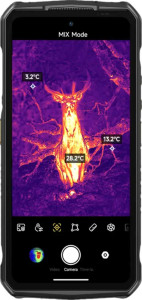
Two further differentiators stand out. The Armor 29 Pro includes an external memory slot, allowing users to expand storage beyond its 512 GB internal capacity — a practical advantage the WP200 Pro cannot match despite its larger built-in storage. It also carries an infrared sensor, which enables use as a universal remote and, more relevantly for a rugged device, can be leveraged for thermal or IR-related functionality. The WP200 Pro has neither.

The Oukitel WP200 Pro holds no exclusive connectivity advantage in this group — every feature it offers is also present on the Armor 29 Pro Thermal, which then adds Wi-Fi 6E, Bluetooth 5.4, expandable storage, and an IR sensor on top. The Armor 29 Pro Thermal takes a clear and well-rounded win in this category.
Miscellaneous:
has a video light
Has sapphire glass display
Has a curved display
Has an e-paper display

The Miscellaneous group offers nothing to differentiate the Oukitel WP200 Pro and the Ulefone Armor 29 Pro Thermal — every spec listed is identical. Both have a video light, and neither features sapphire glass, a curved display, or an e-paper display. This is a complete tie with no edge to award to either device.

Comparison Summary & Verdict

After examining every specification, these two phones clearly target different kinds of users. The Oukitel WP200 Pro stands out for those who want a far more manageable daily carry: at just 311 g and 13.7 mm thick, it is dramatically lighter and slimmer, and its 1 TB of internal storage paired with 24 GB of RAM makes it a powerhouse for media and multitasking in a relatively compact form. By contrast, the Ulefone Armor 29 Pro Thermal is built for users who push smartphones to their absolute limits — its massive 21,200 mAh battery with 120 W fast charging, rugged build, secondary screen, 3.5 mm audio jack, expandable storage, infrared sensor, and more versatile triple-camera system with four flash LEDs make it the obvious choice for outdoor professionals and power users who need a device that can last days in the field. Choose the Oukitel WP200 Pro for everyday portability and storage capacity; choose the Ulefone Armor 29 Pro Thermal for extreme endurance and field-ready versatility.

Oukitel WP200 Pro
Buy Oukitel WP200 Pro if...

Buy the Oukitel WP200 Pro if you want a much lighter and slimmer device with 1 TB of storage and 24 GB of RAM for power users who still value everyday portability.

Ulefone Armor 29 Pro Thermal
Buy Ulefone Armor 29 Pro Thermal if...

Buy the Ulefone Armor 29 Pro Thermal if you need extreme battery endurance with its 21,200 mAh cell and 120 W charging, a rugged build, expandable storage, and a more versatile camera system for demanding outdoor use.