Oukitel WP200 Pro
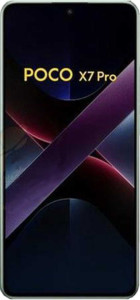
Xiaomi Poco X7 Pro

Oukitel WP200 Pro Xiaomi Poco X7 Pro

Overview

Welcome to our in-depth comparison of the Oukitel WP200 Pro and the Xiaomi Poco X7 Pro. Both phones share an IP68 waterproof rating, OLED displays with 120Hz refresh rates, and Android 15, yet they take very different approaches to battery capacity, display quality, and overall form factor. Whether you value raw endurance or a slimmer, more refined multimedia experience, this comparison will help you decide which device deserves a place in your pocket.

Common Features

  • Both phones are waterproof with an IP68 ingress protection rating.
  • Neither phone has a rugged build.
  • Neither phone can be folded.
  • Both phones feature an OLED/AMOLED display type.
  • Both phones have a 120Hz refresh rate.
  • Both phones have branded damage-resistant glass on the display.
  • Neither phone has a secondary screen.
  • Both phones have a touchscreen.
  • Both processors are built on a 4 nm semiconductor process.
  • Both phones support 64-bit processing.
  • Both phones use big.LITTLE technology with 8 CPU threads.
  • Both phones run Android 15.
  • Both phones support fast charging.
  • Neither phone has wireless charging.
  • Neither phone has a removable battery.
  • Neither phone has a 3.5 mm audio jack.
  • Both phones support 5G connectivity.
  • Both phones support Wi-Fi 4, Wi-Fi 5, and Wi-Fi 6.
  • Both phones have dual SIM card slots.
  • Both phones have NFC and a fingerprint scanner.
  • Both phones use USB Type-C with USB version 2.
  • Neither phone has an external memory slot.
  • Both phones have a multi-lens main camera.
  • Both phones have continuous autofocus when recording video and phase-detection autofocus for photos.
  • Both phones support slow-motion video recording.
  • Both phones have a video light.
  • Neither phone has a sapphire glass display, curved display, or e-paper display.

Main Differences

  • Weight is 311 g on Oukitel WP200 Pro and 198 g on Xiaomi Poco X7 Pro.
  • Thickness is 13.7 mm on Oukitel WP200 Pro and 8.3 mm on Xiaomi Poco X7 Pro.
  • Volume is 174.49 cm³ on Oukitel WP200 Pro and 100.36 cm³ on Xiaomi Poco X7 Pro.
  • Screen size is 6.7″ on Oukitel WP200 Pro and 6.67″ on Xiaomi Poco X7 Pro.
  • Pixel density is 394 ppi on Oukitel WP200 Pro and 446 ppi on Xiaomi Poco X7 Pro.
  • Resolution is 1080 x 2412 px on Oukitel WP200 Pro and 1220 x 2712 px on Xiaomi Poco X7 Pro.
  • Typical brightness is 500 nits on Oukitel WP200 Pro and 1400 nits on Xiaomi Poco X7 Pro.
  • Gorilla Glass version is Gorilla Glass 5 on Oukitel WP200 Pro and Gorilla Glass 7i on Xiaomi Poco X7 Pro.
  • HDR10 and HDR10+ support is present on Xiaomi Poco X7 Pro but not available on Oukitel WP200 Pro.
  • Dolby Vision support is present on Xiaomi Poco X7 Pro but not available on Oukitel WP200 Pro.
  • Always-On Display is available on Xiaomi Poco X7 Pro but not on Oukitel WP200 Pro.
  • Internal storage is 1000 GB on Oukitel WP200 Pro and 512 GB on Xiaomi Poco X7 Pro.
  • RAM is 24 GB on Oukitel WP200 Pro and 12 GB on Xiaomi Poco X7 Pro.
  • GPU is Mali G610 MP6 on Oukitel WP200 Pro and Mali G720 MC7 on Xiaomi Poco X7 Pro.
  • Geekbench 6 multi-core score is 3891 on Oukitel WP200 Pro and 6137 on Xiaomi Poco X7 Pro.
  • Geekbench 6 single-core score is 1224 on Oukitel WP200 Pro and 1583 on Xiaomi Poco X7 Pro.
  • GPU clock speed is 950 MHz on Oukitel WP200 Pro and 1300 MHz on Xiaomi Poco X7 Pro.
  • Maximum memory bandwidth is 51.2 GB/s on Oukitel WP200 Pro and 68.2 GB/s on Xiaomi Poco X7 Pro.
  • Main camera resolution is 108 & 2 & 0.3 MP on Oukitel WP200 Pro and 50 & 8 MP on Xiaomi Poco X7 Pro.
  • Front camera resolution is 32 MP on Oukitel WP200 Pro and 20 MP on Xiaomi Poco X7 Pro.
  • Optical image stabilization is present on Xiaomi Poco X7 Pro but not available on Oukitel WP200 Pro.
  • Maximum video recording frame rate at 4K is 30 fps on Oukitel WP200 Pro and 60 fps on Xiaomi Poco X7 Pro.
  • Laser autofocus is present on Xiaomi Poco X7 Pro but not available on Oukitel WP200 Pro.
  • RAW photo shooting is supported on Xiaomi Poco X7 Pro but not on Oukitel WP200 Pro.
  • HDR10 video recording is supported on Xiaomi Poco X7 Pro but not on Oukitel WP200 Pro.
  • Battery capacity is 8800 mAh on Oukitel WP200 Pro and 6000 mAh on Xiaomi Poco X7 Pro.
  • Charging speed is 45W on Oukitel WP200 Pro and 90W on Xiaomi Poco X7 Pro.
  • Stereo speakers are present on Xiaomi Poco X7 Pro but not on Oukitel WP200 Pro.
  • aptX, aptX HD, and LDAC audio codec support is available on Xiaomi Poco X7 Pro but not on Oukitel WP200 Pro.
  • Bluetooth version is 5.3 on Oukitel WP200 Pro and 6.0 on Xiaomi Poco X7 Pro.
  • Maximum download speed is 4700 Mbit/s on Oukitel WP200 Pro and 5700 Mbit/s on Xiaomi Poco X7 Pro.
  • An infrared sensor is present on Xiaomi Poco X7 Pro but not on Oukitel WP200 Pro.
  • A barometer is present on Oukitel WP200 Pro but not on Xiaomi Poco X7 Pro.
Specs Comparison
Oukitel WP200 Pro

Oukitel WP200 Pro

Xiaomi Poco X7 Pro

Xiaomi Poco X7 Pro

Design:
water resistance Waterproof Waterproof
weight 311 g 198 g
thickness 13.7 mm 8.3 mm
width 77.85 mm 75.2 mm
height 163.6 mm 160.8 mm
volume 174.486762 cm³ 100.364928 cm³
Ingress Protection (IP) rating IP68 IP68
has a rugged build
can be folded

Both the Oukitel WP200 Pro and the Xiaomi Poco X7 Pro share an IP68 waterproof rating, meaning both can withstand submersion in water under standardized conditions. On that front, they are evenly matched — neither has a meaningful protection advantage over the other.

Where they diverge sharply is in physical form factor. The WP200 Pro is a significantly bulkier device: at 311 g and 13.7 mm thick, it is nearly 113 g heavier and over 5 mm thicker than the Poco X7 Pro, which weighs just 198 g and measures 8.3 mm thin. This translates to a volume difference of roughly 74 cm³ — the WP200 Pro occupies nearly 74% more physical space. In practical terms, this means the WP200 Pro will feel noticeably dense and cumbersome during extended one-handed use or when pocketed, while the Poco X7 Pro sits comfortably in the slim-and-light category for a modern smartphone.

Interestingly, despite its considerably larger mass and volume, the WP200 Pro is not flagged as having a rugged build — the same as the Poco X7 Pro. This means the extra bulk does not translate into any rated drop or shock resistance advantage based on the available data. The Poco X7 Pro holds a clear edge in design for users who prioritize everyday comfort, portability, and pocket-friendliness, while the WP200 Pro offers no compensating structural toughness to justify its added weight and size.

Display:
Display type OLED/AMOLED OLED/AMOLED
screen size 6.7" 6.67"
pixel density 394 ppi 446 ppi
resolution 1080 x 2412 px 1220 x 2712 px
refresh rate 120Hz 120Hz
brightness (typical) 500 nits 1400 nits
has branded damage-resistant glass
Gorilla Glass version Gorilla Glass 5 Gorilla Glass 7i
supports HDR10
supports HDR10+
Always-On Display
supports Dolby Vision
Has a secondary screen
has a touch screen

Both phones use an OLED/AMOLED panel with a 120Hz refresh rate, so the baseline viewing experience — deep blacks, vibrant colors, smooth scrolling — is shared ground. The screen sizes are nearly identical at 6.7″ and 6.67″ respectively, making size a non-factor in this comparison.

The gap opens up decisively in panel quality. The Poco X7 Pro renders at 1220 x 2712 px with a pixel density of 446 ppi, versus the WP200 Pro's 1080 x 2412 px at 394 ppi — a difference that is perceptible when reading fine text or viewing detailed images up close. Far more impactful is the brightness gulf: the Poco X7 Pro reaches 1400 nits typical brightness compared to just 500 nits on the WP200 Pro. In direct sunlight, this is the difference between a legible screen and one that becomes a struggle to read. The Poco X7 Pro also supports HDR10, HDR10+, and Dolby Vision, enabling richer contrast and color accuracy when streaming compatible content — capabilities entirely absent on the WP200 Pro.

Glass protection further tilts the scales: the WP200 Pro uses Gorilla Glass 5, while the Poco X7 Pro steps up to Gorilla Glass 7i, offering improved scratch and drop resistance. The Poco X7 Pro also includes an Always-On Display, a convenience feature missing from the WP200 Pro. Across nearly every display dimension that matters — brightness, sharpness, HDR support, and glass durability — the Poco X7 Pro holds a commanding advantage.

Performance:
internal storage 1000GB 512GB
RAM 24GB 12GB
GPU name Mali G610 MP6 Mali G720 MC7
CPU speed 1 x 3.1 & 3 x 3 & 4 x 2 GHz 1 x 3.25 & 3 x 3 & 4 x 2.15 GHz
Geekbench 6 result (multi) 3891 6137
Geekbench 6 result (single) 1224 1583
GPU clock speed 950 MHz 1300 MHz
RAM speed 6400 MHz 4267 MHz
semiconductor size 4 nm 4 nm
Supports 64-bit
DirectX version DirectX 12 DirectX 12
Has integrated graphics
Uses big.LITTLE technology
CPU threads 8 threads 8 threads
Has NX bit
Uses HMP
Has TrustZone
maximum memory bandwidth 51.2 GB/s 68.2 GB/s
OpenCL version 2 2
memory channels 4 4
maximum memory amount 16GB 24GB
DDR memory version 5 5
L3 cache 4 MB 6 MB

On paper, the Oukitel WP200 Pro looks stacked: 24 GB of RAM and 1 TB of internal storage are headline figures that few phones at any price point can match. For users who juggle dozens of apps simultaneously or store massive local media libraries, that combination has real appeal. The Poco X7 Pro counters with 12 GB of RAM and 512 GB of storage — respectable, but trailing in both categories.

Raw compute performance, however, tells a very different story. The Poco X7 Pro scores 6137 (multi-core) and 1583 (single-core) on Geekbench 6, compared to the WP200 Pro's 3891 and 1224 respectively. That is a roughly 58% multi-core advantage — a gap large enough to be felt in demanding tasks like video editing, gaming, and heavy multitasking. The GPU disparity reinforces this: the Poco X7 Pro's Mali G720 MC7 running at 1300 MHz substantially outclasses the WP200 Pro's Mali G610 MP6 at 950 MHz, translating to meaningfully smoother frame rates in graphically intensive games. The Poco X7 Pro also carries a higher memory bandwidth of 68.2 GB/s and a larger 6 MB L3 cache, both of which reduce bottlenecks during sustained workloads.

The trade-off here is clear: the WP200 Pro offers more storage headroom and installed RAM, but the Poco X7 Pro's processor and GPU are in a different performance tier entirely. Since raw speed and graphics capability drive the actual user experience in most scenarios, the Poco X7 Pro holds the stronger overall performance advantage — the WP200 Pro's generous RAM and storage are compelling on spec sheets but cannot compensate for a significantly slower compute engine.

Cameras:
megapixels (main camera) 108 & 2 & 0.3 MP 50 & 8 MP
Has a dual-lens (or multi-lens) main camera
megapixels (front camera) 32MP 20MP
has built-in optical image stabilization
video recording (main camera) 2160 x 30 fps 2160 x 60 fps
Has a dual-tone LED flash
number of flash LEDs 2 2
has a BSI sensor
has a CMOS sensor
has continuous autofocus when recording movies
Has phase-detection autofocus for photos
supports slow-motion video recording
has a built-in HDR mode
has manual exposure
has a flash
optical zoom 0x 0x
has manual ISO
has a serial shot mode
has manual focus
has a front camera
Has laser autofocus
Shoots 360° panorama
has manual white balance
shoots raw
has touch autofocus
has manual shutter speed
can create panoramas in-camera
wide aperture (front camera) 2.2f 2.5f
Has a front-facing LED flash
has a dual-lens (or multi-lens) front camera
supports HDR10 recording
supports Dolby Vision recording
has a front-facing camera under the display
Has a RGB LED flash
has 3D photo/video recording capabilities

Megapixel counts can be misleading, and this comparison is a good example. The Oukitel WP200 Pro leads with a 108 MP primary sensor, but its secondary lenses — a 2 MP and a 0.3 MP unit — add little practical value. The Poco X7 Pro uses a 50 MP main sensor paired with an 8 MP ultrawide, which is a far more usable two-lens configuration. In real-world shooting, a capable ultrawide lens is meaningfully more versatile than depth or macro sensors measured in fractions of a megapixel.

The qualitative camera advantages sit firmly with the Poco X7 Pro. It includes optical image stabilization (OIS) — absent on the WP200 Pro — which directly reduces blur in low-light photos and shaky handheld video. It also supports 4K at 60fps video recording versus the WP200 Pro's 4K at 30fps, doubling the frame rate for smoother footage. The Poco X7 Pro adds laser autofocus for faster, more reliable subject locking, shoots in RAW format for photographers who post-process their images, and supports HDR10 video recording — none of which the WP200 Pro offers. The WP200 Pro's 32 MP front camera does outspec the Poco X7 Pro's 20 MP selfie shooter, though the WP200 Pro's slightly wider front aperture of f/2.2 versus f/2.5 gives it a minor light-gathering edge for selfies.

Taken together, the front camera is the one area where the WP200 Pro holds a spec advantage. But across the metrics that most influence overall camera capability — stabilization, video frame rate, autofocus sophistication, and RAW support — the Poco X7 Pro is the stronger camera system by a clear margin.

Operating system:
Android version Android 15 Android 15
has clipboard warnings
has location privacy options
has camera/microphone privacy options
has Mail Privacy Protection
has theme customization
can block app tracking
blocks cross-site tracking
has on-device machine learning
has notification permissions
has media picker
Can play games while they download
has dark mode
has Wi-Fi password sharing
has battery health check
has an extra dim mode
has focus modes
has dynamic theming
can offload apps
Has customizable notifications
has Live Text
has full-page screenshots
supports split screen
gets direct OS updates
has PiP
Can be used as a PC
Has sharing intents
has a child lock
Supports widgets
Is free and open source
Has offline voice recognition
has voice commands
Tracks the current position of a mobile device
is a multi-user system
has Quick Start

This is a rare case of a complete tie. Every single operating system specification provided for the Oukitel WP200 Pro and the Xiaomi Poco X7 Pro is identical — both run Android 15 and share the same feature set across privacy controls, customization options, multitasking capabilities, and accessibility tools.

The shared highlights are worth noting for users evaluating the platform as a whole. Both phones offer on-device machine learning, dynamic theming, split-screen multitasking, Picture-in-Picture, and a solid suite of privacy tools including location and camera/microphone controls. Neither device receives direct OS updates from Google, meaning both rely on their respective manufacturers for software patches — a consideration for long-term software support that applies equally to both.

With no differentiating data points across the entire specification set, this category is a complete draw. A buyer's software experience will be functionally equivalent on either device based strictly on the provided specifications.

Battery:
battery power 8800 mAh 6000 mAh
has wireless charging
Supports fast charging
charging speed 45W 90W
has a removable battery
has a battery level indicator
has a rechargeable battery

Battery is the one category where the Oukitel WP200 Pro asserts a genuine, meaningful advantage. Its 8800 mAh cell is nearly 47% larger than the Poco X7 Pro's 6000 mAh battery — a gap that, all else being equal, translates directly into significantly more time between charges. For users who spend long days away from an outlet, or who use their phone as a hotspot or media device, that extra capacity is a tangible real-world benefit.

The Poco X7 Pro hits back on charging speed, however. At 90W, it charges at twice the rate of the WP200 Pro's 45W, meaning it can recover from a low battery far more quickly. In practical terms, the Poco X7 Pro's smaller battery at 90W will reach a full charge in a fraction of the time it takes the WP200 Pro to top up its larger cell. For users who charge frequently and briefly — during meetings, commutes, or meal breaks — fast charging can offset a smaller battery in day-to-day convenience. Neither phone supports wireless charging.

The right choice here depends on usage pattern. The WP200 Pro suits users who prioritize maximum endurance and charge infrequently, while the Poco X7 Pro caters to those who prefer quick top-ups throughout the day. In absolute energy terms, though, the WP200 Pro holds the battery capacity edge — and an 8800 mAh reserve is large enough that even slower charging rarely becomes a bottleneck.

Audio:
has a socket for a 3.5 mm audio jack
has stereo speakers
has aptX
has LDAC
has aptX HD
has aptX Adaptive
has aptX Lossless
Has a radio

Audio is another category where the Poco X7 Pro pulls ahead cleanly. Neither phone includes a 3.5mm headphone jack or an FM radio, so wired analog listening is off the table for both. From there, however, the two devices diverge significantly.

The Poco X7 Pro features stereo speakers — a meaningful upgrade for media consumption, gaming, and calls, where dual-channel sound creates a noticeably wider, more immersive audio experience compared to a single mono speaker. The WP200 Pro lacks stereo output entirely. For wireless audio, the Poco X7 Pro supports both aptX HD and LDAC, two high-resolution Bluetooth audio codecs that deliver substantially better sound quality to compatible headphones and earbuds than standard Bluetooth audio. The WP200 Pro supports none of these codecs, meaning Bluetooth audio quality is capped at lower fidelity regardless of how premium the connected headphones are.

There is no offsetting advantage for the WP200 Pro in this category. The Poco X7 Pro wins audio outright — offering a better speaker setup for built-in listening and superior wireless audio fidelity for headphone users.

Connectivity & Features:
release date February 2025 January 2025
has 5G support
Wi-Fi version Wi-Fi 4 (802.11n), Wi-Fi 5 (802.11ac), Wi-Fi 6 (802.11ax) Wi-Fi 4 (802.11n), Wi-Fi 5 (802.11ac), Wi-Fi 6 (802.11ax)
SIM cards 2 SIM 2 SIM
Bluetooth version 5.3 6
has an external memory slot
Has USB Type-C
USB version 2 2
has NFC
download speed 4700 MBits/s 5700 MBits/s
Has a fingerprint scanner
has emergency SOS via satellite
has crash detection
is DLNA-certified
has a gyroscope
supports ANT+
Has a heart rate monitor
has GPS
has a compass
supports Wi-Fi
Has an infrared sensor
has an accelerometer
has a cellular module
Has a barometer
has an HDMI output
Uses 3D facial recognition
Has an iris scanner
Stylus included
supports Galileo
Has motion tracking
Has optical tracking
Has a built-in projector

The connectivity foundations are largely shared: both phones support 5G, dual SIM, Wi-Fi 6, NFC, USB Type-C, and the same USB 2.0 standard. For most users, day-to-day wireless experience will feel equivalent. The differences that do exist, however, are worth examining carefully.

The Poco X7 Pro edges ahead in two wireless specs. Its Bluetooth 6.0 is a newer standard than the WP200 Pro's Bluetooth 5.3, offering improved connection stability and efficiency with compatible devices. Its peak cellular download speed of 5700 Mbps also exceeds the WP200 Pro's 4700 Mbps — a difference that matters most in congested network environments or when transferring large files over mobile data. The Poco X7 Pro also includes an infrared sensor, enabling it to function as a universal remote for TVs and home appliances — a niche but genuinely useful feature the WP200 Pro lacks. The WP200 Pro counters with a barometer, a sensor useful for altitude tracking and weather awareness, which the Poco X7 Pro omits.

The barometer versus infrared trade-off appeals to different user profiles — outdoor and fitness-oriented users may value the former, while everyday convenience favors the latter. On balance, the Poco X7 Pro's newer Bluetooth standard and higher download ceiling give it a modest but real connectivity advantage, making it the marginally stronger performer in this category overall.

Miscellaneous:
has a video light
Has sapphire glass display
Has a curved display
Has an e-paper display

The miscellaneous specifications for these two devices are identical across every data point provided. Both include a video light, and neither features sapphire glass, a curved display, or an e-paper display.

With no differentiating factors present in this category, this group is a complete tie. Neither phone holds any advantage over the other based strictly on the available data.

Comparison Summary & Verdict

After examining every specification, these two phones clearly target different users. The Oukitel WP200 Pro stands out with its massive 8800 mAh battery, enormous 1 TB of storage, and 24 GB of RAM, making it a compelling choice for power users who need extended endurance above all else. The Xiaomi Poco X7 Pro, on the other hand, excels in almost every other area: it delivers a significantly sharper and brighter display with 1400 nits brightness and Dolby Vision, stronger CPU and GPU performance as shown by its Geekbench scores, optical image stabilization, stereo speakers, and a far more compact and lightweight body. If raw battery longevity and storage are your top priorities, the Oukitel WP200 Pro delivers. For a well-rounded, high-performance smartphone experience with superior display and audio quality, the Xiaomi Poco X7 Pro is the stronger all-around choice.

Oukitel WP200 Pro
Buy Oukitel WP200 Pro if...

Buy the Oukitel WP200 Pro if you need exceptional battery endurance with its 8800 mAh cell, plus massive 1 TB storage and 24 GB of RAM at a comparable price point.

Xiaomi Poco X7 Pro
Buy Xiaomi Poco X7 Pro if...

Buy the Xiaomi Poco X7 Pro if you want superior all-around performance, a brighter and sharper display with Dolby Vision, optical image stabilization, stereo speakers, and a significantly lighter and slimmer design.