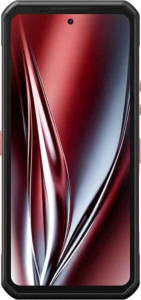
Oukitel WP300
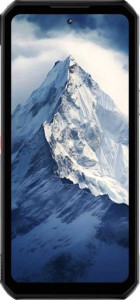
Oukitel WP56

Oukitel WP300 Oukitel WP56

Overview

Welcome to our in-depth comparison of the Oukitel WP300 and the Oukitel WP56, two rugged 5G smartphones that share a surprising amount of DNA yet diverge in some meaningful ways. Both devices pack a massive 16000 mAh battery, the MediaTek Dimensity 7050 chipset, and 512 GB of storage, making the choice far from obvious. The real battlegrounds lie in their display technology, ingress protection ratings, and a handful of features that could tip the scales depending on your lifestyle and daily needs.

Common Features

  • Both products are waterproof and feature a rugged build.
  • Neither product can be folded.
  • Both share the same width of 82.4 mm and height of 177.3 mm.
  • Both feature a 6.8″ screen with a resolution of 1080 x 2460 px and a pixel density of 395 ppi.
  • Both use Gorilla Glass 5 for damage-resistant screen protection.
  • Neither product supports HDR10, HDR10+, or Always-On Display.
  • Both are powered by the MediaTek Dimensity 7050 chipset with a Mali G68 MP4 GPU.
  • Both offer 12 GB of RAM and 512 GB of internal storage.
  • Both score 550000 on the AnTuTu benchmark, 2257 (multi) and 936 (single) on Geekbench 6.
  • Both have a dual-lens main camera with 108 & 2 MP and a 32 MP front camera.
  • Neither product includes optical image stabilization or a dual-tone LED flash, but both have a 3-LED flash and BSI/CMOS sensors.
  • Both run Android 15 with clipboard warnings, location privacy options, and camera/microphone privacy options.
  • Both support app tracking blocking, theme customization, but neither blocks cross-site tracking nor has Mail Privacy Protection.
  • Both are equipped with a 16000 mAh battery supporting 45W fast charging, and neither supports wireless or reverse wireless charging.
  • Both come with a charger included and neither has a removable battery.
  • Neither product has a 3.5 mm audio jack, aptX, LDAC, aptX HD, aptX Adaptive, aptX Lossless, or a radio.
  • Both support 5G, Wi-Fi 4 and Wi-Fi 5, Bluetooth 5.2, NFC, dual SIM, USB Type-C, and have an external memory slot.
  • Both achieve a download speed of 2770 MBits/s.
  • Both include a video light, and neither has a sapphire glass, curved, or e-paper display.

Main Differences

  • Weight is 512 g on the Oukitel WP300 and 524 g on the Oukitel WP56.
  • Thickness is 23.2 mm on the Oukitel WP300 and 24.8 mm on the Oukitel WP56.
  • Volume is 338.94 cm³ on the Oukitel WP300 and 362.32 cm³ on the Oukitel WP56.
  • The Ingress Protection rating is IP67 on the Oukitel WP300 and IP69 on the Oukitel WP56.
  • The display type is LCD IPS on the Oukitel WP300 and OLED/AMOLED on the Oukitel WP56.
  • Timelapse functionality is present on the Oukitel WP56 but not available on the Oukitel WP300.
  • Stereo speakers are present on the Oukitel WP56 but not available on the Oukitel WP300.
  • An infrared sensor is present on the Oukitel WP56 but not available on the Oukitel WP300.
Specs Comparison
Oukitel WP300

Oukitel WP300

Oukitel WP56

Oukitel WP56

Design:
water resistance Waterproof Waterproof
weight 512 g 524 g
thickness 23.2 mm 24.8 mm
width 82.4 mm 82.4 mm
height 177.3 mm 177.3 mm
volume 338.940864 cm³ 362.316096 cm³
Ingress Protection (IP) rating IP67 IP69
has a rugged build
can be folded

Both the Oukitel WP300 and WP56 share the same rugged DNA: identical footprints (82.4 × 177.3 mm), non-foldable slabs with waterproof builds designed for demanding environments. At a glance, they look like near-twins — but the details reveal a meaningful split in protection level and physical bulk.

The most significant differentiator is the IP rating. The WP300 carries an IP67 certification, meaning it can handle submersion in up to 1 meter of still water for 30 minutes — solid for rain, splashes, and accidental drops in puddles. The WP56 steps up to IP69, which adds resistance to high-pressure, high-temperature water jets — the kind used in industrial washdowns or vehicle cleaning. For construction workers, outdoor professionals, or anyone in wet-intensive environments, this is a genuinely practical upgrade, not just a spec sheet number. The WP56's protection is simply more versatile and more robust.

That extra protection comes with a small physical cost: the WP56 is 1.6 mm thicker (24.8 vs 23.2 mm), 12 g heavier (524 vs 512 g), and occupies notably more volume (362.3 vs 338.9 cm³). Neither phone is pocketable in any conventional sense at these dimensions, so the difference is marginal in daily handling — but it is real. If raw portability and slightly trimmer ergonomics matter more than maximum water resistance, the WP300 has a modest edge. For most rugged-use scenarios, however, the WP56 holds the clear advantage in this category, thanks to its superior IP69 rating.

Display:
Display type LCD, IPS OLED/AMOLED
screen size 6.8" 6.8"
pixel density 395 ppi 395 ppi
resolution 1080 x 2460 px 1080 x 2460 px
has branded damage-resistant glass
Gorilla Glass version Gorilla Glass 5 Gorilla Glass 5
supports HDR10
supports HDR10+
Always-On Display
supports Dolby Vision
Has a secondary screen
has a touch screen

On paper, these two displays look virtually identical: both offer a 6.8″ screen, 1080 x 2460 px resolution, and a sharp 395 ppi pixel density, topped with Gorilla Glass 5 for scratch and impact resistance. HDR formats and Always-On Display are absent on both. For a spec-sheet skim, they appear to be a wash — but one difference changes the entire character of the display experience.

The WP300 uses an LCD IPS panel, while the WP56 opts for an OLED/AMOLED panel. This is the single most impactful differentiator in this category. OLED technology renders true blacks by switching off individual pixels entirely, which translates to dramatically higher contrast ratios and more vivid colors compared to LCD, where a backlight is always on. In practical terms, the WP56's screen will look noticeably richer and punchier — especially when viewing dark content or using the phone in varied lighting conditions. OLED panels also tend to offer better outdoor visibility in bright sunlight and consume less power when displaying dark-themed interfaces.

Given that every other display specification is perfectly matched between the two, the WP56 holds a clear advantage in this group purely on the strength of its OLED panel. The WP300's IPS LCD is a capable, color-accurate technology, but it cannot match OLED's contrast depth or per-pixel efficiency. For users who prioritize display quality — whether for media consumption, outdoor use, or simply a more premium visual experience — the WP56 is the stronger choice here.

Performance:
internal storage 512GB 512GB
RAM 12GB 12GB
AnTuTu benchmark score 550000 550000
Chipset (SoC) name MediaTek Dimensity 7050 MediaTek Dimensity 7050
GPU name Mali G68 MP4 Mali G68 MP4
CPU speed 2 x 2.6 & 6 x 2 GHz 2 x 2.6 & 6 x 2 GHz
Geekbench 6 result (multi) 2257 2257
Geekbench 6 result (single) 936 936
GPU clock speed 950 MHz 950 MHz
Has integrated LTE
RAM speed 3200 MHz 3200 MHz
semiconductor size 6 nm 6 nm
Supports 64-bit
DirectX version DirectX 12 DirectX 12
Has integrated graphics
OpenGL ES version 3.2 3.2
Uses big.LITTLE technology
CPU threads 8 threads 8 threads
Has NX bit
Uses HMP
Has TrustZone
OpenCL version 2 2
memory channels 4 4
maximum memory amount 16GB 16GB
uses multithreading
GPU execution units 4 4
GPU turbo 900 MHz 900 MHz
Thermal Design Power (TDP) 5W 5W
DDR memory version 5 5
shading units 64 64
L3 cache 2 MB 2 MB

Under the hood, the WP300 and WP56 are carbon copies of each other. Both are powered by the MediaTek Dimensity 7050 chipset, built on a 6 nm process, paired with 12 GB of DDR5 RAM and 512 GB of internal storage. The benchmark scores confirm the hardware equivalence: each device posts an AnTuTu score of 550,000, a Geekbench 6 single-core result of 936, and a multi-core result of 2,257 — there is no daylight between them.

In real-world terms, the Dimensity 7050 is a capable mid-range chip. The big.LITTLE architecture with HMP (Heterogeneous Multi-Processing) means the processor can intelligently distribute workloads across its performance and efficiency cores, keeping everyday tasks smooth while managing power consumption. The Mali G68 MP4 GPU, running at 950 MHz with DirectX 12 and OpenGL ES 3.2 support, handles moderate gaming and graphics tasks competently, though it is not positioned for demanding 3D titles at maximum settings.

This category is an absolute tie. Every metric — chipset, RAM, storage, GPU, benchmark scores, memory speed, cache — is shared between the two devices without a single point of differentiation. A buyer's choice between these phones will hinge entirely on other spec groups; performance is simply not a factor to weigh here.

Cameras:
megapixels (main camera) 108 & 2 MP 108 & 2 MP
Has a dual-lens (or multi-lens) main camera
megapixels (front camera) 32MP 32MP
has built-in optical image stabilization
Has a dual-tone LED flash
number of flash LEDs 3 3
has a BSI sensor
has a CMOS sensor
has continuous autofocus when recording movies
Has phase-detection autofocus for photos
supports slow-motion video recording
has a built-in HDR mode
has manual exposure
has a flash
optical zoom 0x 0x
has manual ISO
has a serial shot mode
has manual focus
has a front camera
Has laser autofocus
Shoots 360° panorama
has manual white balance
shoots raw
has touch autofocus
has manual shutter speed
can create panoramas in-camera
wide aperture (front camera) 2f 2f
Has timelapse function
Has a front-facing LED flash
has a dual-lens (or multi-lens) front camera
supports HDR10 recording
supports Dolby Vision recording
has a front-facing camera under the display
Has a RGB LED flash
has 3D photo/video recording capabilities

Camera hardware is essentially a mirror image across these two devices. Both sport a dual-lens rear setup led by a 108 MP main sensor with BSI and CMOS technology, backed by phase-detection autofocus, continuous autofocus during video, and a triple-LED flash. The 32 MP front camera with an f/2 aperture is equally matched. Manual controls — ISO, exposure, focus, and white balance — are available on both, giving users a reasonable degree of shooting flexibility for a rugged-category phone.

Notably absent on both models is optical image stabilization, optical zoom, and the ability to shoot RAW files — limitations worth flagging for anyone with serious photography expectations. The lack of OIS in particular means handheld shots in low light or while moving are more susceptible to blur, which is a relevant trade-off for an outdoor/action-oriented device.

The sole differentiator in this entire category is that the WP56 includes a timelapse mode, which the WP300 lacks. For most users this is a niche feature, but for outdoor enthusiasts documenting sunsets, construction progress, or natural phenomena, it adds genuine creative utility. It hands the WP56 a narrow edge in this group — the camera systems are otherwise identical, making timelapse the single tiebreaker.

Operating system:
Android version Android 15 Android 15
has clipboard warnings
has location privacy options
has camera/microphone privacy options
has Mail Privacy Protection
has theme customization
can block app tracking
blocks cross-site tracking
has on-device machine learning
has notification permissions
has media picker
Can play games while they download
has dark mode
has Wi-Fi password sharing
has battery health check
has an extra dim mode
has focus modes
has dynamic theming
can offload apps
Has customizable notifications
has Live Text
has full-page screenshots
supports split screen
gets direct OS updates
has PiP
Can be used as a PC
Has sharing intents
has a child lock
Supports widgets
Is free and open source
Has offline voice recognition
has voice commands
Tracks the current position of a mobile device
is a multi-user system
has Quick Start

From a software standpoint, the WP300 and WP56 are indistinguishable. Both run Android 15 and share an identical feature set across every tracked dimension — privacy controls, productivity tools, and system utilities included. Neither receives direct OS updates, which is a shared limitation worth noting for long-term software support expectations, but it applies equally to both.

The privacy suite on offer is solid for an Android device at this tier: location controls, camera and microphone access management, app tracking blocking, and clipboard warnings are all present. On the productivity side, split-screen multitasking, Picture-in-Picture, widgets, offline voice recognition, and Live Text round out a genuinely capable daily-use feature set. Dynamic theming and dark mode cater to personalization, while multi-user support and a child lock add practical versatility for shared-device scenarios.

This category is a complete tie. Not a single software feature separates these two devices — every capability and every absence is shared identically. The OS experience will be functionally interchangeable, and no buyer should factor software into their decision between these two phones.

Battery:
battery power 16000 mAh 16000 mAh
has wireless charging
Supports fast charging
charging speed 45W 45W
has reverse wireless charging
comes with a charger
has a removable battery
has a battery level indicator
has a rechargeable battery

Massive battery capacity is a calling card of rugged phones, and both the WP300 and WP56 deliver in identical fashion: each houses a 16,000 mAh cell — roughly three to four times the capacity of a typical flagship smartphone. For users who need multi-day endurance in the field without access to a power outlet, this is a genuinely compelling specification that sets both devices apart from the mainstream.

Replenishing a battery this large could easily be a bottleneck, but both phones support 45W fast charging and ship with a charger included. While a full charge from zero will still take considerable time given the sheer cell size, 45W keeps the wait reasonable compared to slower charging rugged alternatives. Neither device offers wireless or reverse wireless charging — a minor limitation for those accustomed to charging pads, but not unusual at this segment and battery size.

Much like the performance and OS categories, this group ends in a complete tie. Capacity, charging speed, removability, and every other battery attribute are shared exactly. Battery life and charging behavior will be functionally identical between the two phones, and should play no role in differentiating them for a prospective buyer.

Audio:
has a socket for a 3.5 mm audio jack
has stereo speakers
has aptX
has LDAC
has aptX HD
has aptX Adaptive
has aptX Lossless
Has a radio

Audio is where these two devices finally part ways in a meaningful sense. Both drop the 3.5 mm headphone jack and lack advanced Bluetooth audio codecs like aptX or LDAC — meaning wired headphone users will need an adapter, and audiophiles streaming over Bluetooth won't get lossless-quality transmission on either phone. Those are shared compromises.

The key differentiator is that the WP56 features stereo speakers, while the WP300 is limited to a mono speaker setup. In practice, stereo speakers produce a noticeably wider, more immersive soundstage — whether you're watching video, taking hands-free calls in a loud outdoor environment, or playing back audio without headphones. For a rugged device frequently used in the field where headphone use may be impractical, this distinction has real everyday relevance.

The WP56 holds a clear edge in this category. The stereo speaker advantage is the only differentiator here, but it is a tangible one for speaker-reliant use cases. The WP300's mono output is a straightforward step down in audio quality for any scenario where built-in speakers are the primary listening method.

Connectivity & Features:
release date June 2025 July 2025
has 5G support
Wi-Fi version Wi-Fi 4 (802.11n), Wi-Fi 5 (802.11ac) Wi-Fi 4 (802.11n), Wi-Fi 5 (802.11ac)
SIM cards 2 SIM 2 SIM
Bluetooth version 5.2 5.2
has an external memory slot
Has USB Type-C
has NFC
download speed 2770 MBits/s 2770 MBits/s
upload speed 1250 MBits/s 1250 MBits/s
Has a fingerprint scanner
has emergency SOS via satellite
has crash detection
is DLNA-certified
has a gyroscope
supports ANT+
Has a heart rate monitor
has GPS
has a compass
supports Wi-Fi
Has an infrared sensor
has an accelerometer
has a cellular module
Has a barometer
has an HDMI output
Uses 3D facial recognition
Has an iris scanner
Stylus included
supports Galileo
Has motion tracking
Has optical tracking
Has a built-in projector

Connectivity credentials are well-matched across both devices. The WP300 and WP56 each support 5G, dual SIM, Bluetooth 5.2, NFC, Wi-Fi 5, USB Type-C, and expandable storage via a microSD slot. Navigation is covered by GPS with Galileo support, and the sensor suite — gyroscope, accelerometer, compass, and fingerprint scanner — is identical. For a rugged phone expected to serve as a reliable communication hub in demanding conditions, this is a solid and comprehensive foundation on both sides.

The solitary differentiator in this category is that the WP56 includes an infrared sensor, which the WP300 lacks. An IR blaster allows the phone to function as a universal remote control for televisions, air conditioners, and other IR-compatible appliances — a convenience feature that some users find genuinely useful, particularly in hospitality, facility management, or everyday home use scenarios.

The WP56 takes a narrow edge here, with the infrared sensor being the only point of separation in an otherwise identical connectivity and feature set. It is not a critical differentiator for most rugged-use cases, but it does add a layer of utility that the WP300 simply cannot match in this group.

Miscellaneous:
has a video light
Has sapphire glass display
Has a curved display
Has an e-paper display

The miscellaneous category for these two devices is brief and conclusive. Both the WP300 and WP56 include a video light — a useful addition for recording footage or illuminating subjects in low-light conditions — and neither features a sapphire glass display, curved screen, or e-paper panel. There is nothing here that distinguishes one from the other.

This is a complete tie. With every attribute in this group shared identically, miscellaneous features contribute nothing to the decision between these two phones. Buyers should look to the categories where the devices do diverge — design, display, audio, and connectivity — to make their final call.

Comparison Summary & Verdict

After examining every specification, it is clear that both phones are built for demanding environments, but they serve slightly different users. The Oukitel WP300 is the leaner option — it is lighter at 512 g, slimmer at 23.2 mm, and its IP67 rating still delivers solid waterproofing for most real-world scenarios. If a more manageable form factor matters to you, it has the edge. The Oukitel WP56, on the other hand, steps up with an OLED/AMOLED display for richer visuals, a stricter IP69 rating for high-pressure water resistance, plus stereo speakers, a timelapse camera function, and an infrared sensor — a more complete feature set for power users who want no compromises in the field or at home.

Oukitel WP300
Buy Oukitel WP300 if...

Buy the Oukitel WP300 if you prefer a lighter and slimmer rugged phone and standard waterproofing is sufficient for your needs.

Oukitel WP56
Buy Oukitel WP56 if...

Buy the Oukitel WP56 if you want a superior OLED display, higher IP69 water resistance, stereo speakers, and a broader feature set including an infrared sensor and timelapse camera.