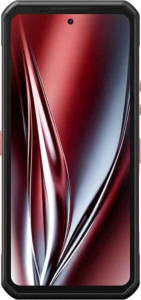
Oukitel WP300
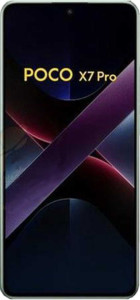
Xiaomi Poco X7 Pro

Oukitel WP300 Xiaomi Poco X7 Pro

Overview

Welcome to our in-depth comparison of the Oukitel WP300 and the Xiaomi Poco X7 Pro — two Android 15 smartphones that take dramatically different approaches to what a modern phone should be. From rugged durability and massive battery capacity to cutting-edge display technology and raw processing power, these two devices cater to very different kinds of users. Read on as we break down their specs across design, performance, cameras, audio, and connectivity to help you decide which one truly fits your lifestyle.

Common Features

  • Both phones are waterproof.
  • Neither phone can be folded.
  • Both phones have damage-resistant glass.
  • Neither phone has a secondary screen.
  • Both phones have a touch screen.
  • Both phones come with 512GB of internal storage.
  • Both phones have 12GB of RAM.
  • Both phones support 64-bit processing.
  • Both phones use DirectX 12.
  • Both phones have integrated graphics.
  • Both phones use big.LITTLE technology.
  • Both phones have 8 CPU threads.
  • Both phones have a multi-lens main camera.
  • Neither phone has a dual-tone LED flash.
  • Both phones have a CMOS sensor.
  • Both phones support continuous autofocus when recording movies.
  • Both phones have phase-detection autofocus for photos.
  • Both phones support slow-motion video recording.
  • Both phones have a built-in HDR mode.
  • Both phones support manual exposure.
  • Both phones run Android 15.
  • Both phones have clipboard warnings.
  • Both phones have location privacy options.
  • Both phones have camera and microphone privacy options.
  • Neither phone has Mail Privacy Protection.
  • Both phones support theme customization.
  • Both phones can block app tracking.
  • Neither phone blocks cross-site tracking.
  • Neither phone supports wireless charging.
  • Both phones support fast charging.
  • Both phones come with a charger.
  • Neither phone has a removable battery.
  • Both phones have a battery level indicator.
  • Both phones have a rechargeable battery.
  • Neither phone has a 3.5mm audio jack.
  • Neither phone has aptX Adaptive.
  • Neither phone has aptX Lossless.
  • Neither phone has a radio.
  • Both phones support 5G.
  • Both phones have dual SIM support.
  • Both phones have USB Type-C.
  • Both phones use USB version 2.
  • Both phones have NFC.
  • Both phones have a fingerprint scanner.
  • Neither phone has emergency SOS via satellite.
  • Neither phone has crash detection.
  • Both phones have a video light.
  • Neither phone has a sapphire glass display.
  • Neither phone has a curved display.
  • Neither phone has an e-paper display.

Main Differences

  • Weight is 512g on Oukitel WP300 and 198g on Xiaomi Poco X7 Pro.
  • Thickness is 23.2mm on Oukitel WP300 and 8.3mm on Xiaomi Poco X7 Pro.
  • Width is 82.4mm on Oukitel WP300 and 75.2mm on Xiaomi Poco X7 Pro.
  • Height is 177.3mm on Oukitel WP300 and 160.8mm on Xiaomi Poco X7 Pro.
  • Volume is 338.94 cm³ on Oukitel WP300 and 100.36 cm³ on Xiaomi Poco X7 Pro.
  • IP rating is IP67 on Oukitel WP300 and IP68 on Xiaomi Poco X7 Pro.
  • A rugged build is present on Oukitel WP300 but not on Xiaomi Poco X7 Pro.
  • Display type is LCD IPS on Oukitel WP300 and OLED/AMOLED on Xiaomi Poco X7 Pro.
  • Screen size is 6.8″ on Oukitel WP300 and 6.67″ on Xiaomi Poco X7 Pro.
  • Pixel density is 395 ppi on Oukitel WP300 and 446 ppi on Xiaomi Poco X7 Pro.
  • Resolution is 1080x2460px on Oukitel WP300 and 1220x2712px on Xiaomi Poco X7 Pro.
  • Gorilla Glass version is Gorilla Glass 5 on Oukitel WP300 and Gorilla Glass 7i on Xiaomi Poco X7 Pro.
  • HDR10 support is present on Xiaomi Poco X7 Pro but not available on Oukitel WP300.
  • HDR10+ support is present on Xiaomi Poco X7 Pro but not available on Oukitel WP300.
  • Always-On Display is available on Xiaomi Poco X7 Pro but not on Oukitel WP300.
  • Dolby Vision support is present on Xiaomi Poco X7 Pro but not on Oukitel WP300.
  • AnTuTu benchmark score is 550,000 on Oukitel WP300 and 1,663,422 on Xiaomi Poco X7 Pro.
  • The chipset is MediaTek Dimensity 7050 on Oukitel WP300 and MediaTek Dimensity 8400 on Xiaomi Poco X7 Pro.
  • The GPU is Mali G68 MP4 on Oukitel WP300 and Mali G720 MC7 on Xiaomi Poco X7 Pro.
  • CPU speed is 2x2.6 & 6x2 GHz on Oukitel WP300 and 1x3.25 & 3x3 & 4x2.15 GHz on Xiaomi Poco X7 Pro.
  • Geekbench 6 multi-core score is 2,257 on Oukitel WP300 and 6,137 on Xiaomi Poco X7 Pro.
  • Geekbench 6 single-core score is 936 on Oukitel WP300 and 1,583 on Xiaomi Poco X7 Pro.
  • GPU clock speed is 950 MHz on Oukitel WP300 and 1300 MHz on Xiaomi Poco X7 Pro.
  • RAM speed is 3200 MHz on Oukitel WP300 and 4267 MHz on Xiaomi Poco X7 Pro.
  • Semiconductor size is 6nm on Oukitel WP300 and 4nm on Xiaomi Poco X7 Pro.
  • Maximum memory amount is 16GB on Oukitel WP300 and 24GB on Xiaomi Poco X7 Pro.
  • L3 cache is 2MB on Oukitel WP300 and 6MB on Xiaomi Poco X7 Pro.
  • Main camera megapixels are 108 & 2 MP on Oukitel WP300 and 50 & 8 MP on Xiaomi Poco X7 Pro.
  • Front camera megapixels are 32MP on Oukitel WP300 and 20MP on Xiaomi Poco X7 Pro.
  • Optical image stabilization is present on Xiaomi Poco X7 Pro but not on Oukitel WP300.
  • Number of flash LEDs is 3 on Oukitel WP300 and 2 on Xiaomi Poco X7 Pro.
  • A BSI sensor is present on Oukitel WP300 but not on Xiaomi Poco X7 Pro.
  • Laser autofocus is available on Xiaomi Poco X7 Pro but not on Oukitel WP300.
  • RAW shooting is supported on Xiaomi Poco X7 Pro but not on Oukitel WP300.
  • Front camera aperture is f/2.0 on Oukitel WP300 and f/2.5 on Xiaomi Poco X7 Pro.
  • Timelapse function is available on Xiaomi Poco X7 Pro but not on Oukitel WP300.
  • HDR10 video recording is supported on Xiaomi Poco X7 Pro but not on Oukitel WP300.
  • Battery capacity is 16,000 mAh on Oukitel WP300 and 6,000 mAh on Xiaomi Poco X7 Pro.
  • Charging speed is 45W on Oukitel WP300 and 90W on Xiaomi Poco X7 Pro.
  • Stereo speakers are present on Xiaomi Poco X7 Pro but not on Oukitel WP300.
  • aptX support is available on Xiaomi Poco X7 Pro but not on Oukitel WP300.
  • LDAC support is available on Xiaomi Poco X7 Pro but not on Oukitel WP300.
  • aptX HD support is available on Xiaomi Poco X7 Pro but not on Oukitel WP300.
  • Wi-Fi version support includes Wi-Fi 6 (802.11ax) on Xiaomi Poco X7 Pro but Oukitel WP300 tops out at Wi-Fi 5 (802.11ac).
  • Bluetooth version is 5.2 on Oukitel WP300 and 6.0 on Xiaomi Poco X7 Pro.
  • An external memory slot is available on Oukitel WP300 but not on Xiaomi Poco X7 Pro.
  • Download speed is 2770 Mbit/s on Oukitel WP300 and 5700 Mbit/s on Xiaomi Poco X7 Pro.
  • An infrared sensor is present on Xiaomi Poco X7 Pro but not on Oukitel WP300.
Specs Comparison
Oukitel WP300

Oukitel WP300

Xiaomi Poco X7 Pro

Xiaomi Poco X7 Pro

Design:
water resistance Waterproof Waterproof
weight 512 g 198 g
thickness 23.2 mm 8.3 mm
width 82.4 mm 75.2 mm
height 177.3 mm 160.8 mm
volume 338.940864 cm³ 100.364928 cm³
Ingress Protection (IP) rating IP67 IP68
has a rugged build
can be folded

These two phones occupy entirely different design philosophies. The Oukitel WP300 is a purpose-built rugged device, and its numbers reflect that: at 512 g and 23.2 mm thick, it is more than twice as heavy and nearly three times as thick as the Poco X7 Pro. Its volume of 338.94 cm³ dwarfs the Poco's 100.36 cm³, meaning it takes up over three times the physical space. In real-world terms, the WP300 will feel like carrying a brick — pocketable only in cargo pants, and fatiguing to hold for extended periods. The Poco X7 Pro, at 198 g and 8.3 mm thin, sits comfortably within the range of a standard slim flagship and is suited for all-day carry without physical strain.

On water resistance, both phones are rated Waterproof, but there is a meaningful distinction: the WP300 carries an IP67 rating, meaning it can withstand submersion up to 1 meter for 30 minutes, while the Poco X7 Pro achieves IP68, which typically covers deeper and/or longer submersion. This is notable because the Poco X7 Pro offers superior water protection despite not having a rugged build, while the WP300's rugged chassis adds bulk and reinforcement designed to handle drops, dust, and mechanical shocks — protections that IP ratings alone do not cover.

The design edge depends entirely on use case. For outdoor, high-impact environments where durability against drops and harsh conditions matters, the WP300's rugged build is its core advantage, and its bulk is an intentional trade-off. For everyday use where portability, comfort, and water resistance are the priorities, the Poco X7 Pro wins decisively — it is lighter, slimmer, and even achieves a higher IP rating without the penalties of a rugged form factor.
Display:
Display type LCD, IPS OLED/AMOLED
screen size 6.8" 6.67"
pixel density 395 ppi 446 ppi
resolution 1080 x 2460 px 1220 x 2712 px
has branded damage-resistant glass
Gorilla Glass version Gorilla Glass 5 Gorilla Glass 7i
supports HDR10
supports HDR10+
Always-On Display
supports Dolby Vision
Has a secondary screen
has a touch screen

The most consequential difference here is panel technology. The WP300 uses an LCD IPS display, while the Poco X7 Pro deploys an OLED/AMOLED panel — and this single distinction cascades into nearly every aspect of the viewing experience. OLED produces true blacks by turning off individual pixels, resulting in far superior contrast ratios and more vibrant colors compared to LCD, which relies on a backlight that can never fully extinguish. For media consumption, gaming, or anything visually demanding, the Poco X7 Pro's screen will look noticeably more punchy and immersive in direct use.

The pixel density gap reinforces this advantage: the Poco X7 Pro resolves at 446 ppi against the WP300's 395 pi, delivering sharper text and finer image detail despite having a slightly smaller 6.67″ screen versus the WP300's 6.8″. The Poco also supports HDR10, HDR10+, and Dolby Vision — the full suite of major HDR standards — meaning compatible streaming content will render with expanded brightness and color range. The WP300 supports none of these. The Poco's Always-On Display further adds practical convenience the WP300 lacks entirely.

Both phones use Gorilla Glass, but the Poco X7 Pro's Gorilla Glass 7i is a newer generation than the WP300's Gorilla Glass 5, offering improved scratch and drop resistance. The Poco X7 Pro holds a clear and comprehensive advantage across this entire spec group — superior panel type, sharper resolution, full HDR support, and more modern glass protection. The WP300 offers a larger screen footprint, but the Poco X7 Pro delivers a meaningfully better display in every qualitative dimension the specs expose.

Performance:
internal storage 512GB 512GB
RAM 12GB 12GB
AnTuTu benchmark score 550000 1663422
Chipset (SoC) name MediaTek Dimensity 7050 MediaTek Dimensity 8400
GPU name Mali G68 MP4 Mali G720 MC7
CPU speed 2 x 2.6 & 6 x 2 GHz 1 x 3.25 & 3 x 3 & 4 x 2.15 GHz
Geekbench 6 result (multi) 2257 6137
Geekbench 6 result (single) 936 1583
GPU clock speed 950 MHz 1300 MHz
RAM speed 3200 MHz 4267 MHz
semiconductor size 6 nm 4 nm
Supports 64-bit
DirectX version DirectX 12 DirectX 12
Has integrated graphics
OpenGL ES version 3.2 3.2
Uses big.LITTLE technology
CPU threads 8 threads 8 threads
Has NX bit
Uses HMP
Has TrustZone
OpenCL version 2 2
memory channels 4 4
maximum memory amount 16GB 24GB
DDR memory version 5 5
L3 cache 2 MB 6 MB

The performance gap between these two phones is substantial and impossible to overlook. The Poco X7 Pro's Dimensity 8400 chip, built on a 4 nm process, achieves an AnTuTu score of 1,663,422 — roughly three times the WP300's 550,000 on its Dimensity 7050 at 6 nm. Benchmark scores translate directly to real-world responsiveness: the Poco X7 Pro will handle demanding games, multitasking, and heavy apps with noticeably greater fluidity and headroom, while the WP300 is positioned for everyday tasks and light-to-moderate workloads.

The Geekbench 6 results tell the same story with more granularity. In single-core performance — which governs how snappy everyday interactions feel — the Poco scores 1,583 against the WP300's 936. Multi-core performance, critical for sustained workloads like video processing or multitasking, shows an even wider gap: 6,137 versus 2,257. On the GPU side, the Poco's Mali G720 MC7 running at 1,300 MHz outpaces the WP300's Mali G68 MP4 at 950 MHz, meaning graphics-intensive applications and gaming will run at higher frame rates or detail settings on the Poco. The Poco's 6 MB L3 cache versus the WP300's 2 MB also reduces latency for repeated data access, further improving perceived speed.

Both devices ship with 12 GB of RAM and 512 GB of storage, so they are evenly matched on capacity. The Poco does support a higher maximum of 24 GB RAM versus the WP300's 16 GB ceiling, and its RAM runs at a faster 4,267 MHz compared to 3,200 MHz, contributing to snappier memory throughput. The Poco X7 Pro holds a commanding and clear performance advantage across every meaningful metric in this group.

Cameras:
megapixels (main camera) 108 & 2 MP 50 & 8 MP
Has a dual-lens (or multi-lens) main camera
megapixels (front camera) 32MP 20MP
has built-in optical image stabilization
Has a dual-tone LED flash
number of flash LEDs 3 2
has a BSI sensor
has a CMOS sensor
has continuous autofocus when recording movies
Has phase-detection autofocus for photos
supports slow-motion video recording
has a built-in HDR mode
has manual exposure
has a flash
optical zoom 0x 0x
has manual ISO
has a serial shot mode
has manual focus
has a front camera
Has laser autofocus
Shoots 360° panorama
has manual white balance
shoots raw
has touch autofocus
has manual shutter speed
can create panoramas in-camera
wide aperture (front camera) 2f 2.5f
Has timelapse function
Has a front-facing LED flash
has a dual-lens (or multi-lens) front camera
supports HDR10 recording
supports Dolby Vision recording
has a front-facing camera under the display
Has a RGB LED flash
has 3D photo/video recording capabilities

At first glance, the WP300's 108 MP main sensor appears to dwarf the Poco X7 Pro's 50 MP — but megapixel count alone is a poor proxy for camera quality, and the surrounding specs reveal why the Poco is the more capable imaging system. The Poco X7 Pro includes optical image stabilization (OIS), which the WP300 entirely lacks. OIS is one of the most impactful real-world camera features: it physically compensates for hand movement during shots, reducing blur in low-light photos and significantly improving video smoothness. Without it, the WP300 is at a structural disadvantage in any non-ideal shooting condition.

The Poco X7 Pro also gains the edge in autofocus versatility by adding laser autofocus on top of phase-detection — useful for quickly locking onto subjects in low contrast or low-light scenes where PDAF alone can struggle. Its ability to shoot RAW files is another meaningful differentiator, giving photographers full post-processing control over exposure, white balance, and detail — a capability the WP300 does not offer at all. Add HDR10 video recording and a timelapse mode to the Poco's column, and it becomes clear that the Poco is built with a broader and more refined feature set for both photo and video capture.

The WP300 does hold one area of advantage: its front camera. At 32 MP with an f/2.0 aperture, it outresolves the Poco's 20 MP selfie camera and admits more light thanks to the wider aperture (lower f-number means a larger opening). For users who prioritize selfie quality, this is a genuine edge. Overall, however, the Poco X7 Pro's combination of OIS, laser autofocus, RAW support, and HDR10 recording gives it a clear and practical advantage as the more capable camera system.

Operating system:
Android version Android 15 Android 15
has clipboard warnings
has location privacy options
has camera/microphone privacy options
has Mail Privacy Protection
has theme customization
can block app tracking
blocks cross-site tracking
has on-device machine learning
has notification permissions
has media picker
Can play games while they download
has dark mode
has Wi-Fi password sharing
has battery health check
has an extra dim mode
has focus modes
has dynamic theming
can offload apps
Has customizable notifications
has Live Text
has full-page screenshots
supports split screen
gets direct OS updates
has PiP
Can be used as a PC
Has sharing intents
has a child lock
Supports widgets
Is free and open source
Has offline voice recognition
has voice commands
Tracks the current position of a mobile device
is a multi-user system
has Quick Start

Rarely does a spec group produce such a definitive result: every single data point in this category is identical between the two phones. Both run Android 15, both lack direct OS updates, and both share the exact same feature set across privacy controls, productivity tools, and system capabilities. From split-screen multitasking and Picture-in-Picture to dynamic theming, on-device machine learning, and offline voice recognition — the list is a perfect mirror.

This is a complete tie, and the right conclusion to draw is that neither phone offers a software advantage over the other based on the provided specs. A user choosing between the Oukitel WP300 and the Poco X7 Pro should look entirely to other spec groups — performance, display, cameras, or design — to inform their decision, as the operating system dimension contributes nothing to differentiate them.

Battery:
battery power 16000 mAh 6000 mAh
has wireless charging
Supports fast charging
charging speed 45W 90W
comes with a charger
has a removable battery
has a battery level indicator
has a rechargeable battery

Battery capacity is where the Oukitel WP300 makes its most dramatic statement. Its 16,000 mAh cell is nearly three times the size of the Poco X7 Pro's already-generous 6,000 mAh — a scale that puts the WP300 firmly in power-bank territory. For users in the field, off-grid, or in environments where charging access is limited for days at a time, this kind of reserve is genuinely transformative. The WP300 could realistically run for multiple days of heavy use, or serve as an emergency charge source for other devices, making it a purpose-built endurance tool rather than just a phone with a big battery.

The trade-off comes at the charger. Despite its enormous capacity, the WP300 tops out at 45W charging, meaning a full charge from empty will take a very long time. The Poco X7 Pro counters with 90W fast charging — double the speed — which, applied to its 6,000 mAh cell, means it can go from critically low to fully charged in a fraction of the time. For users who charge daily and value quick top-ups, the Poco's approach is far more convenient in a typical routine.

Neither phone offers wireless charging or a removable battery, so those are not differentiating factors. The conclusion here hinges entirely on use case: the WP300 wins on raw endurance and capacity, making it the clear choice for extended off-grid scenarios, while the Poco X7 Pro wins on charging speed and daily convenience. For most everyday users, the Poco's balance is more practical; for outdoor or expedition use, the WP300's massive battery is a genuine and significant advantage.

Audio:
has a socket for a 3.5 mm audio jack
has stereo speakers
has aptX
has LDAC
has aptX HD
has aptX Adaptive
has aptX Lossless
Has a radio

Audio is another category where the Poco X7 Pro pulls ahead decisively. Its stereo speakers — absent on the WP300 — are one of the most impactful hardware features for everyday media consumption. Stereo output creates a sense of width and spatial separation that a single mono speaker simply cannot replicate, making a tangible difference when watching videos, listening to music, or gaming without headphones. The WP300 offers no comparable speaker setup, which is a notable omission given its positioning as an all-terrain device where headphone use may not always be practical.

For wireless audio, the gap persists. The Poco X7 Pro supports aptX, aptX HD, and LDAC — three high-quality Bluetooth audio codecs that allow compatible wireless headphones to receive audio at significantly higher bitrates than the standard SBC codec. LDAC in particular, developed by Sony, can transmit up to three times the data of standard Bluetooth audio, delivering near-lossless quality to supported headphones. The WP300 supports none of these codecs, meaning Bluetooth audio is limited to lower-fidelity transmission regardless of the headphones paired with it.

Both phones omit a 3.5 mm headphone jack and FM radio, so those are shared limitations rather than differentiators. Overall, the Poco X7 Pro holds a clear and uncontested advantage in this group — it offers a richer speaker experience and meaningfully superior wireless audio quality for users who care about how their phone sounds.

Connectivity & Features:
release date June 2025 January 2025
has 5G support
Wi-Fi version Wi-Fi 4 (802.11n), Wi-Fi 5 (802.11ac) Wi-Fi 4 (802.11n), Wi-Fi 5 (802.11ac), Wi-Fi 6 (802.11ax)
SIM cards 2 SIM 2 SIM
Bluetooth version 5.2 6
has an external memory slot
Has USB Type-C
USB version 2 2
has NFC
download speed 2770 MBits/s 5700 MBits/s
Has a fingerprint scanner
has emergency SOS via satellite
has crash detection
is DLNA-certified
has a gyroscope
supports ANT+
Has a heart rate monitor
has GPS
has a compass
supports Wi-Fi
Has an infrared sensor
has an accelerometer
has a cellular module
Has a barometer
has an HDMI output
Uses 3D facial recognition
Has an iris scanner
Stylus included
supports Galileo
Has motion tracking
Has optical tracking
Has a built-in projector

Both the Oukitel WP300 and Xiaomi Poco X7 Pro support 5G, ensuring fast cellular connectivity. The WP300 offers Wi-Fi 4 (802.11n) and Wi-Fi 5 (802.11ac), while the Poco X7 Pro supports Wi-Fi 4, Wi-Fi 5, and the latest Wi-Fi 6 (802.11ax) for better wireless performance. Both phones feature dual SIM card support, Bluetooth 5.2 on the WP300 and Bluetooth 6 on the Poco X7 Pro, and have NFC capabilities.

The WP300 has an external memory slot, while the Poco X7 Pro lacks this feature. Both devices have USB Type-C ports with USB 2.0 support. The WP300 offers a download speed of 2770 MBits/s, while the Poco X7 Pro provides a faster download speed of 5700 MBits/s.

In terms of sensors and features, both phones are equipped with a fingerprint scanner, a gyroscope, GPS, and a compass. The Poco X7 Pro has an additional infrared sensor, while the WP300 lacks this feature. Neither phone offers a barometer, HDMI output, 3D facial recognition, iris scanner, or built-in projector. Both phones support Galileo, and neither includes features like motion tracking or optical tracking.

Miscellaneous:
has a video light
Has sapphire glass display
Has a curved display
Has an e-paper display

Both the Oukitel WP300 and Xiaomi Poco X7 Pro are equipped with a video light, allowing for better video recording in low-light conditions. Neither device features sapphire glass displays, curved displays, or e-paper displays, meaning both phones have standard flat displays without any specialized features in these areas.

In terms of miscellaneous features, the two phones are identical, with no significant differences in display materials or form factor.

Comparison Summary & Verdict

After examining every spec category, it is clear that the Oukitel WP300 and Xiaomi Poco X7 Pro serve fundamentally different audiences. The Oukitel WP300 stands out as a rugged outdoor powerhouse, offering an enormous 16,000 mAh battery, an IP67-rated tough build, an external memory slot, and a high-megapixel 108MP main camera — ideal for users who need extreme endurance in demanding environments. The Xiaomi Poco X7 Pro, on the other hand, dominates in everyday performance and refinement, boasting a significantly faster Dimensity 8400 chipset, a vibrant OLED display with HDR10+ and Dolby Vision, superior audio with LDAC and stereo speakers, 90W fast charging, and a much slimmer, lighter form factor. If durability and battery life are your top priorities, the WP300 delivers. If you want a well-rounded, high-performance smartphone experience in a premium package, the Xiaomi Poco X7 Pro is the stronger all-around choice.

Oukitel WP300
Buy Oukitel WP300 if...

Buy the Oukitel WP300 if you need a rugged, near-indestructible phone with an enormous 16,000 mAh battery and expandable storage for extended outdoor use.

Xiaomi Poco X7 Pro
Buy Xiaomi Poco X7 Pro if...

Buy the Xiaomi Poco X7 Pro if you want top-tier performance, a stunning OLED display with Dolby Vision, superior audio, and a slim lightweight design for everyday use.