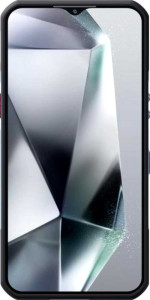
The software story between these two devices is largely one of parity, with one version gap and one feature difference separating them. The Armor X16 Pro ships with Android 15, one generation ahead of the WP35 Pro's Android 14. In practical terms, a newer Android version typically brings incremental privacy refinements, performance optimizations, and UI polish — and being one step ahead means the X16 Pro is starting from a more current security and feature baseline, even if neither device receives direct OS updates.
The only concrete feature difference in this dataset is app offloading, which the Armor X16 Pro supports and the WP35 Pro does not. App offloading allows the system to temporarily remove infrequently used apps while preserving their data, freeing up storage without a full uninstall. Given that the X16 Pro also ships with less internal storage than the WP35 Pro, this capability provides a useful mechanism for managing that constraint over time. Beyond these two points, the feature sets are identical across productivity, privacy, accessibility, and multitasking — both support split-screen, PiP, widgets, dynamic theming, on-device ML, and a full suite of privacy controls.
The Armor X16 Pro holds a modest OS advantage: it offers a newer Android version and the added utility of app offloading. Neither difference is transformative, but for users who care about running the most current Android build at launch and want more flexibility in storage management, the X16 Pro has the edge in this category.