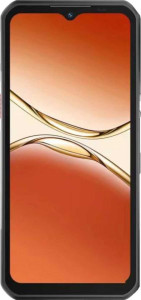
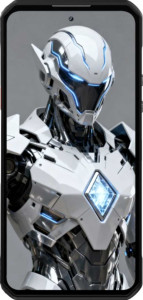
Oukitel WP55 Ultra
Oukitel WP60

Oukitel WP55 Ultra Oukitel WP60

Overview

Welcome to our in-depth spec comparison between the Oukitel WP55 Ultra and the Oukitel WP60 — two rugged, waterproof smartphones built to handle demanding environments. While both share the same chipset and IP69 protection, they diverge in meaningful ways across display technology, battery capacity, software generation, and connectivity features. Read on to discover which of these tough-built devices best matches your priorities.

Common Features

  • Both phones are waterproof with an IP69 ingress protection rating.
  • Both phones have a waterproof depth rating of 1.5 m.
  • Both phones feature a rugged build.
  • Neither phone can be folded.
  • Both phones have a 120Hz display refresh rate.
  • Both phones feature Gorilla Glass 5 damage-resistant glass.
  • Neither phone supports HDR10, HDR10+, or Dolby Vision.
  • Neither phone has a secondary screen.
  • Both phones have a touchscreen.
  • Both phones have 512GB of internal storage.
  • Both phones are powered by the MediaTek Dimensity 7025 chipset with an IMG BXM-8-256 GPU.
  • Both phones have a CPU speed of 2 x 2.5 & 6 x 2 GHz.
  • Both phones scored 2291 on Geekbench 6 multi-core and 884 on single-core.
  • Both phones have a 108MP main camera sensor.
  • Both phones have a 32MP front camera.
  • Neither phone has optical image stabilization.
  • Both phones support phase-detection autofocus for photos and continuous autofocus when recording.
  • Both phones run on Android with clipboard warnings, location privacy options, and camera/microphone privacy options.
  • Both phones support app tracking blocking and on-device machine learning.
  • Neither phone supports wireless charging, but both support 33W fast charging.
  • Neither phone has a removable battery.
  • Both phones have stereo speakers.
  • Neither phone supports aptX, LDAC, aptX HD, aptX Adaptive, aptX Adaptive, or aptX Lossless.
  • Both phones support 5G, dual SIM, Bluetooth 5.2, NFC, USB Type-C (USB 2.0), and have an external memory slot.
  • Both phones have a maximum download speed of 2770 MBits/s.
  • Both phones have a video light.
  • Neither phone has a sapphire glass display, curved display, or e-paper display.

Main Differences

  • Weight is 367 g on Oukitel WP55 Ultra and 360 g on Oukitel WP60.
  • Thickness is 15.3 mm on Oukitel WP55 Ultra and 14.9 mm on Oukitel WP60.
  • Width is 81 mm on Oukitel WP55 Ultra and 87 mm on Oukitel WP60.
  • Height is 172.2 mm on Oukitel WP55 Ultra and 184 mm on Oukitel WP60.
  • Volume is 213.41 cm³ on Oukitel WP55 Ultra and 238.52 cm³ on Oukitel WP60.
  • Display type is OLED/AMOLED on Oukitel WP55 Ultra and LCD IPS on Oukitel WP60.
  • Screen size is 6.58″ on Oukitel WP55 Ultra and 7.2″ on Oukitel WP60.
  • Resolution is 1080 x 2408 px on Oukitel WP55 Ultra and 720 x 1560 px on Oukitel WP60.
  • Pixel density is 401 ppi on Oukitel WP55 Ultra and 400 ppi on Oukitel WP60.
  • RAM is 12GB on Oukitel WP55 Ultra and 16GB on Oukitel WP60.
  • AnTuTu benchmark score is 488970 on Oukitel WP55 Ultra and 485008 on Oukitel WP60.
  • The secondary camera configuration is 5MP & 8MP on Oukitel WP55 Ultra and 8MP & 2MP on Oukitel WP60.
  • Dual-tone LED flash is present on Oukitel WP60 but not available on Oukitel WP55 Ultra.
  • Oukitel WP60 has 2 flash LEDs while Oukitel WP55 Ultra has 1.
  • Oukitel WP55 Ultra runs Android 15 while Oukitel WP60 runs Android 14.
  • App offloading is supported on Oukitel WP55 Ultra but not available on Oukitel WP60.
  • Battery capacity is 11000 mAh on Oukitel WP55 Ultra and 10000 mAh on Oukitel WP60.
  • A 3.5 mm audio jack is present on Oukitel WP55 Ultra but not available on Oukitel WP60.
  • FM radio is available on Oukitel WP60 but not present on Oukitel WP55 Ultra.
  • Oukitel WP55 Ultra supports Wi-Fi 6 (802.11ax) in addition to Wi-Fi 4 and Wi-Fi 5, while Oukitel WP60 supports only Wi-Fi 4 and Wi-Fi 5.
  • A gyroscope is present on Oukitel WP55 Ultra but not available on Oukitel WP60.
  • A compass is present on Oukitel WP55 Ultra but not available on Oukitel WP60.
Specs Comparison
Oukitel WP55 Ultra

Oukitel WP55 Ultra

Oukitel WP60

Oukitel WP60

Design:
water resistance Waterproof Waterproof
weight 367 g 360 g
thickness 15.3 mm 14.9 mm
width 81 mm 87 mm
height 172.2 mm 184 mm
volume 213.40746 cm³ 238.5192 cm³
Ingress Protection (IP) rating IP69 IP69
waterproof depth rating 1.5 m 1.5 m
has a rugged build
can be folded

Both the Oukitel WP55 Ultra and WP60 share the same rugged DNA: full waterproofing, an IP69 rating, and a 1.5 m depth tolerance. For users shopping in this category, those shared traits confirm that neither phone compromises on protection — both are genuinely field-ready devices designed to handle water, dust, and rough handling.

Where they diverge is in physical footprint and handling. The WP60 is notably taller (184 mm vs 172.2 mm) and wider (87 mm vs 81 mm), resulting in a significantly larger overall volume — 238.5 cm³ versus 213.4 cm³. That extra bulk matters in practice: the WP55 Ultra will sit more comfortably in a pocket and feel less unwieldy during one-handed use. The WP60 partially offsets this with a marginally slimmer profile (14.9 mm vs 15.3 mm) and a slightly lower weight (360 g vs 367 g), though a 7 g difference is imperceptible day-to-day.

On balance, the WP55 Ultra has the edge in ergonomics and portability: its smaller footprint and meaningfully lower volume make it the more manageable carry, while surrendering almost nothing in durability credentials. The WP60's slim thickness advantage is real but minor, and it cannot compensate for the larger overall hand feel — a tangible drawback for a device already in the heavy-and-thick rugged category.

Display:
Display type OLED/AMOLED LCD, IPS
screen size 6.58" 7.2"
pixel density 401 ppi 400 ppi
resolution 1080 x 2408 px 720 x 1560 px
refresh rate 120Hz 120Hz
has branded damage-resistant glass
Gorilla Glass version Gorilla Glass 5 Gorilla Glass 5
supports HDR10
supports HDR10+
supports Dolby Vision
Has a secondary screen
has a touch screen

The most consequential difference here is panel technology. The WP55 Ultra uses an OLED/AMOLED display, while the WP60 relies on an LCD IPS panel. In practice, OLED delivers true blacks, higher contrast, and more vivid colors by lighting pixels individually — LCD cannot match this regardless of size or refresh rate. For outdoor rugged use, OLED also tends to offer better visibility in direct sunlight at equivalent brightness levels.

Resolution tells an equally important story. Despite the WP60 sporting a larger 7.2″ screen versus the WP55 Ultra's 6.58″, it runs at only 720 x 1560 px — a notably lower resolution that results in a pixel density of 400 ppi, nearly identical to the WP55 Ultra's 401 ppi at 1080 x 2408 px. That means the WP60 achieves comparable sharpness only because its pixels are spread across a larger canvas; zoomed-in content, text rendering, and fine detail will look measurably crisper on the WP55 Ultra's full HD panel. The shared 120Hz refresh rate and Gorilla Glass 5 protection are genuine ties — smooth scrolling and scratch resistance are equivalent on both.

The WP55 Ultra holds a clear display advantage. The WP60's larger screen is its only meaningful win here, which may appeal to users prioritizing media consumption real estate. But the combination of a superior OLED panel and a full HD resolution makes the WP55 Ultra the stronger performer for image quality, readability, and overall visual experience.

Performance:
internal storage 512GB 512GB
RAM 12GB 16GB
AnTuTu benchmark score 488970 485008
Chipset (SoC) name MediaTek Dimensity 7025 MediaTek Dimensity 7025
GPU name IMG BXM-8-256 IMG BXM-8-256
CPU speed 2 x 2.5 & 6 x 2 GHz 2 x 2.5 & 6 x 2 GHz
Geekbench 6 result (multi) 2291 2291
Geekbench 6 result (single) 884 884
Geekbench 5 result (multi) 1890 1890
Geekbench 5 result (single) 690 690
GPU clock speed 900 MHz 900 MHz
Has integrated LTE
RAM speed 2750 MHz 2750 MHz
semiconductor size 6 nm 6 nm
Supports 64-bit
DirectX version DirectX 12 DirectX 12
Has integrated graphics
Uses big.LITTLE technology
Has NX bit
Uses HMP
maximum memory bandwidth 51.2 GB/s 51.2 GB/s
OpenCL version 2 2
memory channels 4 4
maximum memory amount 16GB 16GB
uses multithreading
DDR memory version 5 5
shading units 18 18

Rare in product comparisons, the performance category here is essentially a dead heat at the silicon level. Both phones run on the identical MediaTek Dimensity 7025 chipset — a 6 nm chip with the same CPU configuration, the same IMG BXM-8-256 GPU, and matching Geekbench scores across every benchmark. The AnTuTu figures (488,970 vs 485,008) differ by less than 1%, well within normal run-to-run variance. For real-world use, these devices will feel indistinguishable in day-to-day tasks, app launches, and gaming.

The one tangible differentiator is RAM. The WP60 ships with 16 GB versus the WP55 Ultra's 12 GB. Both use the same DDR5 memory at 2750 MHz, so the speed is equal — the WP60 simply has more of it. Extra RAM does not make a phone faster in isolation, but it does allow more apps to remain active in the background without being force-closed, which benefits heavy multitaskers and users who frequently switch between demanding applications. Internal storage is a tie at 512 GB on both.

For the vast majority of users, these phones will perform identically. The WP60 holds a narrow edge in this category solely due to its larger RAM buffer, which offers a tangible advantage only for power users pushing aggressive multitasking. Anyone with moderate usage patterns will find no meaningful performance difference between the two.

Cameras:
megapixels (main camera) 108 & 5 & 8 MP 108 & 8 & 2 MP
Has a dual-lens (or multi-lens) main camera
megapixels (front camera) 32MP 32MP
has built-in optical image stabilization
Has a dual-tone LED flash
number of flash LEDs 1 2
has a BSI sensor
has a CMOS sensor
has continuous autofocus when recording movies
Has phase-detection autofocus for photos
supports slow-motion video recording
has a built-in HDR mode
has manual exposure
has a flash
optical zoom 0x 0x
has manual ISO
has a serial shot mode
has manual focus
has a front camera
Has laser autofocus
Shoots 360° panorama
has manual white balance
shoots raw
has touch autofocus
has manual shutter speed
can create panoramas in-camera
Has timelapse function
Has a front-facing LED flash
has a dual-lens (or multi-lens) front camera
supports HDR10 recording
supports Dolby Vision recording
has a front-facing camera under the display
Has a RGB LED flash
has 3D photo/video recording capabilities

At first glance, the camera systems look nearly identical — both lead with a 108 MP primary sensor, match on a 32 MP front camera, and share the same feature set including phase-detection autofocus, HDR mode, and a full suite of manual controls. Neither offers optical image stabilization or slow-motion video, so those shared limitations apply equally to both buyers.

The differences lie in the secondary lenses and flash hardware. The WP55 Ultra pairs its main sensor with 5 MP and 8 MP auxiliary cameras, while the WP60 goes with 8 MP and 2 MP. The WP60's stronger 8 MP secondary gives it an edge on that particular lens, but its 2 MP third camera is essentially a low-utility sensor by modern standards. The WP55 Ultra's 5 MP third lens offers more usable output than a 2 MP equivalent. On flash, the WP60 pulls ahead more clearly: it features a dual-tone LED flash with two LEDs, compared to the WP55 Ultra's single LED. Dual-tone flash produces more natural-looking skin tones and better color accuracy in low-light shots — a tangible, practical advantage in the field.

This is a close category, but the WP60 has a narrow edge driven primarily by its superior flash setup. For rugged-phone users who frequently shoot in dim or challenging environments — which is a common scenario for this device class — dual-tone flash is a genuinely useful advantage. The secondary lens comparison is more of a wash, making flash the deciding factor here.

Operating system:
Android version Android 15 Android 14
has clipboard warnings
has location privacy options
has camera/microphone privacy options
has Mail Privacy Protection
has theme customization
can block app tracking
blocks cross-site tracking
has on-device machine learning
has notification permissions
has media picker
Can play games while they download
has dark mode
has Wi-Fi password sharing
has battery health check
has an extra dim mode
has focus modes
has dynamic theming
can offload apps
Has customizable notifications
has Live Text
has full-page screenshots
supports split screen
gets direct OS updates
has PiP
Can be used as a PC
Has sharing intents
has a child lock
Supports widgets
Is free and open source
Has offline voice recognition
has voice commands
Tracks the current position of a mobile device
is a multi-user system
has Quick Start

The software gap between these two phones comes down to one version number and one feature. The WP55 Ultra ships with Android 15, while the WP60 runs Android 14. A newer Android version matters for two reasons: it brings the latest security patches out of the box, and it positions the device for a longer effective support window before falling behind on updates — relevant given that neither phone receives direct OS updates from the manufacturer.

The only functional feature difference in this dataset is app offloading: the WP55 Ultra supports it, the WP60 does not. Offloading allows the system to temporarily remove unused apps while retaining their data, freeing up storage without requiring a full uninstall and reinstall cycle. On a 512 GB device this is less critical than it would be on a storage-constrained phone, but it remains a useful housekeeping tool for power users with large app libraries. Everything else — privacy controls, dark mode, split screen, widgets, PiP, and the full suite of Android productivity features — is identical across both devices.

The WP55 Ultra has a clear edge in this category. A more current OS version is an objective advantage in terms of security posture and longevity, and the addition of app offloading, however minor, means the WP55 Ultra is the more future-proof and fully-featured software package of the two.

Battery:
battery power 11000 mAh 10000 mAh
has wireless charging
Supports fast charging
charging speed 33W 33W
has reverse wireless charging
has a removable battery
has a battery level indicator
has a rechargeable battery

Battery capacity is where the WP55 Ultra reasserts itself after the WP60's RAM advantage in performance. Its 11,000 mAh cell outpaces the WP60's 10,000 mAh by a meaningful 10%. Both are already enormous reserves by smartphone standards — well beyond the 4,000–5,000 mAh range typical of mainstream devices — but in the rugged phone segment, where devices are often used in the field without reliable access to a charger, that extra 1,000 mAh translates directly into additional hours of active use before requiring a top-up.

Charging parity is complete: both devices support 33W fast charging and neither offers wireless or reverse wireless charging. At 33W, filling even an 11,000 mAh cell from empty takes a significant amount of time, but the day-to-day expectation for batteries this large is typically multi-day endurance rather than rapid turnaround — so charging speed is a secondary concern for most users in this category.

The WP55 Ultra has the edge here, and it is a straightforward one. A larger battery with identical charging hardware means longer runtime between charges, which is arguably the most important battery metric for a rugged device designed for extended outdoor or field use. There are no trade-offs to weigh — the WP55 Ultra simply offers more capacity at the same replenishment rate.

Audio:
has a socket for a 3.5 mm audio jack
has stereo speakers
has aptX
has LDAC
has aptX HD
has aptX Adaptive
has aptX Lossless
Has a radio

Audio hardware splits cleanly between these two devices, with each holding one advantage the other lacks. The WP55 Ultra includes a 3.5 mm headphone jack — absent on the WP60 — which for rugged phone users is more than a convenience: in field environments, wired headsets are often more reliable, more durable, and easier to use with gloves than wireless alternatives. Losing the jack on the WP60 means users must rely on Bluetooth or a USB-C adapter, adding a point of failure and potential compatibility friction.

The WP60 counters with a built-in FM radio, which the WP55 Ultra does not have. This is a genuinely practical feature for outdoor and emergency use cases — FM radio functions without a data connection or cellular signal, making it a meaningful differentiator for users in remote areas or situations where network access is unreliable. Neither phone supports high-quality wireless audio codecs such as aptX or LDAC, and both offer stereo speakers, so speaker output and Bluetooth audio quality are level across the board.

This category is a functional trade-off rather than a clear win for either side. The WP55 Ultra's headphone jack is the more universally useful feature, particularly given the rugged use context. The WP60's FM radio is a niche but legitimate advantage for a specific subset of users — those in remote or off-grid scenarios. Which advantage matters more depends entirely on how the device will be used day to day.

Connectivity & Features:
release date September 2025 October 2025
has 5G support
Wi-Fi version Wi-Fi 4 (802.11n), Wi-Fi 6 (802.11ax), Wi-Fi 5 (802.11ac) Wi-Fi 4 (802.11n), Wi-Fi 5 (802.11ac)
SIM cards 2 SIM 2 SIM
Bluetooth version 5.2 5.2
has an external memory slot
Has USB Type-C
USB version 2 2
has NFC
download speed 2770 MBits/s 2770 MBits/s
Has a fingerprint scanner
has emergency SOS via satellite
has crash detection
is DLNA-certified
has a gyroscope
supports ANT+
Has a heart rate monitor
has GPS
has a compass
supports Wi-Fi
Has an infrared sensor
has an accelerometer
has a cellular module
Has a barometer
has an HDMI output
Uses 3D facial recognition
Has an iris scanner
Stylus included
supports Galileo
Has motion tracking
Has optical tracking
Has a built-in projector

The connectivity foundation is identical: both phones offer 5G, Bluetooth 5.2, NFC, dual SIM, expandable storage, and matching download speeds. For most users, this common ground covers the essentials comfortably. The divergence appears in Wi-Fi and sensors — and it consistently favors the WP55 Ultra.

On wireless networking, the WP55 Ultra supports Wi-Fi 6 (802.11ax) in addition to Wi-Fi 5 and Wi-Fi 4, while the WP60 tops out at Wi-Fi 5 (802.11ac). Wi-Fi 6 delivers better throughput and significantly improved performance in congested environments — useful anywhere multiple devices share the same network. The sensor gap is more consequential for rugged use: the WP55 Ultra includes a gyroscope and a compass, both of which the WP60 lacks entirely. A gyroscope enables accurate motion and orientation sensing critical for navigation apps, AR features, and image stabilization assist. A compass is a fundamental tool for outdoor users — its absence on the WP60 is a notable omission for a device marketed at field and adventure use cases.

The WP55 Ultra has a clear and meaningful edge in this category. Wi-Fi 6 is a welcome upgrade, but the missing gyroscope and compass on the WP60 are genuine functional gaps — not paper-spec differences — that directly impact the navigation and outdoor utility that define the rugged phone category.

Miscellaneous:
has a video light
Has sapphire glass display
Has a curved display
Has an e-paper display

The miscellaneous spec group offers no differentiation between these two devices whatsoever. Both include a video light, and neither features sapphire glass, a curved display, or an e-paper display. Every data point in this category is an exact match.

This is a complete tie, and no conclusion beyond that is supported by the provided data. Buyers weighing the two phones should look to the other specification groups — display, connectivity, battery, and sensors — where the meaningful differences between these two devices actually reside.

Comparison Summary & Verdict

After examining every specification, these two rugged phones serve slightly different audiences. The Oukitel WP55 Ultra stands out with its OLED display, larger 11000 mAh battery, Android 15, Wi-Fi 6 support, gyroscope, compass, and a 3.5 mm headphone jack — making it the stronger choice for users who value screen quality, longer battery endurance, and richer connectivity. The Oukitel WP60, on the other hand, offers a bigger 7.2-inch LCD screen, 16 GB of RAM, a dual-tone LED flash, and a built-in FM radio, appealing to users who prefer a larger display, more memory headroom, and media-friendly extras. Both deliver capable rugged performance at their shared core, so the right pick simply comes down to which trade-offs matter most to you.

Oukitel WP55 Ultra
Buy Oukitel WP55 Ultra if...

Buy the Oukitel WP55 Ultra if you want a superior OLED display, a larger 11000 mAh battery, Wi-Fi 6 support, and extras like a gyroscope, compass, and 3.5 mm headphone jack.

Oukitel WP60
Buy Oukitel WP60 if...

Buy the Oukitel WP60 if you prefer a larger 7.2-inch screen, 16 GB of RAM, a dual-tone LED flash, and a built-in FM radio.