Oukitel WP55 Ultra
Xiaomi Redmi Note 14 Pro Plus 5G (Global)

Oukitel WP55 Ultra Xiaomi Redmi Note 14 Pro Plus 5G (Global)

Overview

Welcome to our in-depth comparison between the Oukitel WP55 Ultra and the Xiaomi Redmi Note 14 Pro Plus 5G (Global) — two 5G smartphones that take very different approaches to what a modern Android handset should be. From their contrasting philosophies on durability and battery endurance versus display quality and camera versatility, to their differences in raw performance and everyday usability, this head-to-head covers every key specification to help you decide which device suits your lifestyle best.

Common Features

  • Both phones are waterproof and neither can be folded.
  • Both phones feature an OLED/AMOLED display with a 120Hz refresh rate.
  • Both displays include damage-resistant branded glass and neither has a secondary screen.
  • Both phones have a touchscreen.
  • Both phones offer 512GB of internal storage and 12GB of RAM.
  • Integrated LTE, 64-bit support, DirectX 12, integrated graphics, big.LITTLE technology, and HMP are present on both phones.
  • Both phones have a multi-lens main camera system.
  • Neither phone has a dual-tone LED flash; each has a single LED flash.
  • Both cameras include a CMOS sensor, continuous autofocus during video, phase-detection autofocus for photos, and a built-in HDR mode.
  • Both operating systems include clipboard warnings, location privacy options, and camera/microphone privacy options.
  • Both operating systems support theme customization, app tracking blocking, and on-device machine learning.
  • Mail Privacy Protection is not available on either phone.
  • Cross-site tracking blocking is not available on either phone.
  • Neither phone supports wireless charging, but both support fast charging and come with a charger in the box.
  • Neither phone has a removable battery, and both have a battery level indicator and a rechargeable battery.
  • Both phones feature stereo speakers and neither has a radio.
  • Neither phone supports aptX HD, aptX Adaptive, or aptX Lossless.
  • Both phones support 5G, Wi-Fi 4/5/6, dual SIM, USB Type-C (USB 2.0), NFC, and a fingerprint scanner.
  • Emergency SOS via satellite is not available on either phone.
  • Both phones have a video light, and neither has a sapphire glass display or an e-paper display.

Main Differences

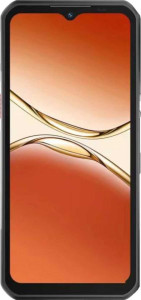
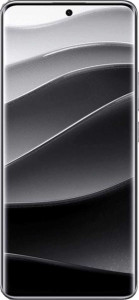
  • Weight is 367 g on Oukitel WP55 Ultra and 205 g on Xiaomi Redmi Note 14 Pro Plus 5G (Global).
  • Thickness is 15.3 mm on Oukitel WP55 Ultra and 8.8 mm on Xiaomi Redmi Note 14 Pro Plus 5G (Global).
  • Volume is 213.41 cm³ on Oukitel WP55 Ultra and 106.82 cm³ on Xiaomi Redmi Note 14 Pro Plus 5G (Global).
  • IP rating is IP69 on Oukitel WP55 Ultra and IP68 on Xiaomi Redmi Note 14 Pro Plus 5G (Global).
  • A rugged build is present on Oukitel WP55 Ultra but not on Xiaomi Redmi Note 14 Pro Plus 5G (Global).
  • Screen size is 6.58″ on Oukitel WP55 Ultra and 6.67″ on Xiaomi Redmi Note 14 Pro Plus 5G (Global).
  • Pixel density is 401 ppi on Oukitel WP55 Ultra and 446 ppi on Xiaomi Redmi Note 14 Pro Plus 5G (Global).
  • Resolution is 1080 x 2408 px on Oukitel WP55 Ultra and 1220 x 2712 px on Xiaomi Redmi Note 14 Pro Plus 5G (Global).
  • Gorilla Glass version is Gorilla Glass 5 on Oukitel WP55 Ultra and Gorilla Glass Victus 2 on Xiaomi Redmi Note 14 Pro Plus 5G (Global).
  • HDR10, HDR10+, and Dolby Vision support are present on Xiaomi Redmi Note 14 Pro Plus 5G (Global) but not available on Oukitel WP55 Ultra.
  • AnTuTu benchmark score is 488,970 on Oukitel WP55 Ultra and 736,300 on Xiaomi Redmi Note 14 Pro Plus 5G (Global).
  • The chipset is MediaTek Dimensity 7025 on Oukitel WP55 Ultra and Qualcomm Snapdragon 7s Gen 3 on Xiaomi Redmi Note 14 Pro Plus 5G (Global).
  • Semiconductor size is 6 nm on Oukitel WP55 Ultra and 4 nm on Xiaomi Redmi Note 14 Pro Plus 5G (Global).
  • Main camera resolution is 108 & 5 & 8 MP on Oukitel WP55 Ultra and 200 & 8 & 2 MP on Xiaomi Redmi Note 14 Pro Plus 5G (Global).
  • Optical image stabilization is present on Xiaomi Redmi Note 14 Pro Plus 5G (Global) but not available on Oukitel WP55 Ultra.
  • Optical zoom is 0x on Oukitel WP55 Ultra and 4x on Xiaomi Redmi Note 14 Pro Plus 5G (Global).
  • Slow-motion video recording, 360° panorama, and timelapse are available on Xiaomi Redmi Note 14 Pro Plus 5G (Global) but not on Oukitel WP55 Ultra.
  • Battery capacity is 11,000 mAh on Oukitel WP55 Ultra and 5,110 mAh on Xiaomi Redmi Note 14 Pro Plus 5G (Global).
  • Charging speed is 33W on Oukitel WP55 Ultra and 120W on Xiaomi Redmi Note 14 Pro Plus 5G (Global).
  • A 3.5 mm audio jack is present on Oukitel WP55 Ultra but not on Xiaomi Redmi Note 14 Pro Plus 5G (Global).
  • LDAC and aptX support are available on Xiaomi Redmi Note 14 Pro Plus 5G (Global) but not on Oukitel WP55 Ultra.
  • An external memory slot is available on Oukitel WP55 Ultra but not on Xiaomi Redmi Note 14 Pro Plus 5G (Global).
  • An infrared sensor is present on Xiaomi Redmi Note 14 Pro Plus 5G (Global) but not on Oukitel WP55 Ultra.
  • Android version is Android 15 on Oukitel WP55 Ultra and Android 14 on Xiaomi Redmi Note 14 Pro Plus 5G (Global).
  • App offloading is supported on Oukitel WP55 Ultra but not on Xiaomi Redmi Note 14 Pro Plus 5G (Global).
  • A curved display is present on Xiaomi Redmi Note 14 Pro Plus 5G (Global) but not on Oukitel WP55 Ultra.
Specs Comparison
Oukitel WP55 Ultra

Oukitel WP55 Ultra

Xiaomi Redmi Note 14 Pro Plus 5G (Global)

Xiaomi Redmi Note 14 Pro Plus 5G (Global)

Design:
water resistance Waterproof Waterproof
weight 367 g 205 g
thickness 15.3 mm 8.8 mm
width 81 mm 74.7 mm
height 172.2 mm 162.5 mm
volume 213.40746 cm³ 106.821 cm³
Ingress Protection (IP) rating IP69 IP68
has a rugged build
can be folded

These two phones represent fundamentally different design philosophies. The Oukitel WP55 Ultra is a purpose-built rugged device, and its dimensions reflect that: at 367 g and 15.3 mm thick, it is nearly twice as heavy and almost twice as thick as the Redmi Note 14 Pro+, which comes in at a slim 8.8 mm and a far more manageable 205 g. In practice, the WP55 Ultra will feel noticeably bulky in a pocket and fatiguing during extended one-handed use, while the Redmi Note 14 Pro+ offers a conventional, svelte form factor suited for everyday carry.

Both phones are rated as waterproof, but the protection level differs meaningfully. The WP55 Ultra holds an IP69 rating, which adds resistance to high-temperature, high-pressure water jets — a step above the Redmi's IP68, which covers submersion in still water. Combined with its confirmed rugged build, the WP55 Ultra is engineered for harsh environments such as construction sites or outdoor expeditions. The Redmi Note 14 Pro+, with no rugged build designation, is designed for everyday splash and submersion protection rather than industrial abuse.

For most users, the Redmi Note 14 Pro+ holds a clear design advantage: it is significantly lighter, thinner, and more pocketable without sacrificing meaningful water resistance for typical daily scenarios. The WP55 Ultra earns its edge only for users who specifically need a phone that can withstand harsh physical conditions and high-pressure water exposure — a genuine trade-off of portability for durability.

Display:
Display type OLED/AMOLED OLED/AMOLED
screen size 6.58" 6.67"
pixel density 401 ppi 446 ppi
resolution 1080 x 2408 px 1220 x 2712 px
refresh rate 120Hz 120Hz
has branded damage-resistant glass
Gorilla Glass version Gorilla Glass 5 Gorilla Glass Victus 2
supports HDR10
supports HDR10+
supports Dolby Vision
Has a secondary screen
has a touch screen

On the surface, these two displays share a lot of common ground: both are OLED/AMOLED panels with a 120Hz refresh rate, meaning smooth scrolling and rich contrast are available on either phone. The real separation emerges in resolution and pixel density. The Redmi Note 14 Pro+ renders at 1220 x 2712 px across a 6.67″ screen, yielding 446 ppi, while the WP55 Ultra outputs 1080 x 2408 px on a 6.58″ panel for 401 ppi. The 45 ppi gap is perceptible — text and fine detail will appear visibly crisper on the Redmi, particularly at close reading distances.

The HDR story further widens the gap. The Redmi Note 14 Pro+ supports HDR10, HDR10+, and Dolby Vision, meaning compatible streaming content from platforms like Netflix or Prime Video will be displayed with greater dynamic range, more accurate highlights, and richer shadow detail. The WP55 Ultra supports none of these standards, so HDR content will be tone-mapped rather than rendered natively — a meaningful limitation for media consumption. Glass protection also differs: the Redmi ships with Gorilla Glass Victus 2, a newer and more scratch- and drop-resistant generation than the Gorilla Glass 5 found on the WP55 Ultra.

The Redmi Note 14 Pro+ holds a clear display advantage across every meaningful metric — sharper resolution, full HDR ecosystem support, and newer glass protection. The WP55 Ultra's OLED panel is competent for a rugged device, but users who prioritize media quality or display fidelity will find the Redmi's screen to be in a different league.

Performance:
internal storage 512GB 512GB
RAM 12GB 12GB
AnTuTu benchmark score 488970 736300
Chipset (SoC) name MediaTek Dimensity 7025 Qualcomm Snapdragon 7s Gen 3
GPU name IMG BXM-8-256 Adreno 710
CPU speed 2 x 2.5 & 6 x 2 GHz 1 x 2.5 & 3 x 2.4 & 4 x 1.8 GHz
Geekbench 6 result (multi) 2291 3239
Geekbench 6 result (single) 884 1162
Geekbench 5 result (multi) 1890 3242
Geekbench 5 result (single) 690 893
GPU clock speed 900 MHz 1050 MHz
Has integrated LTE
RAM speed 2750 MHz 3200 MHz
semiconductor size 6 nm 4 nm
Supports 64-bit
DirectX version DirectX 12 DirectX 12
Has integrated graphics
Uses big.LITTLE technology
Uses HMP
maximum memory bandwidth 51.2 GB/s 25.6 GB/s
OpenCL version 2 2
maximum memory amount 16GB 16GB
uses multithreading
DDR memory version 5 4
shading units 18 128

Storage and RAM are matched — both phones ship with 512GB of storage and 12GB of RAM — but the silicon underneath tells a very different story. The Redmi Note 14 Pro+ runs on a Snapdragon 7s Gen 3 built on a 4 nm process node, while the WP55 Ultra relies on a Dimensity 7025 on 6 nm. A smaller node generally translates to better power efficiency and more headroom for sustained performance, and the benchmark results confirm the gap decisively: the Redmi scores 736,300 on AnTuTu versus 488,970 for the WP55 Ultra — roughly a 50% lead that places these chips in distinctly different performance tiers.

CPU benchmarks reinforce this. In Geekbench 6 multi-core, the Redmi posts 3,239 against the WP55 Ultra's 2,291 — a lead of over 40% that will be felt in demanding workloads like video editing, gaming, and heavy multitasking. GPU performance follows the same pattern: the Redmi's Adreno 710 runs at 1,050 MHz with 128 shading units, compared to the WP55 Ultra's IMG BXM-8-256 at 900 MHz with just 18 shading units. That gap in shading units is enormous and directly limits the WP55 Ultra's capability with graphically intensive games and GPU compute tasks. One counterpoint worth noting: the WP55 Ultra uses faster DDR5 RAM at 3,200 MHz... wait, actually it's 2,750 MHz DDR5 vs 3,200 MHz DDR4 on the Redmi — the Redmi has faster RAM speed despite using DDR4, which benefits bandwidth-sensitive tasks.

The Redmi Note 14 Pro+ holds an unambiguous performance advantage in this category. Across every meaningful benchmark and key silicon metric — process node, CPU throughput, GPU capability — it outpaces the WP55 Ultra by a substantial margin. For users who care about gaming, app responsiveness, or future-proofing, the Redmi's Snapdragon 7s Gen 3 is the stronger platform.
Cameras:
megapixels (main camera) 108 & 5 & 8 MP 200 & 8 & 2 MP
Has a dual-lens (or multi-lens) main camera
megapixels (front camera) 32MP 20MP
has built-in optical image stabilization
Has a dual-tone LED flash
number of flash LEDs 1 1
has a BSI sensor
has a CMOS sensor
has continuous autofocus when recording movies
Has phase-detection autofocus for photos
supports slow-motion video recording
has a built-in HDR mode
has manual exposure
has a flash
optical zoom 0x 4x
has manual ISO
has a serial shot mode
has manual focus
has a front camera
Has laser autofocus
Shoots 360° panorama
has manual white balance
shoots raw
has touch autofocus
has manual shutter speed
can create panoramas in-camera
wide aperture (front camera) 2.2f 2.2f
Has timelapse function
Has a front-facing LED flash
has a dual-lens (or multi-lens) front camera
supports HDR10 recording
supports Dolby Vision recording
has a front-facing camera under the display
Has a RGB LED flash
has 3D photo/video recording capabilities

The main camera headline figures favor the Redmi Note 14 Pro+ significantly: its primary sensor resolves at 200 MP versus the WP55 Ultra's 108 MP, but the more consequential difference is optical zoom. The Redmi offers 4x optical zoom, while the WP55 Ultra provides 0x — meaning any zoom on the WP55 Ultra is purely digital and results in cropped, degraded images. For anyone who regularly photographs subjects at a distance, this alone is a major practical limitation. The Redmi also includes optical image stabilization (OIS), which reduces motion blur in handheld shots and is especially impactful in low-light and video scenarios. The WP55 Ultra lacks OIS entirely.

Beyond the primary sensor, the Redmi pulls ahead in video versatility. It supports slow-motion recording and a timelapse function — neither of which is available on the WP55 Ultra. The Redmi also shoots 360° panoramas, adding another creative option absent from the WP55 Ultra's feature set. On the front camera, the WP55 Ultra actually holds a modest edge on paper with 32 MP versus the Redmi's 20 MP, though both share the same f/2.2 aperture. The shared manual controls — ISO, exposure, white balance, and focus — give both phones a similar degree of hands-on shooting flexibility.

The Redmi Note 14 Pro+ is the clear winner in this category. Its combination of a higher-resolution main sensor, optical zoom, OIS, slow-motion, and timelapse support gives it a substantially more capable and versatile camera system. The WP55 Ultra's higher-megapixel selfie camera is a minor bright spot, but it does not offset the Redmi's broad advantages across both photo and video capabilities.

Operating system:
Android version Android 15 Android 14
has clipboard warnings
has location privacy options
has camera/microphone privacy options
has Mail Privacy Protection
has theme customization
can block app tracking
blocks cross-site tracking
has on-device machine learning
has notification permissions
has media picker
Can play games while they download
has dark mode
has Wi-Fi password sharing
has battery health check
has an extra dim mode
has focus modes
has dynamic theming
can offload apps
Has customizable notifications
has Live Text
has full-page screenshots
supports split screen
gets direct OS updates
has PiP
Can be used as a PC
Has sharing intents
has a child lock
Supports widgets
Is free and open source
Has offline voice recognition
has voice commands
Tracks the current position of a mobile device
is a multi-user system
has Quick Start

This is one of the closest spec group matchups in the entire comparison. Both phones run stock-adjacent Android, share an identical privacy feature set — including location controls, camera/microphone toggles, and app tracking blocking — and offer the same suite of usability features: dark mode, dynamic theming, split-screen, picture-in-picture, widgets, and offline voice recognition. For the vast majority of day-to-day software experience, these two phones are functionally equivalent.

Two differences are worth calling out. The WP55 Ultra ships with Android 15, one full generation ahead of the Redmi Note 14 Pro+'s Android 14. This gives the WP55 Ultra access to the latest platform-level improvements from the outset, which matters particularly since neither phone receives direct OS updates — meaning users are likely starting from the version they purchase and staying there for the long term. The second differentiator is app offloading: the WP55 Ultra supports it, the Redmi does not. Offloading allows infrequently used apps to be temporarily removed while preserving their data, a useful tool for managing storage without permanent deletion.

The Oukitel WP55 Ultra holds a narrow but genuine software edge here, courtesy of its newer Android version and app offloading support. Given that neither device gets direct OS updates, launching on Android 15 versus Android 14 is a meaningful head start. That said, the overall software experience between these two phones is remarkably similar, and the gap should not be overstated.

Battery:
battery power 11000 mAh 5110 mAh
has wireless charging
Supports fast charging
charging speed 33W 120W
comes with a charger
has a removable battery
has a battery level indicator
has a rechargeable battery

Battery capacity is where the WP55 Ultra makes its most dramatic statement in this entire comparison. Its 11,000 mAh cell is more than double the Redmi Note 14 Pro+'s 5,110 mAh — a difference that, in practical terms, could mean the gap between one day of use and potentially two or three, depending on usage patterns. For field workers, travelers, or anyone far from a power outlet, that kind of reserve is a genuine operational advantage and aligns directly with the WP55 Ultra's rugged device positioning.

The trade-off comes at the charger. The Redmi counters with a blistering 120W fast charging speed, which can realistically top up its 5,110 mAh battery in well under an hour. The WP55 Ultra's 33W charging, applied to an 11,000 mAh cell, means significantly longer time tethered to a wall — likely several hours for a full charge. So while the WP55 Ultra needs to visit a charger far less often, each visit takes considerably longer. Neither phone supports wireless charging, so both users are equally dependent on a cable.

Which phone wins here depends entirely on usage context. The Redmi Note 14 Pro+ suits users who charge nightly and value the speed of topping up quickly during the day. The WP55 Ultra is the clear choice for users who need maximum endurance between charges and can tolerate slow replenishment — its 11,000 mAh capacity is simply in a different class for raw longevity.

Audio:
has a socket for a 3.5 mm audio jack
has stereo speakers
has aptX
has LDAC
has aptX HD
has aptX Adaptive
has aptX Lossless
Has a radio

Audio is a category where each phone makes a deliberate trade-off in opposite directions. The WP55 Ultra retains a 3.5 mm headphone jack, which the Redmi Note 14 Pro+ has dropped entirely. For users with wired headphones, earbuds, or audio equipment — common in field or industrial contexts where Bluetooth reliability can be a concern — the WP55 Ultra's jack is a practical convenience that eliminates the need for a dongle or adapter.

The Redmi counters by offering superior wireless audio quality. It supports both aptX and LDAC, two high-resolution Bluetooth audio codecs that allow compatible wireless headphones to receive significantly more audio data than standard Bluetooth — resulting in noticeably better fidelity for listeners using quality wireless gear. The WP55 Ultra supports neither, meaning Bluetooth audio on the WP55 Ultra is limited to standard codecs. Both phones feature stereo speakers, so built-in playback quality is on equal footing at the hardware specification level.

This group is a genuine split decision, and the right answer depends on how a user listens. The WP55 Ultra wins for wired audio users — its 3.5 mm jack is an increasingly rare feature with real utility. The Redmi Note 14 Pro+ wins for wireless listeners, where LDAC and aptX support enable a meaningfully higher-quality Bluetooth audio experience with compatible headphones.

Connectivity & Features:
release date September 2025 January 2025
has 5G support
Wi-Fi version Wi-Fi 4 (802.11n), Wi-Fi 6 (802.11ax), Wi-Fi 5 (802.11ac) Wi-Fi 4 (802.11n), Wi-Fi 6 (802.11ax), Wi-Fi 5 (802.11ac)
SIM cards 2 SIM 2 SIM
Bluetooth version 5.2 5.4
has an external memory slot
Has USB Type-C
USB version 2 2
has NFC
download speed 2770 MBits/s 2900 MBits/s
Has a fingerprint scanner
has emergency SOS via satellite
has crash detection
is DLNA-certified
has a gyroscope
supports ANT+
Has a heart rate monitor
has GPS
has a compass
supports Wi-Fi
Has an infrared sensor
has an accelerometer
has a cellular module
Has a barometer
has an HDMI output
Uses 3D facial recognition
Has an iris scanner
Stylus included
supports Galileo
Has motion tracking
Has optical tracking
Has a built-in projector

Connectivity fundamentals are well-matched between these two phones. Both support 5G, dual SIM, Wi-Fi 6, USB Type-C, and NFC, making them equally capable for modern wireless use. Even their cellular download speeds are nearly identical — 2,900 Mbits/s on the Redmi versus 2,770 Mbits/s on the WP55 Ultra — a gap too small to notice in real-world conditions. Where small but meaningful differences emerge is in Bluetooth and expandable storage.

The Redmi Note 14 Pro+ runs Bluetooth 5.4 against the WP55 Ultra's 5.2, a newer version that brings incremental improvements to connection stability and efficiency — relevant for users who keep multiple Bluetooth devices paired simultaneously. In the other direction, the WP55 Ultra includes a microSD card slot for expandable storage, which the Redmi entirely omits. Given both phones ship with 512GB, this may not matter to most users, but it is a meaningful fallback for those who want to archive large files or swap storage. The Redmi counters with an infrared sensor, absent on the WP55 Ultra, which allows the phone to function as a universal remote for TVs and appliances.

This category is broadly a draw, with each phone holding a specific niche advantage. The WP55 Ultra wins for users who value storage flexibility via its expandable memory slot. The Redmi Note 14 Pro+ edges ahead for those who want a slightly more modern Bluetooth implementation and the added convenience of a built-in infrared sensor. Neither advantage is substantial enough to tip the category decisively.

Miscellaneous:
has a video light
Has sapphire glass display
Has a curved display
Has an e-paper display

This is a lean spec group with limited data points, and most of them are shared. Both phones include a video light and neither features sapphire glass or an e-paper display — leaving the curved display on the Redmi Note 14 Pro+ as the sole differentiator.

A curved screen gives the Redmi a more premium, streamlined aesthetic where the display gently wraps at the edges, which many users find visually appealing. The WP55 Ultra uses a flat display, which is actually a practical choice for a rugged device — flat screens are generally easier to protect with cases and screen protectors, and less prone to edge-related accidental touches or damage in demanding environments.

Neither design choice represents an objective advantage; it comes down to preference and context. The Redmi Note 14 Pro+ edges ahead on style with its curved display, while the WP55 Ultra's flat panel is the more pragmatic fit for its rugged use case. Overall, this group is effectively a draw with no meaningful functional winner.

Comparison Summary & Verdict

After examining every specification, these two phones emerge as strong choices for very different users. The Oukitel WP55 Ultra is purpose-built for those who demand resilience and endurance: its IP69-rated rugged chassis, massive 11,000 mAh battery, 3.5 mm audio jack, and expandable storage make it an exceptional companion for outdoor workers and adventurers who cannot afford downtime. The Xiaomi Redmi Note 14 Pro Plus 5G (Global), on the other hand, wins decisively on everyday refinement — offering a sharper 446 ppi display with Dolby Vision, a significantly faster Snapdragon chipset, a 200 MP main camera with optical zoom, and blazing 120W fast charging, all in a slimmer, lighter body. Choose the Oukitel for raw toughness and battery longevity; choose the Xiaomi for a polished, feature-rich daily driver.

Oukitel WP55 Ultra
Buy Oukitel WP55 Ultra if...

Buy the Oukitel WP55 Ultra if you need a rugged, IP69-rated phone with a massive 11,000 mAh battery, a 3.5 mm headphone jack, and expandable storage for demanding outdoor or work environments.

Xiaomi Redmi Note 14 Pro Plus 5G (Global)
Buy Xiaomi Redmi Note 14 Pro Plus 5G (Global) if...

Buy the Xiaomi Redmi Note 14 Pro Plus 5G (Global) if you want a slim, high-performance daily driver with a superior display, a versatile 200 MP camera system with optical zoom, and ultra-fast 120W charging.