Oukitel WP60
Oukitel WP62 5G

Oukitel WP60 Oukitel WP62 5G

Overview

Welcome to our in-depth comparison of the Oukitel WP60 and the Oukitel WP62 5G, two rugged smartphones that share the same processor and core performance credentials yet diverge significantly in areas like display technology, audio configuration, and software features. Whether you prioritize a larger screen, richer sound, or a more modern operating system, this head-to-head breakdown will help you decide which tough-built device best matches your needs.

Common Features

  • Both phones are waterproof and feature a rugged build.
  • Neither phone can be folded.
  • Both phones share the same 120Hz display refresh rate.
  • Both displays are protected by Gorilla Glass 5.
  • HDR10 support is not available on either product.
  • HDR10+ support is not available on either product.
  • Dolby Vision support is not available on either product.
  • Neither phone has a secondary screen.
  • Both phones have a touchscreen.
  • Both phones offer 512GB of internal storage and 16GB of RAM.
  • Both phones use the MediaTek Dimensity 7025 chipset with an IMG BXM-8-256 GPU.
  • Both phones have the same CPU speed of 2 x 2.5 & 6 x 2 GHz.
  • Both phones scored 2291 on Geekbench 6 multi-core and 884 on single-core.
  • Both phones feature a 108 & 8 & 2 MP multi-lens main camera and a 32MP front camera.
  • Optical image stabilization is not present on either phone.
  • Both phones support phase-detection autofocus for photos and continuous autofocus during video recording.
  • Both phones support fast charging at 33W, but neither supports wireless or reverse wireless charging.
  • Neither phone has a removable battery.
  • Both phones support 5G, dual SIM, NFC, Bluetooth 5.2, USB Type-C (USB 2.0), and have an external memory slot.
  • Both phones have a download speed of 2770 MBits/s.
  • Both phones include privacy options for location, camera, and microphone, as well as app tracking blocking and theme customization.
  • On-device machine learning is available on both phones.
  • Neither phone has a video light absent; both include a video light.
  • Neither phone has a sapphire glass display, curved display, or e-paper display.

Main Differences

  • The IP rating is IP69 on the Oukitel WP60 and IP68 on the Oukitel WP62 5G.
  • Weight is 360 g on the Oukitel WP60 and 370 g on the Oukitel WP62 5G.
  • Thickness is 14.9 mm on the Oukitel WP60 and 15.3 mm on the Oukitel WP62 5G.
  • Width is 87 mm on the Oukitel WP60 and 81 mm on the Oukitel WP62 5G.
  • Height is 184 mm on the Oukitel WP60 and 172.2 mm on the Oukitel WP62 5G.
  • Volume is 238.5192 cm³ on the Oukitel WP60 and 213.40746 cm³ on the Oukitel WP62 5G.
  • The display type is LCD IPS on the Oukitel WP60 and OLED/AMOLED on the Oukitel WP62 5G.
  • Screen size is 7.2″ on the Oukitel WP60 and 6.58″ on the Oukitel WP62 5G.
  • Resolution is 720 x 1560 px on the Oukitel WP60 and 1080 x 2408 px on the Oukitel WP62 5G.
  • Pixel density is 400 ppi on the Oukitel WP60 and 401 ppi on the Oukitel WP62 5G.
  • A dual-tone LED flash with 2 LEDs is present on the Oukitel WP60, while no flash LEDs are present on the Oukitel WP62 5G.
  • Slow-motion video recording is not supported on the Oukitel WP60 but is available on the Oukitel WP62 5G.
  • Timelapse is not available on the Oukitel WP60 but is supported on the Oukitel WP62 5G.
  • The Oukitel WP60 runs Android 14, while the Oukitel WP62 5G runs Android 15.
  • App offloading is not supported on the Oukitel WP60 but is available on the Oukitel WP62 5G.
  • Battery capacity is 10000 mAh on the Oukitel WP60 and 11000 mAh on the Oukitel WP62 5G.
  • A 3.5 mm audio jack is absent on the Oukitel WP60 but present on the Oukitel WP62 5G.
  • Stereo speakers are present on the Oukitel WP60 but not available on the Oukitel WP62 5G.
  • LDAC support is not available on the Oukitel WP60 but is present on the Oukitel WP62 5G.
  • An FM radio is available on the Oukitel WP60 but not on the Oukitel WP62 5G.
  • Wi-Fi 6 (802.11ax) support is available on the Oukitel WP62 5G but not on the Oukitel WP60, which supports only Wi-Fi 4 and Wi-Fi 5.
  • A gyroscope is absent on the Oukitel WP60 but present on the Oukitel WP62 5G.
  • A compass is absent on the Oukitel WP60 but present on the Oukitel WP62 5G.
Specs Comparison
Oukitel WP60

Oukitel WP60

Oukitel WP62 5G

Oukitel WP62 5G

Design:
water resistance Waterproof Waterproof
weight 360 g 370 g
thickness 14.9 mm 15.3 mm
width 87 mm 81 mm
height 184 mm 172.2 mm
volume 238.5192 cm³ 213.40746 cm³
Ingress Protection (IP) rating IP69 IP68
has a rugged build
can be folded

Both the Oukitel WP60 and the WP62 5G share the same rugged DNA: waterproof builds, no folding mechanism, and the kind of robust chassis expected from the WP lineup. The most meaningful design distinction between them, however, comes down to form factor versus protection rating. The WP60 is a noticeably larger device — 184 mm tall and 87 mm wide — giving it a total volume of roughly 238.5 cm³, while the WP62 5G is more compact at 172.2 × 81 mm and 213.4 cm³. In practice, the WP62 5G will feel more manageable in one hand and fit more comfortably in a pocket, which is a real ergonomic advantage for daily carry.

Where the WP60 fights back is on its IP69 rating versus the WP62 5G's IP68. This is not a trivial difference: IP68 certifies sustained submersion, but IP69 adds resistance to high-pressure, high-temperature water jets — a scenario relevant to industrial environments, pressure washing, or extreme outdoor use. For most consumers, IP68 is more than sufficient, but in professional or truly harsh settings, the WP60's higher rating is a genuine, spec-backed advantage. The WP60 is also 10 g lighter at 360 g despite its larger frame, though both devices are firmly in ″heavy rugged phone″ territory.

Overall, the WP62 5G has the edge in everyday handling thanks to its more compact footprint, while the WP60 holds a clear advantage in water and pressure resistance with its IP69 certification. The right choice depends on the user's environment: a more pocketable form factor favors the WP62 5G, but demanding industrial or high-pressure wet conditions tip the scales toward the WP60.
Display:
Display type LCD, IPS OLED/AMOLED
screen size 7.2" 6.58"
pixel density 400 ppi 401 ppi
resolution 720 x 1560 px 1080 x 2408 px
refresh rate 120Hz 120Hz
has branded damage-resistant glass
Gorilla Glass version Gorilla Glass 5 Gorilla Glass 5
supports HDR10
supports HDR10+
supports Dolby Vision
Has a secondary screen
has a touch screen

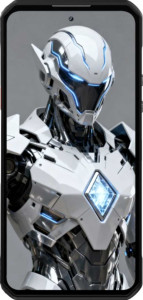
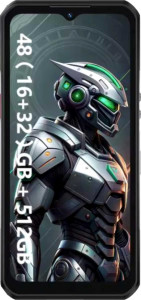
The single biggest differentiator in this group is panel technology. The WP60 uses an LCD IPS display, while the WP62 5G steps up to an OLED/AMOLED panel — and that gap matters far more than any single number in the spec sheet. OLED delivers true blacks, higher contrast, and punchier colors by lighting pixels individually rather than relying on a backlight. For outdoor use in a rugged phone context, OLED panels also tend to achieve higher peak brightness, making them easier to read in direct sunlight. The WP60's IPS panel is perfectly serviceable, but it cannot match the visual quality of OLED under those conditions.

Where the WP60 counters is with its larger 7.2-inch screen versus the WP62 5G's 6.58-inch display. More screen real estate is genuinely useful for maps, documents, or media consumption in the field. That said, the resolution gap significantly undermines the size advantage: the WP60 renders at only 720 × 1560 px, while the WP62 5G outputs a crisp 1080 × 2408 px. Despite the WP60's larger canvas, both devices land at nearly identical pixel densities of around 400 ppi — meaning the WP60's lower resolution is precisely scaled to its bigger screen, keeping sharpness comparable. Both also share a smooth 120Hz refresh rate and the same Gorilla Glass 5 protection.

The WP62 5G holds a clear display advantage, driven entirely by its OLED panel. The WP60's extra screen size does not compensate for the qualitative gap in contrast, color depth, and real-world brightness that OLED brings to the table. Users who prioritize visual quality — especially outdoors — will find the WP62 5G's display meaningfully superior.

Performance:
internal storage 512GB 512GB
RAM 16GB 16GB
Chipset (SoC) name MediaTek Dimensity 7025 MediaTek Dimensity 7025
GPU name IMG BXM-8-256 IMG BXM-8-256
CPU speed 2 x 2.5 & 6 x 2 GHz 2 x 2.5 & 6 x 2 GHz
Geekbench 6 result (multi) 2291 2291
Geekbench 6 result (single) 884 884
Geekbench 5 result (multi) 1890 1890
Geekbench 5 result (single) 690 690
GPU clock speed 900 MHz 900 MHz
Has integrated LTE
RAM speed 2750 MHz 2750 MHz
semiconductor size 6 nm 6 nm
Supports 64-bit
DirectX version DirectX 12 DirectX 12
Has integrated graphics
Uses big.LITTLE technology
Has NX bit
Uses HMP
maximum memory bandwidth 51.2 GB/s 51.2 GB/s
OpenCL version 2 2
memory channels 4 4
maximum memory amount 16GB 16GB
uses multithreading
DDR memory version 5 5
shading units 18 18

Performance is a non-issue to compare here — both devices are powered by the identical MediaTek Dimensity 7025 chipset, paired with the same 16GB of DDR5 RAM and 512GB of internal storage. Every measurable performance metric in the data is a perfect match: the same Geekbench 6 multi-core score of 2291, the same single-core score of 884, the same IMG BXM-8-256 GPU running at 900 MHz, and the same 51.2 GB/s maximum memory bandwidth. There is no performance differentiator between these two phones at the silicon level.

The Dimensity 7025 is a capable mid-range chip built on a 6 nm process, which balances performance and thermal efficiency well — an important trait in rugged devices that may be used in warm outdoor environments. The big.LITTLE architecture with HMP (Heterogeneous Multi-Processing) means the chip can intelligently distribute workloads across its 2 × 2.5 GHz performance cores and 6 × 2 GHz efficiency cores, keeping everyday tasks snappy while conserving battery during lighter use.

This group is an absolute tie. No matter which metric you examine, the hardware is spec-for-spec identical. Any perceived difference in real-world performance between the WP60 and WP62 5G would come from software optimization or thermal management — neither of which is reflected in the provided data — not from the underlying silicon.

Cameras:
megapixels (main camera) 108 & 8 & 2 MP 108 & 8 & 2 MP
Has a dual-lens (or multi-lens) main camera
megapixels (front camera) 32MP 32MP
has built-in optical image stabilization
Has a dual-tone LED flash
number of flash LEDs 2 0
has a BSI sensor
has a CMOS sensor
has continuous autofocus when recording movies
Has phase-detection autofocus for photos
supports slow-motion video recording
has a built-in HDR mode
has manual exposure
has a flash
optical zoom 0x 0x
has manual ISO
has manual focus
has a front camera
Has laser autofocus
Shoots 360° panorama
has manual white balance
shoots raw
has touch autofocus
has manual shutter speed
can create panoramas in-camera
Has timelapse function
Has a front-facing LED flash
has a dual-lens (or multi-lens) front camera
supports HDR10 recording
supports Dolby Vision recording
has a front-facing camera under the display
Has a RGB LED flash
has 3D photo/video recording capabilities

On paper, the two cameras look nearly identical: both feature a 108 MP + 8 MP + 2 MP triple rear system, a 32 MP front camera, phase-detection autofocus, and the same manual controls across exposure, ISO, white balance, and focus. Neither offers optical image stabilization or optical zoom, which are the same constraints regardless of which model you choose. For most shooting scenarios — stills, HDR, panoramas — these phones will deliver comparable results.

The differences emerge in the details. The WP60 includes a dual-tone LED flash with two LEDs, which allows for more natural color temperature in flash photography compared to a single-LED unit. The WP62 5G, by contrast, lists zero flash LEDs despite having a flash — an apparent data inconsistency — but more meaningfully, it adds two video-oriented features the WP60 lacks: slow-motion video recording and a timelapse function. These are genuinely useful tools for users who want more creative or documentary control over their footage in the field.

The verdict here leans slightly toward the WP62 5G for video versatility, thanks to slow-motion and timelapse capabilities that the WP60 simply does not offer. The WP60's dual-tone flash is a worthwhile perk for low-light still photography, but it is a narrower advantage. Users who shoot video or want more expressive capture modes will find the WP62 5G's feature set more complete.

Operating system:
Android version Android 14 Android 15
has clipboard warnings
has location privacy options
has camera/microphone privacy options
has Mail Privacy Protection
has theme customization
can block app tracking
blocks cross-site tracking
has on-device machine learning
has notification permissions
has media picker
Can play games while they download
has dark mode
has Wi-Fi password sharing
has battery health check
has an extra dim mode
has focus modes
has dynamic theming
can offload apps
Has customizable notifications
has Live Text
has full-page screenshots
supports split screen
gets direct OS updates
has PiP
Can be used as a PC
Has sharing intents
has a child lock
Supports widgets
Is free and open source
Has offline voice recognition
has voice commands
Tracks the current position of a mobile device
is a multi-user system
has Quick Start

Across the full breadth of OS features in this group, the WP60 and WP62 5G are remarkably alike — both run stock Android with the same privacy controls, split-screen multitasking, PiP, widgets, dynamic theming, and on-device machine learning. Neither receives direct OS updates, which is worth noting for long-term software support expectations regardless of which model you choose. The functional day-to-day experience on both devices will feel essentially the same.

Two differences are worth calling out. The more meaningful one is the Android version: the WP60 ships on Android 14, while the WP62 5G launches on Android 15. A newer OS version means access to the latest platform security patches, refined privacy features, and any behavioral improvements Google introduced in that release cycle — advantages that matter over the life of the device. The secondary difference is that the WP62 5G supports app offloading, a feature the WP60 lacks. This allows rarely used apps to be temporarily removed while preserving their data, freeing up storage without a full uninstall — a modest but practical perk on a device you may load with specialized field tools.

The WP62 5G has a clear, if narrow, edge in this category. Android 15 is a concrete, version-tracked advantage, and app offloading adds a useful layer of storage flexibility. Neither difference is dramatic enough to be a dealbreaker on its own, but taken together they give the WP62 5G a more current and slightly more flexible software foundation.

Battery:
battery power 10000 mAh 11000 mAh
has wireless charging
Supports fast charging
charging speed 33W 33W
has reverse wireless charging
has a removable battery
has a battery level indicator
has a rechargeable battery

Battery life is where rugged phones traditionally make their case, and both the WP60 and WP62 5G deliver massive capacities well beyond mainstream smartphones. They share identical charging infrastructure — 33W wired fast charging, no wireless or reverse wireless charging, and a non-removable cell — so the only number that separates them is raw capacity: 10,000 mAh on the WP60 versus 11,000 mAh on the WP62 5G.

That 1,000 mAh gap represents a 10% larger battery in the WP62 5G, which in practical terms translates to a proportionally longer time between charges under equivalent usage conditions. For a device already operating in the multi-day range, that margin could mean the difference between making it through a long field shift and needing a top-up. It is not a transformative difference, but in demanding use cases where charging opportunities are scarce, every extra hour of runtime counts. Both devices charge at the same 33W speed, meaning the WP62 5G will also take slightly longer to reach full charge from empty — a minor tradeoff for the larger reserve.

The WP62 5G has the edge here, straightforwardly: more capacity at the same charging speed is an unambiguous advantage in this category. The WP60 is by no means a poor performer with its 10,000 mAh cell, but for users who prioritize maximum runtime above all else, the WP62 5G's 11,000 mAh battery tips the scales in its favor.

Audio:
has a socket for a 3.5 mm audio jack
has stereo speakers
has aptX
has LDAC
has aptX HD
has aptX Adaptive
has aptX Lossless
Has a radio

Audio is the one category in this comparison where the two phones diverge most sharply in philosophy rather than degree. The WP60 drops the headphone jack entirely but gains stereo speakers and a built-in FM radio. The WP62 5G takes the opposite approach: it retains the 3.5 mm audio jack and drops both stereo speakers and radio, instead adding support for LDAC — Sony's high-resolution Bluetooth codec capable of transmitting up to 990 kbps of audio data wirelessly.

Each trade-off serves a different user. The WP60's stereo speakers make it the stronger choice for hands-free audio in the field — louder, more directional sound without any accessories. The FM radio is a genuine utility feature in areas with poor data connectivity. The WP62 5G, meanwhile, is built for users who want high-fidelity personal audio: the 3.5 mm jack supports any wired headphones without adapters, and LDAC delivers near-lossless quality to compatible wireless headphones — a meaningful step above standard Bluetooth audio codecs.

This group is effectively a tie with different strengths. There is no objectively superior option — the right answer depends entirely on use case. Field workers or those who rely on shared audio output will prefer the WP60's stereo speakers and radio, while audio-conscious users or those who frequently use headphones will find the WP62 5G's jack and LDAC support more valuable.

Connectivity & Features:
release date October 2025 October 2025
has 5G support
Wi-Fi version Wi-Fi 4 (802.11n), Wi-Fi 5 (802.11ac) Wi-Fi 4 (802.11n), Wi-Fi 6 (802.11ax), Wi-Fi 5 (802.11ac)
SIM cards 2 SIM 2 SIM
Bluetooth version 5.2 5.2
has an external memory slot
Has USB Type-C
USB version 2 2
has NFC
download speed 2770 MBits/s 2770 MBits/s
Has a fingerprint scanner
has emergency SOS via satellite
has crash detection
is DLNA-certified
has a gyroscope
supports ANT+
Has a heart rate monitor
has GPS
has a compass
supports Wi-Fi
Has an infrared sensor
has an accelerometer
has a cellular module
Has a barometer
has an HDMI output
Uses 3D facial recognition
Has an iris scanner
Stylus included
supports Galileo
Has motion tracking
Has optical tracking
Has a built-in projector

The connectivity foundations are identical across both devices: 5G, dual SIM, Bluetooth 5.2, NFC, USB Type-C, expandable storage, and the same 2770 Mbps peak download speed. For most users, this shared baseline covers everything needed for modern wireless use. The one connectivity upgrade worth flagging is that the WP62 5G adds Wi-Fi 6 (802.11ax) to the standard Wi-Fi 4/5 stack the WP60 supports. Wi-Fi 6 delivers better throughput and significantly improved performance in congested environments — relevant for anyone working in facilities with many simultaneous connected devices.

The more practically significant gap is in onboard sensors. The WP62 5G includes both a gyroscope and a compass, neither of which is present on the WP60. For a rugged device, these omissions on the WP60 are notable: a compass enables accurate directional orientation independent of movement — critical for navigation apps in the field — while a gyroscope supports motion-based features, augmented reality applications, and more precise orientation tracking. The WP60's accelerometer alone handles basic motion detection, but it cannot substitute for these two sensors in applications that explicitly require them.

The WP62 5G has a clear advantage in this category. Wi-Fi 6 support is a future-facing connectivity upgrade, but the inclusion of a gyroscope and compass is the more meaningful win — especially for a device positioned for outdoor and professional use, where reliable navigation and spatial awareness features are not optional extras but practical necessities.

Miscellaneous:
has a video light
Has sapphire glass display
Has a curved display
Has an e-paper display

The Miscellaneous group offers no differentiation between the two devices whatsoever. Both the WP60 and WP62 5G include a video light, and both lack sapphire glass, a curved display, and an e-paper display — across every data point in this category, the specs are a perfect match.

This is a complete tie. There is nothing in this group that should influence a purchasing decision either way.

Comparison Summary & Verdict

After examining every specification, both phones prove to be capable rugged companions, but they clearly cater to different users. The Oukitel WP60 stands out with its larger 7.2″ screen, higher IP69 water resistance rating, stereo speakers, built-in FM radio, and a dual-tone LED flash, making it the better pick for users who want maximum multimedia immersion and the toughest protection against high-pressure water jets. The Oukitel WP62 5G, on the other hand, counters with a sharper OLED display at 1080 x 2408 px, a bigger 11000 mAh battery, Android 15, Wi-Fi 6, a 3.5 mm audio jack with LDAC support, slow-motion and timelapse video, and additional sensors like a gyroscope and compass, making it the stronger choice for users who value display quality, connectivity, and a more feature-complete experience.

Oukitel WP60
Buy Oukitel WP60 if...

Buy the Oukitel WP60 if you want a larger screen, stereo speakers, FM radio, and the highest IP69 water and pressure resistance for extreme outdoor use.

Oukitel WP62 5G
Buy Oukitel WP62 5G if...

Buy the Oukitel WP62 5G if you prioritize a sharper OLED display, a larger battery, Android 15, Wi-Fi 6, a headphone jack, and richer sensor support including a gyroscope and compass.