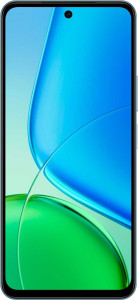
Oukitel WP60
Vivo Y39 5G

Oukitel WP60 Vivo Y39 5G

Overview

When comparing the Oukitel WP60 and the Vivo Y39 5G, two very different philosophies emerge. One is built for endurance and outdoor resilience, while the other leans toward a slim, everyday-friendly experience. In this head-to-head, we examine their key battlegrounds: durability and build quality, battery capacity, camera systems, and performance specifications — helping you understand which device is truly built for your lifestyle before you decide.

Common Features

  • Neither product can be folded.
  • Both products feature an LCD IPS display type.
  • Both products have a 120Hz refresh rate.
  • HDR10 support is not available on either product.
  • HDR10+ support is not available on either product.
  • Always-On Display is not available on either product.
  • Dolby Vision support is not available on either product.
  • Neither product has a secondary screen.
  • Both products have a touchscreen.
  • Both products have integrated LTE.
  • Both products support 64-bit processing.
  • Both products use DirectX 12.
  • Both products have integrated graphics.
  • Both products use big.LITTLE technology.
  • Both products support OpenCL version 2.
  • Both products support a maximum of 16GB memory.
  • Both products use DDR5 memory.
  • Both products have a multi-lens main camera.
  • Optical image stabilization is not available on either product.
  • Both products have 2 flash LEDs.
  • A BSI sensor is not present on either product.
  • Both products have a CMOS sensor.
  • Both products support continuous autofocus when recording video.
  • Both products have phase-detection autofocus for photos.
  • Both products have a built-in HDR mode.
  • Clipboard warnings are present on both products.
  • Both products offer location privacy options.
  • Both products offer camera and microphone privacy options.
  • Mail Privacy Protection is not available on either product.
  • Both products support theme customization.
  • Both products can block app tracking.
  • Cross-site tracking blocking is not available on either product.
  • Both products have on-device machine learning.
  • Neither product supports wireless charging.
  • Both products support fast charging.
  • The battery is not removable on either product.
  • Both products have a battery level indicator.
  • Both products have a rechargeable battery.
  • aptX support is not available on either product.
  • LDAC support is not available on either product.
  • aptX HD support is not available on either product.
  • aptX Adaptive support is not available on either product.
  • aptX Lossless support is not available on either product.
  • Both products support 5G.
  • Both products support Wi-Fi 4 (802.11n) and Wi-Fi 5 (802.11ac).
  • Both products have dual SIM support.
  • Both products have USB Type-C.
  • Both products use USB version 2.
  • Both products have NFC.
  • Both products have a fingerprint scanner.
  • Emergency SOS via satellite is not available on either product.
  • Both products have a video light.
  • Neither product has a sapphire glass display.
  • Neither product has a curved display.
  • Neither product has an e-paper display.

Main Differences

  • Water resistance is Waterproof on Oukitel WP60 and Water resistant on Vivo Y39 5G.
  • Weight is 360g on Oukitel WP60 and 8.1g on Vivo Y39 5G.
  • Thickness is 14.9mm on Oukitel WP60 and 8.1mm on Vivo Y39 5G.
  • Width is 87mm on Oukitel WP60 and 76.3mm on Vivo Y39 5G.
  • Height is 184mm on Oukitel WP60 and 165.7mm on Vivo Y39 5G.
  • Volume is 238.52 cm³ on Oukitel WP60 and 102.41 cm³ on Vivo Y39 5G.
  • IP rating is IP69 on Oukitel WP60 and IP64 on Vivo Y39 5G.
  • A rugged build is featured on Oukitel WP60 but not on Vivo Y39 5G.
  • Screen size is 7.2″ on Oukitel WP60 and 6.68″ on Vivo Y39 5G.
  • Pixel density is 400 ppi on Oukitel WP60 and 264 ppi on Vivo Y39 5G.
  • Resolution is 720 x 1560 px on Oukitel WP60 and 720 x 1608 px on Vivo Y39 5G.
  • Branded damage-resistant glass is present on Oukitel WP60 but not on Vivo Y39 5G.
  • Internal storage is 512GB on Oukitel WP60 and 256GB on Vivo Y39 5G.
  • RAM is 16GB on Oukitel WP60 and 8GB on Vivo Y39 5G.
  • The chipset is MediaTek Dimensity 7025 on Oukitel WP60 and Qualcomm Snapdragon 4 Gen 2 on Vivo Y39 5G.
  • The GPU is IMG BXM-8-256 on Oukitel WP60 and Adreno 613 on Vivo Y39 5G.
  • CPU speed is 2 x 2.5 & 6 x 2 GHz on Oukitel WP60 and 2 x 2.3 & 6 x 2 GHz on Vivo Y39 5G.
  • GPU clock speed is 900 MHz on Oukitel WP60 and 955 MHz on Vivo Y39 5G.
  • RAM speed is 2750 MHz on Oukitel WP60 and 3200 MHz on Vivo Y39 5G.
  • Semiconductor size is 6nm on Oukitel WP60 and 4nm on Vivo Y39 5G.
  • Main camera megapixels are 108 & 8 & 2 MP on Oukitel WP60 and 50 & 2 MP on Vivo Y39 5G.
  • Front camera megapixels are 32MP on Oukitel WP60 and 8MP on Vivo Y39 5G.
  • A dual-tone LED flash is present on Oukitel WP60 but not on Vivo Y39 5G.
  • Slow-motion video recording is supported on Vivo Y39 5G but not on Oukitel WP60.
  • A timelapse function is available on Vivo Y39 5G but not on Oukitel WP60.
  • Android version is Android 14 on Oukitel WP60 and Android 15 on Vivo Y39 5G.
  • App offloading is supported on Vivo Y39 5G but not on Oukitel WP60.
  • Battery capacity is 10000 mAh on Oukitel WP60 and 6500 mAh on Vivo Y39 5G.
  • Charging speed is 33W on Oukitel WP60 and 44W on Vivo Y39 5G.
  • A 3.5mm audio jack is present on Vivo Y39 5G but not on Oukitel WP60.
  • Stereo speakers are featured on Oukitel WP60 but not on Vivo Y39 5G.
  • A radio is present on Oukitel WP60 but not on Vivo Y39 5G.
  • Bluetooth version is 5.2 on Oukitel WP60 and 5.1 on Vivo Y39 5G.
  • An external memory slot is available on Oukitel WP60 but not on Vivo Y39 5G.
  • Download speed is 2770 Mbit/s on Oukitel WP60 and 2500 Mbit/s on Vivo Y39 5G.
  • A gyroscope is present on Vivo Y39 5G but not on Oukitel WP60.
  • A compass is present on Vivo Y39 5G but not on Oukitel WP60.
Specs Comparison
Oukitel WP60

Oukitel WP60

Vivo Y39 5G

Vivo Y39 5G

Design:
water resistance Waterproof Water resistant
weight 360 g 8.1 g
thickness 14.9 mm 8.1 mm
width 87 mm 76.3 mm
height 184 mm 165.7 mm
volume 238.5192 cm³ 102.407571 cm³
Ingress Protection (IP) rating IP69 IP64
has a rugged build
can be folded

The most defining divide between these two phones is their design philosophy. The Oukitel WP60 is a purpose-built rugged device: it carries an IP69 rating, meaning it can withstand high-pressure, high-temperature water jets — a step above typical splash resistance. The Vivo Y39 5G, by contrast, holds an IP64 rating, which covers dust resistance and splashes from any direction but offers no meaningful protection against submersion or pressurized water. For users who work in construction, outdoor, or industrial environments, that gap is significant.

The physical footprint reflects this trade-off clearly. The WP60 is substantially larger and heavier — 184 × 87 × 14.9 mm and 360 g — a direct consequence of its reinforced chassis and rugged internals. The Y39 5G is considerably more compact at 165.7 × 76.3 × 8.1 mm, and its dramatically lower stated weight results in a volume nearly 57% smaller than the WP60. In day-to-day carry, the Y39 5G will feel far less bulky in a pocket and less fatiguing during extended one-handed use.

In summary, the Vivo Y39 5G has a clear edge for users who prioritize a slim, lightweight, and everyday-friendly form factor. The Oukitel WP60 holds an equally clear advantage for anyone who needs serious environmental protection — its rugged build and higher IP rating make it the only viable choice between the two for demanding or outdoor use cases.

Display:
Display type LCD, IPS LCD, IPS
screen size 7.2" 6.68"
pixel density 400 ppi 264 ppi
resolution 720 x 1560 px 720 x 1608 px
refresh rate 120Hz 120Hz
has branded damage-resistant glass
supports HDR10
supports HDR10+
Always-On Display
supports Dolby Vision
Has a secondary screen
has a touch screen

Both phones share the same panel technology — LCD IPS — and an identical 120Hz refresh rate, which delivers smooth scrolling and responsive touch interactions on either device. Neither supports HDR10, HDR10+, or Dolby Vision, so content rendering quality is essentially on par at a baseline level.

Where they diverge meaningfully is screen size and pixel density. The Oukitel WP60 sports a large 7.2-inch display at 400 ppi, while the Vivo Y39 5G offers a 6.68-inch panel at only 264 ppi. Both run a 720p base resolution, but the WP60's smaller pixel pitch across a similarly-resolved screen translates to noticeably sharper text and finer image detail — 400 ppi sits comfortably in the ″retina″ range for typical viewing distances, whereas 264 ppi can show visible pixelation on crisp text or fine UI elements.

The WP60 also carries branded damage-resistant glass — absent on the Y39 5G — adding a layer of scratch and impact protection that matters for daily use, especially given its rugged positioning. Overall, the Oukitel WP60 holds a clear display edge: it offers a bigger canvas, sharper pixels, and better physical screen protection, making it the stronger performer in this category despite both phones sharing the same panel type and refresh rate.

Performance:
internal storage 512GB 256GB
RAM 16GB 8GB
Chipset (SoC) name MediaTek Dimensity 7025 Qualcomm Snapdragon 4 Gen 2
GPU name IMG BXM-8-256 Adreno 613
CPU speed 2 x 2.5 & 6 x 2 GHz 2 x 2.3 & 6 x 2 GHz
GPU clock speed 900 MHz 955 MHz
Has integrated LTE
RAM speed 2750 MHz 3200 MHz
semiconductor size 6 nm 4 nm
Supports 64-bit
DirectX version DirectX 12 DirectX 12
Has integrated graphics
Uses big.LITTLE technology
OpenCL version 2 2
maximum memory amount 16GB 16GB
DDR memory version 5 5

At the silicon level, the Vivo Y39 5G holds a notable architectural advantage: its Snapdragon 4 Gen 2 is built on a 4nm process, compared to the 6nm node used by the WP60's Dimensity 7025. A smaller node generally translates to better power efficiency and thermal performance — meaning the Y39 5G's chip can sustain workloads while generating less heat and drawing less battery. The Y39 5G also edges ahead on RAM bandwidth at 3200 MHz versus the WP60's 2750 MHz, and its GPU clock speed is marginally higher at 955 MHz versus 900 MHz.

That said, the Oukitel WP60 counters with a commanding lead in raw resources. It ships with 16GB of RAM and 512GB of internal storage — double what the Y39 5G offers on both counts. In practice, 16GB of RAM means the WP60 can keep significantly more apps active in the background without reloading, and 512GB of storage is a meaningful differentiator for users who store large files, videos, or offline content locally.

This is a genuinely split category. The Y39 5G's more efficient chip architecture gives it a real-world edge in sustained performance and thermal headroom, while the WP60's superior memory and storage configuration better serves power users and heavy multitaskers. Neither holds an unconditional advantage — the better choice depends entirely on whether raw capacity or chipset efficiency matters more to the user.

Cameras:
megapixels (main camera) 108 & 8 & 2 MP 50 & 2 MP
Has a dual-lens (or multi-lens) main camera
megapixels (front camera) 32MP 8MP
has built-in optical image stabilization
Has a dual-tone LED flash
number of flash LEDs 2 2
has a BSI sensor
has a CMOS sensor
has continuous autofocus when recording movies
Has phase-detection autofocus for photos
supports slow-motion video recording
has a built-in HDR mode
has manual exposure
has a flash
optical zoom 0x 0x
has manual ISO
has a serial shot mode
has manual focus
has a front camera
Has laser autofocus
Shoots 360° panorama
has manual white balance
shoots raw
has touch autofocus
has manual shutter speed
can create panoramas in-camera
Has timelapse function
Has a front-facing LED flash
has a dual-lens (or multi-lens) front camera
supports HDR10 recording
supports Dolby Vision recording
has a front-facing camera under the display
Has a RGB LED flash
has 3D photo/video recording capabilities

The headline difference in the main camera array is resolution: the Oukitel WP60 leads with a 108MP primary sensor alongside 8MP and 2MP lenses, while the Vivo Y39 5G fields a 50MP main sensor with a 2MP companion. On paper, the WP60's higher megapixel count allows for more aggressive cropping and finer detail capture in good light. Its front camera also pulls ahead significantly at 32MP versus the Y39 5G's 8MP, making it the stronger selfie device by a wide margin.

However, the Y39 5G carves out its own advantages in video and creative flexibility. It supports slow-motion video recording and includes a timelapse function — both absent on the WP60. For users who shoot varied video content rather than just stills, these features add genuine creative range that the WP60 simply cannot match. Manual controls — ISO, exposure, white balance, and focus — are available on both devices, so neither has an edge there.

On balance, the Oukitel WP60 is the stronger choice for photography-focused users, offering substantially higher resolution across both front and rear cameras. The Vivo Y39 5G counters with a more versatile video feature set. The right pick hinges on use case: stills and selfie quality favor the WP60, while dynamic video shooting gives the Y39 5G a clear functional edge.

Operating system:
Android version Android 14 Android 15
has clipboard warnings
has location privacy options
has camera/microphone privacy options
has Mail Privacy Protection
has theme customization
can block app tracking
blocks cross-site tracking
has on-device machine learning
has notification permissions
has media picker
Can play games while they download
has dark mode
has Wi-Fi password sharing
has battery health check
has an extra dim mode
has focus modes
has dynamic theming
can offload apps
Has customizable notifications
has Live Text
has full-page screenshots
supports split screen
gets direct OS updates
has PiP
Can be used as a PC
Has sharing intents
has a child lock
Supports widgets
Is free and open source
Has offline voice recognition
has voice commands
Tracks the current position of a mobile device
is a multi-user system
has Quick Start

Across nearly the entire feature set, these two phones are functionally identical at the OS level — both offer dark mode, dynamic theming, split-screen, picture-in-picture, customizable notifications, on-device machine learning, and a full suite of privacy controls. For the vast majority of day-to-day software interactions, users switching between these devices would notice almost no difference.

Two distinctions are worth calling out. The Vivo Y39 5G ships with Android 15 versus the WP60's Android 14, giving it access to the latest platform-level improvements, security patches, and API support out of the box. It also supports app offloading — a feature the WP60 lacks — which allows infrequently used apps to be temporarily removed while retaining their data, a useful tool for managing storage without permanently deleting anything.

Neither phone receives direct OS updates, so long-term software support is a consideration for both. That said, the Vivo Y39 5G holds a modest but clear edge here: starting on a newer Android version buys more runway before obsolescence, and app offloading adds a practical storage management option the WP60 simply does not offer.

Battery:
battery power 10000 mAh 6500 mAh
has wireless charging
Supports fast charging
charging speed 33W 44W
has a removable battery
has a battery level indicator
has a rechargeable battery

Battery capacity is where the Oukitel WP60 makes one of its most compelling arguments. Its 10,000 mAh cell is an unusually large reservoir — roughly 54% bigger than the 6,500 mAh battery in the Vivo Y39 5G. For users in field environments, on extended trips, or anywhere reliable charging access is limited, that extra capacity translates directly into significantly more hours between charges, and potentially the ability to top up other devices in a pinch.

The trade-off comes at the charger. The Y39 5G supports 44W fast charging versus the WP60's 33W, meaning the Vivo will recover from a low battery meaningfully faster in absolute time — a real convenience advantage for users who charge in short windows throughout the day. Neither phone supports wireless charging, so both are equally limited on that front.

Weighing the two, the Oukitel WP60 holds the stronger overall battery position. A 10,000 mAh cell is an exceptional capacity at any price point, and for its target rugged-use audience, longevity between charges matters far more than refill speed. The Y39 5G's faster charging is a useful perk, but it cannot fully offset a capacity gap of this magnitude.

Audio:
has a socket for a 3.5 mm audio jack
has stereo speakers
has aptX
has LDAC
has aptX HD
has aptX Adaptive
has aptX Lossless
Has a radio

Audio is a category where each phone makes a different but equally deliberate compromise. The Oukitel WP60 drops the headphone jack entirely but compensates with stereo speakers — a setup that delivers wider, more immersive sound for media consumption, speakerphone calls, and outdoor listening without any accessories. The Vivo Y39 5G takes the opposite approach: it retains the 3.5mm audio jack but offers only a single speaker, meaning wired headphone users are well served while speaker-only listening is more limited.

The WP60 also includes a built-in FM radio — a feature the Y39 5G lacks entirely. For its rugged, field-oriented audience, this is a genuinely practical addition, providing access to emergency broadcasts or local stations without any data connection. Neither device supports advanced Bluetooth audio codecs like aptX or LDAC, so wireless audio quality is on equal footing for both.

This category is a direct trade-off with no universal winner. Users who rely on wired headphones or earphones will find the Vivo Y39 5G more accommodating, while those who prioritize speaker quality and offline radio functionality will prefer the Oukitel WP60. The right choice here comes down entirely to personal listening habits.

Connectivity & Features:
release date October 2025 March 2025
has 5G support
Wi-Fi version Wi-Fi 4 (802.11n), Wi-Fi 5 (802.11ac) Wi-Fi 4 (802.11n), Wi-Fi 5 (802.11ac)
SIM cards 2 SIM 2 SIM
Bluetooth version 5.2 5.1
has an external memory slot
Has USB Type-C
USB version 2 2
has NFC
download speed 2770 MBits/s 2500 MBits/s
Has a fingerprint scanner
has emergency SOS via satellite
has crash detection
is DLNA-certified
has a gyroscope
supports ANT+
Has a heart rate monitor
has GPS
has a compass
supports Wi-Fi
Has an infrared sensor
has an accelerometer
has a cellular module
Has a barometer
has an HDMI output
Uses 3D facial recognition
Has an iris scanner
Stylus included
supports Galileo
Has motion tracking
Has optical tracking
Has a built-in projector

The core connectivity stack is remarkably well-matched: both phones support 5G, dual SIM, NFC, GPS with Galileo, Wi-Fi 5, USB Type-C, and fingerprint scanning. For everyday tasks like contactless payments, fast mobile data, and file transfers, users on either device are on essentially equal footing. The WP60 does hold a slight edge in Bluetooth version (5.2 vs 5.1) and peak download speed (2770 Mbps vs 2500 Mbps), though these differences are unlikely to be perceptible in typical real-world use.

The more meaningful divergences lie in storage expandability and onboard sensors. The Oukitel WP60 includes a microSD card slot — absent on the Y39 5G — which is a significant practical advantage, especially given that both phones are in a storage tier where users may eventually need more space. On the sensor side, the Vivo Y39 5G counters with a gyroscope and compass that the WP60 lacks. The gyroscope enables more accurate motion-based features and smoother augmented reality experiences, while the compass is essential for reliable map orientation without relying solely on GPS triangulation.

Neither phone dominates this category outright. The Oukitel WP60 wins on expandable storage and Bluetooth recency, while the Vivo Y39 5G offers a more complete sensor suite for navigation and motion-aware applications. Which advantage matters more will depend on the user — field workers and media-heavy users will value the WP60's storage flexibility, while those who frequently use maps or motion-sensitive apps will appreciate the Y39 5G's sensor complement.

Miscellaneous:
has a video light
Has sapphire glass display
Has a curved display
Has an e-paper display

The miscellaneous spec group presents a clean sweep of identical values across every data point. Both the Oukitel WP60 and the Vivo Y39 5G include a video light, and neither features a sapphire glass display, curved display, or e-paper display.

This group is a complete tie — there is no differentiating factor between the two devices based on the provided data. Neither product holds any advantage or disadvantage here.

Comparison Summary & Verdict

After examining every specification, it is clear that these two devices serve distinctly different audiences. The Oukitel WP60 is the obvious pick for users who demand a tough, go-anywhere smartphone: its IP69-rated waterproof rugged build, massive 10000 mAh battery, 512GB internal storage, 16GB RAM, and a large 7.2″ high-density display make it a powerhouse for outdoor professionals and heavy users. The Vivo Y39 5G, on the other hand, excels as a sleek everyday companion — it is significantly lighter and thinner, runs the newer Android 15, offers faster 44W charging, a sharper 4nm chipset, a 3.5mm audio jack, gyroscope, and compass, making it ideal for users who value portability and modern software features in daily life.

Oukitel WP60
Buy Oukitel WP60 if...

Buy the Oukitel WP60 if you need a rugged, waterproof smartphone with a massive battery, generous storage, and a large high-density display for demanding outdoor use.

Vivo Y39 5G
Buy Vivo Y39 5G if...

Buy the Vivo Y39 5G if you prefer a slim, lightweight daily driver with a newer chipset, faster charging, Android 15, a headphone jack, and built-in gyroscope and compass.