Oukitel WP62 5G
Samsung Galaxy A36 5G

Oukitel WP62 5G Samsung Galaxy A36 5G

Overview

Welcome to our in-depth comparison of the Oukitel WP62 5G and the Samsung Galaxy A36 5G — two very different takes on the modern 5G smartphone. One is built to survive the harshest environments with a massive battery, while the other prioritizes a slim, refined everyday experience. In this comparison, we examine their key battlegrounds: durability and build quality, raw performance, camera capabilities, battery life, and overall portability to help you decide which device truly fits your lifestyle.

Common Features

  • Both phones are waterproof and neither can be folded.
  • Both phones have an IP rating that provides water resistance.
  • Both phones feature an OLED/AMOLED display.
  • Both phones support a 120Hz refresh rate.
  • Both phones have damage-resistant glass on the display.
  • Dolby Vision support is not available on either phone.
  • Neither phone has a secondary screen.
  • Both phones have a touchscreen.
  • Both phones have integrated LTE.
  • Both phones support 64-bit processing.
  • Both phones use big.LITTLE technology.
  • Both phones have integrated graphics.
  • Both phones run Android 15.
  • Both phones support fast charging.
  • Neither phone has wireless charging.
  • Neither phone has a removable battery.
  • Both phones have a rechargeable battery with a battery level indicator.
  • Both phones support 5G connectivity.
  • Both phones have a USB Type-C port with USB version 2.
  • Both phones have NFC and a fingerprint scanner.
  • Both phones support Wi-Fi 4, Wi-Fi 5, and Wi-Fi 6.
  • Neither phone has a radio.
  • Both phones have a CMOS sensor and support phase-detection autofocus for photos.
  • Both phones have a built-in HDR mode and support continuous autofocus when recording movies.
  • Both phones support slow-motion video recording.
  • Both phones have a multi-lens main camera.
  • Clipboard warnings are available on both phones.
  • Both phones have location privacy options and camera/microphone privacy options.
  • App tracking can be blocked on both phones.
  • Cross-site tracking is not blocked on either phone.
  • Both phones have a video light.
  • Neither phone has a sapphire glass display, a curved display, or an e-paper display.

Main Differences

  • Weight is 370 g on Oukitel WP62 5G and 195 g on Samsung Galaxy A36 5G.
  • Thickness is 15.3 mm on Oukitel WP62 5G and 7.4 mm on Samsung Galaxy A36 5G.
  • Volume is 213.41 cm³ on Oukitel WP62 5G and 94.27 cm³ on Samsung Galaxy A36 5G.
  • IP rating is IP68 on Oukitel WP62 5G and IP67 on Samsung Galaxy A36 5G.
  • A rugged build is present on Oukitel WP62 5G but not on Samsung Galaxy A36 5G.
  • Screen size is 6.58″ on Oukitel WP62 5G and 6.7″ on Samsung Galaxy A36 5G.
  • Pixel density is 401 ppi on Oukitel WP62 5G and 385 ppi on Samsung Galaxy A36 5G.
  • Gorilla Glass version is Gorilla Glass 5 on Oukitel WP62 5G and Gorilla Glass Victus on Samsung Galaxy A36 5G.
  • HDR10 and HDR10+ support is present on Samsung Galaxy A36 5G but not available on Oukitel WP62 5G.
  • Chipset is MediaTek Dimensity 7025 on Oukitel WP62 5G and Qualcomm Snapdragon 6 Gen 3 on Samsung Galaxy A36 5G.
  • RAM is 16 GB on Oukitel WP62 5G and 12 GB on Samsung Galaxy A36 5G.
  • Internal storage is 512 GB on Oukitel WP62 5G and 256 GB on Samsung Galaxy A36 5G.
  • Geekbench 6 multi-core score is 2291 on Oukitel WP62 5G and 2917 on Samsung Galaxy A36 5G.
  • Geekbench 6 single-core score is 884 on Oukitel WP62 5G and 1007 on Samsung Galaxy A36 5G.
  • Semiconductor size is 6 nm on Oukitel WP62 5G and 4 nm on Samsung Galaxy A36 5G.
  • Maximum memory bandwidth is 51.2 GB/s on Oukitel WP62 5G and 25.6 GB/s on Samsung Galaxy A36 5G.
  • Main camera resolution is 108 & 8 & 2 MP on Oukitel WP62 5G and 50 & 8 & 5 MP on Samsung Galaxy A36 5G.
  • Front camera resolution is 32 MP on Oukitel WP62 5G and 12 MP on Samsung Galaxy A36 5G.
  • Optical image stabilization is present on Samsung Galaxy A36 5G but not available on Oukitel WP62 5G.
  • Battery capacity is 11000 mAh on Oukitel WP62 5G and 5000 mAh on Samsung Galaxy A36 5G.
  • Charging speed is 33W on Oukitel WP62 5G and 45W on Samsung Galaxy A36 5G.
  • A charger is included in the box with Oukitel WP62 5G but not with Samsung Galaxy A36 5G.
  • A 3.5 mm audio jack is present on Oukitel WP62 5G but not on Samsung Galaxy A36 5G.
  • Stereo speakers are present on Samsung Galaxy A36 5G but not on Oukitel WP62 5G.
  • LDAC support is present on Oukitel WP62 5G but not on Samsung Galaxy A36 5G.
  • SIM card support is dual SIM (physical) on Oukitel WP62 5G, while Samsung Galaxy A36 5G supports 1 or 2 physical SIMs plus 1 or 2 eSIMs.
  • Bluetooth version is 5.2 on Oukitel WP62 5G and 5.3 on Samsung Galaxy A36 5G.
  • An external memory slot is available on Oukitel WP62 5G but not on Samsung Galaxy A36 5G.
  • Download speed is 2770 Mbit/s on Oukitel WP62 5G and 2900 Mbit/s on Samsung Galaxy A36 5G.
Specs Comparison
Oukitel WP62 5G

Oukitel WP62 5G

Samsung Galaxy A36 5G

Samsung Galaxy A36 5G

Design:
water resistance Waterproof Waterproof
weight 370 g 195 g
thickness 15.3 mm 7.4 mm
width 81 mm 78.2 mm
height 172.2 mm 162.9 mm
volume 213.40746 cm³ 94.266972 cm³
Ingress Protection (IP) rating IP68 IP67
has a rugged build
can be folded

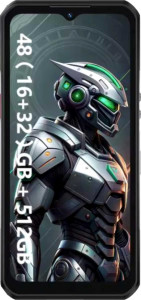
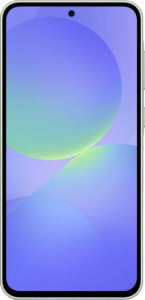
The most striking divide between these two phones is physical form. The Oukitel WP62 5G is a purpose-built rugged device, and the numbers reflect that unambiguously: at 370 g and 15.3 mm thick, it is nearly twice the weight and more than twice the thickness of the Samsung Galaxy A36 5G, which comes in at a slim 195 g and just 7.4 mm. The volume difference is equally dramatic — over 213 cm³ versus roughly 94 cm³ — meaning the WP62 5G displaces more than twice the space in a pocket or bag. For daily carry, this is a meaningful ergonomic trade-off.

Both phones are rated waterproof, but the WP62 5G holds a slight edge with an IP68 certification compared to the A36 5G's IP67. In practical terms, IP68 means the device is rated for deeper or longer submersion, which matters in genuinely demanding environments. Beyond the IP rating, the WP62 5G also carries a rugged build designation — reinforced construction designed to withstand drops, dust, and physical stress — something the A36 5G does not offer.

The choice here is about use-case fit, not just specs. If you work in construction, outdoors, or any high-risk environment, the WP62 5G's rugged credentials give it a clear and meaningful edge. For everyday users who simply want water resistance without the bulk, the A36 5G's dramatically lighter and slimmer profile wins on comfort and portability. Neither can be folded, so that is a non-factor in this comparison.
Display:
Display type OLED/AMOLED OLED/AMOLED
screen size 6.58" 6.7"
pixel density 401 ppi 385 ppi
resolution 1080 x 2408 px 1080 x 2340 px
refresh rate 120Hz 120Hz
has branded damage-resistant glass
Gorilla Glass version Gorilla Glass 5 Gorilla Glass Victus
supports HDR10
supports HDR10+
supports Dolby Vision
Has a secondary screen
has a touch screen

Both phones use OLED/AMOLED panels with 1080p resolution and a 120Hz refresh rate, so the baseline display experience — vibrant colors, deep blacks, and smooth scrolling — is shared territory. The A36 5G edges ahead with a slightly larger 6.7″ screen, while the WP62 5G's 6.58″ panel compensates marginally with a higher pixel density of 401 ppi versus 385 ppi, though this difference is imperceptible to the naked eye at normal viewing distances.

Where the Samsung pulls clearly ahead is in HDR support. The A36 5G is certified for both HDR10 and HDR10+, meaning streaming content from compatible platforms will render with greater dynamic range — brighter highlights, deeper shadows, and more lifelike color gradients. The WP62 5G supports none of these standards, which is a tangible limitation for media consumption. On glass protection, the gap is also meaningful: Samsung's Gorilla Glass Victus offers superior scratch and drop resistance compared to the WP62 5G's Gorilla Glass 5 — somewhat ironic given the WP62 5G's rugged positioning.

For display quality, the Samsung Galaxy A36 5G holds a clear advantage. Its HDR10+ certification elevates the media viewing experience in a way the WP62 5G simply cannot match, and its stronger screen glass adds a layer of protection that complements everyday use. The WP62 5G's display is perfectly serviceable, but it trails in the specs that matter most for visual fidelity.

Performance:
internal storage 512GB 256GB
RAM 16GB 12GB
Chipset (SoC) name MediaTek Dimensity 7025 Qualcomm Snapdragon 6 Gen 3
GPU name IMG BXM-8-256 Adreno 710
CPU speed 2 x 2.5 & 6 x 2 GHz 4 x 2.4 & 4 x 1.8 GHz
Geekbench 6 result (multi) 2291 2917
Geekbench 6 result (single) 884 1007
GPU clock speed 900 MHz 800 MHz
Has integrated LTE
RAM speed 2750 MHz 2750 MHz
semiconductor size 6 nm 4 nm
Supports 64-bit
DirectX version DirectX 12 DirectX 12
Has integrated graphics
Uses big.LITTLE technology
Has NX bit
Uses HMP
maximum memory bandwidth 51.2 GB/s 25.6 GB/s
OpenCL version 2 2
memory channels 4 2
maximum memory amount 16GB 12GB
DDR memory version 5 5

Raw CPU performance favors the Samsung Galaxy A36 5G. Its Snapdragon 6 Gen 3 chip, built on a 4 nm process, outscores the WP62 5G's Dimensity 7025 (6 nm) in both Geekbench 6 single-core (1007 vs 884) and multi-core (2917 vs 2291) tests. The smaller fabrication node also translates to better power efficiency — the A36 5G's chipset does more work per milliwatt, which has downstream benefits for thermals and battery endurance under sustained load.

Flip to memory and storage, though, and the picture reverses. The WP62 5G ships with 16 GB of RAM and 512 GB of internal storage — double the storage and a third more RAM than the A36 5G's 12 GB / 256 GB configuration. More striking is the memory architecture: the WP62 5G uses 4 memory channels delivering up to 51.2 GB/s of bandwidth, compared to the A36 5G's 2-channel setup at 25.6 GB/s. That bandwidth advantage can benefit GPU-bound tasks and data-intensive workloads, even if the underlying CPU cores are slower.

On balance, the A36 5G holds the performance edge for most users. Its superior benchmark scores and more efficient chipset mean snappier day-to-day responsiveness and better sustained performance. The WP62 5G's larger RAM pool and doubled memory bandwidth are genuine assets for heavy multitasking or storage-heavy use cases, but they do not overcome the A36 5G's CPU lead in typical smartphone workloads.

Cameras:
megapixels (main camera) 108 & 8 & 2 MP 50 & 8 & 5 MP
Has a dual-lens (or multi-lens) main camera
megapixels (front camera) 32MP 12MP
has built-in optical image stabilization
Has a dual-tone LED flash
number of flash LEDs 0 1
has a BSI sensor
has a CMOS sensor
has continuous autofocus when recording movies
Has phase-detection autofocus for photos
supports slow-motion video recording
has a built-in HDR mode
has manual exposure
has a flash
optical zoom 0x 0x
has manual ISO
has manual focus
has a front camera
Has laser autofocus
Shoots 360° panorama
has manual white balance
shoots raw
has touch autofocus
has manual shutter speed
can create panoramas in-camera
wide aperture (front camera) 2.2f 2.2f
Has timelapse function
Has a front-facing LED flash
has a dual-lens (or multi-lens) front camera
supports HDR10 recording
supports Dolby Vision recording
has a front-facing camera under the display
Has a RGB LED flash
has 3D photo/video recording capabilities

Megapixel counts tell only part of the story here. The Oukitel WP62 5G leads with a 108 MP primary sensor, while the Samsung Galaxy A36 5G uses a 50 MP main shooter. On paper that sounds decisive, but the A36 5G counters with something more practically valuable: optical image stabilization (OIS). OIS physically compensates for hand movement during capture, producing noticeably sharper photos in low light and smoother handheld video — an advantage no megapixel count can replicate. The WP62 5G has no OIS at all.

The secondary lenses also differ in a meaningful way. Samsung's triple system pairs its main sensor with an 8 MP ultrawide and a 5 MP macro lens, while Oukitel pairs its main with an 8 MP ultrawide and a 2 MP depth sensor. The A36 5G's macro lens offers more versatility for close-up photography than a dedicated depth sensor, which contributes little beyond portrait-mode bokeh effects. Front camera resolution swings heavily toward the WP62 5G at 32 MP versus the A36 5G's 12 MP, which could matter for selfie-focused users, though both share the same f/2.2 aperture.

Despite the WP62 5G's headline megapixel advantage, the A36 5G holds the camera edge on the strength of OIS alone. In real-world shooting conditions — especially indoors, at night, or while moving — stabilization is one of the single most impactful features a smartphone camera can have. The rest of the feature set is essentially a draw, making OIS the decisive differentiator here.

Operating system:
Android version Android 15 Android 15
has clipboard warnings
has location privacy options
has camera/microphone privacy options
has Mail Privacy Protection
has theme customization
can block app tracking
blocks cross-site tracking
has on-device machine learning
has notification permissions
has media picker
Can play games while they download
has dark mode
has Wi-Fi password sharing
has battery health check
has an extra dim mode
has focus modes
has dynamic theming
can offload apps
Has customizable notifications
has Live Text
has full-page screenshots
supports split screen
gets direct OS updates
has PiP
Can be used as a PC
Has sharing intents
has a child lock
Supports widgets
Is free and open source
Has offline voice recognition
has voice commands
Tracks the current position of a mobile device
is a multi-user system
has Quick Start

This is a rare case of a complete tie. Both the Oukitel WP62 5G and the Samsung Galaxy A36 5G run Android 15 and share an identical feature set across every single spec in this group — from privacy controls and dark mode to split-screen multitasking, Picture-in-Picture, widgets, and on-device machine learning. There is not a single differentiating data point between them here.

The shared foundation is worth noting for what it includes. Both devices offer a solid privacy toolkit — location controls, camera and microphone permissions, app tracking blocking, and clipboard warnings — alongside quality-of-life features like dynamic theming, full-page screenshots, offline voice recognition, and battery health monitoring. For users who prioritize a feature-rich Android experience out of the box, neither phone is at a disadvantage relative to the other on software alone.

Based strictly on the provided specs, this group is a dead heat. Any meaningful software differentiation between these two devices — such as Samsung's One UI skin versus Oukitel's interface, or long-term update commitments — falls outside the data provided and cannot factor into this assessment. On the specs given, the verdict is an unambiguous draw.

Battery:
battery power 11000 mAh 5000 mAh
has wireless charging
Supports fast charging
charging speed 33W 45W
comes with a charger
has a removable battery
has a battery level indicator
has a rechargeable battery

The battery story here is dominated by one extraordinary number: the Oukitel WP62 5G packs an 11000 mAh cell — more than double the 5000 mAh found in the Samsung Galaxy A36 5G. A capacity this large is firmly in power-bank territory, and for users in the field, on extended travel, or without reliable access to outlets, that kind of reserve translates directly into multi-day runtime without a charge. It is one of the most significant battery advantages you will find between two smartphones.

The A36 5G fights back on charging speed, however. At 45W, it replenishes its smaller battery considerably faster than the WP62 5G's 33W rate. Given that the WP62 5G's cell is 2.2 times larger, the time-to-full gap between the two is substantial — the A36 5G will be charged and ready long before the WP62 5G reaches capacity. One further practical note: the WP62 5G comes with a charger included, while the A36 5G does not, which is a small but real out-of-box consideration. Neither phone supports wireless charging.

For battery longevity between charges, the WP62 5G wins decisively. Its 11000 mAh capacity is purpose-built for endurance in a way that no charging speed advantage can offset — the A36 5G's faster top-up is a convenience, but it still requires finding a plug far more frequently. Users who prioritize staying unplugged for as long as possible have a clear choice here.

Audio:
has a socket for a 3.5 mm audio jack
has stereo speakers
has LDAC
has aptX Lossless
Has a radio

Each phone wins on a different audio front, making this a genuine trade-off rather than a clear-cut victory. The Oukitel WP62 5G retains a 3.5 mm headphone jack — an increasingly rare feature that allows direct connection to wired headphones and audio gear without adapters. It also supports LDAC, Sony's high-resolution Bluetooth audio codec, which transmits up to three times more data than standard Bluetooth audio and delivers near-lossless quality to compatible wireless headphones. For dedicated listeners, that combination is genuinely compelling.

The Samsung Galaxy A36 5G takes the opposite approach: no headphone jack, but stereo speakers instead. Stereo output creates a wider, more immersive soundstage for media consumption — movies, music, and gaming all benefit from having distinct left and right channels rather than mono audio from a single driver. It does not support LDAC, so wireless audio is limited to standard Bluetooth codecs.

This group is a draw that depends entirely on listening habits. Users who invest in quality headphones — wired or LDAC-capable wireless — will find the WP62 5G better equipped. Those who primarily consume media through the phone's speakers will prefer the A36 5G's stereo output. Neither advantage is trivial, and neither phone covers both bases.

Connectivity & Features:
release date October 2025 March 2025
has 5G support
Wi-Fi version Wi-Fi 4 (802.11n), Wi-Fi 6 (802.11ax), Wi-Fi 5 (802.11ac) Wi-Fi 4 (802.11n), Wi-Fi 5 (802.11ac), Wi-Fi 6 (802.11ax)
SIM cards 2 SIM 1 SIM, 1 eSIM, 2 SIM, 2 eSIM
Bluetooth version 5.2 5.3
has an external memory slot
Has USB Type-C
USB version 2 2
has NFC
download speed 2770 MBits/s 2900 MBits/s
Has a fingerprint scanner
has emergency SOS via satellite
has crash detection
is DLNA-certified
has a gyroscope
supports ANT+
Has a heart rate monitor
has GPS
has a compass
supports Wi-Fi
Has an infrared sensor
has an accelerometer
has a cellular module
Has a barometer
has an HDMI output
Uses 3D facial recognition
Has an iris scanner
Stylus included
supports Galileo
Has motion tracking
Has optical tracking
Has a built-in projector

Across most of this spec group, the two phones are functionally identical — both offer 5G, Wi-Fi 6, NFC, USB Type-C, GPS, and the same suite of motion sensors. The meaningful divergences are fewer but worth unpacking. The Samsung Galaxy A36 5G supports eSIM, enabling flexible carrier switching and dual-SIM configurations that don't require a physical second card — particularly useful for frequent travelers or anyone managing separate personal and work numbers digitally. The WP62 5G is limited to two physical SIM slots with no eSIM capability.

The roles reverse on storage expandability. The Oukitel WP62 5G includes a microSD card slot, allowing users to expand storage beyond its already generous 512 GB internal capacity. The A36 5G offers no such option — what you buy is what you get. The WP62 5G also trails slightly on Bluetooth 5.2 versus the A36 5G's Bluetooth 5.3, though the practical difference in range or stability between these two versions is minimal for everyday use. Download speed is marginally higher on the A36 5G (2900 vs 2770 Mbits/s), a gap unlikely to be noticeable in real-world conditions.

This group is broadly a draw with use-case splits. The A36 5G's eSIM flexibility is the more forward-looking advantage for connected, mobile users, while the WP62 5G's expandable storage is a practical asset for those who accumulate large amounts of local content. Neither edge is decisive enough to declare an overall winner here.

Miscellaneous:
has a video light
Has sapphire glass display
Has a curved display
Has an e-paper display

The miscellaneous spec group offers nothing to separate these two devices. Every data point — video light present on both, no sapphire glass, no curved display, no e-paper display on either — is identical across the Oukitel WP62 5G and the Samsung Galaxy A36 5G. There is simply no differentiator to analyze here.

This is a complete tie by the data provided. Neither phone holds any advantage or disadvantage within this group, and no conclusion beyond parity can be drawn from these specs alone.

Comparison Summary & Verdict

After a thorough review of every specification, these two phones clearly serve very different audiences. The Oukitel WP62 5G is the definitive choice for outdoor enthusiasts and power users who need an IP68-rated rugged build, an enormous 11,000 mAh battery, 16 GB of RAM, 512 GB of storage, a 3.5 mm headphone jack, and LDAC audio support — all in one durable package. Conversely, the Samsung Galaxy A36 5G shines as a polished daily driver, offering a significantly lighter and thinner design, a superior Snapdragon 6 Gen 3 chipset with stronger Geekbench scores, HDR10+ display support, optical image stabilization, stereo speakers, and faster 45W charging — though it does not include a charger in the box. Your ideal pick comes down to context: rugged endurance versus refined everyday performance.

Oukitel WP62 5G
Buy Oukitel WP62 5G if...

Buy the Oukitel WP62 5G if you need a rugged, outdoor-ready smartphone with an enormous 11,000 mAh battery, 16 GB of RAM, 512 GB of storage, a headphone jack, and IP68 water resistance.

Samsung Galaxy A36 5G
Buy Samsung Galaxy A36 5G if...

Buy the Samsung Galaxy A36 5G if you want a lightweight, slim everyday smartphone with a more powerful chipset, HDR10+ display, optical image stabilization, stereo speakers, and faster 45W charging.