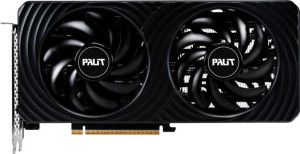
Palit GeForce RTX 5060 Dual OC
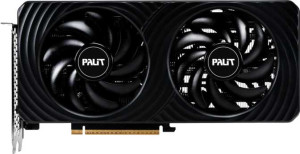
Palit GeForce RTX 5060 Ti Dual 8GB

Palit GeForce RTX 5060 Dual OC Palit GeForce RTX 5060 Ti Dual 8GB

Overview

Welcome to our in-depth specification comparison between the Palit GeForce RTX 5060 Dual OC and the Palit GeForce RTX 5060 Ti Dual 8GB. Both cards share the same Blackwell architecture, 8GB of GDDR7 memory, and identical port configurations, yet they diverge in meaningful ways across shader counts, floating-point performance, clock speeds, and power consumption. Read on to see how these two mid-range contenders stack up across every key specification.

Common Features

  • GPU memory speed is 1750 MHz on both products.
  • Both products have 48 render output units (ROPs).
  • Double Precision Floating Point (DPFP) is supported on both products.
  • Effective memory speed is 28000 MHz on both products.
  • Maximum memory bandwidth is 448 GB/s on both products.
  • Both products have 8GB of VRAM.
  • Both products use GDDR7 memory.
  • Memory bus width is 128-bit on both products.
  • ECC memory is supported on both products.
  • Both products support DirectX 12 Ultimate.
  • OpenGL version is 4.6 on both products.
  • OpenCL version is 3 on both products.
  • Multi-display technology is supported on both products.
  • Ray tracing is supported on both products.
  • 3D is supported on both products.
  • DLSS is supported on both products.
  • XeSS (XMX) is not available on either product.
  • Both products have one HDMI output running HDMI 2.1b.
  • Both products have 3 DisplayPort outputs and no USB-C, DVI, or mini DisplayPort outputs.
  • Both products are built on the Blackwell GPU architecture using a 5 nm process with 21,900 million transistors, PCIe 5, and share identical dimensions of 262.1 mm width and 126.3 mm height, with no air-water cooling.

Main Differences

  • GPU base clock speed is 2280 MHz on Palit GeForce RTX 5060 Dual OC and 2407 MHz on Palit GeForce RTX 5060 Ti Dual 8GB.
  • GPU turbo clock speed is 2535 MHz on Palit GeForce RTX 5060 Dual OC and 2573 MHz on Palit GeForce RTX 5060 Ti Dual 8GB.
  • Pixel rate is 121.7 GPixel/s on Palit GeForce RTX 5060 Dual OC and 123.5 GPixel/s on Palit GeForce RTX 5060 Ti Dual 8GB.
  • Floating-point performance is 19.47 TFLOPS on Palit GeForce RTX 5060 Dual OC and 23.71 TFLOPS on Palit GeForce RTX 5060 Ti Dual 8GB.
  • Texture rate is 304.2 GTexels/s on Palit GeForce RTX 5060 Dual OC and 370.5 GTexels/s on Palit GeForce RTX 5060 Ti Dual 8GB.
  • Shading units number 3840 on Palit GeForce RTX 5060 Dual OC and 4608 on Palit GeForce RTX 5060 Ti Dual 8GB.
  • Texture mapping units (TMUs) total 120 on Palit GeForce RTX 5060 Dual OC and 144 on Palit GeForce RTX 5060 Ti Dual 8GB.
  • Thermal Design Power (TDP) is 145W on Palit GeForce RTX 5060 Dual OC and 180W on Palit GeForce RTX 5060 Ti Dual 8GB.
Specs Comparison
Palit GeForce RTX 5060 Dual OC

Palit GeForce RTX 5060 Dual OC

Palit GeForce RTX 5060 Ti Dual 8GB

Palit GeForce RTX 5060 Ti Dual 8GB

Performance:
GPU clock speed 2280 MHz 2407 MHz
GPU turbo 2535 MHz 2573 MHz
pixel rate 121.7 GPixel/s 123.5 GPixel/s
floating-point performance 19.47 TFLOPS 23.71 TFLOPS
texture rate 304.2 GTexels/s 370.5 GTexels/s
GPU memory speed 1750 MHz 1750 MHz
shading units 3840 4608
texture mapping units (TMUs) 120 144
render output units (ROPs) 48 48
Has Double Precision Floating Point (DPFP)

The most telling differentiator between these two cards lies in their shader and compute hardware. The RTX 5060 Ti Dual 8GB ships with 4608 shading units and 144 TMUs versus 3840 shading units and 120 TMUs on the RTX 5060 Dual OC — a roughly 20% wider execution engine. This directly translates into the floating-point gap: 23.71 TFLOPS on the Ti versus 19.47 TFLOPS on the standard model, a difference that matters most in compute-heavy workloads like ray tracing, AI-accelerated features, and shader-intensive scenes at higher resolutions.

Clock speeds tell a more nuanced story. The 5060 Ti holds a higher base clock of 2407 MHz versus 2280 MHz, and its turbo advantage narrows to just 38 MHz (2573 MHz vs 2535 MHz). This means the 5060 Dual OC boosts more aggressively relative to its base, but the Ti's wider architecture still pulls ahead in sustained throughput. Both cards share identical 1750 MHz memory speed and an equal 48 ROPs count, so pixel fill rate is virtually tied — the Ti's marginally higher pixel rate of 123.5 GPixel/s vs 121.7 GPixel/s is negligible in practice.

Overall, the RTX 5060 Ti Dual 8GB holds a clear performance edge in this group. Its ~22% lead in raw compute throughput and ~22% advantage in texture fill rate are meaningful gains, not marginal ones, and will be felt in demanding titles and workloads where shader throughput is the bottleneck. The RTX 5060 Dual OC remains competitive at lower rendering loads, but the Ti's broader GPU core gives it a decisive structural advantage here.

Memory:
effective memory speed 28000 MHz 28000 MHz
maximum memory bandwidth 448 GB/s 448 GB/s
VRAM 8GB 8GB
GDDR version GDDR7 GDDR7
memory bus width 128-bit 128-bit
Supports ECC memory

When it comes to memory, these two cards are completely identical across every measurable dimension. Both feature 8GB of GDDR7 VRAM on a 128-bit bus, running at an effective speed of 28000 MHz and delivering 448 GB/s of memory bandwidth. There is no differentiator here whatsoever.

That shared bandwidth figure is worth contextualizing. GDDR7 allows a narrower 128-bit bus to punch well above what GDDR6X achieved at the same width, making 448 GB/s a genuinely capable number for 1080p and 1440p workloads. The 8GB VRAM capacity is sufficient for most current titles at those resolutions, though it can become a constraint in texture-heavy or modded games that push beyond that ceiling. ECC memory support on both cards is a minor but noteworthy feature, adding a layer of data integrity useful in creative or lightly professional workloads.

This group is an unambiguous tie. Buyers choosing between these two cards will find zero memory-related reason to favor one over the other — the decision will rest entirely on other specification groups such as GPU compute performance or pricing.

Features:
DirectX version DirectX 12 Ultimate DirectX 12 Ultimate
OpenGL version 4.6 4.6
OpenCL version 3 3
Supports multi-display technology
supports ray tracing
Supports 3D
supports DLSS
has XeSS (XMX)
AMD SAM / Intel Resizable BAR Intel Resizable BAR Intel Resizable BAR
has LHR
has RGB lighting
supported displays 4 4

Feature parity is total here — every single specification in this group is shared between the two cards. Both support DirectX 12 Ultimate and ray tracing, placing them on equal footing for modern rendering pipelines. DirectX 12 Ultimate is the current standard for AAA gaming, and ray tracing support means both cards can handle reflections, shadows, and global illumination effects in titles that implement them.

DLSS support on both is a meaningful shared advantage. NVIDIA's AI-driven upscaling can substantially boost frame rates with minimal visual quality loss, making it especially useful when ray tracing is enabled and raw performance headroom tightens. Both cards also support Intel Resizable BAR, which allows the CPU to access the full VRAM pool simultaneously rather than in smaller chunks — a feature that can yield modest but real frame rate improvements in supported titles. The cap of 4 supported displays is identical as well, covering virtually all multi-monitor use cases.

As with memory, this group is a straight tie. Neither card offers any feature the other lacks, so the feature set provides no basis for choosing one over the other. Buyers should weight their decision on the performance and pricing differences documented in other specification groups.

Ports:
has an HDMI output
HDMI ports 1 1
HDMI version HDMI 2.1b HDMI 2.1b
DisplayPort outputs 3 3
USB-C ports 0 0
DVI outputs 0 0
mini DisplayPort outputs 0 0

Both cards carry an identical port layout: one HDMI 2.1b output and three DisplayPort outputs, for a total of four physical connections — matching the four-display limit noted in their feature specs. Neither card offers USB-C or any legacy output such as DVI, which reflects the current industry direction away from older standards.

HDMI 2.1b is the latest revision of the HDMI specification, supporting high refresh rates at 4K and beyond, which is useful for connecting to modern televisions or high-end monitors. The three DisplayPort outputs give multi-monitor users flexibility, as DisplayPort is generally the preferred interface for high-refresh-rate PC monitors. The absence of USB-C is worth noting for users who own monitors that rely on that connection, as an adapter would be required.

This is another complete tie. The port configuration is a carbon copy across both cards, so connectivity plays no role in differentiating them. The choice between the two remains purely a matter of performance and other group comparisons.

General info:
GPU architecture Blackwell Blackwell
release date May 2025 April 2025
Thermal Design Power (TDP) 145W 180W
PCI Express (PCIe) version 5 5
semiconductor size 5 nm 5 nm
number of transistors 21900 million 21900 million
Has air-water cooling
width 262.1 mm 262.1 mm
height 126.3 mm 126.3 mm

Sharing the same Blackwell architecture, 5nm process node, and identical transistor count of 21,900 million, these two cards are built from the same silicon family. The identical physical dimensions — 262.1 mm × 126.3 mm — mean both will fit the same cases and occupy the same slot space, removing any installation considerations as a differentiating factor.

The one meaningful gap in this group is power consumption. The RTX 5060 Dual OC carries a 145W TDP, while the RTX 5060 Ti Dual 8GB steps up to 180W — a 35W difference, or roughly 24% more power draw. In practical terms, this means the Ti will generate more heat, may require a more capable power supply, and will draw more from a system's overall energy budget. For users in small form factor builds or regions with high electricity costs, this gap is worth factoring in. Both cards use air cooling only, so thermal management relies entirely on the included heatsink and fan solution.

Neither card has a clear overall edge in this group — it depends on priorities. The RTX 5060 Dual OC has the advantage for users who value lower power draw and cooler, quieter operation, while the Ti's higher TDP is simply the cost of its broader GPU compute hardware. For most standard mid-tower builds with adequate PSU headroom, the 35W difference is manageable rather than prohibitive.

Comparison Summary & Verdict

After examining all available specifications, the two cards share a strong common foundation: identical 8GB GDDR7 memory with 448 GB/s bandwidth, the same port layout, and full support for ray tracing and DLSS. However, the Palit GeForce RTX 5060 Ti Dual 8GB pulls ahead with 4608 shading units versus 3840, a higher floating-point performance of 23.71 TFLOPS compared to 19.47 TFLOPS, and a superior texture rate of 370.5 GTexels/s. This comes at the cost of a higher 180W TDP versus 145W. The Palit GeForce RTX 5060 Dual OC is the better pick for users who want solid performance with lower power draw, while the Ti variant is the stronger choice for those prioritizing raw compute throughput.

Palit GeForce RTX 5060 Dual OC
Buy Palit GeForce RTX 5060 Dual OC if...

Buy the Palit GeForce RTX 5060 Dual OC if you want a capable Blackwell-based GPU with a lower 145W power draw, making it ideal for smaller builds or systems with limited power headroom.

Palit GeForce RTX 5060 Ti Dual 8GB
Buy Palit GeForce RTX 5060 Ti Dual 8GB if...

Buy the Palit GeForce RTX 5060 Ti Dual 8GB if you want maximum performance from this tier, with notably higher shading units, floating-point throughput of 23.71 TFLOPS, and a faster texture rate, and you can accommodate its 180W TDP.