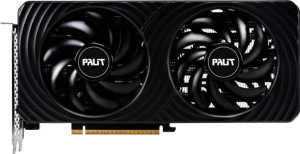
Palit GeForce RTX 5060 Dual
Palit GeForce RTX 5060 Infinity 3

Palit GeForce RTX 5060 Dual Palit GeForce RTX 5060 Infinity 3

Common Features

  • Both products have a GPU clock speed of 2280 MHz.
  • Both products have a GPU turbo speed of 2497 MHz.
  • Both products have a pixel rate of 119.9 GPixel/s.
  • Both products have a floating-point performance of 19.18 TFLOPS.
  • Both products have a texture rate of 299.6 GTexels/s.
  • Both products have a GPU memory speed of 1750 MHz.
  • Both products have 3840 shading units.
  • Both products have 120 texture mapping units (TMUs).
  • Both products have an effective memory speed of 28000 MHz.
  • Both products have a maximum memory bandwidth of 448 GB/s.
  • Both products have 8GB of VRAM.
  • Both products use GDDR7 memory.
  • Both products have a memory bus width of 128-bit.
  • Both products support ECC memory.
  • Both products support DirectX 12 Ultimate.
  • Both products support OpenGL 4.6.
  • Both products support OpenCL 3.
  • Both products support multi-display technology.
  • Both products support ray tracing.
  • Both products support DLSS.

Main Differences

  • RGB lighting is available on Palit GeForce RTX 5060 Dual but not on Palit GeForce RTX 5060 Infinity 3.
  • Palit GeForce RTX 5060 Dual has a width of 262.1 mm while Palit GeForce RTX 5060 Infinity 3 has a width of 291.9 mm.
  • Palit GeForce RTX 5060 Dual has a height of 126.3 mm while Palit GeForce RTX 5060 Infinity 3 has a height of 116.6 mm.
Specs Comparison
Palit GeForce RTX 5060 Dual

Palit GeForce RTX 5060 Dual

Palit GeForce RTX 5060 Infinity 3

Palit GeForce RTX 5060 Infinity 3

Performance:
GPU clock speed 2280 MHz 2280 MHz
GPU turbo 2497 MHz 2497 MHz
pixel rate 119.9 GPixel/s 119.9 GPixel/s
floating-point performance 19.18 TFLOPS 19.18 TFLOPS
texture rate 299.6 GTexels/s 299.6 GTexels/s
GPU memory speed 1750 MHz 1750 MHz
shading units 3840 3840
texture mapping units (TMUs) 120 120
render output units (ROPs) 48 48
Has Double Precision Floating Point (DPFP)

The performance specifications for the Palit GeForce RTX 5060 Dual and Palit GeForce RTX 5060 Infinity 3 are identical. Both products feature a GPU clock speed of 2280 MHz and a turbo boost of 2497 MHz. Additionally, they both achieve a pixel rate of 119.9 GPixel/s and have a floating-point performance of 19.18 TFLOPS. The texture rate for both is 299.6 GTexels/s, and both cards have a GPU memory speed of 1750 MHz.

In terms of architecture, the two products are also the same, each having 3840 shading units, 120 texture mapping units (TMUs), and 48 render output units (ROPs). Furthermore, both cards support Double Precision Floating Point (DPFP) calculations.

Since the specifications for these two products match exactly across all listed performance metrics, there is no difference in performance between the Palit GeForce RTX 5060 Dual and the Palit GeForce RTX 5060 Infinity 3 in this category.

Memory:
effective memory speed 28000 MHz 28000 MHz
maximum memory bandwidth 448 GB/s 448 GB/s
VRAM 8GB 8GB
GDDR version GDDR7 GDDR7
memory bus width 128-bit 128-bit
Supports ECC memory

The memory specifications for the Palit GeForce RTX 5060 Dual and Palit GeForce RTX 5060 Infinity 3 are identical. Both products feature an effective memory speed of 28000 MHz and a maximum memory bandwidth of 448 GB/s. They also both have 8GB of VRAM, utilize GDDR7 memory, and have a 128-bit memory bus width.

In addition, both cards support ECC (Error-Correcting Code) memory, ensuring improved data integrity during heavy workloads.

Since the memory configurations and features are the same for both models, there is no difference in memory performance between the Palit GeForce RTX 5060 Dual and the Palit GeForce RTX 5060 Infinity 3 in this category.

Features:
DirectX version DirectX 12 Ultimate DirectX 12 Ultimate
OpenGL version 4.6 4.6
OpenCL version 3 3
Supports multi-display technology
supports ray tracing
Supports 3D
supports DLSS
has XeSS (XMX)
AMD SAM / Intel Resizable BAR Intel Resizable BAR Intel Resizable BAR
has LHR
has RGB lighting
supported displays 4 4

The features of the Palit GeForce RTX 5060 Dual and Palit GeForce RTX 5060 Infinity 3 are nearly identical, with both products supporting DirectX 12 Ultimate, OpenGL version 4.6, and OpenCL version 3. Both cards also support multi-display technology, ray tracing, 3D, and DLSS. Additionally, they both have Intel Resizable BAR support and lack XeSS (XMX) functionality. Both models are also free from LHR (Lite Hash Rate) restrictions, meaning they do not have limitations on cryptocurrency mining performance.

The main difference between the two models is the presence of RGB lighting. The Palit GeForce RTX 5060 Dual includes RGB lighting, while the Palit GeForce RTX 5060 Infinity 3 does not. However, both cards support up to 4 displays, ensuring a broad range of connectivity options for multi-monitor setups.

Overall, the only notable feature difference between the two is the RGB lighting, which is exclusive to the Palit GeForce RTX 5060 Dual.

Ports:
has an HDMI output
HDMI ports 1 1
HDMI version HDMI 2.1b HDMI 2.1b
DisplayPort outputs 3 3
USB-C ports 0 0
DVI outputs 0 0
mini DisplayPort outputs 0 0

The port configurations for the Palit GeForce RTX 5060 Dual and Palit GeForce RTX 5060 Infinity 3 are identical. Both products feature 1 HDMI output with HDMI 2.1b support, 3 DisplayPort outputs, and no USB-C, DVI, or mini DisplayPort outputs.

Since the port setup is the same for both models, there are no differences in connectivity options between the two products in this category.

Overall, both the Palit GeForce RTX 5060 Dual and the Palit GeForce RTX 5060 Infinity 3 offer the same port configuration, ensuring comparable display connectivity capabilities.

General info:
GPU architecture Blackwell Blackwell
release date May 2025 May 2025
Thermal Design Power (TDP) 145W 145W
PCI Express (PCIe) version 5 5
semiconductor size 5 nm 5 nm
number of transistors 21900 million 21900 million
Has air-water cooling
width 262.1 mm 291.9 mm
height 126.3 mm 116.6 mm

The general specifications for the Palit GeForce RTX 5060 Dual and Palit GeForce RTX 5060 Infinity 3 are identical in most aspects. Both cards utilize the Blackwell GPU architecture, have a Thermal Design Power (TDP) of 145W, and support PCI Express version 5. Both models are built with a 5 nm semiconductor size and contain 21,900 million transistors. Additionally, neither product features air-water cooling.

The primary difference between the two models lies in their physical dimensions. The Palit GeForce RTX 5060 Dual is 262.1 mm in width and 126.3 mm in height, while the Palit GeForce RTX 5060 Infinity 3 is slightly wider at 291.9 mm but shorter in height at 116.6 mm.

Despite the difference in size, all other general specifications are the same between the two products, meaning their overall architecture and power requirements are identical.

Comparison Summary

This is a specification comparison between Palit GeForce RTX 5060 Dual and Palit GeForce RTX 5060 Infinity 3. Both products share a GPU clock speed of 2280 MHz, a GPU turbo speed of 2497 MHz, and 8GB of VRAM with a memory bus width of 128-bit. However, the Palit GeForce RTX 5060 Dual includes RGB lighting, while the Palit GeForce RTX 5060 Infinity 3 does not. The dimensions differ, with the Dual measuring 262.1 mm in width and 126.3 mm in height, while the Infinity 3 is slightly larger, at 291.9 mm in width and 116.6 mm in height.