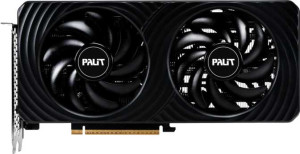
Palit GeForce RTX 5060 Ti Dual 8GB
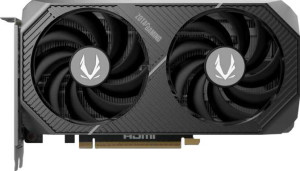
Zotac Gaming GeForce RTX 5060 Ti Twin Edge 16GB

Palit GeForce RTX 5060 Ti Dual 8GB Zotac Gaming GeForce RTX 5060 Ti Twin Edge 16GB

Overview

Welcome to our in-depth specification comparison between the Palit GeForce RTX 5060 Ti Dual 8GB and the Zotac Gaming GeForce RTX 5060 Ti Twin Edge 16GB. Both cards are built on the same Blackwell architecture and share a striking number of core specs, yet they diverge in ways that could meaningfully influence your buying decision. Key battlegrounds include VRAM capacity, physical dimensions, and aesthetic features like RGB lighting. Read on to see exactly how these two cards stack up.

Common Features

  • Both cards share a base GPU clock speed of 2407 MHz.
  • Both cards deliver a pixel rate of 123.5 GPixel/s.
  • Both cards have a GPU memory speed of 1750 MHz.
  • Both cards feature 4608 shading units.
  • Both cards include 144 texture mapping units (TMUs).
  • Both cards have 48 render output units (ROPs).
  • Double Precision Floating Point (DPFP) support is available on both products.
  • Both cards use GDDR7 memory.
  • Both cards have an effective memory speed of 28000 MHz.
  • Both cards offer a maximum memory bandwidth of 448 GB/s.
  • Both cards use a 128-bit memory bus width.
  • ECC memory support is available on both products.
  • Both cards support DirectX 12 Ultimate.
  • Both cards support OpenGL version 4.6.
  • Both cards support OpenCL version 3.
  • Multi-display technology support is available on both products.
  • Ray tracing support is available on both products.
  • 3D support is available on both products.
  • DLSS support is available on both products.
  • XeSS (XMX) support is not available on either product.
  • Both cards include 1 HDMI port with HDMI 2.1b.
  • Both cards include 3 DisplayPort outputs.
  • Neither card includes USB-C ports, DVI outputs, or mini DisplayPort outputs.
  • Both cards are built on the Blackwell GPU architecture.
  • Both cards have a Thermal Design Power (TDP) of 180W.
  • Both cards use PCIe version 5.
  • Both cards are manufactured on a 5 nm semiconductor process.
  • Both cards feature 21,900 million transistors.
  • Air-water cooling is not available on either product.

Main Differences

  • GPU turbo clock speed is 2573 MHz on Palit GeForce RTX 5060 Ti Dual 8GB and 2572 MHz on Zotac Gaming GeForce RTX 5060 Ti Twin Edge 16GB.
  • Floating-point performance is 23.71 TFLOPS on Palit GeForce RTX 5060 Ti Dual 8GB and 23.7 TFLOPS on Zotac Gaming GeForce RTX 5060 Ti Twin Edge 16GB.
  • Texture rate is 370.5 GTexels/s on Palit GeForce RTX 5060 Ti Dual 8GB and 370.4 GTexels/s on Zotac Gaming GeForce RTX 5060 Ti Twin Edge 16GB.
  • VRAM is 8GB on Palit GeForce RTX 5060 Ti Dual 8GB and 16GB on Zotac Gaming GeForce RTX 5060 Ti Twin Edge 16GB.
  • RGB lighting is present on Palit GeForce RTX 5060 Ti Dual 8GB but not available on Zotac Gaming GeForce RTX 5060 Ti Twin Edge 16GB.
  • Card width is 262.1 mm on Palit GeForce RTX 5060 Ti Dual 8GB and 220.5 mm on Zotac Gaming GeForce RTX 5060 Ti Twin Edge 16GB.
  • Card height is 126.3 mm on Palit GeForce RTX 5060 Ti Dual 8GB and 120.3 mm on Zotac Gaming GeForce RTX 5060 Ti Twin Edge 16GB.
Specs Comparison
Palit GeForce RTX 5060 Ti Dual 8GB

Palit GeForce RTX 5060 Ti Dual 8GB

Zotac Gaming GeForce RTX 5060 Ti Twin Edge 16GB

Zotac Gaming GeForce RTX 5060 Ti Twin Edge 16GB

Performance:
GPU clock speed 2407 MHz 2407 MHz
GPU turbo 2573 MHz 2572 MHz
pixel rate 123.5 GPixel/s 123.5 GPixel/s
floating-point performance 23.71 TFLOPS 23.7 TFLOPS
texture rate 370.5 GTexels/s 370.4 GTexels/s
GPU memory speed 1750 MHz 1750 MHz
shading units 4608 4608
texture mapping units (TMUs) 144 144
render output units (ROPs) 48 48
Has Double Precision Floating Point (DPFP)

From a pure GPU engine standpoint, the Palit RTX 5060 Ti Dual 8GB and the Zotac Gaming RTX 5060 Ti Twin Edge 16GB are virtually identical twins. Both share the same 2407 MHz base clock, the same 4608 shading units, 144 TMUs, and 48 ROPs, pointing to the exact same silicon configuration running at the same operating point. Their memory subsystems are also in lockstep at 1750 MHz.

The only measurable differences lie in boost clock and derived throughput metrics: the Palit boosts to 2573 MHz versus the Zotac's 2572 MHz, producing a floating-point performance of 23.71 TFLOPS against 23.70 TFLOPS, and a texture rate of 370.5 versus 370.4 GTexels/s. In real-world terms, a 1 MHz boost difference and a 0.01 TFLOPS compute gap are entirely imperceptible — no benchmark, game, or workload would ever surface a distinction at this scale.

On performance alone, these two cards are an absolute tie. Neither holds any meaningful GPU compute, throughput, or clock-speed advantage over the other. The decision between them should therefore hinge entirely on other spec groups — most notably memory capacity, cooling design, price, and physical dimensions — rather than anything in this category.

Memory:
effective memory speed 28000 MHz 28000 MHz
maximum memory bandwidth 448 GB/s 448 GB/s
VRAM 8GB 16GB
GDDR version GDDR7 GDDR7
memory bus width 128-bit 128-bit
Supports ECC memory

The memory subsystem is where these two cards finally part ways in a meaningful manner. The shared foundation is strong: both run GDDR7 over a 128-bit bus at an effective 28000 MHz, delivering 448 GB/s of bandwidth — a respectable figure enabled specifically by GDDR7's superior efficiency per pin compared to its predecessors. ECC support is present on both, which is a minor but welcome addition for creators and professionals concerned about memory error correction.

The decisive split is VRAM capacity: the Palit ships with 8GB while the Zotac Twin Edge carries 16GB. At current and near-future workloads, this gap matters considerably. Modern AAA titles with high-resolution texture packs, ray tracing, and frame generation can already push past 8GB in certain scenes, and that ceiling will only drop lower as games advance. For creative workloads — AI inference, video editing, 3D rendering — 16GB is increasingly the practical minimum for handling large assets without offloading to slower system RAM.

The Zotac Twin Edge 16GB holds a clear and significant advantage in this group. The bandwidth and speed floor is identical, so neither card is starved for throughput, but the doubling of capacity fundamentally expands what the Zotac can handle without bottlenecking. For users targeting longevity or running memory-intensive applications, the 16GB configuration is the more capable choice by a wide margin.

Features:
DirectX version DirectX 12 Ultimate DirectX 12 Ultimate
OpenGL version 4.6 4.6
OpenCL version 3 3
Supports multi-display technology
supports ray tracing
Supports 3D
supports DLSS
has XeSS (XMX)
AMD SAM / Intel Resizable BAR Intel Resizable BAR Intel Resizable BAR
has LHR
has RGB lighting
supported displays 4 4

Across the software and API feature set, these two cards are indistinguishable. Both support DirectX 12 Ultimate, ray tracing, and DLSS — the three pillars that define a modern NVIDIA gaming card's capability profile. DirectX 12 Ultimate ensures compatibility with the full suite of current rendering techniques, while DLSS provides AI-driven upscaling and frame generation that can substantially boost perceived performance in supported titles. Neither card supports XeSS, which is expected given that is an Intel-native technology.

Multi-display support is capped at 4 displays on both, and Intel Resizable BAR is present on each, allowing the CPU to access the full GPU framebuffer — a feature that can yield modest but real performance gains in supported games. The absence of LHR (Lite Hash Rate) on both is a non-issue for gaming-focused buyers and simply reflects that this limiter is no longer part of NVIDIA's current product strategy.

The sole differentiator in this group is aesthetic: the Palit Dual 8GB includes RGB lighting, while the Zotac Twin Edge 16GB does not. For builders who prioritize a themed or illuminated system, this tips the scales toward the Palit. For those indifferent to lighting, it is a non-factor. On functional features alone, this group is a dead heat — the Palit holds a minor edge only for users who specifically value RGB aesthetics.

Ports:
has an HDMI output
HDMI ports 1 1
HDMI version HDMI 2.1b HDMI 2.1b
DisplayPort outputs 3 3
USB-C ports 0 0
DVI outputs 0 0
mini DisplayPort outputs 0 0

Port selection is identical across both cards: one HDMI 2.1b output and three DisplayPort outputs, totaling four display connections — consistent with the four-display limit noted in the Features group. HDMI 2.1b is the latest revision of the standard, bringing support for high refresh rates at 4K and beyond, making it well-suited for modern gaming monitors and TVs alike. The three DisplayPort outputs offer flexibility for multi-monitor productivity setups or high-refresh competitive gaming rigs.

Neither card offers USB-C, mini DisplayPort, or legacy DVI outputs. The absence of USB-C is worth noting for users who own newer monitors that rely on that connection, as an adapter would be required. However, this is a common omission at this tier and not a distinguishing factor between the two.

This group is a complete tie. Every port type, count, and version is exactly matched. Connectivity cannot serve as a differentiator here — buyers with specific display output requirements will find both cards equally capable or equally limiting.

General info:
GPU architecture Blackwell Blackwell
release date April 2025 April 2025
Thermal Design Power (TDP) 180W 180W
PCI Express (PCIe) version 5 5
semiconductor size 5 nm 5 nm
number of transistors 21900 million 21900 million
Has air-water cooling
width 262.1 mm 220.5 mm
height 126.3 mm 120.3 mm

At the foundational level, these two cards share the same DNA: both are built on NVIDIA's Blackwell architecture using a 5nm process node with 21.9 billion transistors, and both draw a 180W TDP over a PCIe 5.0 interface. The shared power envelope means neither card will demand more from a PSU or case airflow than the other, and PCIe 5.0 ensures neither will face bandwidth bottlenecks on any current or near-future platform.

Where this group produces a genuine distinction is physical size. The Palit Dual measures 262.1 mm × 126.3 mm, while the Zotac Twin Edge is notably more compact at 220.5 mm × 120.3 mm — a difference of nearly 42 mm in length. That gap is practically significant: smaller cases, Mini-ITX or Micro-ATX builds, and enclosures with tight GPU clearance tolerances are far more likely to accommodate the Zotac. The Palit's larger footprint is typical of cards that prioritize cooling surface area, but it comes at the cost of build flexibility.

For users working within space-constrained systems, the Zotac Twin Edge holds a clear physical advantage in this group. In full-size ATX cases where clearance is not a concern, the size difference becomes irrelevant and both cards stand equal on every other general specification listed here.

Comparison Summary & Verdict

After a thorough comparison, it is clear that these two cards are nearly identical in raw compute performance, sharing the same GPU clocks, 180W TDP, GDDR7 memory standard, and a full suite of features including ray tracing and DLSS. The decision therefore comes down to specific priorities. The Palit GeForce RTX 5060 Ti Dual 8GB suits users who want RGB lighting and are working within tighter budgets or do not require large VRAM buffers for their workloads. The Zotac Gaming GeForce RTX 5060 Ti Twin Edge 16GB, on the other hand, stands out for its 16GB of VRAM and notably more compact dimensions, making it the stronger pick for content creators, future-focused gamers, or anyone building in a space-constrained case.

Palit GeForce RTX 5060 Ti Dual 8GB
Buy Palit GeForce RTX 5060 Ti Dual 8GB if...

Buy the Palit GeForce RTX 5060 Ti Dual 8GB if you want RGB lighting in your build and do not need more than 8GB of VRAM for your typical gaming or creative workloads.

Zotac Gaming GeForce RTX 5060 Ti Twin Edge 16GB
Buy Zotac Gaming GeForce RTX 5060 Ti Twin Edge 16GB if...

Buy the Zotac Gaming GeForce RTX 5060 Ti Twin Edge 16GB if you need the extra headroom of 16GB VRAM for demanding workloads or future titles, and prefer a more compact card that fits easily into smaller cases.