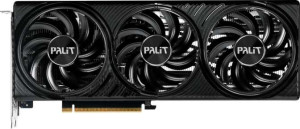
Palit GeForce RTX 5060 Ti Infinity 3 OC 16GB
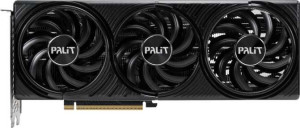
Palit GeForce RTX 5070 Infinity 3 OC

Palit GeForce RTX 5060 Ti Infinity 3 OC 16GB Palit GeForce RTX 5070 Infinity 3 OC

Overview

When choosing between the Palit GeForce RTX 5060 Ti Infinity 3 OC 16GB and the Palit GeForce RTX 5070 Infinity 3 OC, buyers are presented with an intriguing clash within NVIDIA’s Blackwell generation. Both cards share the same architecture, port layout, and core feature set, yet they diverge sharply in raw compute power, memory configuration, and power draw. This detailed spec comparison explores exactly where each card leads and where it falls short.

Common Features

  • GPU memory speed is 1750 MHz on both products.
  • Both products support Double Precision Floating Point (DPFP).
  • Effective memory speed is 28000 MHz on both products.
  • Both products use GDDR7 memory.
  • Both products support ECC memory.
  • Both products support DirectX 12 Ultimate.
  • OpenGL version is 4.6 on both products.
  • OpenCL version is 3 on both products.
  • Both products support multi-display technology.
  • Both products support ray tracing.
  • Both products support 3D.
  • Both products support DLSS.
  • XeSS (XMX) support is not available on either product.
  • Both products have an HDMI output.
  • Both products have 1 HDMI port.
  • HDMI version is HDMI 2.1b on both products.
  • Both products have 3 DisplayPort outputs.
  • Neither product has USB-C ports, DVI outputs, or mini DisplayPort outputs.
  • Both products are built on the Blackwell GPU architecture.
  • Both products use PCIe version 5.
  • Both products are manufactured on a 5 nm semiconductor process.
  • Neither product features air-water cooling.
  • Both products share the same dimensions of 291.9 mm width and 116.6 mm height.

Main Differences

  • GPU clock speed is 2407 MHz on Palit GeForce RTX 5060 Ti Infinity 3 OC 16GB and 2325 MHz on Palit GeForce RTX 5070 Infinity 3 OC.
  • GPU turbo speed is 2662 MHz on Palit GeForce RTX 5060 Ti Infinity 3 OC 16GB and 2542 MHz on Palit GeForce RTX 5070 Infinity 3 OC.
  • Pixel rate is 127.8 GPixel/s on Palit GeForce RTX 5060 Ti Infinity 3 OC 16GB and 203.4 GPixel/s on Palit GeForce RTX 5070 Infinity 3 OC.
  • Floating-point performance is 24.53 TFLOPS on Palit GeForce RTX 5060 Ti Infinity 3 OC 16GB and 31.24 TFLOPS on Palit GeForce RTX 5070 Infinity 3 OC.
  • Texture rate is 383.3 GTexels/s on Palit GeForce RTX 5060 Ti Infinity 3 OC 16GB and 488.1 GTexels/s on Palit GeForce RTX 5070 Infinity 3 OC.
  • Shading units number 4608 on Palit GeForce RTX 5060 Ti Infinity 3 OC 16GB and 6144 on Palit GeForce RTX 5070 Infinity 3 OC.
  • Texture mapping units (TMUs) number 144 on Palit GeForce RTX 5060 Ti Infinity 3 OC 16GB and 192 on Palit GeForce RTX 5070 Infinity 3 OC.
  • Render output units (ROPs) number 48 on Palit GeForce RTX 5060 Ti Infinity 3 OC 16GB and 80 on Palit GeForce RTX 5070 Infinity 3 OC.
  • Maximum memory bandwidth is 448 GB/s on Palit GeForce RTX 5060 Ti Infinity 3 OC 16GB and 672 GB/s on Palit GeForce RTX 5070 Infinity 3 OC.
  • VRAM is 16GB on Palit GeForce RTX 5060 Ti Infinity 3 OC 16GB and 12GB on Palit GeForce RTX 5070 Infinity 3 OC.
  • Memory bus width is 128-bit on Palit GeForce RTX 5060 Ti Infinity 3 OC 16GB and 192-bit on Palit GeForce RTX 5070 Infinity 3 OC.
  • RGB lighting is not present on Palit GeForce RTX 5060 Ti Infinity 3 OC 16GB but is available on Palit GeForce RTX 5070 Infinity 3 OC.
  • Thermal Design Power (TDP) is 180W on Palit GeForce RTX 5060 Ti Infinity 3 OC 16GB and 250W on Palit GeForce RTX 5070 Infinity 3 OC.
  • Number of transistors is 21900 million on Palit GeForce RTX 5060 Ti Infinity 3 OC 16GB and 31100 million on Palit GeForce RTX 5070 Infinity 3 OC.
Specs Comparison
Palit GeForce RTX 5060 Ti Infinity 3 OC 16GB

Palit GeForce RTX 5060 Ti Infinity 3 OC 16GB

Palit GeForce RTX 5070 Infinity 3 OC

Palit GeForce RTX 5070 Infinity 3 OC

Performance:
GPU clock speed 2407 MHz 2325 MHz
GPU turbo 2662 MHz 2542 MHz
pixel rate 127.8 GPixel/s 203.4 GPixel/s
floating-point performance 24.53 TFLOPS 31.24 TFLOPS
texture rate 383.3 GTexels/s 488.1 GTexels/s
GPU memory speed 1750 MHz 1750 MHz
shading units 4608 6144
texture mapping units (TMUs) 144 192
render output units (ROPs) 48 80
Has Double Precision Floating Point (DPFP)

The most telling story in this performance group is the gap in raw compute hardware. The RTX 5070 fields 6144 shading units against the RTX 5060 Ti's 4608 — a 33% wider execution engine — and that advantage flows directly into every throughput metric. Floating-point performance lands at 31.24 TFLOPS versus 24.53 TFLOPS, and the texture rate follows suit at 488.1 GTexels/s versus 383.3 GTexels/s. In practice, a higher TFLOPS figure means the GPU can process more shader workloads per second, which translates to better frame rates at higher resolutions and with more demanding effects enabled.

Where the 5060 Ti punches back is on clock speeds: its base of 2407 MHz and boost of 2662 MHz edge out the 5070's 2325 MHz / 2542 MHz. However, clock speed alone does not overcome a 33% deficit in execution units — the 5070's larger shader array more than compensates. The render output unit count is equally decisive: 80 ROPs on the 5070 versus 48 on the 5060 Ti, giving the 5070 a 67% higher pixel fill rate (203.4 vs 127.8 GPixel/s). ROPs are the final stage of the rendering pipeline, so more of them directly reduces bottlenecks when pushing high resolutions or high frame rates. Memory clock is identical on both at 1750 MHz, and both support Double Precision Floating Point, making neither card meaningfully differentiated on those two points.

The RTX 5070 Infinity 3 OC holds a clear and decisive performance advantage across every compute and throughput metric in this group. The 5060 Ti's modestly higher clocks are a minor consolation that cannot offset the 5070's substantially larger GPU die. Users prioritizing raw rendering horsepower — particularly at 1440p or 4K — will find the 5070 the stronger choice based strictly on these specifications.

Memory:
effective memory speed 28000 MHz 28000 MHz
maximum memory bandwidth 448 GB/s 672 GB/s
VRAM 16GB 12GB
GDDR version GDDR7 GDDR7
memory bus width 128-bit 192-bit
Supports ECC memory

Both cards share the same GDDR7 memory standard and an identical effective speed of 28000 MHz, so the differentiator here is entirely structural. The RTX 5070 uses a 192-bit memory bus versus the 5060 Ti's 128-bit bus — and that wider pipeline is the sole reason the 5070 achieves 672 GB/s of memory bandwidth against the 5060 Ti's 448 GB/s. Bandwidth is the rate at which the GPU can feed data to its execution units, and a 50% advantage here means the 5070 is far less likely to hit a memory bottleneck when rendering high-resolution textures, large shadow maps, or complex frame buffers.

The one area where the 5060 Ti flips the script is raw VRAM capacity: 16GB versus the 5070's 12GB. More VRAM matters when a game or application needs to hold large assets entirely on-card — think high-resolution texture packs, large AI model weights, or multi-monitor workloads. If available VRAM is exceeded, the GPU must spill data to slower system memory, which can cause abrupt performance drops. So while the 5070 moves data faster, the 5060 Ti can hold more of it at once. Both cards support ECC memory, a feature relevant primarily in professional or compute workloads where data integrity is critical.

This group produces a genuine split rather than a clean winner. The RTX 5070 holds the bandwidth edge — meaningful for sustained throughput at high resolutions — while the RTX 5060 Ti 16GB counters with a 4GB VRAM advantage that becomes relevant in memory-hungry scenarios. A user focused on 4K gaming with maxed texture settings may value the extra VRAM buffer; one prioritizing raw memory throughput for GPU-compute or bandwidth-sensitive workloads will favor the 5070's wider bus.

Features:
DirectX version DirectX 12 Ultimate DirectX 12 Ultimate
OpenGL version 4.6 4.6
OpenCL version 3 3
Supports multi-display technology
supports ray tracing
Supports 3D
supports DLSS
has XeSS (XMX)
AMD SAM / Intel Resizable BAR Intel Resizable BAR Intel Resizable BAR
has LHR
has RGB lighting
supported displays 4 4

Across the feature set, these two cards are remarkably well-matched. Both support DirectX 12 Ultimate, ray tracing, and DLSS — the trifecta that defines modern gaming capability. DirectX 12 Ultimate ensures compatibility with the full range of current rendering techniques including mesh shaders and variable rate shading, while DLSS provides AI-driven upscaling that can recover significant frame rate headroom, particularly useful given the performance demands of ray tracing. Neither card has LHR restrictions or XeSS support, and both include Intel Resizable BAR, which allows the CPU to access the full GPU frame buffer simultaneously and can yield modest performance gains in supported titles.

Both cards top out at 4 supported displays, making them equally capable for multi-monitor setups. The only functional differentiator in this entire group is RGB lighting: the RTX 5070 Infinity 3 OC includes it, while the 5060 Ti Infinity 3 OC does not. For users building aesthetically coordinated systems with RGB ecosystems, this is a tangible distinction — but it carries zero impact on rendering performance or software compatibility.

In terms of features, these two cards are effectively tied. Every capability that matters for gaming, compute, or multi-display use is shared identically between them. The RTX 5070's sole exclusive here is RGB lighting, which is a cosmetic rather than a functional advantage. Buyers should not let this group influence their decision — look to performance and memory specs to differentiate these two products.

Ports:
has an HDMI output
HDMI ports 1 1
HDMI version HDMI 2.1b HDMI 2.1b
DisplayPort outputs 3 3
USB-C ports 0 0
DVI outputs 0 0
mini DisplayPort outputs 0 0

Port configurations are identical on both cards, full stop. Each offers 1 HDMI 2.1b output and 3 DisplayPort outputs, totaling four display connections — consistent with the four supported displays noted in the features group. HDMI 2.1b is the latest HDMI revision, capable of driving 4K at high refresh rates and 8K output, making it well-suited for modern televisions and high-end monitors alike. The three DisplayPort outputs provide flexibility for multi-monitor desktop setups or daisy-chaining compatible displays.

Neither card includes USB-C, DVI, or mini DisplayPort outputs. The absence of USB-C is worth noting for users who own newer monitors that accept video over USB-C, as an adapter would be required — but this limitation applies equally to both cards and is therefore not a differentiator.

This group is an outright tie. There is no port-related reason to prefer one card over the other; connectivity options are completely interchangeable between the RTX 5060 Ti Infinity 3 OC 16GB and the RTX 5070 Infinity 3 OC.

General info:
GPU architecture Blackwell Blackwell
release date April 2025 March 2025
Thermal Design Power (TDP) 180W 250W
PCI Express (PCIe) version 5 5
semiconductor size 5 nm 5 nm
number of transistors 21900 million 31100 million
Has air-water cooling
width 291.9 mm 291.9 mm
height 116.6 mm 116.6 mm

At the foundational level, these two cards share the same Blackwell architecture, 5nm process node, PCIe 5.0 interface, and identical physical dimensions of 291.9 × 116.6 mm. Same architecture means both benefit from the same generational improvements in shader efficiency, AI acceleration, and media engines. The matching form factor is practically significant too — users can slot either card into the same chassis without any fitment concerns.

Where they diverge meaningfully is die size and power draw. The RTX 5070 packs 31,100 million transistors against the 5060 Ti's 21,900 million — a 42% larger die, which directly explains the performance gap seen in compute and throughput metrics. That larger die comes at a cost: the 5070 carries a 250W TDP versus the 5060 Ti's notably leaner 180W. In practical terms, a 70W difference means the 5070 demands a more capable PSU, produces more heat under sustained load, and will draw meaningfully more from your electricity bill over time. Neither card uses hybrid air-water cooling, so both rely entirely on their air coolers to manage their respective thermal envelopes.

For system builders, the 5060 Ti Infinity 3 OC 16GB holds a real advantage in this group: it delivers its performance from a significantly lower 180W power envelope, making it more compatible with modest PSU configurations and smaller cases with limited airflow. The 5070 is the larger, more power-hungry chip — a trade-off that is inherent to its higher transistor count and the performance gains that come with it.
Comparison Summary & Verdict

Both cards are firmly rooted in the same Blackwell architecture, offer identical port selections, and support the same modern APIs including DirectX 12 Ultimate, ray tracing, and DLSS. That said, the Palit GeForce RTX 5070 Infinity 3 OC establishes a clear lead in rendering muscle, boasting 6144 shading units, a 192-bit memory bus, 672 GB/s of bandwidth, and 31.24 TFLOPS of floating-point performance, making it the stronger pick for high-resolution gaming and GPU-intensive workloads. Conversely, the Palit GeForce RTX 5060 Ti Infinity 3 OC 16GB counters with a generous 16GB VRAM buffer, higher base and turbo clock speeds, and a leaner 180W TDP, making it a compelling option for those who prioritize memory capacity and power efficiency over raw throughput.

Palit GeForce RTX 5060 Ti Infinity 3 OC 16GB
Buy Palit GeForce RTX 5060 Ti Infinity 3 OC 16GB if...

Buy the Palit GeForce RTX 5060 Ti Infinity 3 OC 16GB if you need a large 16GB VRAM buffer for memory-intensive tasks and want a more power-efficient card with a 180W TDP.

Palit GeForce RTX 5070 Infinity 3 OC
Buy Palit GeForce RTX 5070 Infinity 3 OC if...

Buy the Palit GeForce RTX 5070 Infinity 3 OC if you want maximum rendering throughput, with more shading units, a wider 192-bit memory bus, and significantly higher overall compute performance.