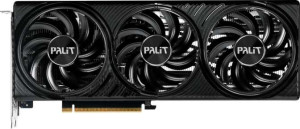
Palit GeForce RTX 5060 Ti Infinity 3 OC 16GB
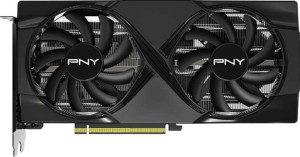
PNY GeForce RTX 5060 Ti OC Dual Fan 16GB

Palit GeForce RTX 5060 Ti Infinity 3 OC 16GB PNY GeForce RTX 5060 Ti OC Dual Fan 16GB

Overview

Welcome to our detailed spec comparison between the Palit GeForce RTX 5060 Ti Infinity 3 OC 16GB and the PNY GeForce RTX 5060 Ti OC Dual Fan 16GB. Both cards are built on the same Blackwell architecture and share a wide array of core specifications, yet they differ in key areas such as GPU turbo clock speeds and physical dimensions. Read on to discover how these two RTX 5060 Ti variants stack up across performance, memory, features, and connectivity.

Common Features

  • Both cards share a base GPU clock speed of 2407 MHz.
  • Both cards have a GPU memory speed of 1750 MHz.
  • Both cards feature 4608 shading units.
  • Both cards have 144 texture mapping units (TMUs).
  • Both cards have 48 render output units (ROPs).
  • Double Precision Floating Point (DPFP) is supported on both cards.
  • Both cards have an effective memory speed of 28000 MHz.
  • Both cards offer a maximum memory bandwidth of 448 GB/s.
  • Both cards come with 16GB of VRAM.
  • Both cards use GDDR7 memory.
  • Both cards have a 128-bit memory bus width.
  • ECC memory is supported on both cards.
  • Both cards support DirectX 12 Ultimate.
  • Both cards support OpenGL version 4.6.
  • Both cards support OpenCL version 3.
  • Multi-display technology is supported on both cards.
  • Ray tracing is supported on both cards.
  • DLSS is supported on both cards.
  • XeSS (XMX) support is not available on either card.
  • Both cards have one HDMI 2.1b output and three DisplayPort outputs, with no USB-C or DVI outputs.
  • Both cards are built on the Blackwell GPU architecture.
  • Both cards have a Thermal Design Power (TDP) of 180W.
  • Both cards use PCIe version 5.
  • Both cards are manufactured on a 5 nm semiconductor process.
  • Both cards feature 21900 million transistors.
  • Air-water cooling is not available on either card.

Main Differences

  • GPU turbo clock speed is 2662 MHz on the Palit GeForce RTX 5060 Ti Infinity 3 OC 16GB and 2692 MHz on the PNY GeForce RTX 5060 Ti OC Dual Fan 16GB.
  • Pixel rate is 127.8 GPixel/s on the Palit GeForce RTX 5060 Ti Infinity 3 OC 16GB and 129.2 GPixel/s on the PNY GeForce RTX 5060 Ti OC Dual Fan 16GB.
  • Floating-point performance is 24.53 TFLOPS on the Palit GeForce RTX 5060 Ti Infinity 3 OC 16GB and 24.81 TFLOPS on the PNY GeForce RTX 5060 Ti OC Dual Fan 16GB.
  • Texture rate is 383.3 GTexels/s on the Palit GeForce RTX 5060 Ti Infinity 3 OC 16GB and 387.6 GTexels/s on the PNY GeForce RTX 5060 Ti OC Dual Fan 16GB.
  • Card width is 291.9 mm on the Palit GeForce RTX 5060 Ti Infinity 3 OC 16GB and 245 mm on the PNY GeForce RTX 5060 Ti OC Dual Fan 16GB.
  • Card height is 116.6 mm on the Palit GeForce RTX 5060 Ti Infinity 3 OC 16GB and 120 mm on the PNY GeForce RTX 5060 Ti OC Dual Fan 16GB.
Specs Comparison
Palit GeForce RTX 5060 Ti Infinity 3 OC 16GB

Palit GeForce RTX 5060 Ti Infinity 3 OC 16GB

PNY GeForce RTX 5060 Ti OC Dual Fan 16GB

PNY GeForce RTX 5060 Ti OC Dual Fan 16GB

Performance:
GPU clock speed 2407 MHz 2407 MHz
GPU turbo 2662 MHz 2692 MHz
pixel rate 127.8 GPixel/s 129.2 GPixel/s
floating-point performance 24.53 TFLOPS 24.81 TFLOPS
texture rate 383.3 GTexels/s 387.6 GTexels/s
GPU memory speed 1750 MHz 1750 MHz
shading units 4608 4608
texture mapping units (TMUs) 144 144
render output units (ROPs) 48 48
Has Double Precision Floating Point (DPFP)

Both cards are built on identical silicon foundations: the same 2407 MHz base clock, 4608 shading units, 144 TMUs, and 48 ROPs. This means their day-to-day performance floors are perfectly matched, and neither card has a structural architectural advantage over the other at stock conditions.

The only meaningful divergence lies in the boost clock. The PNY OC Dual Fan reaches a turbo of 2692 MHz versus 2662 MHz on the Palit Infinity 3 OC — a 30 MHz gap. This translates directly into its marginally higher computed throughput figures: 24.81 TFLOPS versus 24.53 TFLOPS in floating-point performance, and a texture rate of 387.6 GTexels/s versus 383.3 GTexels/s. In practice, a ~1.1% boost clock difference is effectively imperceptible in real-world gaming workloads — frame time deltas at this level fall well within run-to-run variance.

For this performance group, the PNY holds a narrow technical edge purely on paper due to its higher turbo clock, but the gap is so slim that it will not translate into a tangible gaming experience difference. Buyers should look to other spec groups — such as thermal design, memory configuration, or build quality — to differentiate between these two otherwise near-identical performers.

Memory:
effective memory speed 28000 MHz 28000 MHz
maximum memory bandwidth 448 GB/s 448 GB/s
VRAM 16GB 16GB
GDDR version GDDR7 GDDR7
memory bus width 128-bit 128-bit
Supports ECC memory

Memory is where these two cards are in complete lockstep. Both feature 16GB of GDDR7 running at an effective 28000 MHz across a 128-bit bus, yielding identical peak bandwidth of 448 GB/s. There is no differentiator here whatsoever.

That said, the shared memory configuration deserves some context. GDDR7 is a generational leap in memory efficiency — the 28000 MHz effective speed compensates significantly for the 128-bit bus width, which is narrower than what higher-tier cards typically use. The resulting 448 GB/s bandwidth is competitive for this GPU tier, and the 16GB frame buffer is generous enough to handle high-resolution texture assets and modern titles with memory-hungry shaders without hitting VRAM limits under typical gaming scenarios. ECC memory support on both cards is also a minor bonus for users running compute or professional workloads alongside gaming.

This group is a dead tie. Regardless of which card you choose, you get an identical memory subsystem in every measurable way — same capacity, same speed, same bandwidth, same bus. Memory should play no role in deciding between these two products.

Features:
DirectX version DirectX 12 Ultimate DirectX 12 Ultimate
OpenGL version 4.6 4.6
OpenCL version 3 3
Supports multi-display technology
supports ray tracing
Supports 3D
supports DLSS
has XeSS (XMX)
AMD SAM / Intel Resizable BAR Intel Resizable BAR Intel Resizable BAR
has LHR
has RGB lighting
supported displays 4 4

Across every feature in this group, the Palit Infinity 3 OC and the PNY OC Dual Fan are mirror images of each other. Both support DirectX 12 Ultimate and ray tracing, which are the two most consequential checkboxes for modern gaming — DX12 Ultimate ensures compatibility with the full suite of next-gen rendering features, while hardware ray tracing enables physically accurate lighting and reflections in supported titles.

DLSS support is another shared highlight worth emphasizing. As an AI-driven upscaling technology, DLSS can deliver substantial frame rate gains with minimal perceptible image quality loss, making it one of the most practically valuable features on any NVIDIA card at this tier. Both cards also support up to 4 simultaneous displays and Intel Resizable BAR, the latter allowing the CPU to access the full GPU frame buffer at once — a small but measurable performance optimization in compatible systems. Neither card carries RGB lighting, which may matter to aesthetics-focused builders.

This group is another complete tie. The feature sets are identical down to every last entry, so software capabilities and API support offer no basis for choosing one card over the other. The decision will need to rest on other factors entirely.

Ports:
has an HDMI output
HDMI ports 1 1
HDMI version HDMI 2.1b HDMI 2.1b
DisplayPort outputs 3 3
USB-C ports 0 0
DVI outputs 0 0
mini DisplayPort outputs 0 0

Port configuration is identical on both cards: one HDMI 2.1b output and three DisplayPorts, totaling four display outputs — which aligns with the four-display support noted in the Features group. The combination is well-suited for a typical multi-monitor setup, whether that means a primary gaming display paired with secondary screens, or driving a single high-end panel.

HDMI 2.1b is the key headline here. It supports up to 4K at high refresh rates and 8K output, making both cards future-proof for next-generation displays and living-room setups via HDMI. The three DisplayPort outputs add flexibility for desktop multi-monitor configurations. Notably, neither card includes a USB-C port, which rules out direct connection to USB-C or Thunderbolt monitors without an adapter.

Once again, this group is a dead tie — the port layout is identical in type, count, and version. Connectivity preferences will not be a differentiating factor between these two cards.

General info:
GPU architecture Blackwell Blackwell
release date April 2025 April 2025
Thermal Design Power (TDP) 180W 180W
PCI Express (PCIe) version 5 5
semiconductor size 5 nm 5 nm
number of transistors 21900 million 21900 million
Has air-water cooling
width 291.9 mm 245 mm
height 116.6 mm 120 mm

At the architectural level, both cards are cut from the same cloth: identical Blackwell architecture on a 5nm process with 21,900 million transistors, a 180W TDP, and PCIe 5.0 support. The shared TDP means power supply and case airflow requirements are equivalent regardless of which card you choose, and PCIe 5.0 ensures both are ready for current and near-future motherboard platforms — though the bandwidth uplift over PCIe 4.0 is negligible for GPU workloads at this tier in practice.

Physical dimensions are where these two cards finally diverge in a tangible way. The Palit Infinity 3 OC is notably longer at 291.9 mm compared to the PNY OC Dual Fan at 245 mm — a difference of nearly 47mm. That gap is significant for builders working with smaller mid-tower or compact ATX cases, where GPU clearance can be a hard constraint. The PNY is marginally taller at 120 mm versus 116.6 mm, but that difference is minor and unlikely to affect fitment in any realistic case scenario.

For this group, the PNY holds a practical edge for anyone with a space-constrained build, thanks to its considerably shorter length. Users with full-tower cases or ample GPU clearance will find both cards equally viable, but in tighter enclosures the Palit's extra length could be a genuine installation obstacle.

Comparison Summary & Verdict

After a thorough review of the specifications, both the Palit GeForce RTX 5060 Ti Infinity 3 OC 16GB and the PNY GeForce RTX 5060 Ti OC Dual Fan 16GB share the same 16GB GDDR7 memory, 180W TDP, and identical feature sets including ray tracing and DLSS support. The PNY card holds a modest edge in GPU turbo clock speed (2692 MHz vs 2662 MHz), translating to marginally higher pixel, texture, and floating-point output. Meanwhile, the Palit card is notably wider at 291.9 mm compared to the more compact 245 mm width of the PNY. If case space is a concern, the PNY’s smaller footprint may be the deciding factor, while users with larger builds who are indifferent to minor clock differences may find either card equally suitable.

Palit GeForce RTX 5060 Ti Infinity 3 OC 16GB
Buy Palit GeForce RTX 5060 Ti Infinity 3 OC 16GB if...

Buy the Palit GeForce RTX 5060 Ti Infinity 3 OC 16GB if you have a full-size case with ample room and are comfortable with a larger card, and the minor clock speed difference versus the PNY is not a priority.

PNY GeForce RTX 5060 Ti OC Dual Fan 16GB
Buy PNY GeForce RTX 5060 Ti OC Dual Fan 16GB if...

Buy the PNY GeForce RTX 5060 Ti OC Dual Fan 16GB if you want a slightly higher GPU turbo clock speed and a more compact card width of 245 mm that fits more easily into smaller or mid-tower cases.