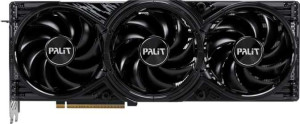
Palit GeForce RTX 5070 GamingPro OC
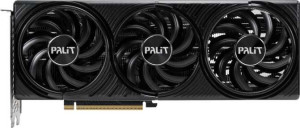
Palit GeForce RTX 5070 Infinity 3 OC

Palit GeForce RTX 5070 GamingPro OC Palit GeForce RTX 5070 Infinity 3 OC

Overview

When choosing between the Palit GeForce RTX 5070 GamingPro OC and the Palit GeForce RTX 5070 Infinity 3 OC, it quickly becomes clear that both cards share the same Blackwell architecture, 12GB GDDR7 memory, and 250W TDP. The key battlegrounds narrow down to boost clock speeds and raw throughput figures versus physical dimensions, making this comparison especially relevant for builders weighing peak performance against case clearance constraints.

Common Features

  • Both cards share a base GPU clock speed of 2325 MHz.
  • Both cards have a GPU memory speed of 1750 MHz.
  • Both cards feature 6144 shading units.
  • Both cards include 192 texture mapping units (TMUs).
  • Both cards have 80 render output units (ROPs).
  • Double Precision Floating Point (DPFP) is supported on both cards.
  • Both cards have an effective memory speed of 28000 MHz.
  • Both cards offer a maximum memory bandwidth of 672 GB/s.
  • Both cards are equipped with 12GB of VRAM.
  • Both cards use GDDR7 memory.
  • Both cards feature a 192-bit memory bus width.
  • ECC memory is supported on both cards.
  • Both cards support DirectX 12 Ultimate.
  • Both cards have an OpenGL version of 4.6.
  • Both cards support OpenCL version 3.
  • Multi-display technology is supported on both cards.
  • Ray tracing is supported on both cards.
  • 3D output is supported on both cards.
  • DLSS is supported on both cards.
  • XeSS (XMX) is not available on either card.
  • Both cards include one HDMI 2.1b output.
  • Both cards feature three DisplayPort outputs.
  • Neither card includes USB-C, DVI, or mini DisplayPort outputs.
  • Both cards are based on the Blackwell GPU architecture.
  • Both cards have a Thermal Design Power (TDP) of 250W.
  • Both cards use PCIe version 5.
  • Both cards are manufactured on a 5 nm process.
  • Both cards contain 31100 million transistors.
  • Air-water cooling is not available on either card.

Main Differences

  • GPU turbo clock speed is 2572 MHz on the Palit GeForce RTX 5070 GamingPro OC and 2542 MHz on the Palit GeForce RTX 5070 Infinity 3 OC.
  • Pixel rate is 205.8 GPixel/s on the Palit GeForce RTX 5070 GamingPro OC and 203.4 GPixel/s on the Palit GeForce RTX 5070 Infinity 3 OC.
  • Floating-point performance is 31.6 TFLOPS on the Palit GeForce RTX 5070 GamingPro OC and 31.24 TFLOPS on the Palit GeForce RTX 5070 Infinity 3 OC.
  • Texture rate is 493.8 GTexels/s on the Palit GeForce RTX 5070 GamingPro OC and 488.1 GTexels/s on the Palit GeForce RTX 5070 Infinity 3 OC.
  • Card width is 331.9 mm on the Palit GeForce RTX 5070 GamingPro OC and 291.9 mm on the Palit GeForce RTX 5070 Infinity 3 OC.
  • Card height is 127.1 mm on the Palit GeForce RTX 5070 GamingPro OC and 116.6 mm on the Palit GeForce RTX 5070 Infinity 3 OC.
Specs Comparison
Palit GeForce RTX 5070 GamingPro OC

Palit GeForce RTX 5070 GamingPro OC

Palit GeForce RTX 5070 Infinity 3 OC

Palit GeForce RTX 5070 Infinity 3 OC

Performance:
GPU clock speed 2325 MHz 2325 MHz
GPU turbo 2572 MHz 2542 MHz
pixel rate 205.8 GPixel/s 203.4 GPixel/s
floating-point performance 31.6 TFLOPS 31.24 TFLOPS
texture rate 493.8 GTexels/s 488.1 GTexels/s
GPU memory speed 1750 MHz 1750 MHz
shading units 6144 6144
texture mapping units (TMUs) 192 192
render output units (ROPs) 80 80
Has Double Precision Floating Point (DPFP)

At their core, both the GamingPro OC and the Infinity 3 OC share the same fundamental GPU silicon: identical base clocks of 2325 MHz, the same 6144 shading units, 192 TMUs, 80 ROPs, and matched memory speeds of 1750 MHz. This means the two cards draw from the same pool of raw hardware resources, and any performance delta between them comes down almost entirely to how aggressively each board partner has tuned the boost behavior.

That tuning difference, while modest, is consistent across every derived metric. The GamingPro OC holds a 30 MHz boost clock advantage (2572 MHz vs. 2542 MHz), which cascades into a slightly higher pixel rate (205.8 vs. 203.4 GPixel/s), texture rate (493.8 vs. 488.1 GTexels/s), and floating-point throughput (31.6 vs. 31.24 TFLOPS). In practice, a ~1.2% clock difference like this translates to a margin that is real but barely perceptible in actual frame rates — typically within the noise of run-to-run variance in gaming benchmarks.

On balance, the GamingPro OC holds a narrow but clear performance edge in this group, purely by virtue of its higher factory overclock. Both cards are otherwise identical in architecture and parallelism, so neither offers a structural advantage. For a user prioritizing peak numbers from the spec sheet, the GamingPro OC wins; for anyone expecting a tangible in-game difference, the gap is too slim to be decisive on its own.

Memory:
effective memory speed 28000 MHz 28000 MHz
maximum memory bandwidth 672 GB/s 672 GB/s
VRAM 12GB 12GB
GDDR version GDDR7 GDDR7
memory bus width 192-bit 192-bit
Supports ECC memory

The Palit GeForce RTX 5070 GamingPro OC and the Palit GeForce RTX 5070 Infinity 3 OC share identical memory specifications. Both have an effective memory speed of 28000 MHz and a maximum memory bandwidth of 672 GB/s. They also feature the same VRAM capacity of 12GB, using the GDDR7 memory type. Additionally, both cards have a 192-bit memory bus width and support ECC (Error-Correcting Code) memory.

There are no differences in memory performance or features between the two products in this group. All specifications related to memory are identical for both the GamingPro OC and Infinity 3 OC.

Features:
DirectX version DirectX 12 Ultimate DirectX 12 Ultimate
OpenGL version 4.6 4.6
OpenCL version 3 3
Supports multi-display technology
supports ray tracing
Supports 3D
supports DLSS
has XeSS (XMX)
AMD SAM / Intel Resizable BAR Intel Resizable BAR Intel Resizable BAR
has LHR
has RGB lighting
supported displays 4 4

The Palit GeForce RTX 5070 GamingPro OC and the Palit GeForce RTX 5070 Infinity 3 OC are identical in terms of their features. Both cards support DirectX 12 Ultimate, OpenGL 4.6, and OpenCL 3. They also support multi-display technology, ray tracing, and 3D, and both offer DLSS support. Neither card features XeSS (XMX) support, and both support Intel Resizable BAR (AMD SAM is not supported). Additionally, neither card has LHR (Lite Hash Rate) limitations, and both feature RGB lighting.

Both models are also capable of supporting up to 4 displays, making them equally versatile in multi-monitor setups. Overall, all feature-related specifications match exactly between the two cards.

Ports:
has an HDMI output
HDMI ports 1 1
HDMI version HDMI 2.1b HDMI 2.1b
DisplayPort outputs 3 3
USB-C ports 0 0
DVI outputs 0 0
mini DisplayPort outputs 0 0

The Palit GeForce RTX 5070 GamingPro OC and the Palit GeForce RTX 5070 Infinity 3 OC are identical in terms of their ports. Both products feature 1 HDMI output with HDMI 2.1b support, 3 DisplayPort outputs, and no USB-C ports, DVI outputs, or mini DisplayPort outputs. The specifications for port configuration are the same across both models.

There are no differences between the two cards in terms of port options, and both offer the same connectivity capabilities.

General info:
GPU architecture Blackwell Blackwell
release date January 2025 March 2025
Thermal Design Power (TDP) 250W 250W
PCI Express (PCIe) version 5 5
semiconductor size 5 nm 5 nm
number of transistors 31100 million 31100 million
Has air-water cooling
width 331.9 mm 291.9 mm
height 127.1 mm 116.6 mm

The Palit GeForce RTX 5070 GamingPro OC and the Palit GeForce RTX 5070 Infinity 3 OC are nearly identical in their general specifications. Both use the Blackwell GPU architecture, have a Thermal Design Power (TDP) of 250W, and support PCI Express version 5.0. They also share the same 5 nm semiconductor size and have 31,100 million transistors. Neither card features air-water cooling.

However, there is a difference in physical dimensions. The GamingPro OC is larger, measuring 331.9 mm in width and 127.1 mm in height, while the Infinity 3 OC is more compact at 291.9 mm in width and 116.6 mm in height.

Overall, both models are very similar in performance and design, with the main distinction being the size of the cards.

Comparison Summary & Verdict

Having examined all available specifications, the Palit GeForce RTX 5070 GamingPro OC and the Palit GeForce RTX 5070 Infinity 3 OC are nearly identical in memory, features, and connectivity. The GamingPro OC holds a measurable edge with its higher GPU turbo of 2572 MHz, translating into a slightly better pixel rate of 205.8 GPixel/s, texture rate of 493.8 GTexels/s, and floating-point performance of 31.6 TFLOPS. The trade-off is its noticeably larger body at 331.9 mm wide and 127.1 mm tall. The Infinity 3 OC, at a more compact 291.9 mm width, is the smarter choice for space-constrained builds, giving up only a slim performance margin. Pick the GamingPro OC for maximum clock headroom; choose the Infinity 3 OC when compact dimensions are a priority.

Palit GeForce RTX 5070 GamingPro OC
Buy Palit GeForce RTX 5070 GamingPro OC if...

Buy the Palit GeForce RTX 5070 GamingPro OC if you want the highest boost clock speed and peak performance figures, and your case can comfortably fit its larger 331.9 mm width.

Palit GeForce RTX 5070 Infinity 3 OC
Buy Palit GeForce RTX 5070 Infinity 3 OC if...

Buy the Palit GeForce RTX 5070 Infinity 3 OC if you are building in a compact case and need a shorter 291.9 mm card while still enjoying near-identical performance.