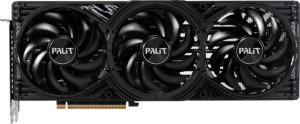
Palit GeForce RTX 5070 GamingPro-S
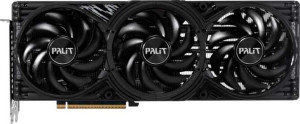
Palit GeForce RTX 5070 GamingPro-S OC

Palit GeForce RTX 5070 GamingPro-S Palit GeForce RTX 5070 GamingPro-S OC

Overview

Welcome to our detailed specification comparison between the Palit GeForce RTX 5070 GamingPro-S and the Palit GeForce RTX 5070 GamingPro-S OC. Both cards share the same Blackwell architecture, 12GB of GDDR7 memory, and a 250W TDP, making this a focused head-to-head. The key battlegrounds in this comparison are GPU boost clock speed, pixel rate, floating-point performance, and texture throughput — areas where the two cards quietly but meaningfully diverge.

Common Features

  • Both products share a base GPU clock speed of 2325 MHz.
  • Both products have a GPU memory speed of 1750 MHz.
  • Both products feature 6144 shading units.
  • Both products include 192 texture mapping units (TMUs).
  • Both products have 80 render output units (ROPs).
  • Double Precision Floating Point (DPFP) is supported on both products.
  • Both products have an effective memory speed of 28000 MHz.
  • Both products offer a maximum memory bandwidth of 672 GB/s.
  • Both products come with 12GB of VRAM.
  • Both products use GDDR7 memory.
  • Both products have a 192-bit memory bus width.
  • ECC memory is supported on both products.
  • Both products support DirectX 12 Ultimate.
  • Both products support OpenGL version 4.6.
  • Both products support OpenCL version 3.
  • Multi-display technology is supported on both products.
  • Ray tracing is supported on both products.
  • 3D support is available on both products.
  • DLSS is supported on both products.
  • XeSS (XMX) support is not available on either product.
  • Both products feature one HDMI 2.1b output port.
  • Both products include three DisplayPort outputs.
  • Neither product includes USB-C ports, DVI outputs, or mini DisplayPort outputs.
  • Both products are based on the Blackwell GPU architecture.
  • Both products have a Thermal Design Power (TDP) of 250W.
  • Both products use PCIe version 5.
  • Both products are manufactured on a 5 nm semiconductor process.
  • Both products contain 31100 million transistors.
  • Air-water cooling is not available on either product.
  • Both products share the same dimensions of 331.9 mm width and 127.1 mm height.

Main Differences

  • GPU turbo clock speed is 2512 MHz on the Palit GeForce RTX 5070 GamingPro-S and 2572 MHz on the Palit GeForce RTX 5070 GamingPro-S OC.
  • Pixel rate is 201 GPixel/s on the Palit GeForce RTX 5070 GamingPro-S and 205.8 GPixel/s on the Palit GeForce RTX 5070 GamingPro-S OC.
  • Floating-point performance is 30.87 TFLOPS on the Palit GeForce RTX 5070 GamingPro-S and 31.6 TFLOPS on the Palit GeForce RTX 5070 GamingPro-S OC.
  • Texture rate is 482.3 GTexels/s on the Palit GeForce RTX 5070 GamingPro-S and 493.8 GTexels/s on the Palit GeForce RTX 5070 GamingPro-S OC.
Specs Comparison
Palit GeForce RTX 5070 GamingPro-S

Palit GeForce RTX 5070 GamingPro-S

Palit GeForce RTX 5070 GamingPro-S OC

Palit GeForce RTX 5070 GamingPro-S OC

Performance:
GPU clock speed 2325 MHz 2325 MHz
GPU turbo 2512 MHz 2572 MHz
pixel rate 201 GPixel/s 205.8 GPixel/s
floating-point performance 30.87 TFLOPS 31.6 TFLOPS
texture rate 482.3 GTexels/s 493.8 GTexels/s
GPU memory speed 1750 MHz 1750 MHz
shading units 6144 6144
texture mapping units (TMUs) 192 192
render output units (ROPs) 80 80
Has Double Precision Floating Point (DPFP)

At their core, both the GamingPro-S and the GamingPro-S OC share identical silicon configurations: the same 6144 shading units, 192 TMUs, 80 ROPs, and 1750 MHz memory speed. This means both cards are working with the exact same underlying GPU architecture and memory bandwidth — the only lever Palit has pulled on the OC model is the boost clock frequency.

That lever does make a measurable difference. The GamingPro-S OC reaches a GPU turbo of 2572 MHz versus 2512 MHz on the standard model — a 60 MHz (roughly 2.4%) uplift. This compounds across all throughput metrics: floating-point performance rises from 30.87 TFLOPS to 31.6 TFLOPS, texture rate from 482.3 to 493.8 GTexels/s, and pixel rate from 201 to 205.8 GPixel/s. In practice, a ~2–3% performance gap rarely translates into a noticeable difference in real-world frame rates, as it typically falls within benchmark run-to-run variance and is well below the threshold most users would perceive during gameplay.

The GamingPro-S OC holds a technical edge in this performance group, but it is a slim one. Both cards support Double Precision Floating Point, which is relevant for compute workloads but is not a differentiator here since both offer it equally. Buyers prioritizing peak theoretical throughput should lean toward the OC variant, but those who are price-sensitive will find the standard GamingPro-S delivers essentially the same real-world gaming experience.

Memory:
effective memory speed 28000 MHz 28000 MHz
maximum memory bandwidth 672 GB/s 672 GB/s
VRAM 12GB 12GB
GDDR version GDDR7 GDDR7
memory bus width 192-bit 192-bit
Supports ECC memory

Memory is where these two cards are in complete lockstep. Both the GamingPro-S and the GamingPro-S OC feature 12GB of GDDR7 running on a 192-bit bus at an effective speed of 28000 MHz, delivering 672 GB/s of memory bandwidth. Every single memory specification is identical — there is no differentiation whatsoever between the two models here.

The specs themselves are worth contextualizing. GDDR7 is a significant generational leap in memory technology, and 672 GB/s of bandwidth is more than enough to keep the GPU fed in demanding workloads at 1440p and even 4K. The 192-bit bus width is a middle-ground choice — narrower than higher-tier cards, but GDDR7's raw speed compensates effectively. ECC memory support is a welcome inclusion, primarily benefiting users running professional compute or AI inference workloads where data integrity matters, though it has no practical impact on gaming.

This group is a complete tie. No matter which of these two cards a buyer chooses, they get the exact same memory subsystem with no trade-offs in either direction. Any performance differences between the two models must be attributed entirely to clock speed, not memory.

Features:
DirectX version DirectX 12 Ultimate DirectX 12 Ultimate
OpenGL version 4.6 4.6
OpenCL version 3 3
Supports multi-display technology
supports ray tracing
Supports 3D
supports DLSS
has XeSS (XMX)
AMD SAM / Intel Resizable BAR Intel Resizable BAR Intel Resizable BAR
has LHR
has RGB lighting
supported displays 4 4

Feature parity is total between these two cards. Both the GamingPro-S and the GamingPro-S OC run on DirectX 12 Ultimate, which is the current gold standard for gaming APIs, enabling hardware-accelerated ray tracing, mesh shaders, and variable rate shading in supported titles. Alongside this, both cards support ray tracing and DLSS — the latter being particularly impactful, as DLSS uses AI-based upscaling to recover frame rates lost to demanding rendering techniques like ray tracing, making these features genuinely practical rather than just checkbox items.

On the connectivity and usability side, both cards support up to 4 simultaneous displays and include Intel Resizable BAR, which allows the CPU to access the full GPU frame buffer at once rather than in small chunks — a feature that can yield modest but real performance gains in supported games and requires no user configuration beyond a compatible motherboard BIOS. Neither card carries LHR (Lite Hash Rate) restrictions, and both include RGB lighting for aesthetics-conscious builds.

Much like the memory group, features result in a complete tie. Every capability, API version, and technology flag is shared equally between the two models. A buyer's decision cannot be swung by features alone — the differentiators lie exclusively in the clock speed figures examined in the performance group.

Ports:
has an HDMI output
HDMI ports 1 1
HDMI version HDMI 2.1b HDMI 2.1b
DisplayPort outputs 3 3
USB-C ports 0 0
DVI outputs 0 0
mini DisplayPort outputs 0 0

Neither the GamingPro-S nor the GamingPro-S OC makes any concessions in the port department — and both make identical choices. The shared configuration of 3 DisplayPort outputs and 1 HDMI 2.1b port gives users four total display connections, aligning with the 4-display limit established in the features group. This is a practical and well-balanced layout for the vast majority of users, whether running a single high-refresh-rate monitor or a multi-display workstation setup.

The inclusion of HDMI 2.1b is worth highlighting — it supports up to 10K resolution and high frame rates at 4K, making it fully capable of driving the latest TVs and high-end monitors without any adapter compromises. The absence of USB-C is notable for users who rely on that connector for display output, though it is not an unusual omission at this product tier.

Ports are another complete tie between these two cards. The output configuration is identical down to every connector count and version number, so display connectivity plays no role in differentiating the two models.

General info:
GPU architecture Blackwell Blackwell
release date March 2025 March 2025
Thermal Design Power (TDP) 250W 250W
PCI Express (PCIe) version 5 5
semiconductor size 5 nm 5 nm
number of transistors 31100 million 31100 million
Has air-water cooling
width 331.9 mm 331.9 mm
height 127.1 mm 127.1 mm

Underneath the clock speed differences noted in the performance group, the GamingPro-S and GamingPro-S OC are built on the exact same physical foundation. Both are powered by the Blackwell architecture manufactured on a 5 nm process with 31.1 billion transistors — the dense transistor count being a direct product of that leading-edge node, enabling more compute capability within a tighter power envelope than previous generations.

Equally important for system builders is that both cards share an identical 250W TDP. This is a critical data point: despite the OC model squeezing out higher boost clocks, Palit has not raised the power ceiling to achieve it, meaning the OC variant does not demand a more robust PSU or generate meaningfully more heat. Both cards also occupy the same physical footprint at 331.9 mm × 127.1 mm, so case compatibility planning is identical for either model. PCIe 5 support ensures neither card will face any bandwidth bottleneck on modern platforms.

General info is a complete tie across the board. The two cards are physically and architecturally indistinguishable — same die, same power draw, same dimensions. This reinforces that the OC model's advantage is purely a factory clock profile applied to identical hardware, with no changes to the underlying platform or thermal envelope.

Comparison Summary & Verdict

After examining all available specifications, these two cards are nearly identical in design, memory, features, and thermal profile. The decisive factor is raw clock-driven performance: the Palit GeForce RTX 5070 GamingPro-S OC edges ahead with a GPU turbo of 2572 MHz, a texture rate of 493.8 GTexels/s, and floating-point performance of 31.6 TFLOPS, compared to 2512 MHz, 482.3 GTexels/s, and 30.87 TFLOPS on the standard model. For users who want every last drop of out-of-the-box performance, the OC variant is the natural choice. The Palit GeForce RTX 5070 GamingPro-S remains a compelling option for those who prioritize the same core feature set — including DLSS, ray tracing, and a full GDDR7 memory subsystem — while accepting a slightly lower boost ceiling.

Palit GeForce RTX 5070 GamingPro-S
Buy Palit GeForce RTX 5070 GamingPro-S if...

Buy the Palit GeForce RTX 5070 GamingPro-S if you want the same Blackwell platform, 12GB GDDR7 memory, and full feature set at a standard boost clock, and the small performance gap of the OC model is not a priority for you.

Palit GeForce RTX 5070 GamingPro-S OC
Buy Palit GeForce RTX 5070 GamingPro-S OC if...

Buy the Palit GeForce RTX 5070 GamingPro-S OC if you want the maximum out-of-the-box boost clock, pixel rate, and floating-point performance this platform can offer without any manual tuning.