Palit GeForce RTX 5070 GamingPro-S
Palit GeForce RTX 5070 Infinity 3 OC

Palit GeForce RTX 5070 GamingPro-S Palit GeForce RTX 5070 Infinity 3 OC

Overview

Choosing between the Palit GeForce RTX 5070 GamingPro-S and the Palit GeForce RTX 5070 Infinity 3 OC means examining two RTX 5070 cards that share the same Blackwell DNA yet diverge in boost clock speeds and physical dimensions. Both are built on a 5 nm process with 12GB GDDR7 memory and a 250W TDP, but how do their GPU turbo speeds and card sizes influence the right choice for your build? Read on to find out.

Common Features

  • Both cards share a base GPU clock speed of 2325 MHz.
  • Both cards have a GPU memory speed of 1750 MHz.
  • Both cards feature 6144 shading units.
  • Both cards include 192 texture mapping units (TMUs).
  • Both cards have 80 render output units (ROPs).
  • Double Precision Floating Point (DPFP) is supported on both cards.
  • Both cards have an effective memory speed of 28000 MHz.
  • Both cards offer a maximum memory bandwidth of 672 GB/s.
  • Both cards come with 12GB of VRAM.
  • Both cards use GDDR7 memory.
  • Both cards have a 192-bit memory bus width.
  • ECC memory is supported on both cards.
  • Both cards support DirectX 12 Ultimate.
  • Both cards support OpenGL version 4.6.
  • Both cards support OpenCL version 3.
  • Multi-display technology is supported on both cards.
  • Ray tracing is supported on both cards.
  • 3D support is available on both cards.
  • DLSS is supported on both cards.
  • XeSS (XMX) is not available on either card.
  • Both cards have one HDMI 2.1b output.
  • Both cards include three DisplayPort outputs.
  • Neither card has USB-C, DVI, or mini DisplayPort outputs.
  • Both cards are built on the Blackwell GPU architecture.
  • Both cards have a Thermal Design Power (TDP) of 250W.
  • Both cards use PCIe version 5.
  • Both cards are manufactured on a 5 nm semiconductor process.
  • Both cards contain 31,100 million transistors.
  • Neither card features air-water cooling.

Main Differences

  • GPU turbo clock speed is 2512 MHz on the Palit GeForce RTX 5070 GamingPro-S and 2542 MHz on the Palit GeForce RTX 5070 Infinity 3 OC.
  • Pixel rate is 201 GPixel/s on the Palit GeForce RTX 5070 GamingPro-S and 203.4 GPixel/s on the Palit GeForce RTX 5070 Infinity 3 OC.
  • Floating-point performance is 30.87 TFLOPS on the Palit GeForce RTX 5070 GamingPro-S and 31.24 TFLOPS on the Palit GeForce RTX 5070 Infinity 3 OC.
  • Texture rate is 482.3 GTexels/s on the Palit GeForce RTX 5070 GamingPro-S and 488.1 GTexels/s on the Palit GeForce RTX 5070 Infinity 3 OC.
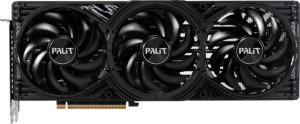
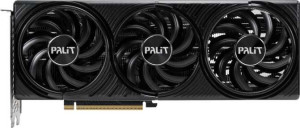
  • Card width is 331.9 mm on the Palit GeForce RTX 5070 GamingPro-S and 291.9 mm on the Palit GeForce RTX 5070 Infinity 3 OC.
  • Card height is 127.1 mm on the Palit GeForce RTX 5070 GamingPro-S and 116.6 mm on the Palit GeForce RTX 5070 Infinity 3 OC.
Specs Comparison
Palit GeForce RTX 5070 GamingPro-S

Palit GeForce RTX 5070 GamingPro-S

Palit GeForce RTX 5070 Infinity 3 OC

Palit GeForce RTX 5070 Infinity 3 OC

Performance:
GPU clock speed 2325 MHz 2325 MHz
GPU turbo 2512 MHz 2542 MHz
pixel rate 201 GPixel/s 203.4 GPixel/s
floating-point performance 30.87 TFLOPS 31.24 TFLOPS
texture rate 482.3 GTexels/s 488.1 GTexels/s
GPU memory speed 1750 MHz 1750 MHz
shading units 6144 6144
texture mapping units (TMUs) 192 192
render output units (ROPs) 80 80
Has Double Precision Floating Point (DPFP)

At their core, both the GamingPro-S and the Infinity 3 OC share the same fundamental GPU architecture: identical base clocks of 2325 MHz, the same 6144 shading units, 192 TMUs, 80 ROPs, and a memory bus running at 1750 MHz. This means both cards are built on the exact same silicon and will behave identically under sustained, thermally-constrained workloads where boost clocks cannot be maintained.

The only meaningful performance distinction lies in the factory-tuned boost clock. The Infinity 3 OC reaches a turbo of 2542 MHz versus 2512 MHz on the GamingPro-S — a gap of 30 MHz, or roughly 1.2%. This modest overclock flows through to every derived throughput metric: the Infinity 3 OC edges ahead with 31.24 TFLOPS of floating-point compute versus 30.87 TFLOPS, and a texture rate of 488.1 GTexels/s against 482.3 GTexels/s. In practice, a sub-2% clock advantage of this kind is unlikely to translate into a perceptible frame-rate difference in real gaming scenarios — benchmarks would show the gap well within run-to-run variance.

In summary, the Infinity 3 OC holds a narrow but measurable performance edge on paper, purely due to its higher boost clock. However, the advantage is marginal enough that thermal headroom, power delivery quality, and cooler efficiency — rather than the rated boost frequency alone — will largely determine which card sustains higher real-world clocks over extended gaming sessions. Neither card has a structural architectural advantage over the other in this group.
Memory:
effective memory speed 28000 MHz 28000 MHz
maximum memory bandwidth 672 GB/s 672 GB/s
VRAM 12GB 12GB
GDDR version GDDR7 GDDR7
memory bus width 192-bit 192-bit
Supports ECC memory

On memory, there is simply no daylight between these two cards. Both the GamingPro-S and the Infinity 3 OC are equipped with 12 GB of GDDR7 running across a 192-bit bus at an effective speed of 28000 MHz, yielding identical peak bandwidth of 672 GB/s. Every metric in this group is a perfect match.

The specifications themselves are worth contextualizing. GDDR7 represents a meaningful generational leap in memory efficiency and throughput density compared to GDDR6X, and 672 GB/s is substantial bandwidth for a mid-to-high-range GPU — enough to keep the shader array well-fed in demanding workloads like high-resolution texture streaming and ray tracing. The 192-bit bus width is a deliberate architectural choice that, combined with GDDR7′s higher data rate, achieves competitive bandwidth without the die-area cost of a wider 256-bit interface. Both cards also support ECC memory, which adds error-correction capabilities relevant for professional or compute workloads beyond gaming.

This group is a complete tie. No matter which card a buyer chooses, they get an identical memory subsystem in every measurable dimension. Any performance differences between the two products will be determined entirely by other factors such as clock speeds or cooling — not memory configuration.

Features:
DirectX version DirectX 12 Ultimate DirectX 12 Ultimate
OpenGL version 4.6 4.6
OpenCL version 3 3
Supports multi-display technology
supports ray tracing
Supports 3D
supports DLSS
has XeSS (XMX)
AMD SAM / Intel Resizable BAR Intel Resizable BAR Intel Resizable BAR
has LHR
has RGB lighting
supported displays 4 4

Feature parity is total here. Both the GamingPro-S and the Infinity 3 OC share an identical software and API capability set, anchored by DirectX 12 Ultimate support — the current gold standard for modern gaming, enabling hardware-accelerated ray tracing, variable rate shading, and mesh shaders. Alongside this, both cards support DLSS, Nvidia′s AI-driven upscaling technology, which is one of the most practically impactful features for gamers seeking higher frame rates without a proportional hit to image quality.

A few other shared features are worth noting for specific use cases. Both cards support up to 4 simultaneous displays, making either a capable choice for multi-monitor productivity or gaming setups. Intel Resizable BAR support is present on both, allowing the CPU to access the full GPU framebuffer at once — a feature that can yield measurable frame-rate improvements in CPU-bound scenarios on compatible platforms. Neither card carries an LHR (Lite Hash Rate) limiter, though this is largely a legacy concern at this point.

With every feature — from ray tracing and DLSS to RGB lighting and display support — mirrored exactly across both cards, this group is an unambiguous tie. A buyer′s decision cannot be influenced by features alone; the differentiators lie entirely in other specification groups.

Ports:
has an HDMI output
HDMI ports 1 1
HDMI version HDMI 2.1b HDMI 2.1b
DisplayPort outputs 3 3
USB-C ports 0 0
DVI outputs 0 0
mini DisplayPort outputs 0 0

Both the GamingPro-S and the Infinity 3 OC present an identical rear I/O configuration: one HDMI 2.1b port and three DisplayPort outputs, for a total of four display connections — matching the four-display limit noted in the features group. Neither card includes USB-C, DVI, or mini DisplayPort outputs.

The port selection is well-suited to modern use cases. HDMI 2.1b is the latest revision of the standard, supporting high refresh rates at 4K and beyond, as well as features like Variable Refresh Rate (VRR) — important for connecting to modern TVs or monitors without a DisplayPort input. Three DisplayPort outputs provide ample flexibility for multi-monitor desktop setups or daisy-chaining compatible displays. The absence of USB-C is worth flagging for users who rely on that connector for direct VR headset connectivity or certain portable monitor configurations, though this is a niche concern for most buyers.

There is nothing to separate these two cards on connectivity — it is a complete tie. Whichever card a buyer chooses, they get the same port layout and the same display protocol support.

General info:
GPU architecture Blackwell Blackwell
release date March 2025 March 2025
Thermal Design Power (TDP) 250W 250W
PCI Express (PCIe) version 5 5
semiconductor size 5 nm 5 nm
number of transistors 31100 million 31100 million
Has air-water cooling
width 331.9 mm 291.9 mm
height 127.1 mm 116.6 mm

Architecturally, these two cards are cut from the same cloth. Both are built on Nvidia′s Blackwell architecture using a 5 nm process node, pack the same 31.1 billion transistors, draw 250W TDP, and interface via PCIe 5.0. For builders, the shared TDP means identical power supply and case airflow planning regardless of which card is chosen.

The one area where this group reveals a genuine difference is physical size. The GamingPro-S measures 331.9 × 127.1 mm, while the Infinity 3 OC is notably more compact at 291.9 × 116.6 mm — a difference of 40 mm in length and over 10 mm in height. That 40 mm gap is practically significant: in mid-tower and smaller cases, GPU clearance is frequently a hard constraint, and a shorter card opens up compatibility with a wider range of enclosures. The Infinity 3 OC′s smaller footprint also leaves more room for cable management and airflow around other components.

Given that all fundamental specifications — architecture, process node, TDP, and PCIe generation — are identical, the Infinity 3 OC holds a clear advantage in this group purely on the basis of its more compact dimensions. For users with spacious full-tower builds this distinction may be irrelevant, but for anyone working within tighter case constraints, the smaller card is the more versatile choice.

Comparison Summary & Verdict

The Palit GeForce RTX 5070 GamingPro-S and the Palit GeForce RTX 5070 Infinity 3 OC share an extensive common foundation: identical 12GB GDDR7 memory on a 192-bit bus, the same 250W TDP, and equivalent feature sets including ray tracing and DLSS support. The performance gap between them is real but narrow — the Infinity 3 OC holds a higher boost clock at 2542 MHz versus 2512 MHz, translating to a slightly superior floating-point output of 31.24 TFLOPS and a faster texture rate of 488.1 GTexels/s. Where the two cards diverge most meaningfully is physical size: the GamingPro-S measures 331.9 x 127.1 mm, making it noticeably larger than the more compact Infinity 3 OC at 291.9 x 116.6 mm. Builders working with space-constrained cases will find the Infinity 3 OC the more flexible choice, while those with roomy chassis who want a card at this performance tier without a strict size requirement will find the GamingPro-S a perfectly capable alternative.

Palit GeForce RTX 5070 GamingPro-S
Buy Palit GeForce RTX 5070 GamingPro-S if...

Buy the Palit GeForce RTX 5070 GamingPro-S if your PC case has ample room and you are comfortable with its larger 331.9 x 127.1 mm footprint while seeking solid RTX 5070-class performance.

Palit GeForce RTX 5070 Infinity 3 OC
Buy Palit GeForce RTX 5070 Infinity 3 OC if...

Buy the Palit GeForce RTX 5070 Infinity 3 OC if you want the higher boost clock and marginally better floating-point performance of the two, or if a more compact 291.9 x 116.6 mm card is important for your build.