Palit GeForce RTX 5070 GamingPro-S
Palit GeForce RTX 5070 Ti GamingPro-S

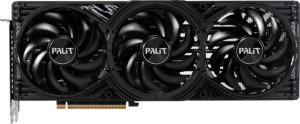
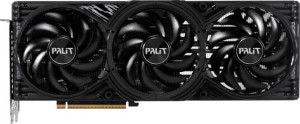
Palit GeForce RTX 5070 GamingPro-S Palit GeForce RTX 5070 Ti GamingPro-S

Overview

Choosing between the Palit GeForce RTX 5070 GamingPro-S and the Palit GeForce RTX 5070 Ti GamingPro-S means navigating two distinct tiers within NVIDIA's Blackwell lineup. While both cards share the same architecture, port configuration, and feature set, they diverge in meaningful ways across raw compute throughput, memory capacity, and power draw. This detailed spec comparison will help you pinpoint exactly which card aligns with your performance needs and budget.

Common Features

  • GPU memory speed is 1750 MHz on both products.
  • Both products support Double Precision Floating Point (DPFP).
  • Effective memory speed is 28000 MHz on both products.
  • Both products use GDDR7 memory.
  • Both products support ECC memory.
  • Both products support DirectX 12 Ultimate.
  • OpenGL version is 4.6 on both products.
  • OpenCL version is 3 on both products.
  • Multi-display technology is supported on both products.
  • Ray tracing is supported on both products.
  • 3D support is available on both products.
  • DLSS is supported on both products.
  • XeSS (XMX) support is not available on either product.
  • Both products have an HDMI output.
  • Both products have 1 HDMI port with HDMI version 2.1b.
  • Both products have 3 DisplayPort outputs.
  • Neither product has USB-C ports, DVI outputs, or mini DisplayPort outputs.
  • Both products are built on the Blackwell GPU architecture.
  • Both products use PCIe version 5.
  • Both products are manufactured on a 5 nm semiconductor process.
  • Neither product has air-water cooling.
  • Both products measure 331.9 mm in width and 127.1 mm in height.

Main Differences

  • GPU clock speed is 2325 MHz on the Palit GeForce RTX 5070 GamingPro-S and 2295 MHz on the Palit GeForce RTX 5070 Ti GamingPro-S.
  • GPU turbo clock is 2512 MHz on the Palit GeForce RTX 5070 GamingPro-S and 2452 MHz on the Palit GeForce RTX 5070 Ti GamingPro-S.
  • Pixel rate is 201 GPixel/s on the Palit GeForce RTX 5070 GamingPro-S and 235.4 GPixel/s on the Palit GeForce RTX 5070 Ti GamingPro-S.
  • Floating-point performance is 30.87 TFLOPS on the Palit GeForce RTX 5070 GamingPro-S and 43.94 TFLOPS on the Palit GeForce RTX 5070 Ti GamingPro-S.
  • Texture rate is 482.3 GTexels/s on the Palit GeForce RTX 5070 GamingPro-S and 686.6 GTexels/s on the Palit GeForce RTX 5070 Ti GamingPro-S.
  • Shading units number 6144 on the Palit GeForce RTX 5070 GamingPro-S and 8960 on the Palit GeForce RTX 5070 Ti GamingPro-S.
  • Texture mapping units (TMUs) total 192 on the Palit GeForce RTX 5070 GamingPro-S and 280 on the Palit GeForce RTX 5070 Ti GamingPro-S.
  • Render output units (ROPs) number 80 on the Palit GeForce RTX 5070 GamingPro-S and 96 on the Palit GeForce RTX 5070 Ti GamingPro-S.
  • Maximum memory bandwidth is 672 GB/s on the Palit GeForce RTX 5070 GamingPro-S and 896 GB/s on the Palit GeForce RTX 5070 Ti GamingPro-S.
  • VRAM is 12 GB on the Palit GeForce RTX 5070 GamingPro-S and 16 GB on the Palit GeForce RTX 5070 Ti GamingPro-S.
  • Memory bus width is 192-bit on the Palit GeForce RTX 5070 GamingPro-S and 256-bit on the Palit GeForce RTX 5070 Ti GamingPro-S.
  • Thermal Design Power (TDP) is 250W on the Palit GeForce RTX 5070 GamingPro-S and 300W on the Palit GeForce RTX 5070 Ti GamingPro-S.
  • Number of transistors is 31100 million on the Palit GeForce RTX 5070 GamingPro-S and 45600 million on the Palit GeForce RTX 5070 Ti GamingPro-S.
Specs Comparison
Palit GeForce RTX 5070 GamingPro-S

Palit GeForce RTX 5070 GamingPro-S

Palit GeForce RTX 5070 Ti GamingPro-S

Palit GeForce RTX 5070 Ti GamingPro-S

Performance:
GPU clock speed 2325 MHz 2295 MHz
GPU turbo 2512 MHz 2452 MHz
pixel rate 201 GPixel/s 235.4 GPixel/s
floating-point performance 30.87 TFLOPS 43.94 TFLOPS
texture rate 482.3 GTexels/s 686.6 GTexels/s
GPU memory speed 1750 MHz 1750 MHz
shading units 6144 8960
texture mapping units (TMUs) 192 280
render output units (ROPs) 80 96
Has Double Precision Floating Point (DPFP)

At first glance, the clock speed story slightly favors the RTX 5070 GamingPro-S, which runs a higher base clock of 2325 MHz and a turbo of 2512 MHz compared to the Ti's 2295 MHz base and 2452 MHz turbo. However, raw clock speed is only one piece of the performance equation — the number of execution units doing work at those speeds matters far more, and this is where the gap opens dramatically.

The RTX 5070 Ti GamingPro-S fields 8960 shading units, 280 TMUs, and 96 ROPs against the standard 5070's 6144 shaders, 192 TMUs, and 80 ROPs — roughly a 46% wider GPU. The real-world consequence of that silicon advantage is visible in throughput: the Ti delivers 43.94 TFLOPS of floating-point performance versus 30.87 TFLOPS, a ~42% lead, and its texture fill rate of 686.6 GTexels/s versus 482.3 GTexels/s translates directly into faster texture processing in complex scenes. The higher ROP count also pushes pixel output to 235.4 GPixel/s versus 201 GPixel/s, meaning the Ti can resolve more pixels per second — a tangible benefit at high resolutions and high refresh rates. Memory speed is identical at 1750 MHz on both cards, so bandwidth is not a differentiator here.

The conclusion is unambiguous: the RTX 5070 Ti GamingPro-S holds a decisive performance edge in this group. Its marginally lower clock speeds are entirely offset by its substantially larger shader array, and every throughput metric — compute, texturing, and pixel output — lands roughly 17–42% higher. Both cards support Double Precision Floating Point, so that feature is a tie. For users who prioritize raw rendering horsepower, the Ti is the clear winner on paper.
Memory:
effective memory speed 28000 MHz 28000 MHz
maximum memory bandwidth 672 GB/s 896 GB/s
VRAM 12GB 16GB
GDDR version GDDR7 GDDR7
memory bus width 192-bit 256-bit
Supports ECC memory

Both cards share the same GDDR7 memory standard and identical effective memory speeds of 28000 MHz, so the generational technology is equal — the divergence lies entirely in capacity and bus width. The RTX 5070 Ti GamingPro-S pairs its memory with a 256-bit bus and 16 GB of VRAM, while the standard RTX 5070 GamingPro-S uses a narrower 192-bit bus and 12 GB. Because bandwidth is a product of bus width and speed, the wider bus on the Ti translates directly into 896 GB/s of memory bandwidth versus 672 GB/s — a ~33% advantage despite running at the exact same clock.

In practice, memory bandwidth governs how quickly the GPU can feed its shader array with texture data, frame buffer reads, and intermediate render targets. Given that the Ti also has roughly 46% more shading units (as seen in the performance group), the larger bandwidth pipeline is well-matched to prevent those extra cores from being starved of data — a bottleneck that a narrower bus would otherwise create. The 4 GB VRAM advantage further reinforces the Ti's position at higher resolutions and in workloads — such as 4K gaming, AI-assisted rendering, or large texture packs — where exceeding the frame buffer forces costly data evictions and performance drops.

Both cards support ECC memory, making them equally capable in error-sensitive compute tasks. Overall though, the RTX 5070 Ti GamingPro-S holds a clear and meaningful edge in this group: more VRAM and substantially higher bandwidth future-proof it better for demanding workloads, while the 5070 GamingPro-S remains competitive only for users who stay within the constraints of its 12 GB frame buffer.

Features:
DirectX version DirectX 12 Ultimate DirectX 12 Ultimate
OpenGL version 4.6 4.6
OpenCL version 3 3
Supports multi-display technology
supports ray tracing
Supports 3D
supports DLSS
has XeSS (XMX)
AMD SAM / Intel Resizable BAR Intel Resizable BAR Intel Resizable BAR
has LHR
has RGB lighting
supported displays 4 4

Across every feature in this group, the two cards are in complete lockstep. Both support DirectX 12 Ultimate, OpenGL 4.6, and OpenCL 3 — the full modern API stack that ensures compatibility with current and near-future games and compute applications. Ray tracing, DLSS, and 3D support are present on both, meaning neither card holds a software capability advantage for the workloads most users care about.

Practically speaking, the shared DLSS support is the most impactful feature here, as it allows both cards to leverage AI-based upscaling and frame generation to boost perceived frame rates — particularly valuable at higher resolutions. The support for up to 4 simultaneous displays and multi-display technology is likewise identical, making both equally suited for multi-monitor setups. Intel Resizable BAR is enabled on both, allowing the CPU to access the full GPU frame buffer at once rather than in smaller chunks, which can offer modest performance gains in supported titles.

This group is a straightforward tie. There is not a single feature differentiator between the RTX 5070 GamingPro-S and the RTX 5070 Ti GamingPro-S here — buyers gain or lose nothing on the features front regardless of which card they choose. The decision between these two should rest entirely on the performance and memory differences examined in the other groups.

Ports:
has an HDMI output
HDMI ports 1 1
HDMI version HDMI 2.1b HDMI 2.1b
DisplayPort outputs 3 3
USB-C ports 0 0
DVI outputs 0 0
mini DisplayPort outputs 0 0

Port configurations are identical on both cards: one HDMI 2.1b output and three DisplayPort outputs, totaling four connectors — which aligns with the four-display limit noted in the features group. Neither card offers USB-C, DVI, or mini DisplayPort outputs, so there are no hidden connectivity advantages on either side.

The HDMI 2.1b standard is worth noting as it supports high bandwidth sufficient for 4K at high refresh rates and 8K output, making both cards well-equipped for modern TV and monitor connectivity without adapters. The three DisplayPort outputs similarly cover the needs of most multi-monitor desktop setups. The absence of USB-C may be a minor inconvenience for users with newer USB-C monitors, but that limitation applies equally to both cards.

This is another clean tie. Connectivity is a non-factor in choosing between the RTX 5070 GamingPro-S and the RTX 5070 Ti GamingPro-S — both offer the same ports, the same versions, and the same total display support. Users should base their decision on the performance and memory differences between these two cards, not on anything in this group.

General info:
GPU architecture Blackwell Blackwell
release date March 2025 February 2025
Thermal Design Power (TDP) 250W 300W
PCI Express (PCIe) version 5 5
semiconductor size 5 nm 5 nm
number of transistors 31100 million 45600 million
Has air-water cooling
width 331.9 mm 331.9 mm
height 127.1 mm 127.1 mm

Sharing the same Blackwell architecture, 5nm process node, PCIe 5.0 interface, and identical physical dimensions of 331.9 × 127.1 mm, these two cards are clearly cut from the same design cloth. The practical implication of matching dimensions is that both will fit the same cases and occupy the same number of PCIe slots — a useful reassurance for builders considering an upgrade path between the two.

Where they diverge meaningfully is in die size and power draw. The RTX 5070 Ti GamingPro-S packs 45,600 million transistors versus the standard 5070's 31,100 million — a ~47% larger chip on the same 5nm node, which directly explains the wider shader array and higher throughput seen in the performance group. That larger die comes with a proportionally larger appetite: the Ti carries a 300W TDP against the 5070's 250W, a 50W difference that means stricter PSU requirements and marginally higher heat output under sustained load. Neither card uses liquid cooling, so both rely on air cooling solutions to manage their respective thermal envelopes.

For this group, the RTX 5070 GamingPro-S holds a practical edge for power-constrained systems — its 250W TDP is notably more forgiving on PSU headroom and system thermals. The Ti's higher transistor count is the architectural source of its performance lead, but that advantage comes at a real power cost. Users with tighter builds or smaller PSUs will find the standard 5070 the easier card to accommodate, while those with capable systems lose nothing by stepping up to the Ti.

Comparison Summary & Verdict

Both the Palit GeForce RTX 5070 GamingPro-S and the Palit GeForce RTX 5070 Ti GamingPro-S share the same Blackwell architecture, identical port layouts, and a full modern feature set including DLSS, ray tracing, and DirectX 12 Ultimate support. The defining separation is one of scale and power: the Ti variant packs 8960 shading units, 16 GB of GDDR7 VRAM on a 256-bit bus, and delivers 43.94 TFLOPS of floating-point performance, making it the go-to for users who demand the highest throughput. The standard RTX 5070, by contrast, operates at a more modest 250W TDP with 12 GB of VRAM and a 192-bit bus, offering a compelling balance of efficiency and capability for those who do not require the absolute top tier. Choose the Ti for maximum performance headroom; choose the standard model for a more power-conscious build.

Palit GeForce RTX 5070 GamingPro-S
Buy Palit GeForce RTX 5070 GamingPro-S if...

Buy the Palit GeForce RTX 5070 GamingPro-S if you want a more power-efficient card with a 250W TDP and 12 GB of GDDR7 VRAM while still enjoying the full Blackwell feature set including DLSS and ray tracing.

Palit GeForce RTX 5070 Ti GamingPro-S
Buy Palit GeForce RTX 5070 Ti GamingPro-S if...

Buy the Palit GeForce RTX 5070 Ti GamingPro-S if you need maximum performance headroom, with 16 GB of GDDR7 VRAM on a wider 256-bit memory bus and 43.94 TFLOPS of floating-point throughput for demanding gaming or compute workloads.