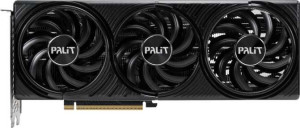
Palit GeForce RTX 5070 Infinity 3 OC
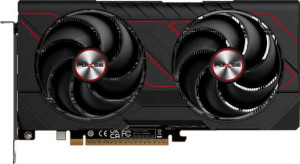
Sapphire Pulse Radeon RX 9060 XT 16GB

Palit GeForce RTX 5070 Infinity 3 OC Sapphire Pulse Radeon RX 9060 XT 16GB

Overview

Welcome to our in-depth spec comparison between the Palit GeForce RTX 5070 Infinity 3 OC and the Sapphire Pulse Radeon RX 9060 XT 16GB — two very different takes on modern GPU design. These cards come from rival architectures, Nvidia Blackwell and AMD RDNA 4.0, and diverge sharply across memory capacity, bandwidth, shading power, and power consumption. Whether you value raw compute muscle or energy efficiency and framebuffer size, this comparison lays out exactly where each card stands.

Common Features

  • Both cards support Double Precision Floating Point (DPFP).
  • Both cards support ECC memory.
  • Both cards are compatible with DirectX 12 Ultimate.
  • Both cards support OpenGL version 4.6.
  • Both cards support multi-display technology.
  • Both cards support ray tracing.
  • Both cards support 3D rendering.
  • Neither card features XeSS (XMX) support.
  • Neither card uses LHR (Lite Hash Rate) limiting.
  • Both cards include an HDMI output running at HDMI 2.1b.
  • Both cards have exactly 1 HDMI port.
  • Neither card has any USB-C ports.
  • Neither card has any DVI outputs.
  • Neither card has any mini DisplayPort outputs.
  • Both cards use PCI Express version 5.
  • Neither card features air-water cooling.

Main Differences

  • GPU base clock speed is 2325 MHz on Palit GeForce RTX 5070 Infinity 3 OC and 1700 MHz on Sapphire Pulse Radeon RX 9060 XT 16GB.
  • GPU turbo clock speed is 2542 MHz on Palit GeForce RTX 5070 Infinity 3 OC and 3290 MHz on Sapphire Pulse Radeon RX 9060 XT 16GB.
  • Pixel rate is 203.4 GPixel/s on Palit GeForce RTX 5070 Infinity 3 OC and 210.6 GPixel/s on Sapphire Pulse Radeon RX 9060 XT 16GB.
  • Floating-point performance is 31.24 TFLOPS on Palit GeForce RTX 5070 Infinity 3 OC and 26.95 TFLOPS on Sapphire Pulse Radeon RX 9060 XT 16GB.
  • Texture rate is 488.1 GTexels/s on Palit GeForce RTX 5070 Infinity 3 OC and 421.1 GTexels/s on Sapphire Pulse Radeon RX 9060 XT 16GB.
  • GPU memory speed is 1750 MHz on Palit GeForce RTX 5070 Infinity 3 OC and 2518 MHz on Sapphire Pulse Radeon RX 9060 XT 16GB.
  • Shading units count is 6144 on Palit GeForce RTX 5070 Infinity 3 OC and 2048 on Sapphire Pulse Radeon RX 9060 XT 16GB.
  • Texture mapping units (TMUs) number 192 on Palit GeForce RTX 5070 Infinity 3 OC and 128 on Sapphire Pulse Radeon RX 9060 XT 16GB.
  • Render output units (ROPs) total 80 on Palit GeForce RTX 5070 Infinity 3 OC and 64 on Sapphire Pulse Radeon RX 9060 XT 16GB.
  • Effective memory speed is 28000 MHz on Palit GeForce RTX 5070 Infinity 3 OC and 20000 MHz on Sapphire Pulse Radeon RX 9060 XT 16GB.
  • Maximum memory bandwidth is 672 GB/s on Palit GeForce RTX 5070 Infinity 3 OC and 322.3 GB/s on Sapphire Pulse Radeon RX 9060 XT 16GB.
  • VRAM is 12GB on Palit GeForce RTX 5070 Infinity 3 OC and 16GB on Sapphire Pulse Radeon RX 9060 XT 16GB.
  • Memory type is GDDR7 on Palit GeForce RTX 5070 Infinity 3 OC and GDDR6 on Sapphire Pulse Radeon RX 9060 XT 16GB.
  • Memory bus width is 192-bit on Palit GeForce RTX 5070 Infinity 3 OC and 128-bit on Sapphire Pulse Radeon RX 9060 XT 16GB.
  • OpenCL version is 3 on Palit GeForce RTX 5070 Infinity 3 OC and 2.2 on Sapphire Pulse Radeon RX 9060 XT 16GB.
  • DLSS support is present on Palit GeForce RTX 5070 Infinity 3 OC but not available on Sapphire Pulse Radeon RX 9060 XT 16GB.
  • Resizable BAR technology is Intel Resizable BAR on Palit GeForce RTX 5070 Infinity 3 OC and AMD SAM on Sapphire Pulse Radeon RX 9060 XT 16GB.
  • RGB lighting is featured on Palit GeForce RTX 5070 Infinity 3 OC but not present on Sapphire Pulse Radeon RX 9060 XT 16GB.
  • Supported displays number 4 on Palit GeForce RTX 5070 Infinity 3 OC and 3 on Sapphire Pulse Radeon RX 9060 XT 16GB.
  • DisplayPort outputs total 3 on Palit GeForce RTX 5070 Infinity 3 OC and 2 on Sapphire Pulse Radeon RX 9060 XT 16GB.
  • GPU architecture is Blackwell on Palit GeForce RTX 5070 Infinity 3 OC and RDNA 4.0 on Sapphire Pulse Radeon RX 9060 XT 16GB.
  • Thermal Design Power (TDP) is 250W on Palit GeForce RTX 5070 Infinity 3 OC and 170W on Sapphire Pulse Radeon RX 9060 XT 16GB.
  • Semiconductor size is 5 nm on Palit GeForce RTX 5070 Infinity 3 OC and 4 nm on Sapphire Pulse Radeon RX 9060 XT 16GB.
  • Transistor count is 31,100 million on Palit GeForce RTX 5070 Infinity 3 OC and 29,700 million on Sapphire Pulse Radeon RX 9060 XT 16GB.
  • Card width is 291.9 mm on Palit GeForce RTX 5070 Infinity 3 OC and 240 mm on Sapphire Pulse Radeon RX 9060 XT 16GB.
  • Card height is 116.6 mm on Palit GeForce RTX 5070 Infinity 3 OC and 124 mm on Sapphire Pulse Radeon RX 9060 XT 16GB.
Specs Comparison
Palit GeForce RTX 5070 Infinity 3 OC

Palit GeForce RTX 5070 Infinity 3 OC

Sapphire Pulse Radeon RX 9060 XT 16GB

Sapphire Pulse Radeon RX 9060 XT 16GB

Performance:
GPU clock speed 2325 MHz 1700 MHz
GPU turbo 2542 MHz 3290 MHz
pixel rate 203.4 GPixel/s 210.6 GPixel/s
floating-point performance 31.24 TFLOPS 26.95 TFLOPS
texture rate 488.1 GTexels/s 421.1 GTexels/s
GPU memory speed 1750 MHz 2518 MHz
shading units 6144 2048
texture mapping units (TMUs) 192 128
render output units (ROPs) 80 64
Has Double Precision Floating Point (DPFP)

The most striking contrast between these two cards lies not in their peak numbers, but in their architectural philosophies. The Palit RTX 5070 deploys a massive 6,144 shading units running at a steady 2,542 MHz turbo, while the Sapphire RX 9060 XT uses only 2,048 shading units but clocks them to an aggressive 3,290 MHz turbo — nearly 30% higher. This tells a clear story: NVIDIA is leveraging brute-force parallelism, while AMD is squeezing more work per clock out of a leaner shader array. The result is that the RTX 5070 leads comfortably in raw compute at 31.24 TFLOPS versus 26.95 TFLOPS, and pulls further ahead in texturing throughput (488.1 GTexels/s vs 421.1 GTexels/s), which directly benefits complex material rendering and texture-heavy scenes.

Pixel output — the stat most tied to high-resolution fill rate — is effectively a wash: the RX 9060 XT's 210.6 GPixel/s edges past the RTX 5070's 203.4 GPixel/s despite having fewer ROPs (64 vs 80), entirely because of its extreme clock advantage. In practice, this negligible gap will not translate to a meaningful real-world difference at any common resolution. The RX 9060 XT does hold a genuine advantage in memory clock speed (2,518 MHz vs 1,750 MHz), which can help sustain bandwidth-hungry workloads, though actual bandwidth depends on the bus width and memory type — data not provided here.

Overall, the RTX 5070 holds a clear performance edge in compute and texture throughput — the two metrics most representative of gaming and creative workload horsepower. The RX 9060 XT is a competitive mid-range challenger with a clever high-clock design, but it cannot match the RTX 5070's lead in TFLOPS and TMU count, which matter most in demanding, shader-heavy workloads.
Memory:
effective memory speed 28000 MHz 20000 MHz
maximum memory bandwidth 672 GB/s 322.3 GB/s
VRAM 12GB 16GB
GDDR version GDDR7 GDDR6
memory bus width 192-bit 128-bit
Supports ECC memory

Memory bandwidth is arguably the most critical subsystem spec for a GPU, and here the gap between these two cards is enormous. The RTX 5070 pairs GDDR7 memory with a 192-bit bus to deliver 672 GB/s of bandwidth — more than double the 322.3 GB/s produced by the RX 9060 XT's GDDR6 over a narrower 128-bit bus. In practical terms, bandwidth is what feeds the GPU's shader array with data; a starved memory subsystem creates a bottleneck that no amount of compute throughput can overcome, particularly at higher resolutions and with texture-heavy or ray-traced content.

Where the RX 9060 XT fights back is VRAM capacity: it offers 16GB versus the RTX 5070's 12GB. That extra headroom can genuinely matter in scenarios that load large asset libraries — think high-resolution texture packs, large generative AI models run locally, or future titles with aggressive VRAM demands. The RTX 5070's 12GB is not insufficient for today's games, but the 16GB buffer gives the RX 9060 XT a degree of future-proofing that should not be dismissed.

On balance, the RTX 5070 holds a decisive memory bandwidth advantage that will translate into real performance gains across a wide range of workloads — the 2× bandwidth lead dwarfs the RX 9060 XT's VRAM edge in day-to-day relevance. The RX 9060 XT's 16GB is a meaningful differentiator only in specific, capacity-constrained scenarios, making it more of a niche strength than a general advantage.

Features:
DirectX version DirectX 12 Ultimate DirectX 12 Ultimate
OpenGL version 4.6 4.6
OpenCL version 3 2.2
Supports multi-display technology
supports ray tracing
Supports 3D
supports DLSS
has XeSS (XMX)
AMD SAM / Intel Resizable BAR Intel Resizable BAR AMD SAM
has LHR
has RGB lighting
supported displays 4 3

Both cards share a solid common foundation: DirectX 12 Ultimate, OpenGL 4.6, ray tracing support, and multi-display capability. These are table-stakes features for modern gaming and content creation, so neither card disadvantages users on compatibility with current software ecosystems. The meaningful divergence begins with upscaling: the RTX 5070 supports DLSS, NVIDIA's AI-driven upscaling technology that can dramatically boost frame rates with minimal visual quality loss, particularly in ray-traced titles. The RX 9060 XT lacks DLSS and does not carry XeSS either, leaving it reliant on AMD's own upscaling solutions — which, while capable, are not captured in the provided specs and cannot be weighed here.

A quieter but real difference is display support: the RTX 5070 can drive up to 4 simultaneous displays versus 3 for the RX 9060 XT. For the majority of gamers this is irrelevant, but power users running expansive multi-monitor workstations will appreciate the extra output. The OpenCL gap — version 3 on the RTX 5070 versus 2.2 on the RX 9060 XT — is worth noting for GPU compute workloads, as OpenCL 3 introduced important capability queries and optional feature exposure, though real-world impact depends heavily on the specific application.

Across this feature group, the RTX 5070 holds a clear advantage. DLSS alone is a significant differentiator — it is one of the most impactful in-game technologies available, capable of recovering substantial frame rates in supported titles. Combined with the higher display count and newer OpenCL version, the RTX 5070 is simply the more feature-rich card by the data provided.

Ports:
has an HDMI output
HDMI ports 1 1
HDMI version HDMI 2.1b HDMI 2.1b
DisplayPort outputs 3 2
USB-C ports 0 0
DVI outputs 0 0
mini DisplayPort outputs 0 0

Port configurations for these two cards are nearly identical, with one exception that matters for multi-monitor users. Both offer a single HDMI 2.1b output — the latest HDMI standard, capable of driving 4K at high refresh rates or even 8K displays — and neither includes USB-C or legacy DVI outputs. The only differentiator is DisplayPort count: the RTX 5070 provides 3 DisplayPort outputs while the RX 9060 XT offers 2.

In practice, that extra DisplayPort on the RTX 5070 means it can connect up to 4 displays simultaneously (3 DP + 1 HDMI) without any adapters, whereas the RX 9060 XT tops out at 3. For single or dual-monitor setups — the overwhelming majority of use cases — this distinction is completely irrelevant. It only becomes meaningful for users actively running three or more monitors driven purely through DisplayPort connections.

This is a narrow edge to the RTX 5070, and only a consequential one for multi-display power users. For everyone else, the port selection is functionally equivalent between the two cards.

General info:
GPU architecture Blackwell RDNA 4.0
release date March 2025 June 2025
Thermal Design Power (TDP) 250W 170W
PCI Express (PCIe) version 5 5
semiconductor size 5 nm 4 nm
number of transistors 31100 million 29700 million
Has air-water cooling
width 291.9 mm 240 mm
height 116.6 mm 124 mm

Two different architectural generations face off here — NVIDIA's Blackwell on the RTX 5070 versus AMD's RDNA 4.0 on the RX 9060 XT — and the most telling number that separates them is power consumption. The RTX 5070 carries a 250W TDP against the RX 9060 XT's notably leaner 170W. That 80W gap is substantial: it means higher electricity costs over time, a greater demand on the system's power supply unit, and more heat that the case and cooling solution must manage. Users in thermally constrained builds — compact cases or systems with modest PSUs — will find the RX 9060 XT considerably easier to accommodate.

On the silicon level, the RX 9060 XT is built on a 4 nm process versus the RTX 5070's 5 nm, giving AMD a slight manufacturing node advantage that contributes directly to its power efficiency story. Transistor counts are close — 31.1 billion on the RTX 5070 versus 29.7 billion on the RX 9060 XT — meaning NVIDIA packs a marginally larger die but runs it hotter, while AMD extracts competitive transistor density from a more advanced node. Both cards use PCIe 5.0, ensuring neither is bottlenecked by interface bandwidth on modern platforms.

Physically, the RTX 5070 is the longer card at 291.9 mm compared to the RX 9060 XT's 240 mm, which could matter in smaller chassis. The RX 9060 XT holds a meaningful advantage in this group overall — its smaller process node, significantly lower TDP, and more compact length make it a friendlier fit for a broader range of systems, and its power efficiency relative to its performance output is genuinely impressive.

Comparison Summary & Verdict

After examining the full specification breakdown, both cards carve out a clear niche. The Palit GeForce RTX 5070 Infinity 3 OC dominates in raw throughput, offering far superior floating-point performance at 31.24 TFLOPS, a massive 672 GB/s memory bandwidth, 6144 shading units, and exclusive DLSS support — making it the stronger choice for demanding workloads, high-refresh gaming, and content creators who rely on Nvidia-specific features. The Sapphire Pulse Radeon RX 9060 XT 16GB, on the other hand, counters with a larger 16GB GDDR6 framebuffer, a higher GPU turbo clock of 3290 MHz, a leaner 170W TDP, and a more compact form factor — appealing strongly to users who need more VRAM for texture-heavy workloads or simply want a capable, power-efficient card at a lower thermal cost. Choose the Palit if performance headroom is your priority; choose the Sapphire if VRAM capacity and efficiency matter most.

Palit GeForce RTX 5070 Infinity 3 OC
Buy Palit GeForce RTX 5070 Infinity 3 OC if...

Buy the Palit GeForce RTX 5070 Infinity 3 OC if you want maximum compute throughput, higher memory bandwidth, DLSS support, and the ability to drive up to four displays simultaneously.

Sapphire Pulse Radeon RX 9060 XT 16GB
Buy Sapphire Pulse Radeon RX 9060 XT 16GB if...

Buy the Sapphire Pulse Radeon RX 9060 XT 16GB if you prioritize a larger 16GB VRAM buffer, lower 170W power consumption, and a more compact card footprint.