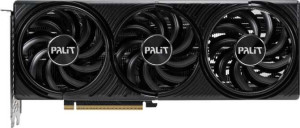
Palit GeForce RTX 5070 Infinity 3
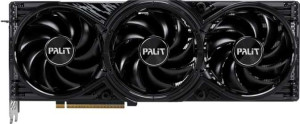
Palit GeForce RTX 5070 Ti GamingPro

Palit GeForce RTX 5070 Infinity 3 Palit GeForce RTX 5070 Ti GamingPro

Overview

Welcome to our in-depth specification comparison between the Palit GeForce RTX 5070 Infinity 3 and the Palit GeForce RTX 5070 Ti GamingPro — two Blackwell-architecture cards built on the same 5 nm process, yet targeting notably different performance tiers. In this head-to-head, we examine the key battlegrounds of raw compute performance, memory capacity and bandwidth, thermal design power, and physical dimensions to help you decide which card best suits your needs.

Common Features

  • Both cards share the same GPU memory speed of 1750 MHz.
  • Double Precision Floating Point (DPFP) support is available on both products.
  • Both cards use GDDR7 memory with an effective memory speed of 28000 MHz.
  • ECC memory support is available on both products.
  • Both cards support DirectX 12 Ultimate.
  • Both cards support OpenGL version 4.6.
  • Both cards support OpenCL version 3.
  • Multi-display technology support is available on both products.
  • Ray tracing support is available on both products.
  • 3D support is available on both products.
  • DLSS support is available on both products.
  • XeSS (XMX) support is not available on either product.
  • Both cards feature one HDMI 2.1b output port.
  • Both cards include three DisplayPort outputs.
  • Neither card has USB-C ports, DVI outputs, or mini DisplayPort outputs.
  • Both cards are built on the Blackwell GPU architecture.
  • Both cards use PCIe version 5.
  • Both cards are manufactured on a 5 nm semiconductor process.
  • Air-water cooling is not available on either product.

Main Differences

  • GPU clock speed is 2325 MHz on Palit GeForce RTX 5070 Infinity 3 and 2295 MHz on Palit GeForce RTX 5070 Ti GamingPro.
  • GPU turbo clock speed is 2512 MHz on Palit GeForce RTX 5070 Infinity 3 and 2452 MHz on Palit GeForce RTX 5070 Ti GamingPro.
  • Pixel rate is 201 GPixel/s on Palit GeForce RTX 5070 Infinity 3 and 235.4 GPixel/s on Palit GeForce RTX 5070 Ti GamingPro.
  • Floating-point performance is 30.87 TFLOPS on Palit GeForce RTX 5070 Infinity 3 and 43.94 TFLOPS on Palit GeForce RTX 5070 Ti GamingPro.
  • Texture rate is 482.3 GTexels/s on Palit GeForce RTX 5070 Infinity 3 and 686.6 GTexels/s on Palit GeForce RTX 5070 Ti GamingPro.
  • Shading units number 6144 on Palit GeForce RTX 5070 Infinity 3 and 8960 on Palit GeForce RTX 5070 Ti GamingPro.
  • Texture mapping units (TMUs) total 192 on Palit GeForce RTX 5070 Infinity 3 and 280 on Palit GeForce RTX 5070 Ti GamingPro.
  • Render output units (ROPs) total 80 on Palit GeForce RTX 5070 Infinity 3 and 96 on Palit GeForce RTX 5070 Ti GamingPro.
  • Maximum memory bandwidth is 672 GB/s on Palit GeForce RTX 5070 Infinity 3 and 896 GB/s on Palit GeForce RTX 5070 Ti GamingPro.
  • VRAM is 12GB on Palit GeForce RTX 5070 Infinity 3 and 16GB on Palit GeForce RTX 5070 Ti GamingPro.
  • Memory bus width is 192-bit on Palit GeForce RTX 5070 Infinity 3 and 256-bit on Palit GeForce RTX 5070 Ti GamingPro.
  • Thermal Design Power (TDP) is 250W on Palit GeForce RTX 5070 Infinity 3 and 300W on Palit GeForce RTX 5070 Ti GamingPro.
  • Number of transistors is 31,100 million on Palit GeForce RTX 5070 Infinity 3 and 45,600 million on Palit GeForce RTX 5070 Ti GamingPro.
  • Card width is 291.9 mm on Palit GeForce RTX 5070 Infinity 3 and 331.9 mm on Palit GeForce RTX 5070 Ti GamingPro.
  • Card height is 116.6 mm on Palit GeForce RTX 5070 Infinity 3 and 127 mm on Palit GeForce RTX 5070 Ti GamingPro.
Specs Comparison
Palit GeForce RTX 5070 Infinity 3

Palit GeForce RTX 5070 Infinity 3

Palit GeForce RTX 5070 Ti GamingPro

Palit GeForce RTX 5070 Ti GamingPro

Performance:
GPU clock speed 2325 MHz 2295 MHz
GPU turbo 2512 MHz 2452 MHz
pixel rate 201 GPixel/s 235.4 GPixel/s
floating-point performance 30.87 TFLOPS 43.94 TFLOPS
texture rate 482.3 GTexels/s 686.6 GTexels/s
GPU memory speed 1750 MHz 1750 MHz
shading units 6144 8960
texture mapping units (TMUs) 192 280
render output units (ROPs) 80 96
Has Double Precision Floating Point (DPFP)

At first glance, the Palit GeForce RTX 5070 Infinity 3 appears competitive on clock speeds, edging out the Palit GeForce RTX 5070 Ti GamingPro with a base of 2325 MHz vs 2295 MHz and a turbo of 2512 MHz vs 2452 MHz. However, raw clock frequency tells only a small part of the performance story — what truly determines throughput is how many execution units are being clocked. This is where the Ti pulls decisively ahead.

The RTX 5070 Ti GamingPro carries 8960 shading units against the Infinity 3's 6144 — a 46% increase — along with 280 TMUs vs 192 and 96 ROPs vs 80. These wider pipelines translate directly into the headline numbers: the Ti delivers 43.94 TFLOPS of floating-point performance versus 30.87 TFLOPS, and a texture rate of 686.6 GTexels/s vs 482.3 GTexels/s. In practice, this means the Ti can handle more geometry, shading, and texture work per frame — an advantage that compounds at higher resolutions and in GPU-limited scenarios. The higher pixel fill rate (235.4 vs 201 GPixel/s) further reinforces its lead in rendering output. Memory speed is identical at 1750 MHz for both, and both support Double Precision Floating Point, so neither has an edge on those fronts.

The RTX 5070 Ti GamingPro holds a clear and substantial performance advantage in this group. Despite the Infinity 3's marginally higher clocks, the Ti's far larger shader and compute array gives it roughly a 42% lead in raw throughput. Unless power consumption or physical constraints favor the non-Ti model, the GamingPro is the stronger performer by a significant margin.

Memory:
effective memory speed 28000 MHz 28000 MHz
maximum memory bandwidth 672 GB/s 896 GB/s
VRAM 12GB 16GB
GDDR version GDDR7 GDDR7
memory bus width 192-bit 256-bit
Supports ECC memory

Both the Palit GeForce RTX 5070 Infinity 3 and Palit GeForce RTX 5070 Ti GamingPro feature GDDR7 memory, with the same effective memory speed of 28000 MHz. However, they differ in several other key memory specifications. The RTX 5070 Infinity 3 is equipped with 12GB of VRAM, while the RTX 5070 Ti GamingPro offers 16GB of VRAM, providing a higher memory capacity for more demanding tasks.

When it comes to memory bandwidth, the RTX 5070 Ti GamingPro again takes the lead with a maximum bandwidth of 896 GB/s, surpassing the 672 GB/s offered by the RTX 5070 Infinity 3. This increased bandwidth can benefit performance in memory-intensive applications.

Additionally, the memory bus width on the RTX 5070 Infinity 3 is 192-bit, while the RTX 5070 Ti GamingPro uses a wider 256-bit memory bus, allowing for more efficient data transfer across the memory interface. Both cards support ECC memory, ensuring error correction for more reliable performance in critical applications.

Features:
DirectX version DirectX 12 Ultimate DirectX 12 Ultimate
OpenGL version 4.6 4.6
OpenCL version 3 3
Supports multi-display technology
supports ray tracing
Supports 3D
supports DLSS
has XeSS (XMX)
AMD SAM / Intel Resizable BAR Intel Resizable BAR Intel Resizable BAR
has LHR
has RGB lighting
supported displays 4 4

The Palit GeForce RTX 5070 Infinity 3 and Palit GeForce RTX 5070 Ti GamingPro share several common features, making them similar in many respects. Both support DirectX 12 Ultimate, OpenGL 4.6, and OpenCL 3, providing a robust software foundation for modern applications. They also both support multi-display technology, ray tracing, and 3D, ensuring excellent performance in a wide range of graphical tasks. Additionally, both cards support DLSS (Deep Learning Super Sampling) and have Intel Resizable BAR, which improves performance with supported processors.

When it comes to additional features, the two products are nearly identical. Neither supports XeSS (XMX), and both have RGB lighting for customizable aesthetics. Both also lack LHR (Lite Hash Rate), which is important for users concerned with mining performance. The supported display count is the same on both cards, with both capable of driving up to four displays simultaneously.

In summary, the features of the RTX 5070 Infinity 3 and the RTX 5070 Ti GamingPro are very much aligned, with no significant differences between the two products in this category.

Ports:
has an HDMI output
HDMI ports 1 1
HDMI version HDMI 2.1b HDMI 2.1b
DisplayPort outputs 3 3
USB-C ports 0 0
DVI outputs 0 0
mini DisplayPort outputs 0 0

The Palit GeForce RTX 5070 Infinity 3 and Palit GeForce RTX 5070 Ti GamingPro have identical port configurations. Both cards are equipped with one HDMI output, featuring HDMI 2.1b. They also offer three DisplayPort outputs each and do not include any USB-C, DVI, or mini DisplayPort outputs. The port setup is the same for both, providing similar connectivity options for users looking to connect to multiple displays.

In summary, there are no differences in the ports and connectivity options between the two cards in this category, with both offering the same HDMI, DisplayPort, and lack of other port types.

General info:
GPU architecture Blackwell Blackwell
release date March 2025 January 2025
Thermal Design Power (TDP) 250W 300W
PCI Express (PCIe) version 5 5
semiconductor size 5 nm 5 nm
number of transistors 31100 million 45600 million
Has air-water cooling
width 291.9 mm 331.9 mm
height 116.6 mm 127 mm

The Palit GeForce RTX 5070 Infinity 3 and Palit GeForce RTX 5070 Ti GamingPro share the same GPU architecture, based on Blackwell, and both use a 5 nm semiconductor size. However, there are differences in their overall specifications. The RTX 5070 Ti GamingPro has a higher Thermal Design Power (TDP) of 300W, compared to the 250W of the RTX 5070 Infinity 3. This suggests that the GamingPro may require more power to operate, potentially due to its higher performance capabilities.

In terms of the number of transistors, the RTX 5070 Ti GamingPro has 45,600 million transistors, whereas the RTX 5070 Infinity 3 has 31,100 million. This difference indicates that the GamingPro features a more complex and potentially more powerful chip. The dimensions of the two cards also differ; the RTX 5070 Ti GamingPro is larger, with a width of 331.9 mm and a height of 127 mm, compared to the 291.9 mm width and 116.6 mm height of the RTX 5070 Infinity 3.

Both cards support PCIe version 5, and neither features air-water cooling. These specifications provide insight into the design and power requirements of both products, highlighting the larger form factor and increased power consumption of the RTX 5070 Ti GamingPro.

Comparison Summary & Verdict

After reviewing all available specifications, the two cards share a strong common foundation: identical GPU memory speed, the same Blackwell architecture, PCIe 5 connectivity, and full support for ray tracing, DLSS, and DirectX 12 Ultimate. However, the Palit GeForce RTX 5070 Ti GamingPro pulls ahead in every major performance metric, offering 8960 shading units versus 6144, 16 GB of GDDR7 memory over 12 GB, a wider 256-bit memory bus, and significantly higher floating-point performance at 43.94 TFLOPS compared to 30.87 TFLOPS. These gains come at the cost of a higher 300W TDP and a larger physical footprint. The Palit GeForce RTX 5070 Infinity 3 is the smarter choice for users who value efficiency and a more compact build, while the Ti GamingPro is built for those who demand top-tier throughput and ample VRAM for demanding workloads.

Palit GeForce RTX 5070 Infinity 3
Buy Palit GeForce RTX 5070 Infinity 3 if...

Buy the Palit GeForce RTX 5070 Infinity 3 if you want a more power-efficient card with a lower 250W TDP and a more compact form factor, while still benefiting from the Blackwell architecture and DLSS support.

Palit GeForce RTX 5070 Ti GamingPro
Buy Palit GeForce RTX 5070 Ti GamingPro if...

Buy the Palit GeForce RTX 5070 Ti GamingPro if you need maximum compute performance, with its higher 43.94 TFLOPS, 16 GB of GDDR7 memory, a 256-bit memory bus, and 896 GB/s of memory bandwidth for demanding workloads.