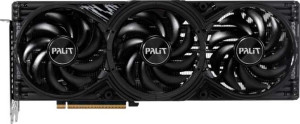
Palit GeForce RTX 5070 Ti GamingPro-S OC
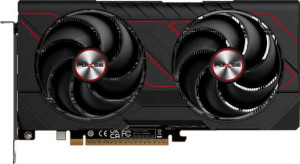
Sapphire Pulse Radeon RX 9060 XT 16GB

Palit GeForce RTX 5070 Ti GamingPro-S OC Sapphire Pulse Radeon RX 9060 XT 16GB

Overview

Welcome to our in-depth spec comparison between the Palit GeForce RTX 5070 Ti GamingPro-S OC and the Sapphire Pulse Radeon RX 9060 XT 16GB. These two cards represent very different approaches to modern GPU design, with one targeting raw compute muscle and the other focusing on efficiency. Both share 16GB of VRAM and support for ray tracing, but they diverge sharply on memory bandwidth, shader counts, and power consumption. Read on to see how they stack up across every key specification.

Common Features

  • Both products support Double Precision Floating Point (DPFP).
  • Both cards come with 16GB of VRAM.
  • ECC memory support is available on both products.
  • Both cards support DirectX 12 Ultimate.
  • Both products support OpenGL version 4.6.
  • Multi-display technology is supported on both products.
  • Ray tracing support is available on both products.
  • 3D support is present on both products.
  • XeSS (XMX) support is not available on either product.
  • LHR is not present on either product.
  • Both cards include one HDMI port.
  • Both products feature HDMI version 2.1b.
  • Neither card has any USB-C ports.
  • Neither card has any DVI outputs.
  • Neither card has any mini DisplayPort outputs.
  • Both products use PCI Express (PCIe) version 5.
  • Air-water cooling is not available on either product.

Main Differences

  • GPU base clock speed is 2295 MHz on Palit GeForce RTX 5070 Ti GamingPro-S OC and 1700 MHz on Sapphire Pulse Radeon RX 9060 XT 16GB.
  • GPU turbo clock is 2482 MHz on Palit GeForce RTX 5070 Ti GamingPro-S OC and 3290 MHz on Sapphire Pulse Radeon RX 9060 XT 16GB.
  • Pixel rate is 238.3 GPixel/s on Palit GeForce RTX 5070 Ti GamingPro-S OC and 210.6 GPixel/s on Sapphire Pulse Radeon RX 9060 XT 16GB.
  • Floating-point performance is 44.48 TFLOPS on Palit GeForce RTX 5070 Ti GamingPro-S OC and 26.95 TFLOPS on Sapphire Pulse Radeon RX 9060 XT 16GB.
  • Texture rate is 695 GTexels/s on Palit GeForce RTX 5070 Ti GamingPro-S OC and 421.1 GTexels/s on Sapphire Pulse Radeon RX 9060 XT 16GB.
  • GPU memory speed is 1750 MHz on Palit GeForce RTX 5070 Ti GamingPro-S OC and 2518 MHz on Sapphire Pulse Radeon RX 9060 XT 16GB.
  • Shading units count is 8960 on Palit GeForce RTX 5070 Ti GamingPro-S OC and 2048 on Sapphire Pulse Radeon RX 9060 XT 16GB.
  • Texture mapping units (TMUs) number 280 on Palit GeForce RTX 5070 Ti GamingPro-S OC and 128 on Sapphire Pulse Radeon RX 9060 XT 16GB.
  • Render output units (ROPs) are 96 on Palit GeForce RTX 5070 Ti GamingPro-S OC and 64 on Sapphire Pulse Radeon RX 9060 XT 16GB.
  • Effective memory speed is 28000 MHz on Palit GeForce RTX 5070 Ti GamingPro-S OC and 20000 MHz on Sapphire Pulse Radeon RX 9060 XT 16GB.
  • Maximum memory bandwidth is 896 GB/s on Palit GeForce RTX 5070 Ti GamingPro-S OC and 322.3 GB/s on Sapphire Pulse Radeon RX 9060 XT 16GB.
  • GDDR version is GDDR7 on Palit GeForce RTX 5070 Ti GamingPro-S OC and GDDR6 on Sapphire Pulse Radeon RX 9060 XT 16GB.
  • Memory bus width is 256-bit on Palit GeForce RTX 5070 Ti GamingPro-S OC and 128-bit on Sapphire Pulse Radeon RX 9060 XT 16GB.
  • OpenCL version is 3 on Palit GeForce RTX 5070 Ti GamingPro-S OC and 2.2 on Sapphire Pulse Radeon RX 9060 XT 16GB.
  • DLSS support is present on Palit GeForce RTX 5070 Ti GamingPro-S OC but not available on Sapphire Pulse Radeon RX 9060 XT 16GB.
  • Resizable BAR technology is Intel Resizable BAR on Palit GeForce RTX 5070 Ti GamingPro-S OC and AMD SAM on Sapphire Pulse Radeon RX 9060 XT 16GB.
  • RGB lighting is present on Palit GeForce RTX 5070 Ti GamingPro-S OC but not available on Sapphire Pulse Radeon RX 9060 XT 16GB.
  • Supported displays number 4 on Palit GeForce RTX 5070 Ti GamingPro-S OC and 3 on Sapphire Pulse Radeon RX 9060 XT 16GB.
  • DisplayPort outputs number 3 on Palit GeForce RTX 5070 Ti GamingPro-S OC and 2 on Sapphire Pulse Radeon RX 9060 XT 16GB.
  • GPU architecture is Blackwell on Palit GeForce RTX 5070 Ti GamingPro-S OC and RDNA 4.0 on Sapphire Pulse Radeon RX 9060 XT 16GB.
  • Thermal Design Power (TDP) is 300W on Palit GeForce RTX 5070 Ti GamingPro-S OC and 170W on Sapphire Pulse Radeon RX 9060 XT 16GB.
  • Semiconductor size is 5 nm on Palit GeForce RTX 5070 Ti GamingPro-S OC and 4 nm on Sapphire Pulse Radeon RX 9060 XT 16GB.
  • Transistor count is 45600 million on Palit GeForce RTX 5070 Ti GamingPro-S OC and 29700 million on Sapphire Pulse Radeon RX 9060 XT 16GB.
  • Card width is 331.9 mm on Palit GeForce RTX 5070 Ti GamingPro-S OC and 240 mm on Sapphire Pulse Radeon RX 9060 XT 16GB.
  • Card height is 127.1 mm on Palit GeForce RTX 5070 Ti GamingPro-S OC and 124 mm on Sapphire Pulse Radeon RX 9060 XT 16GB.
Specs Comparison
Palit GeForce RTX 5070 Ti GamingPro-S OC

Palit GeForce RTX 5070 Ti GamingPro-S OC

Sapphire Pulse Radeon RX 9060 XT 16GB

Sapphire Pulse Radeon RX 9060 XT 16GB

Performance:
GPU clock speed 2295 MHz 1700 MHz
GPU turbo 2482 MHz 3290 MHz
pixel rate 238.3 GPixel/s 210.6 GPixel/s
floating-point performance 44.48 TFLOPS 26.95 TFLOPS
texture rate 695 GTexels/s 421.1 GTexels/s
GPU memory speed 1750 MHz 2518 MHz
shading units 8960 2048
texture mapping units (TMUs) 280 128
render output units (ROPs) 96 64
Has Double Precision Floating Point (DPFP)

The core compute gap between these two cards is substantial. The Palit RTX 5070 Ti delivers 44.48 TFLOPS of floating-point performance versus 26.95 TFLOPS on the Sapphire RX 9060 XT — a 65% advantage that reflects a fundamental difference in GPU tier, not just a minor generational step. This is reinforced by the shading unit count: 8960 shaders on the 5070 Ti against 2048 on the RX 9060 XT, meaning the NVIDIA card can process far more parallel workloads per clock cycle. In practice, this translates to higher sustained frame rates in demanding titles, greater headroom for ray tracing, and significantly faster performance in GPU-accelerated tasks.

Clock speeds tell a more nuanced story. The RX 9060 XT has a notably higher GPU turbo of 3290 MHz compared to the 5070 Ti's 2482 MHz, but clock speed only matters in proportion to the number of execution units doing the work. With over four times fewer shaders, the RX 9060 XT's high boost frequency cannot compensate for the raw throughput deficit. The 5070 Ti also leads in texture rate (695 vs 421.1 GTexels/s) and pixel rate (238.3 vs 210.6 GPixel/s), meaning it handles both texture-heavy scenes and high-resolution rendering more efficiently. The RX 9060 XT does benefit from faster memory speed (2518 MHz vs 1750 MHz), which can reduce memory bandwidth bottlenecks — but this advantage is narrow in scope and does not shift the overall balance.

Both cards support Double Precision Floating Point (DPFP), making them usable for compute workloads beyond gaming. Overall, the RTX 5070 Ti holds a clear and decisive performance advantage across every major compute metric in this group. The RX 9060 XT is a competitive mid-range option, but these two cards are not in the same performance class — a fact buyers should weigh carefully against their respective price points.

Memory:
effective memory speed 28000 MHz 20000 MHz
maximum memory bandwidth 896 GB/s 322.3 GB/s
VRAM 16GB 16GB
GDDR version GDDR7 GDDR6
memory bus width 256-bit 128-bit
Supports ECC memory

Both cards ship with 16GB of VRAM, which is a meaningful point of parity — at this capacity, neither card will be caught short in modern titles or content creation workloads that push VRAM limits. However, the similarity ends there. The RTX 5070 Ti pairs its 16GB with GDDR7 memory on a 256-bit bus, while the RX 9060 XT uses GDDR6 on a 128-bit bus — a combination that cuts available bandwidth roughly in half before clock speeds even enter the equation.

The bandwidth figures make this concrete: the 5070 Ti achieves 896 GB/s of maximum memory bandwidth versus 322.3 GB/s on the RX 9060 XT — nearly a 3× difference. High memory bandwidth is what allows a GPU to feed its shaders with data fast enough to stay saturated, particularly at higher resolutions and with texture-heavy rendering. At 4K or with large texture packs, a bandwidth-constrained card will stall and underperform relative to its raw compute potential, making this gap genuinely impactful in real-world scenarios, not just on paper.

Both cards support ECC memory, which adds a layer of data integrity useful in professional or compute workloads. That said, the memory subsystem as a whole is decisively in the 5070 Ti's favor — broader bus, faster standard, and nearly triple the bandwidth. The RX 9060 XT's equal VRAM capacity softens the gap slightly for workloads that are more VRAM-capacity-bound than bandwidth-bound, but overall the RTX 5070 Ti holds a commanding memory architecture advantage.

Features:
DirectX version DirectX 12 Ultimate DirectX 12 Ultimate
OpenGL version 4.6 4.6
OpenCL version 3 2.2
Supports multi-display technology
supports ray tracing
Supports 3D
supports DLSS
has XeSS (XMX)
AMD SAM / Intel Resizable BAR Intel Resizable BAR AMD SAM
has LHR
has RGB lighting
supported displays 4 3

On the software and API side, these cards share a solid common baseline: both support DirectX 12 Ultimate, OpenGL 4.6, ray tracing, and multi-display output. DirectX 12 Ultimate in particular ensures both are equipped for modern rendering features like mesh shaders and variable rate shading. The meaningful divergence, however, is in upscaling support. The RTX 5070 Ti includes DLSS, NVIDIA's AI-driven upscaling technology that can deliver near-native image quality at a fraction of the rendering cost — a significant practical advantage in supported titles where frame rates and image quality can both be boosted simultaneously. The RX 9060 XT lacks DLSS and does not carry XeSS either, leaving it reliant on AMD's own upscaling solutions, which are not reflected in the provided specs.

A few secondary differences are worth noting. The 5070 Ti supports 4 simultaneous displays versus 3 on the RX 9060 XT — relevant for multi-monitor workstation setups but inconsequential for typical gaming use. The RX 9060 XT pairs with AMD SAM (Smart Access Memory) for Resizable BAR functionality on AMD platforms, while the 5070 Ti uses Intel Resizable BAR — both serve the same purpose of allowing the CPU full access to VRAM, just optimized for their respective platform ecosystems. The 5070 Ti also includes RGB lighting, which the RX 9060 XT omits — a purely aesthetic point.

Taken together, the RTX 5070 Ti holds the feature advantage in this group, driven primarily by DLSS support. In a broad library of modern titles, DLSS is a tangible, session-to-session benefit rather than a checkbox spec — it directly improves playable frame rates without proportional image quality loss. The rest of the feature set is largely comparable, making DLSS the single most consequential differentiator here.
Ports:
has an HDMI output
HDMI ports 1 1
HDMI version HDMI 2.1b HDMI 2.1b
DisplayPort outputs 3 2
USB-C ports 0 0
DVI outputs 0 0
mini DisplayPort outputs 0 0

Port selection on these two cards is nearly identical, with one practical difference. Both feature a single HDMI 2.1b output — the latest HDMI revision, capable of driving 4K at high refresh rates or 8K displays without compromise. Where they diverge is in DisplayPort count: the RTX 5070 Ti provides 3 DisplayPort outputs while the RX 9060 XT offers 2, giving the 5070 Ti a total of four simultaneous display connections versus three.

For the vast majority of users — single or dual monitor setups — this distinction is irrelevant. It only becomes meaningful for users running three or more displays via DisplayPort simultaneously, such as in productivity-focused triple-monitor configurations or certain simulation setups. Neither card includes USB-C, DVI, or mini DisplayPort outputs, so there are no surprises or legacy connectivity advantages on either side.

This is a close category with no fundamental technology gap. The RTX 5070 Ti has a narrow edge purely by virtue of the extra DisplayPort output, but for most users these two cards are effectively equivalent in connectivity. Display version parity on HDMI 2.1b means both are equally future-proofed for high-bandwidth display standards.

General info:
GPU architecture Blackwell RDNA 4.0
release date February 2025 June 2025
Thermal Design Power (TDP) 300W 170W
PCI Express (PCIe) version 5 5
semiconductor size 5 nm 4 nm
number of transistors 45600 million 29700 million
Has air-water cooling
width 331.9 mm 240 mm
height 127.1 mm 124 mm

These two cards represent different tiers of their respective GPU generations, and the general specs reflect that clearly. The RTX 5070 Ti is built on NVIDIA's Blackwell architecture with 45,600 million transistors on a 5nm process, while the RX 9060 XT uses AMD's RDNA 4.0 architecture with 29,700 million transistors on a slightly denser 4nm node. The RX 9060 XT's smaller process node is a fabrication advantage in theory, but the 5070 Ti's significantly larger die — reflected in its transistor count — is what underpins its compute lead seen in other spec groups. More transistors generally means more execution resources, and that gap here is substantial.

Power consumption is where the RX 9060 XT makes a compelling case. Its 170W TDP is dramatically lower than the 5070 Ti's 300W, a 76% difference. In practice, this means the RX 9060 XT places far less strain on a system's power supply, generates less heat, and will typically run quieter under load. For users with compact cases, modest PSUs, or a focus on energy efficiency, this is a genuinely consequential distinction — not just a spec sheet footnote.

Physical size follows the same pattern. The 5070 Ti's 331.9mm length demands a spacious case, while the RX 9060 XT's 240mm footprint is notably more accommodating for mid-tower and smaller builds. Both share PCIe 5.0 compatibility, ensuring neither is bottlenecked by the interface in current platforms. Overall, the RX 9060 XT holds a clear advantage in efficiency and form factor, while the 5070 Ti trades those qualities for significantly greater transistor-backed horsepower — a deliberate design tradeoff rather than an oversight.

Comparison Summary & Verdict

After examining every specification, these two GPUs clearly serve different audiences. The Palit GeForce RTX 5070 Ti GamingPro-S OC dominates in raw throughput, delivering over 44 TFLOPS of floating-point performance, 8960 shading units, and a massive 896 GB/s of memory bandwidth via its 256-bit GDDR7 bus, making it the stronger choice for demanding workloads and high-resolution gaming. It also adds DLSS support and RGB lighting. The Sapphire Pulse Radeon RX 9060 XT 16GB, by contrast, draws just 170W versus 300W, uses a more compact 240mm footprint, and benefits from AMD SAM, making it a compelling option for users who prioritize power efficiency and a smaller build. Both cards match on VRAM capacity, ray tracing, and PCIe 5.0 support, so the decision ultimately comes down to whether you need peak performance or a balanced, efficient card for everyday gaming.

Palit GeForce RTX 5070 Ti GamingPro-S OC
Buy Palit GeForce RTX 5070 Ti GamingPro-S OC if...

Buy the Palit GeForce RTX 5070 Ti GamingPro-S OC if you need maximum GPU horsepower, with vastly higher shader counts, memory bandwidth, and TFLOPS for demanding games or creative workloads, and want DLSS support included.

Sapphire Pulse Radeon RX 9060 XT 16GB
Buy Sapphire Pulse Radeon RX 9060 XT 16GB if...

Buy the Sapphire Pulse Radeon RX 9060 XT 16GB if you want a power-efficient card with a 170W TDP and a compact form factor, while still getting 16GB of VRAM and ray tracing support at a lower thermal cost.