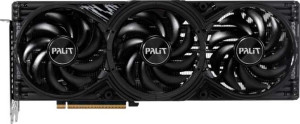
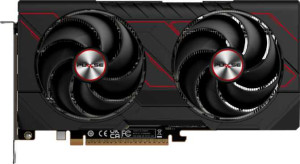
Memory capacity and bandwidth are where the gap between these two cards becomes especially consequential. The RTX 5070 Ti comes equipped with 16GB of GDDR7 over a 256-bit bus, delivering a staggering 896 GB/s of bandwidth. The RX 9060 XT, by contrast, carries 8GB of GDDR6 on a narrower 128-bit bus, yielding 322.3 GB/s. That is nearly a 3x bandwidth advantage for the 5070 Ti — a difference that matters enormously when feeding a large shader array at high resolutions or with modern texture-heavy assets.
The practical implications of 8GB versus 16GB VRAM are increasingly hard to ignore in 2024-era workloads. Games and applications pushing high-resolution texture packs, ray tracing, or AI-driven features routinely breach the 8GB threshold, causing the GPU to spill data to system memory — a process that introduces latency and stuttering. The 5070 Ti's 16GB buffer provides a meaningful safety margin for demanding titles and creative applications alike, while the RX 9060 XT's 8GB may become a limiting factor sooner. The effective memory speed gap — 28000 MHz versus 20000 MHz — further reinforces how the 5070 Ti's GDDR7 architecture outpaces the GDDR6 found on the 9060 XT, even before the bus width difference is factored in.
Both cards support ECC memory, which is a useful feature for compute and professional workloads where data integrity matters, so that is a wash. Overall, the RTX 5070 Ti holds a commanding advantage in this group — more capacity, faster memory technology, a wider bus, and dramatically higher bandwidth. For users planning to game at 4K, use memory-intensive applications, or future-proof their system, the 5070 Ti's memory subsystem is in a different league.