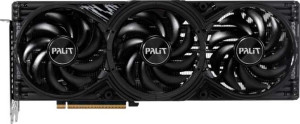
Palit GeForce RTX 5070 Ti GamingPro-S OC
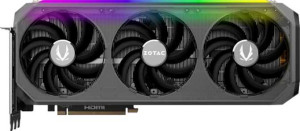
Zotac Gaming GeForce RTX 5070 Ti AMP Extreme Infinity

Palit GeForce RTX 5070 Ti GamingPro-S OC Zotac Gaming GeForce RTX 5070 Ti AMP Extreme Infinity

Overview

Welcome to our detailed specification comparison of the Palit GeForce RTX 5070 Ti GamingPro-S OC and the Zotac Gaming GeForce RTX 5070 Ti AMP Extreme Infinity. Both cards share the same Blackwell architecture and identical memory configuration, yet they differ in areas such as GPU turbo clock speed and physical dimensions. Explore the full breakdown below to see how these two Blackwell-based cards stack up against each other.

Common Features

  • Both cards share a base GPU clock speed of 2295 MHz.
  • Both cards have a GPU memory speed of 1750 MHz.
  • Both cards feature 8960 shading units.
  • Both cards include 280 texture mapping units (TMUs).
  • Both cards have 96 render output units (ROPs).
  • Double Precision Floating Point (DPFP) is supported on both cards.
  • Both cards have an effective memory speed of 28000 MHz.
  • Both cards offer a maximum memory bandwidth of 896 GB/s.
  • Both cards come with 16GB of VRAM.
  • Both cards use GDDR7 memory.
  • Both cards have a 256-bit memory bus width.
  • ECC memory is supported on both cards.
  • Both cards support DirectX 12 Ultimate.
  • Both cards support OpenGL version 4.6.
  • Both cards support OpenCL version 3.
  • Multi-display technology is supported on both cards.
  • Ray tracing is supported on both cards.
  • 3D support is available on both cards.
  • DLSS is supported on both cards.
  • XeSS (XMX) support is not available on either card.
  • Both cards include one HDMI 2.1b output.
  • Both cards feature three DisplayPort outputs.
  • Neither card includes USB-C ports.
  • Neither card includes DVI outputs.
  • Neither card includes mini DisplayPort outputs.
  • Both cards are built on the Blackwell GPU architecture.
  • Both cards have a Thermal Design Power (TDP) of 300W.
  • Both cards use PCIe version 5.
  • Both cards are manufactured on a 5 nm semiconductor process.
  • Both cards contain 45600 million transistors.
  • Air-water cooling is not available on either card.

Main Differences

  • GPU turbo clock speed is 2482 MHz on the Palit GeForce RTX 5070 Ti GamingPro-S OC and 2512 MHz on the Zotac Gaming GeForce RTX 5070 Ti AMP Extreme Infinity.
  • Pixel rate is 238.3 GPixel/s on the Palit GeForce RTX 5070 Ti GamingPro-S OC and 241.2 GPixel/s on the Zotac Gaming GeForce RTX 5070 Ti AMP Extreme Infinity.
  • Floating-point performance is 44.48 TFLOPS on the Palit GeForce RTX 5070 Ti GamingPro-S OC and 45.02 TFLOPS on the Zotac Gaming GeForce RTX 5070 Ti AMP Extreme Infinity.
  • Texture rate is 695 GTexels/s on the Palit GeForce RTX 5070 Ti GamingPro-S OC and 703.4 GTexels/s on the Zotac Gaming GeForce RTX 5070 Ti AMP Extreme Infinity.
  • Card width is 331.9 mm on the Palit GeForce RTX 5070 Ti GamingPro-S OC and 332.1 mm on the Zotac Gaming GeForce RTX 5070 Ti AMP Extreme Infinity.
  • Card height is 127.1 mm on the Palit GeForce RTX 5070 Ti GamingPro-S OC and 137.5 mm on the Zotac Gaming GeForce RTX 5070 Ti AMP Extreme Infinity.
Specs Comparison
Palit GeForce RTX 5070 Ti GamingPro-S OC

Palit GeForce RTX 5070 Ti GamingPro-S OC

Zotac Gaming GeForce RTX 5070 Ti AMP Extreme Infinity

Zotac Gaming GeForce RTX 5070 Ti AMP Extreme Infinity

Performance:
GPU clock speed 2295 MHz 2295 MHz
GPU turbo 2482 MHz 2512 MHz
pixel rate 238.3 GPixel/s 241.2 GPixel/s
floating-point performance 44.48 TFLOPS 45.02 TFLOPS
texture rate 695 GTexels/s 703.4 GTexels/s
GPU memory speed 1750 MHz 1750 MHz
shading units 8960 8960
texture mapping units (TMUs) 280 280
render output units (ROPs) 96 96
Has Double Precision Floating Point (DPFP)

Both cards share an identical foundation: the same base clock of 2295 MHz, the same 8960 shading units, 280 TMUs, 96 ROPs, and identical memory speeds of 1750 MHz. This means the vast majority of their raw compute architecture is equivalent, and in practice, workloads that don't push the GPU to its thermal and power limits will yield virtually indistinguishable results.

The meaningful separation emerges at boost. The Zotac Gaming AMP Extreme Infinity holds a 30 MHz advantage in GPU turbo (2512 MHz vs. 2482 MHz), which cascades into slightly higher derived metrics: a pixel rate of 241.2 GPixel/s versus 238.3, a texture rate of 703.4 GTexels/s versus 695, and floating-point throughput of 45.02 TFLOPS versus 44.48. In real-world terms, this roughly 1.2% clock advantage is too small to produce a perceptible framerate difference in gaming, but it does indicate the Zotac is binned or tuned slightly more aggressively out of the box.

In this performance group, the Zotac AMP Extreme Infinity holds a marginal edge purely on paper, thanks to its higher boost clock and the downstream throughput gains it produces. However, the gap is so narrow that it would fall within the margin of real-world variance — thermals, driver behavior, and power delivery will matter more than this 30 MHz difference in daily use. Buyers should weight other factors — cooling solution, acoustics, price, and build quality — more heavily than this slim performance delta.
Memory:
effective memory speed 28000 MHz 28000 MHz
maximum memory bandwidth 896 GB/s 896 GB/s
VRAM 16GB 16GB
GDDR version GDDR7 GDDR7
memory bus width 256-bit 256-bit
Supports ECC memory

On memory, these two cards are carbon copies of each other. Both carry 16GB of GDDR7 across a 256-bit bus, running at an effective speed of 28000 MHz to deliver 896 GB/s of bandwidth. There is not a single differentiating data point in this entire spec group — whatever silicon both boards are built on, the memory subsystem is configured identically.

That said, the specs themselves tell an important story for buyers. GDDR7 represents a significant generational leap in memory efficiency and throughput, and 896 GB/s is a substantial bandwidth figure for this tier — enough to comfortably feed high-resolution textures, ray tracing workloads, and AI-accelerated tasks without the memory bus becoming a bottleneck. The 16GB frame buffer, meanwhile, is well-positioned for 4K gaming and serious creative workloads, where VRAM headroom increasingly matters as asset sizes grow.

With every memory specification — capacity, speed, bandwidth, bus width, and ECC support — being a perfect match, this group is an exact tie. Memory configuration should play no role in choosing between the Palit GamingPro-S OC and the Zotac AMP Extreme Infinity; buyers can look entirely to other spec groups, pricing, and cooling design to make their decision.

Features:
DirectX version DirectX 12 Ultimate DirectX 12 Ultimate
OpenGL version 4.6 4.6
OpenCL version 3 3
Supports multi-display technology
supports ray tracing
Supports 3D
supports DLSS
has XeSS (XMX)
AMD SAM / Intel Resizable BAR Intel Resizable BAR Intel Resizable BAR
has LHR
has RGB lighting
supported displays 4 4

Feature parity is total here. Every capability listed — from DirectX 12 Ultimate and ray tracing support to DLSS, Resizable BAR, and multi-display output — is identical across the Palit GamingPro-S OC and the Zotac AMP Extreme Infinity. Neither card carries a feature the other lacks.

The shared feature set is worth contextualizing for buyers. DirectX 12 Ultimate ensures full compatibility with the modern graphics pipeline, including hardware-accelerated ray tracing and mesh shaders. DLSS support is particularly valuable at this tier — it allows AI-driven upscaling and frame generation to dramatically boost effective framerates in supported titles, which is increasingly a large and growing library. Support for up to 4 simultaneous displays covers virtually every multi-monitor or mixed-output scenario a user might need, from competitive gaming setups to professional workstation configurations.

With no divergence anywhere in this spec group, the features category is a complete tie. Both cards deliver the same software ecosystem, API support, and connectivity options — this dimension offers no grounds for preferring one over the other.

Ports:
has an HDMI output
HDMI ports 1 1
HDMI version HDMI 2.1b HDMI 2.1b
DisplayPort outputs 3 3
USB-C ports 0 0
DVI outputs 0 0
mini DisplayPort outputs 0 0

Connectivity is another area where these two cards are indistinguishable. Both offer the same output configuration: 3 DisplayPort outputs and 1 HDMI 2.1b port, totaling four display connections — which aligns exactly with their supported display count from the features group. Neither card includes USB-C, DVI, or mini DisplayPort outputs.

The port selection itself is well-suited for modern use cases. HDMI 2.1b supports 4K at high refresh rates and 8K output, covering the latest televisions and high-end monitors without an adapter. The triple DisplayPort configuration is ideal for multi-monitor desktop setups, and DisplayPort's higher bandwidth ceiling makes it the preferred choice for gaming monitors pushing high resolutions at elevated refresh rates. The absence of USB-C is worth noting for users who rely on that interface for VR headsets or USB-C monitors, though it is a common omission at this product tier.

No differentiator exists between the two cards here — this is a complete tie. Buyers with specific connectivity requirements, such as needing USB-C output, will find neither card satisfies that need, and everyone else gets an equally capable port layout regardless of which card they choose.

General info:
GPU architecture Blackwell Blackwell
release date February 2025 February 2025
Thermal Design Power (TDP) 300W 300W
PCI Express (PCIe) version 5 5
semiconductor size 5 nm 5 nm
number of transistors 45600 million 45600 million
Has air-water cooling
width 331.9 mm 332.1 mm
height 127.1 mm 137.5 mm

At the silicon level, these two cards are built from the same cloth: identical Blackwell architecture, the same 5nm manufacturing process, the same transistor count of 45.6 billion, and a matching 300W TDP over PCIe 5.0. This confirms that any performance differences observed elsewhere in this comparison stem entirely from firmware and cooling tuning, not from any underlying hardware distinction.

The only measurable divergence in this group is physical. Both cards share nearly the same length at roughly 332mm, but the Zotac AMP Extreme Infinity is noticeably taller at 137.5mm versus the Palit GamingPro-S OC's 127.1mm — a difference of over 10mm. In practical terms, this height gap can matter in tighter cases where GPU clearance between the card and the motherboard's M.2 slots, chipset heatsink, or adjacent components is limited. The Palit's slimmer profile gives it a modest but real advantage in compatibility with more compact or densely packed ATX builds.

Architecturally, this group is a tie — same chip, same process node, same power envelope. However, if case clearance is a concern, the Palit GamingPro-S OC holds a practical edge with its shorter height, making it the more physically flexible option for builders working with constrained interiors.

Comparison Summary & Verdict

After a thorough review of the specifications, both cards prove to be remarkably similar, sharing the same 16GB GDDR7 memory, 300W TDP, and identical feature sets including ray tracing and DLSS support. However, the Zotac Gaming GeForce RTX 5070 Ti AMP Extreme Infinity holds a consistent performance edge with a higher GPU turbo clock of 2512 MHz, a pixel rate of 241.2 GPixel/s, and floating-point performance of 45.02 TFLOPS. On the other hand, the Palit GeForce RTX 5070 Ti GamingPro-S OC offers a notably more compact form factor at just 127.1 mm in height versus 137.5 mm, making it the better fit for tighter builds. Neither card is an outright winner for every user; the choice comes down to whether raw peak performance or physical footprint matters most to you.

Palit GeForce RTX 5070 Ti GamingPro-S OC
Buy Palit GeForce RTX 5070 Ti GamingPro-S OC if...

Buy the Palit GeForce RTX 5070 Ti GamingPro-S OC if you have a compact PC case where vertical clearance is limited, as its 127.1 mm height is noticeably smaller than its rival.

Zotac Gaming GeForce RTX 5070 Ti AMP Extreme Infinity
Buy Zotac Gaming GeForce RTX 5070 Ti AMP Extreme Infinity if...

Buy the Zotac Gaming GeForce RTX 5070 Ti AMP Extreme Infinity if you want the highest possible out-of-the-box performance, thanks to its superior GPU turbo clock, pixel rate, texture rate, and floating-point throughput.