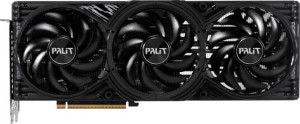
Palit GeForce RTX 5070 Ti GamingPro-S
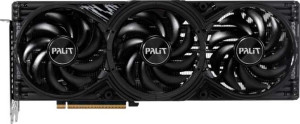
Palit GeForce RTX 5070 Ti GamingPro-S OC

Palit GeForce RTX 5070 Ti GamingPro-S Palit GeForce RTX 5070 Ti GamingPro-S OC

Overview

When choosing between the Palit GeForce RTX 5070 Ti GamingPro-S and the Palit GeForce RTX 5070 Ti GamingPro-S OC, the decision comes down to a focused set of performance metrics. Both cards share the same Blackwell architecture, 16GB of GDDR7 memory, and a 300W TDP, making this a comparison centered squarely on GPU turbo clock speeds and the downstream effects on pixel rate, texture throughput, and floating-point performance. Read on to see how these two cards stack up across every specification.

Common Features

  • Both products have a base GPU clock speed of 2295 MHz.
  • Both products have a GPU memory speed of 1750 MHz.
  • Both products feature 8960 shading units.
  • Both products have 280 texture mapping units (TMUs).
  • Both products have 96 render output units (ROPs).
  • Double Precision Floating Point (DPFP) is supported on both products.
  • Both products have an effective memory speed of 28000 MHz.
  • Both products offer a maximum memory bandwidth of 896 GB/s.
  • Both products come with 16GB of VRAM.
  • Both products use GDDR7 memory.
  • Both products have a 256-bit memory bus width.
  • ECC memory is supported on both products.
  • Both products support DirectX 12 Ultimate.
  • Both products support OpenGL version 4.6.
  • Both products support OpenCL version 3.
  • Multi-display technology is supported on both products.
  • Ray tracing is supported on both products.
  • 3D support is available on both products.
  • DLSS is supported on both products.
  • XeSS (XMX) is not available on either product.
  • Both products have one HDMI 2.1b output.
  • Both products have three DisplayPort outputs.
  • Neither product has USB-C, DVI, or mini DisplayPort outputs.
  • Both products are built on the Blackwell GPU architecture.
  • Both products have a Thermal Design Power (TDP) of 300W.
  • Both products use PCIe version 5.
  • Both products are manufactured on a 5 nm semiconductor process.
  • Both products feature 45600 million transistors.
  • Air-water cooling is not available on either product.
  • Both products measure 331.9 mm in width and 127.1 mm in height.

Main Differences

  • GPU turbo clock speed is 2452 MHz on the Palit GeForce RTX 5070 Ti GamingPro-S and 2482 MHz on the Palit GeForce RTX 5070 Ti GamingPro-S OC.
  • Pixel rate is 235.4 GPixel/s on the Palit GeForce RTX 5070 Ti GamingPro-S and 238.3 GPixel/s on the Palit GeForce RTX 5070 Ti GamingPro-S OC.
  • Floating-point performance is 43.94 TFLOPS on the Palit GeForce RTX 5070 Ti GamingPro-S and 44.48 TFLOPS on the Palit GeForce RTX 5070 Ti GamingPro-S OC.
  • Texture rate is 686.6 GTexels/s on the Palit GeForce RTX 5070 Ti GamingPro-S and 695 GTexels/s on the Palit GeForce RTX 5070 Ti GamingPro-S OC.
Specs Comparison
Palit GeForce RTX 5070 Ti GamingPro-S

Palit GeForce RTX 5070 Ti GamingPro-S

Palit GeForce RTX 5070 Ti GamingPro-S OC

Palit GeForce RTX 5070 Ti GamingPro-S OC

Performance:
GPU clock speed 2295 MHz 2295 MHz
GPU turbo 2452 MHz 2482 MHz
pixel rate 235.4 GPixel/s 238.3 GPixel/s
floating-point performance 43.94 TFLOPS 44.48 TFLOPS
texture rate 686.6 GTexels/s 695 GTexels/s
GPU memory speed 1750 MHz 1750 MHz
shading units 8960 8960
texture mapping units (TMUs) 280 280
render output units (ROPs) 96 96
Has Double Precision Floating Point (DPFP)

Both cards share an identical foundation: the same 2295 MHz base clock, 8960 shading units, 280 TMUs, 96 ROPs, and 1750 MHz memory speed. This means the two GPUs are architecturally equivalent — the OC variant is not a different chip, just a factory-tuned version of the same silicon.

The sole differentiator in this group is the GPU boost clock: the standard GamingPro-S boosts to 2452 MHz, while the OC edition reaches 2482 MHz — a gap of 30 MHz, or roughly 1.2%. This small but real advantage cascades into every derived metric: the OC version posts a higher pixel rate of 238.3 GPixel/s vs. 235.4, a higher texture rate of 695 GTexels/s vs. 686.6, and a higher floating-point throughput of 44.48 TFLOPS vs. 43.94. In practice, a ~1–1.2% performance uplift falls well within benchmark noise and is unlikely to be perceptible in real-world gaming frame rates or rendering workloads.

The OC edition holds a marginal edge on paper, but the advantage is slim enough that real-world performance will be virtually indistinguishable between the two. Both cards also support Double Precision Floating Point (DPFP), which is relevant for compute and professional workloads. For most users, the decision between these two will come down to price and cooling rather than raw performance.

Memory:
effective memory speed 28000 MHz 28000 MHz
maximum memory bandwidth 896 GB/s 896 GB/s
VRAM 16GB 16GB
GDDR version GDDR7 GDDR7
memory bus width 256-bit 256-bit
Supports ECC memory

When it comes to memory, these two cards are completely identical — every single spec matches. Both carry 16GB of GDDR7 VRAM across a 256-bit bus, delivering a peak bandwidth of 896 GB/s at an effective speed of 28000 MHz. There is nothing to differentiate them here.

The specs themselves, however, are worth contextualizing. GDDR7 is the latest generation of graphics memory, and at 896 GB/s, this bandwidth figure is substantial — it ensures the GPU can feed its shading units efficiently even in demanding scenarios like high-resolution texture streaming, ray tracing workloads, or large AI model inference tasks. The 256-bit bus width strikes a balance between die area cost and throughput, and paired with GDDR7′s speed, it avoids the bandwidth bottlenecks that narrower buses can create. The 16GB VRAM capacity is likewise well-suited for 4K gaming, content creation, and increasingly VRAM-hungry AI features.

Both cards also support ECC memory, a feature typically associated with professional and compute workloads where data integrity is critical. On the comparison at hand, this group is a clear tie — neither the GamingPro-S nor the GamingPro-S OC has any memory advantage whatsoever, and buyers can ignore this category entirely when choosing between the two.

Features:
DirectX version DirectX 12 Ultimate DirectX 12 Ultimate
OpenGL version 4.6 4.6
OpenCL version 3 3
Supports multi-display technology
supports ray tracing
Supports 3D
supports DLSS
has XeSS (XMX)
AMD SAM / Intel Resizable BAR Intel Resizable BAR Intel Resizable BAR
has LHR
has RGB lighting
supported displays 4 4

Feature parity is total here — the GamingPro-S and GamingPro-S OC share an identical software and API capability set. Both run DirectX 12 Ultimate, which is the current gold standard for gaming, enabling features like mesh shaders, variable rate shading, and DirectX Raytracing. Paired with full ray tracing support and DLSS, these cards are equipped for the complete modern gaming feature stack — ray-traced lighting and reflections with AI-powered upscaling to recover the performance cost.

A few entries are worth contextualizing for buyers. Intel Resizable BAR support allows the CPU to access the full GPU frame buffer at once rather than in chunks, which can yield modest but real frame rate gains in compatible systems. The absence of LHR (Lite Hash Rate) is a non-issue for gamers — it was a mining limiter that Nvidia has since phased out entirely. Support for up to 4 simultaneous displays makes either card a capable choice for multi-monitor productivity or gaming setups without needing additional hardware.

Since every feature listed is shared identically, this group is an unambiguous tie. Neither card offers any functional or software capability the other lacks, and this dimension should play no role in deciding between the two.

Ports:
has an HDMI output
HDMI ports 1 1
HDMI version HDMI 2.1b HDMI 2.1b
DisplayPort outputs 3 3
USB-C ports 0 0
DVI outputs 0 0
mini DisplayPort outputs 0 0

The port configuration on both cards is identical: one HDMI 2.1b output and three DisplayPort outputs, giving a total of four physical connections — which aligns with the four-display maximum noted in the features group. Neither card offers USB-C, DVI, or mini DisplayPort outputs.

The version details matter here. HDMI 2.1b is the latest iteration of the HDMI standard, supporting up to 10K resolution, high frame rate 4K and 8K output, and features like Variable Refresh Rate (VRR) — making it fully capable of driving a modern high-end TV or monitor without any compromise. The three DisplayPort outputs round out a versatile multi-display setup, whether for gaming across multiple monitors or a mixed productivity and entertainment arrangement.

With zero differences between the two cards in this category, it is another clean tie. Connectivity will not be a factor in choosing between the GamingPro-S and the GamingPro-S OC.

General info:
GPU architecture Blackwell Blackwell
release date February 2025 February 2025
Thermal Design Power (TDP) 300W 300W
PCI Express (PCIe) version 5 5
semiconductor size 5 nm 5 nm
number of transistors 45600 million 45600 million
Has air-water cooling
width 331.9 mm 331.9 mm
height 127.1 mm 127.1 mm

At the hardware level, these two cards are cut from precisely the same cloth. Both are built on Nvidia's Blackwell architecture, manufactured on a 5 nm process with 45.6 billion transistors — figures that reflect a dense, modern GPU die designed for high efficiency and throughput. The move to 5 nm fabrication generally means better performance-per-watt compared to older nodes, which is relevant given the 300W TDP both cards carry.

That 300W power envelope is worth flagging for system builders. It is a meaningful draw that requires a robust PSU and adequate case airflow — neither card offers an air-water hybrid cooling option, so thermal management falls entirely on the air cooler. Both also use PCIe 5.0, the latest interface generation, ensuring maximum bandwidth headroom between the GPU and CPU, though real-world gains over PCIe 4.0 are marginal in current titles. Physically, the cards are identical at 331.9 mm long and 127.1 mm tall, so case compatibility planning applies equally to both.

Every general specification is shared without exception, making this another definitive tie. The underlying silicon, power requirements, physical footprint, and platform compatibility are the same regardless of which variant a buyer chooses.

Comparison Summary & Verdict

After examining every specification, the Palit GeForce RTX 5070 Ti GamingPro-S and the Palit GeForce RTX 5070 Ti GamingPro-S OC are nearly identical cards, sharing the same 16GB GDDR7 memory, 256-bit bus, 896 GB/s bandwidth, identical port configuration, and the same physical dimensions. The sole distinction lies in the GPU turbo clock speed: the OC variant runs at 2482 MHz versus 2452 MHz, translating into a marginally higher floating-point performance of 44.48 TFLOPS against 43.94 TFLOPS, and a slightly elevated texture rate of 695 GTexels/s versus 686.6 GTexels/s. These gains are real but modest. Choose the standard model if you want the same core experience at a likely lower price; opt for the OC edition if you want every last drop of factory-tuned headroom without manually overclocking.

Palit GeForce RTX 5070 Ti GamingPro-S
Buy Palit GeForce RTX 5070 Ti GamingPro-S if...

Buy the Palit GeForce RTX 5070 Ti GamingPro-S if you want the same core architecture, memory, and feature set as the OC model and are looking for the best value between the two.

Palit GeForce RTX 5070 Ti GamingPro-S OC
Buy Palit GeForce RTX 5070 Ti GamingPro-S OC if...

Buy the Palit GeForce RTX 5070 Ti GamingPro-S OC if you want the highest factory-tuned GPU turbo clock speed, pixel rate, texture rate, and floating-point performance available between these two cards.