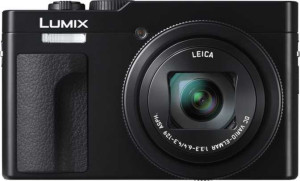
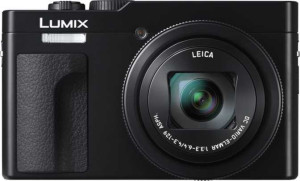
The optical systems of the TZ99 and ZS99 are, across every measurable specification provided, completely identical. Both mount a lens covering 24–720 mm equivalent focal length, delivering a 30x optical zoom range that makes them genuinely versatile travel companions — capable of wide environmental shots at the short end and serious reach for wildlife or distant subjects at the long end. The wide-end aperture of f/3.3 is reasonable for a compact at this zoom range, though the telephoto end narrows to f/6.4, which is expected physics for such an extended zoom and something to keep in mind in low light at distance.
Sensor characteristics are equally matched: both use a 1/2.3″ BSI CMOS sensor at 20 MP, with a native maximum ISO of 3200 expandable to 6400. The BSI (back-side illuminated) design improves light capture efficiency compared to conventional CMOS, which partially offsets the inherent limitations of the small sensor size. Neither camera uses a stacked CMOS, so burst processing headroom is more modest — though the 10 fps continuous shooting rate is still competitive for a travel compact. Autofocus capabilities are fully featured on both, including AF tracking, touch autofocus, and a silent focus motor, making both well-suited for capturing moving subjects discreetly.
With every optics specification matching precisely, there is no advantage for either model in this category. Users prioritizing zoom versatility, sensor quality, or autofocus performance will find both cameras on perfectly equal footing.