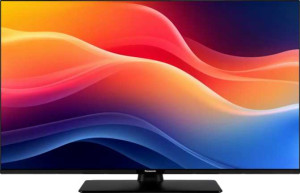
Panasonic TB-65W61AEY 65"
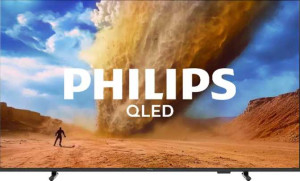
Philips 65PUS7800/12 65"

Panasonic TB-65W61AEY 65" Philips 65PUS7800/12 65"

Overview

Choosing between the Panasonic TB-65W61AEY 65″ and the Philips 65PUS7800/12 65″ means weighing two capable 4K UHD smart TVs that share a strong common foundation yet diverge on some genuinely important fronts. From their contrasting display technologies to opposing stances on HDR format support, and differences in weight, power efficiency, and recording features, this side-by-side comparison explores exactly what sets these two screens apart to help you find the right fit.

Common Features

  • Both TVs have a 4K UHD display resolution of 3840 x 2160 px.
  • Both TVs share a pixel density of 68 ppi.
  • Both TVs support 1070 million display colors at a 10-bit depth.
  • Both TVs have a 60Hz refresh rate.
  • HDR10 support is available on both TVs.
  • HLG support is available on both TVs.
  • Both TVs have Bluetooth connectivity.
  • Both TVs use HDMI 2.1 and include 3 HDMI ports.
  • Both TVs support Wi-Fi.
  • Both TVs include 2 USB ports and 1 RJ45 port.
  • Miracast support is available on both TVs.
  • Both TVs have a 3.5mm audio jack socket.
  • Both TVs deliver 2 x 10W audio output power.
  • Digital Out support is available on both TVs.
  • SRS TheaterSound HD is not available on either TV.
  • Both TVs have stereo speakers.
  • Dolby Atmos support is available on both TVs.
  • Dolby Audio support is available on both TVs.
  • Dolby Virtual support is not available on either TV.
  • Neither TV includes a subwoofer.
  • Both TVs support VESA mounting.
  • AirPlay is not available on either TV.
  • Both TVs have a built-in smart TV platform.
  • Google Assistant compatibility is available on both TVs.
  • Alexa compatibility is available on both TVs.
  • Apple HomeKit and Siri compatibility is not available on either TV.
  • Both TVs support remote smartphone control.
  • Neither TV includes a rechargeable remote control.
  • Both TVs have a standby power consumption of 0.5W.

Main Differences

  • The display type is LED-backlit LCD on Panasonic TB-65W61AEY 65″ and QLED LED-backlit LCD on Philips 65PUS7800/12 65″.
  • The screen size is 65″ on Panasonic TB-65W61AEY 65″ and 64.5″ on Philips 65PUS7800/12 65″.
  • HDR10+ support is present on Philips 65PUS7800/12 65″ but not available on Panasonic TB-65W61AEY 65″.
  • Dolby Vision support is present on Panasonic TB-65W61AEY 65″ but not available on Philips 65PUS7800/12 65″.
  • An ambient light sensor is present on Philips 65PUS7800/12 65″ but not on Panasonic TB-65W61AEY 65″.
  • The Bluetooth version is 5 on Panasonic TB-65W61AEY 65″ and 5.2 on Philips 65PUS7800/12 65″.
  • An external memory slot is available on Panasonic TB-65W61AEY 65″ but not on Philips 65PUS7800/12 65″.
  • The width is 1453 mm on Panasonic TB-65W61AEY 65″ and 1446 mm on Philips 65PUS7800/12 65″.
  • The weight is 21000 g on Panasonic TB-65W61AEY 65″ and 14730 g on Philips 65PUS7800/12 65″.
  • The thickness is 82 mm on Panasonic TB-65W61AEY 65″ and 91 mm on Philips 65PUS7800/12 65″.
  • The height is 836 mm on Panasonic TB-65W61AEY 65″ and 838 mm on Philips 65PUS7800/12 65″.
  • The volume is 99606.056 cm³ on Panasonic TB-65W61AEY 65″ and 110269.068 cm³ on Philips 65PUS7800/12 65″.
  • USB recording support is available on Philips 65PUS7800/12 65″ but not on Panasonic TB-65W61AEY 65″.
  • The operating power consumption is 85W on Panasonic TB-65W61AEY 65″ and 73W on Philips 65PUS7800/12 65″.
Specs Comparison
Panasonic TB-65W61AEY 65"

Panasonic TB-65W61AEY 65"

Philips 65PUS7800/12 65"

Philips 65PUS7800/12 65"

Display:
display resolution 4K (UHD) 4K (UHD)
Display type LED-backlit, LCD QLED, LED-backlit, LCD
screen size 65" 64.5"
resolution 3840 x 2160 px 3840 x 2160 px
pixel density 68 ppi 68 ppi
display colors 1070 million 1070 million
bit depth 10-bit 10-bit
refresh rate 60Hz 60Hz
supports HDR10
supports HDR10+
supports Dolby Vision
supports HLG
has anti-reflection coating
has an ambient light sensor
maximum horizontal viewing angle 178º 178º
maximum vertical viewing angle 178º 178º

At their core, both the Panasonic TB-65W61AEY and the Philips 65PUS7800/12 share a strong display foundation: identical 4K (3840 x 2160) resolution, 68 ppi pixel density, 10-bit color depth rendering 1.07 billion colors, a 60Hz refresh rate, and symmetric 178º viewing angles in both directions. In practice, this means both TVs will deliver the same sharpness and color volume baseline, and neither has a motion-clarity advantage over the other at this refresh rate.

The most meaningful hardware distinction is the panel technology: the Philips uses a QLED layer on top of its LED-backlit LCD, which typically produces higher peak brightness and more saturated colors — particularly in the red and green spectrum — compared to the Panasonic's standard LED-backlit LCD. On the HDR format front, the two TVs take opposite sides: the Panasonic supports Dolby Vision but lacks HDR10+, while the Philips covers HDR10+ but omits Dolby Vision. Both handle HDR10 and HLG. Which matters more depends on your content library — Dolby Vision is dominant on Netflix and Apple TV+, while HDR10+ is preferred by Amazon Prime Video and Samsung devices. The Philips also includes an ambient light sensor, which automatically adjusts brightness to match room lighting — a genuinely useful feature for mixed-use environments that the Panasonic lacks.

Overall, the Philips 65PUS7800/12 holds a display edge: its QLED panel technology offers a potential uplift in color vibrancy and brightness over the Panasonic's conventional LCD, and the ambient light sensor adds practical day-to-day convenience. The HDR format split is a wash — it comes down to personal ecosystem preference rather than a clear technical win for either side.

Connectivity:
Has Bluetooth
HDMI version HDMI 2.1 HDMI 2.1
HDMI ports 3 3
supports Wi-Fi
Bluetooth version 5 5.2
USB ports 2 2
RJ45 ports 1 1
supports Miracast
has a socket for a 3.5 mm audio jack
has an external memory slot
has a VGA connector
DVB standards DVB-T, DVB-T2, DVB-C, DVB-S, DVB-S2 DVB-T, DVB-T2, DVB-C, DVB-S, DVB-S2
has a DVI connector

The connectivity foundation of both TVs is virtually identical: 3 HDMI 2.1 ports, 2 USB ports, an RJ45 Ethernet jack, Wi-Fi, Miracast screen mirroring, a 3.5mm audio jack, and the same full suite of DVB tuner standards (T/T2/C/S/S2). HDMI 2.1 is worth noting positively for both — it supports up to 4K at 120Hz and features like VRR, which is relevant for gaming use cases even if the panels themselves are capped at 60Hz natively.

Two differences stand out. First, the Panasonic includes an external memory slot — useful for playing media directly from a USB drive or SD card without occupying a USB port — while the Philips omits this entirely. Second, the Philips runs Bluetooth 5.2 versus the Panasonic's Bluetooth 5.0. The newer version brings improved connection stability, lower latency, and better handling of multiple simultaneous Bluetooth devices, which matters if you use wireless headphones, a soundbar, or other peripherals.

The connectivity edge is split: the Panasonic TB-65W61AEY wins for users who value local media playback via an external memory slot, while the Philips 65PUS7800/12 has the advantage for wireless peripheral users thanks to its more modern Bluetooth 5.2 implementation. Neither difference is dramatic, but the memory slot is the more broadly useful feature for a wider range of users.

Audio:
audio output power 2 x 10W 2 x 10W
supports Digital Out
has SRS TheaterSound HD
has stereo speakers
has Dolby Atmos
has Dolby Audio
supports Dolby Virtual
has a subwoofer
HDMI ARC / eARC HDMI ARC, HDMI eARC HDMI ARC, HDMI eARC

Audio is the rare category where these two TVs are in complete lockstep. Both deliver 2 x 10W of stereo output — adequate for a quiet-to-moderate listening environment but unlikely to fill a large room with impact. More meaningfully, both support Dolby Atmos and Dolby Audio, meaning they can decode and spatially process object-based audio from streaming services and Blu-ray sources, producing a more immersive soundstage than standard stereo processing allows.

On the connectivity side, both include HDMI ARC and eARC, which is the practically important detail for anyone planning to pair these TVs with an external soundbar or AV receiver. eARC in particular supports high-bandwidth audio formats like lossless Dolby TrueHD and DTS-HD Master Audio — formats that standard ARC cannot carry — so the full audio chain remains uncompromised when routing through a quality external system.

This group is an unambiguous tie: every single audio specification is identical across both products. The buying decision in this category comes down entirely to the external audio setup a user plans to pair with the TV, as neither has any inherent advantage over the other on paper.

Design:
width 1453 mm 1446 mm
weight 21000 g 14730 g
thickness 82 mm 91 mm
height 836 mm 838 mm
volume 99606.056 cm³ 110269.068 cm³
Supports VESA mount

For two 65-inch TVs, the footprint is nearly identical — width and height differ by less than 10mm in either dimension — so placement and furniture compatibility will be essentially the same for both. Where the designs diverge meaningfully is in weight and thickness. The Panasonic tips the scales at 21 kg, while the Philips comes in significantly lighter at 14.7 kg — a difference of over 6 kg, which is roughly 30% less mass. For wall mounting especially, that gap is practically significant: a lighter panel is easier to handle during installation and places less long-term stress on wall brackets.

The trade-off is depth: the Philips is 91 mm thick versus the Panasonic's slimmer 82 mm. That 9mm difference is unlikely to matter much for stand placement, but for flush or near-flush wall mounts where depth clearance is constrained, the Panasonic has a slight edge. Both support VESA mounting, so neither restricts the user to proprietary stand solutions.

Overall, the Philips 65PUS7800/12 holds the design advantage — its substantially lower weight makes it easier to transport, install, and mount safely, and the marginal increase in thickness is an acceptable trade-off for most installation scenarios.

Features:
release date March 2025 February 2025
has AirPlay
has built-in smart TV
compatible with Google Assistant
works with Alexa
works with Siri/Apple HomeKit
supports a remote smartphone
has a rechargeable remote control
supports USB recording
operating power consumption 85W 73W
standby power consumption 0.5W 0.5W
has a search browser
has a sleep timer
has a child lock
has voice commands
EU energy label E E

Smart platform parity is complete between these two: both run a built-in smart TV system with Google Assistant and Alexa voice control, smartphone remote support, a browser, sleep timer, and child lock. Neither integrates with Apple HomeKit or AirPlay, so users deep in the Apple ecosystem will find the same limitation on both sides.

Two specs separate them. The Philips supports USB recording — meaning it can record live broadcast content directly to a connected USB drive — while the Panasonic cannot. For cord-cutters who rely on antenna or satellite broadcasts and want PVR-style functionality without a separate set-top box, this is a genuinely useful feature. On the efficiency front, the Philips draws 73W during operation versus the Panasonic's 85W — a 14% difference. Over several hours of daily use across a year, that gap translates into a noticeable reduction in electricity consumption, even though both carry the same EU energy label of E.

The Philips 65PUS7800/12 takes the edge in this category, combining a meaningful functional addition in USB recording with lower operational power draw. The Panasonic matches it on every shared smart feature, but has no offsetting advantage here.

Comparison Summary & Verdict

Both the Panasonic TB-65W61AEY 65″ and the Philips 65PUS7800/12 65″ deliver a solid 4K smart TV experience with shared support for Dolby Atmos, Dolby Audio, Wi-Fi, HDMI 2.1, and both Google Assistant and Alexa. That said, their differences tell a clear story about who each set is built for. The Panasonic TB-65W61AEY 65″ is the stronger pick for dedicated home cinema fans, thanks to its Dolby Vision HDR support and an external memory slot for direct media storage. The Philips 65PUS7800/12 65″, on the other hand, wins on panel technology with its QLED display and HDR10+ compatibility, and adds practical everyday advantages like an ambient light sensor, USB recording, and a notably lower operating power draw of 73W versus 85W. It is also significantly lighter at 14730g compared to 21000g, making installation easier.

Panasonic TB-65W61AEY 65
Buy Panasonic TB-65W61AEY 65" if...

Buy the Panasonic TB-65W61AEY 65″ if Dolby Vision HDR is a priority for your streaming setup and you want the convenience of an external memory slot for local media storage.

Philips 65PUS7800/12 65
Buy Philips 65PUS7800/12 65" if...

Buy the Philips 65PUS7800/12 65″ if you want a QLED panel with HDR10+ support, USB recording capability, an ambient light sensor, and lower day-to-day power consumption.