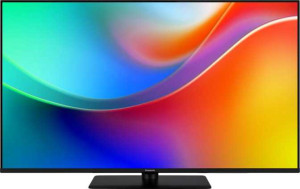
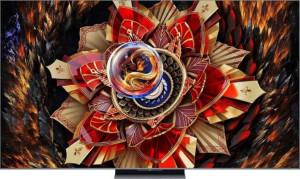
Both the Panasonic TV-65W85BEY and the TCL 85C9K share the same core display foundation: 4K (3840 x 2160) resolution, 10-bit color depth, 1070 million colors, and identical 178º viewing angles in both directions. HDR coverage is equally comprehensive on both sets, with HDR10, HDR10+, Dolby Vision, and HLG all supported — so neither has an edge in format compatibility. The most immediately obvious difference is screen size: the TCL is a significantly larger 85″ panel versus the Panasonic's 65″, which affects not just room presence but pixel density. Because both share the same resolution, the Panasonic's smaller canvas yields a sharper 68 ppi compared to the TCL's 52 ppi — a real-world difference most visible when sitting close, though at typical living-room distances the gap becomes negligible.
On panel technology, the TCL 85C9K adds Mini-LED backlighting to the QLED/LCD stack, which typically enables finer local dimming zones, higher peak brightness, and better contrast compared to standard LED-backlit LCD. The Panasonic uses conventional LED backlighting without Mini-LED, which is a meaningful structural difference for HDR performance in bright scenes. The TCL also edges ahead in responsiveness with a 144Hz refresh rate versus the Panasonic's 120Hz — relevant primarily for gaming and fast motion, where those extra frames can reduce judder. This is reinforced by the TCL supporting AMD FreeSync Premium Pro in addition to the base FreeSync tiers, while the Panasonic tops out at FreeSync Premium. FreeSync Premium Pro adds low-framerate compensation and HDR support in variable refresh rate mode — a notable plus for gaming use cases.
The TCL 85C9K also includes an ambient light sensor, allowing automatic brightness adjustment to match room lighting — a convenience feature absent on the Panasonic. Overall, the TCL holds a clear advantage in this display group: it brings Mini-LED backlighting, a higher refresh rate, a broader adaptive sync tier, and an ambient light sensor. The Panasonic counters only with a higher pixel density owing to its smaller screen, which is a byproduct of size rather than a deliberate display quality improvement. For display technology and performance, the TCL 85C9K has the edge.