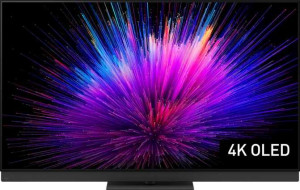
Panasonic TV-65Z95BEB 65"
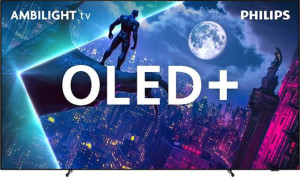
Philips 65OLED950/12 65"

Panasonic TV-65Z95BEB 65" Philips 65OLED950/12 65"

Overview

When choosing between two premium 65-inch 4K OLED televisions, the details truly matter. This head-to-head comparison between the Panasonic TV-65Z95BEB 65″ and the Philips 65OLED950/12 65″ puts both screens under the microscope, examining their approaches to adaptive sync technology, audio format support, physical design, and connectivity to help you make the most informed decision possible.

Common Features

  • Both TVs have a 65″ OLED/AMOLED display with 4K UHD resolution of 3840 x 2160 px.
  • Both TVs share a pixel density of 68 ppi.
  • Both TVs support a 144Hz refresh rate.
  • Both TVs offer a color depth of 1070 million colors at 10-bit.
  • Both TVs feature 4 HDMI 2.1 ports.
  • Both TVs include 1 RJ45 port.
  • Both TVs support Wi-Fi 4 (802.11n) and Wi-Fi 5 (802.11ac).
  • Bluetooth connectivity is available on both TVs.
  • Miracast support is available on both TVs.
  • A 3.5 mm audio jack is present on both TVs.
  • Both TVs include stereo speakers and a subwoofer.
  • Dolby Atmos support is available on both TVs.
  • Dolby Audio support is available on both TVs.
  • Dolby Digital support is available on both TVs.
  • Digital Out support is available on both TVs.
  • SRS TheaterSound HD is not available on either TV.
  • Dolby Virtual support is not available on either TV.
  • Both TVs are compatible with VESA mounting.
  • Both TVs have a maximum operating temperature of 35 °C.
  • AirPlay support is available on both TVs.
  • A built-in smart TV platform is present on both TVs.
  • Google Assistant compatibility is available on both TVs.
  • Alexa compatibility is available on both TVs.
  • Siri and Apple HomeKit support is not available on either TV.
  • Remote smartphone control is supported on both TVs.
  • Neither TV features a rechargeable remote control.
  • USB recording support is available on both TVs.
  • AMD FreeSync and AMD FreeSync Premium adaptive sync are supported on both TVs.

Main Differences

  • Nvidia G-Sync adaptive synchronization is supported on the Philips 65OLED950/12 65″ but not available on the Panasonic TV-65Z95BEB 65″.
  • USB ports number 3 on the Panasonic TV-65Z95BEB 65″ and 2 on the Philips 65OLED950/12 65″.
  • Dolby Digital Plus support is present on the Panasonic TV-65Z95BEB 65″ but not available on the Philips 65OLED950/12 65″.
  • DTS:X support is present on the Philips 65OLED950/12 65″ but not available on the Panasonic TV-65Z95BEB 65″.
  • Width measures 1448 mm on the Panasonic TV-65Z95BEB 65″ and 1444 mm on the Philips 65OLED950/12 65″.
  • Weight is 28500 g on the Panasonic TV-65Z95BEB 65″ and 24020 g on the Philips 65OLED950/12 65″.
  • Thickness is 52 mm on the Panasonic TV-65Z95BEB 65″ and 65 mm on the Philips 65OLED950/12 65″.
  • Height is 888 mm on the Panasonic TV-65Z95BEB 65″ and 831 mm on the Philips 65OLED950/12 65″.
  • Volume is 66862.848 cm³ on the Panasonic TV-65Z95BEB 65″ and 77997.66 cm³ on the Philips 65OLED950/12 65″.
  • The lowest potential operating temperature is 0 °C on the Panasonic TV-65Z95BEB 65″ and 5 °C on the Philips 65OLED950/12 65″.
Specs Comparison
Panasonic TV-65Z95BEB 65"

Panasonic TV-65Z95BEB 65"

Philips 65OLED950/12 65"

Philips 65OLED950/12 65"

Display:
display resolution 4K (UHD) 4K (UHD)
Display type OLED/AMOLED OLED/AMOLED
screen size 65" 65"
resolution 3840 x 2160 px 3840 x 2160 px
pixel density 68 ppi 68 ppi
display colors 1070 million 1070 million
bit depth 10-bit 10-bit
refresh rate 144Hz 144Hz
supports HDR10
supports HDR10+
supports Dolby Vision
supports HLG
Adaptive synchronization AMD FreeSync, AMD FreeSync Premium Nvidia G-Sync, AMD FreeSync, AMD FreeSync Premium
has anti-reflection coating
has an ambient light sensor
maximum horizontal viewing angle 178º 178º
maximum vertical viewing angle 178º 178º

The Panasonic TV-65Z95BEB and the Philips 65OLED950/12 are remarkably well-matched on paper, sharing an identical display foundation: both are 65″ OLED panels running at 3840 x 2160 px with a 68 ppi pixel density, a 10-bit color pipeline capable of rendering 1.07 billion colors, and a 144Hz refresh rate. Full HDR format coverage — HDR10, HDR10+, Dolby Vision, and HLG — is present on both, meaning neither TV will be caught off guard by streaming or disc content regardless of which format the studio chose. Anti-reflection coating and an ambient light sensor are also shared, as are the maximum 178° horizontal and vertical viewing angles typical of OLED technology.

The only spec that separates these two televisions is adaptive synchronization support. The Panasonic covers AMD FreeSync and FreeSync Premium, while the Philips adds Nvidia G-Sync compatibility on top of those same AMD standards. In practical terms, this matters almost exclusively to PC gamers: if you connect a PC with an Nvidia GPU and want tear-free, low-latency gaming, the Philips will negotiate G-Sync natively, whereas the Panasonic will not. For console gamers or those using AMD-based PCs, this distinction is irrelevant since both TVs offer equivalent FreeSync Premium support.

Overall, these two displays are effectively tied for the vast majority of use cases — cinema, streaming, and console gaming. The Philips 65OLED950/12 holds a narrow but meaningful edge for users who game on an Nvidia GPU, as its added G-Sync support is the sole differentiator in this display group.
Connectivity:
Has Bluetooth
HDMI version HDMI 2.1 HDMI 2.1
HDMI ports 4 4
supports Wi-Fi
Wi-Fi version Wi-Fi 4 (802.11n), Wi-Fi 5 (802.11ac) Wi-Fi 4 (802.11n), Wi-Fi 5 (802.11ac)
USB ports 3 2
RJ45 ports 1 1
supports Miracast
has a socket for a 3.5 mm audio jack
has an external memory slot
has a VGA connector
DVB standards DVB-T, DVB-T2, DVB-C, DVB-S, DVB-S2 DVB-T, DVB-T2, DVB-C, DVB-S, DVB-S2
has a DVI connector

Wired connectivity is nearly identical across both televisions: each offers 4x HDMI 2.1 ports — the modern standard that supports 4K at 144Hz and full bandwidth for next-generation consoles and GPUs — alongside a single RJ45 Ethernet port, a 3.5mm audio jack, and a matched Wi-Fi stack covering both Wi-Fi 4 and Wi-Fi 5. Bluetooth, Miracast wireless casting, and an identical DVB tuner suite (covering terrestrial, cable, and satellite standards) round out a shared foundation that will satisfy most living room setups without compromise.

The one concrete difference is USB port count. The Panasonic TV-65Z95BEB provides 3 USB ports versus the 2 on the Philips 65OLED950/12. That extra port may seem minor, but in a typical setup — where a USB hub for peripherals, a streaming stick backup, and a storage drive might all compete for connections simultaneously — having three ports instead of two removes the need for an external hub entirely. It is a small but genuinely practical advantage.

On balance, the Panasonic edges ahead in this group purely on the strength of that additional USB port. Everything else — from HDMI specification and count to wireless and tuner support — is a dead heat. Neither TV is lacking in connectivity fundamentals, but users who regularly attach multiple USB devices will find the Panasonic marginally more convenient out of the box.

Audio:
supports Dolby Digital
supports Digital Out
supports Dolby Digital Plus
has SRS TheaterSound HD
has stereo speakers
has Dolby Atmos
has Dolby Audio
supports Dolby Virtual
has a subwoofer
has DTS:X
HDMI ARC / eARC HDMI ARC, HDMI eARC HDMI ARC, HDMI eARC

Both TVs arrive with a solid shared audio foundation: built-in stereo speakers paired with a subwoofer, support for Dolby Atmos and Dolby Audio, a full Digital Out implementation, and both HDMI ARC and eARC — the latter being the more capable standard that can pass lossless, high-bandwidth audio formats to a connected soundbar without compression. For most users relying on a modern soundbar or AV receiver, this shared eARC support is the most practically important audio spec on this list.

Where the two TVs diverge is in their secondary codec allegiances. The Panasonic TV-65Z95BEB supports Dolby Digital Plus — an enhanced version of the core Dolby Digital standard that delivers higher bitrates and is widely used in streaming services like Netflix and Amazon Prime Video. The Philips 65OLED950/12 forgoes that in favor of DTS:X, an object-based surround format from the DTS family, commonly found on Blu-ray discs and certain streaming platforms. Neither codec is universally superior; the relevance of each depends entirely on the user's primary content source.

This group is effectively a split decision rather than a clear win for either side. Dolby Digital Plus gives the Panasonic an edge for streaming-heavy households, while DTS:X makes the Philips more versatile for physical media enthusiasts. Users who route audio through an eARC-capable soundbar will largely bypass this distinction anyway, as the external device handles decoding. The choice here comes down to ecosystem preference rather than any objective audio quality advantage.

Design:
width 1448 mm 1444 mm
weight 28500 g 24020 g
thickness 52 mm 65 mm
height 888 mm 831 mm
volume 66862.848 cm³ 77997.66 cm³
Supports VESA mount
maximum operating temperature 35 °C 35 °C
lowest potential operating temperature 0 °C 5 °C

At 65 inches, both TVs occupy nearly identical footprints in terms of width — a negligible 4mm separates them — but their physical profiles diverge in two meaningful ways. The Panasonic TV-65Z95BEB is notably slimmer at 52mm thick compared to the Philips 65OLED950/12's 65mm, a 25% difference that is clearly visible in a side-by-side or wall-mount context. The Panasonic also has a smaller overall volume, suggesting a more compact chassis design despite the two sets sharing the same screen size.

Flip the comparison to weight, however, and the advantage reverses. The Philips 65OLED950/12 comes in at 24,020g — roughly 4.5kg lighter than the Panasonic's 28,500g. That gap is significant during installation, particularly for wall-mounting where every kilogram adds stress to the bracket and wall fixings, or in single-person setup scenarios. Both TVs support VESA mounting, so neither restricts your placement options. One minor environmental note: the Panasonic operates down to 0°C versus the Philips's lower limit of 5°C, which could matter in unheated rooms or conservatories during winter months.

Overall, this group is a genuine trade-off rather than a clean win. The Panasonic holds the edge for aesthetics and wall-mount sleekness thanks to its slimmer profile, while the Philips is meaningfully easier to handle and install due to its lower weight. Which advantage matters more depends entirely on the user's setup priorities.

Features:
release date May 2025 June 2025
has AirPlay
has built-in smart TV
compatible with Google Assistant
works with Alexa
works with Siri/Apple HomeKit
supports a remote smartphone
has a rechargeable remote control
supports USB recording
standby power consumption 0.5W 0.5W
has a search browser
has a sleep timer
has a child lock
has voice commands
EU energy label G G

Across every single feature listed for this group, the Panasonic TV-65Z95BEB and the Philips 65OLED950/12 are in complete lockstep. Both ship with a built-in smart TV platform, support AirPlay, and respond to Google Assistant and Alexa voice commands — covering the two dominant smart home ecosystems. Notably, neither supports Siri or Apple HomeKit, so users deeply embedded in the Apple ecosystem will find that limitation equally on both sets.

Practical day-to-day conveniences are also mirrored: both allow USB recording for capturing live broadcasts, support smartphone remote control, include a sleep timer and child lock, and draw just 0.5W in standby — a negligible idle power cost. The shared EU energy label of G places both TVs in the same efficiency bracket, which is typical for high-performance OLED panels of this size and brightness.

There is simply no differentiator to call out in this group. Every feature, every compatibility flag, and every efficiency rating is identical. This is a complete tie, and the Features category offers no basis for choosing one TV over the other.

Comparison Summary & Verdict

Both the Panasonic TV-65Z95BEB 65″ and the Philips 65OLED950/12 65″ share an identical 65-inch 4K OLED panel running at 144 Hz, with matching connectivity and smart TV features. Their key differences, however, reveal distinct strengths. The Panasonic TV-65Z95BEB 65″ appeals to home cinema fans with Dolby Digital Plus support, a slimmer 52 mm profile, and an extra USB port for added peripheral flexibility. The Philips 65OLED950/12 65″ is the stronger choice for PC gamers, offering Nvidia G-Sync compatibility alongside a noticeably lighter build, and it extends its audio codec range with DTS:X support. Choose the Panasonic for a sleeker, cinema-focused setup, or the Philips if gaming sync technology and a lighter panel are your top priorities.

Panasonic TV-65Z95BEB 65
Buy Panasonic TV-65Z95BEB 65" if...

Buy the Panasonic TV-65Z95BEB 65″ if you prioritize Dolby Digital Plus support, a slimmer 52 mm chassis, and an extra USB port for connecting more peripherals.

Philips 65OLED950/12 65
Buy Philips 65OLED950/12 65" if...

Buy the Philips 65OLED950/12 65″ if you game with an Nvidia GPU and require G-Sync compatibility, or if a lighter build and DTS:X audio support are important to you.